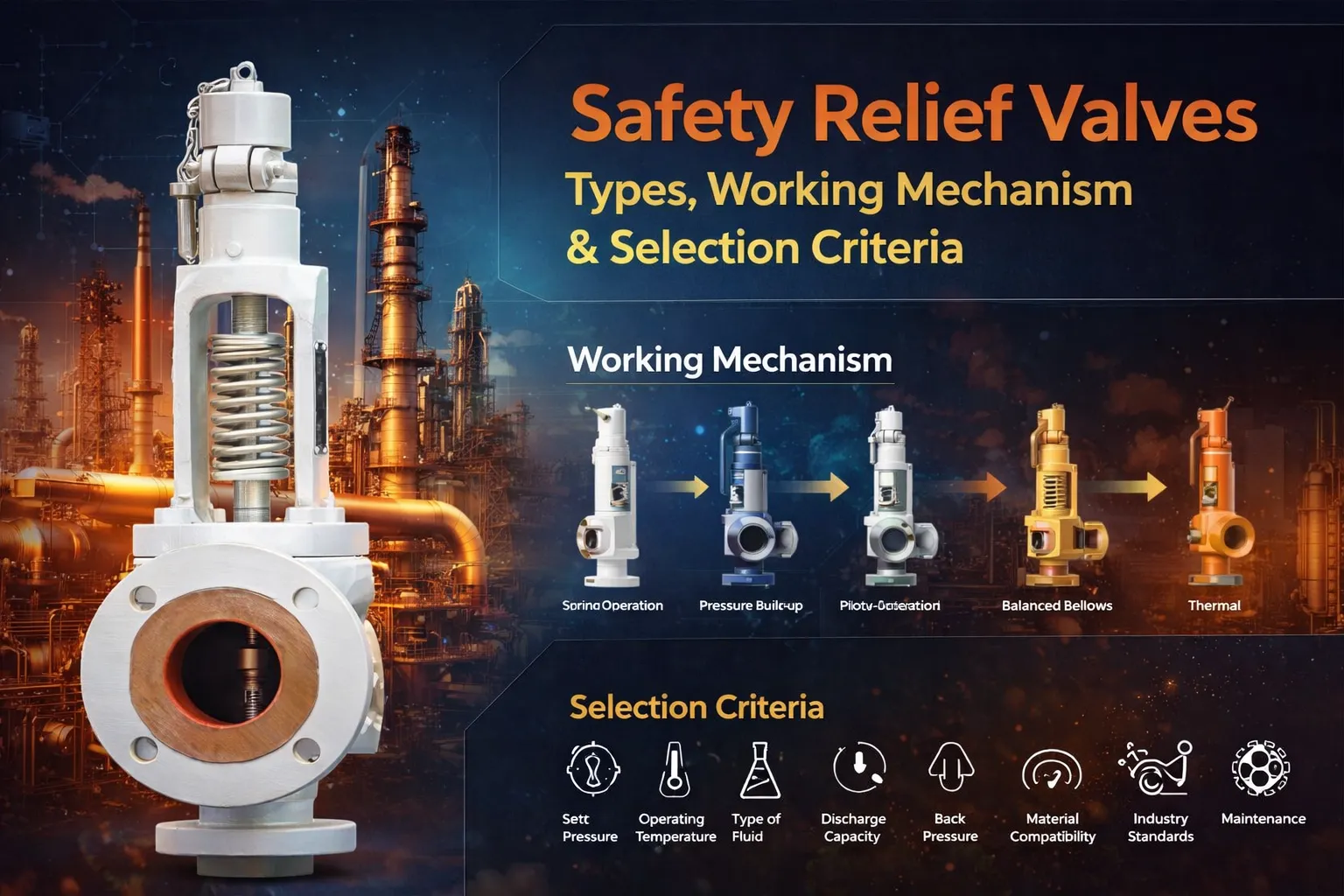

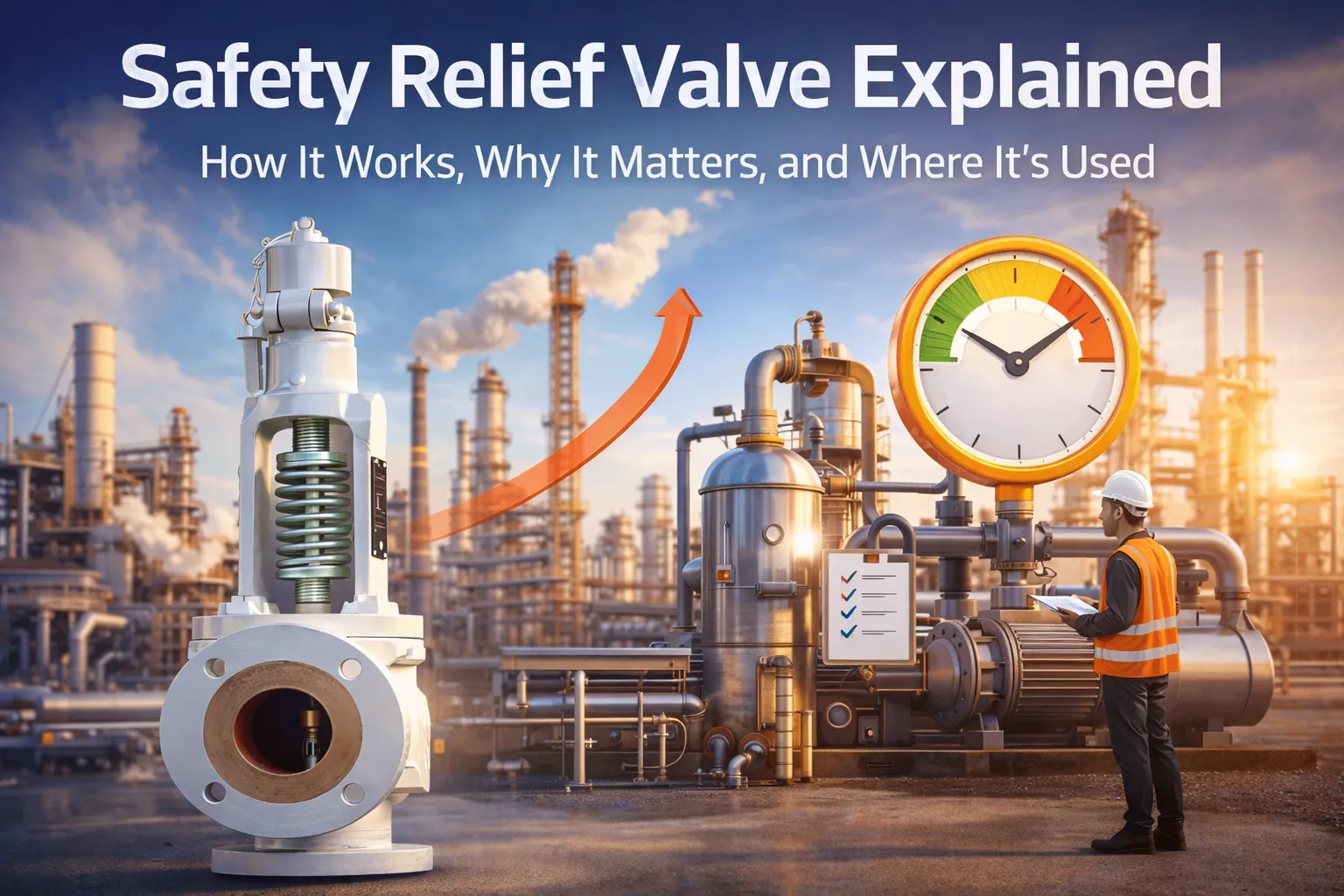
Safety relief valves are critical components in industrial systems where pressure control is essential. Whether used in chemical processing plants, oil refineries, power generation units, or manufacturing facilities, these devices ensure operational safety by preventing excessive pressure buildup. Without a properly functioning safety relief valve, systems are at risk of catastrophic failure, equipment damage, and safety hazards.
This comprehensive guide provides an in-depth understanding of safety relief valves, including their types, working mechanisms, and the most important selection criteria.
What is a Safety Relief Valve?
A safety relief valve is a protective device designed to automatically release excess pressure from a system when it exceeds a predefined safe limit. Once the pressure drops back to normal operating levels, the valve reseats and closes, ensuring minimal loss of process fluid.
These valves are commonly installed in pressure vessels, pipelines, boilers, and other pressurized equipment to maintain system integrity and compliance with safety standards.
Importance of Safety Relief Valves in Industrial Systems
In any pressurized system, pressure fluctuations are inevitable due to operational changes, temperature variations, or unexpected blockages. A safety relief valve plays a crucial role in:
- Preventing overpressure conditions
- Protecting equipment from mechanical failure
- Ensuring personnel safety
- Maintaining regulatory compliance
- Reducing downtime and maintenance costs
Industries such as petrochemicals, pharmaceuticals, food processing, and energy production rely heavily on properly selected and maintained safety relief valves.
Types of Safety Relief Valves
Different applications require different valve designs. Understanding the types of safety relief valves helps ensure optimal performance and safety.
1. Spring-Loaded Safety Relief Valve
The spring-loaded safety relief valve is the most widely used type. It operates using a spring mechanism that keeps the valve closed under normal conditions.
When system pressure exceeds the set point, the force overcomes the spring tension, allowing the valve to open and discharge excess pressure.
Advantages:
- Simple and cost-effective design
- Reliable for general applications
- Suitable for moderate pressure systems
2. Pilot-Operated Safety Relief Valve
A pilot-operated safety relief valve uses a smaller pilot valve to control the opening of the main valve. This design offers higher accuracy and is suitable for high-pressure systems.
Advantages:
- Precise pressure control
- Better sealing performance
- Ideal for large-scale industrial systems
3. Balanced Bellows Safety Relief Valve
This type incorporates a bellows mechanism to balance the effects of back pressure. It ensures consistent operation even when downstream pressure fluctuates.
Advantages:
- Handles variable back pressure
- Reduces risk of performance instability
- Increases valve lifespan
4. Thermal Safety Relief Valve
A thermal safety relief valve is specifically designed to relieve pressure caused by thermal expansion in liquid-filled systems.
Advantages:
- Compact and efficient
- Prevents pressure buildup in closed systems
- Commonly used in pipelines and storage systems
Working Mechanism of a Safety Relief Valve
The working principle of a safety relief valve is based on force balance between system pressure and the valve’s closing mechanism.
Step-by-Step Operation
1. Normal Operation:
During standard conditions, system pressure remains below the set pressure, keeping the valve tightly closed.
2. Pressure Build-Up:
When pressure increases beyond the safe limit, it exerts force on the valve disc.
3. Valve Activation:
Once the pressure force exceeds the spring or pilot force, the valve opens rapidly to release excess pressure.
4. Pressure Release:
The system pressure decreases as fluid or gas is discharged.
5. Reseating:
After pressure returns to a safe level, the valve automatically closes, restoring normal operation.
This automatic mechanism ensures continuous protection without requiring manual intervention.
Key Components of a Safety Relief Valve
A typical safety relief valve consists of several essential components:
- Valve Body: Provides structural support and houses internal parts
- Spring: Determines the set pressure
- Disc and Seat: Ensure tight sealing and prevent leakage
- Bonnet: Protects internal components
- Adjusting Screw: Allows calibration of set pressure
Each component must be precisely engineered to ensure reliable and accurate performance.
Selection Criteria for Safety Relief Valves
Choosing the right safety relief valve is a critical decision that directly impacts system safety and efficiency. Here are the key factors to consider:
1. Set Pressure
The valve should be set slightly above the normal operating pressure but below the maximum allowable pressure of the system.
2. Operating Temperature
Temperature affects material strength and performance. Selecting materials compatible with operating conditions ensures durability and reliability.
3. Type of Fluid
The nature of the fluid—gas, liquid, or steam—determines the valve design, material, and sealing requirements.
4. Discharge Capacity
The valve must be capable of releasing pressure at a rate that prevents system failure during peak conditions.
5. Back Pressure Considerations
If the system experiences back pressure, a balanced bellows or pilot-operated valve is recommended.
6. Material Compatibility
Corrosive or hazardous fluids require specialized materials such as stainless steel or alloy-based components.
7. Industry Standards and Certifications
Ensure compliance with recognized standards such as ASME, API, or ISO to guarantee safety and performance.
8. Installation and Maintenance
Ease of installation, accessibility, and maintenance requirements should also be considered for long-term efficiency.
Common Applications of Safety Relief Valves
Safety relief valves are widely used across various industries, including:
- Oil and gas pipelines
- Chemical processing plants
- Power generation systems
- HVAC and refrigeration systems
- Water treatment facilities
- Hydraulic systems
Their versatility makes them indispensable in any system involving pressurized fluids or gases.
Maintenance and Best Practices
Regular maintenance is essential to ensure the proper functioning of safety relief valves. Best practices include:
- Periodic inspection and testing
- Cleaning to prevent blockage
- Calibration of set pressure
- Replacement of worn components
- Compliance with maintenance schedules
Neglecting maintenance can compromise safety and lead to costly failures.
Conclusion
A well-designed and properly selected safety relief valve is vital for protecting industrial systems from overpressure risks. Understanding the different types, working mechanisms, and selection criteria allows businesses to make informed decisions that enhance safety, efficiency, and reliability.
Partnering with a trusted manufacturer like Vytal Controls ensures access to high-quality safety relief valves designed to meet industry standards and specific application requirements.





















Sign in to leave a comment.