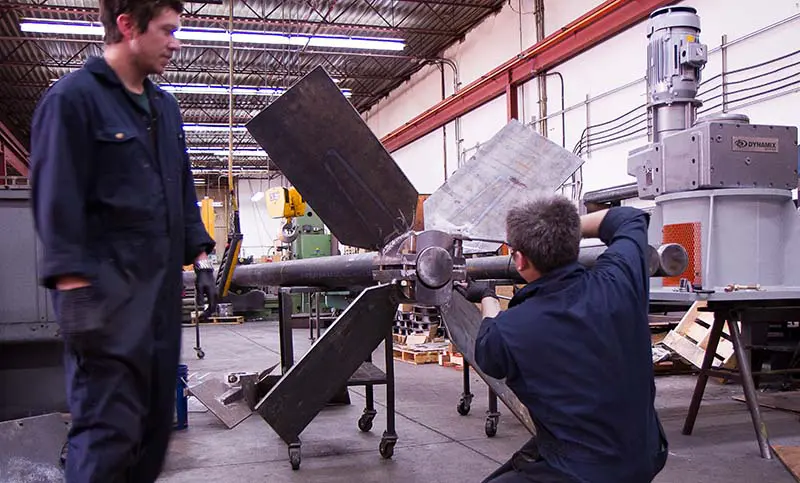
Designed to mix liquids directly inside industrial drums or containers, drum mixers provide a streamlined and cost-effective method for blending chemicals, additives, and liquid materials.
Industries such as chemical manufacturing, pharmaceuticals, water treatment, food processing, and coatings production commonly rely on drum mixers. These systems eliminate the need to transfer liquids into large mixing tanks, allowing operators to blend materials directly in the storage drum. As a result, businesses benefit from improved workflow efficiency, reduced waste, and faster production cycles.
What are drum mixers?
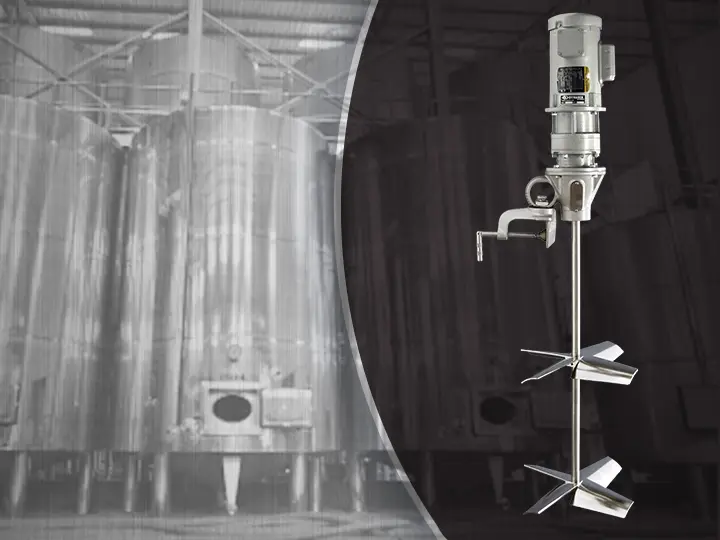
Drum mixers are specialized mixing devices engineered to operate directly inside standard industrial drums. Instead of transferring liquids into separate vessels, the mixer is inserted into the drum to blend the contents quickly and uniformly.
A typical drum mixer consists of a motor, shaft, and impeller. When the motor operates, the impeller rotates to create consistent agitation within the drum. This motion ensures that liquids, powders, and additives are evenly distributed throughout the mixture.
Because of their compact design and easy installation, drum mixers are particularly suitable for small to medium batch mixing operations. Their portability also allows operators to use the same mixer across multiple drums, making them a flexible solution for many production environments.
Key advantages of drum mixers
Drum mixers offer several operational benefits that make them a preferred choice in many industries:
Cost efficiency: Mixing directly inside drums eliminates the need for large mixing tanks and expensive infrastructure.
Improved productivity: Operators can quickly blend materials without transferring them between containers.
Reduced product waste: Mixing in the original drum minimizes material loss during transfer.
Operational versatility: Drum mixers can handle a wide range of liquid viscosities, from light solvents to thicker industrial chemicals.
Due to these advantages, drum mixers are frequently used for blending chemicals, paints, adhesives, lubricants, and other industrial liquids.
Industrial applications of drum mixers
Drum mixers support a variety of industrial processes. In chemical processing plants, they are used to combine solvents, additives, and raw materials. In water treatment facilities, drum mixers help prepare treatment chemicals before they are introduced into larger systems.
Similarly, industries such as coatings and adhesives rely on drum mixers to maintain consistent product formulations while improving overall process efficiency.
Choosing the right drum mixer
Selecting the appropriate drum mixer requires careful consideration of several factors, including liquid viscosity, drum size, mixing speed, and chemical compatibility. Motor power, impeller design, and material durability also play a critical role in ensuring reliable performance.
Partnering with an experienced mixing equipment provider allows businesses to implement solutions tailored to their operational requirements. High-quality drum mixers deliver long-term reliability, improved production efficiency, and consistent mixing performance across industrial applications.
This article’s author is Mark Twain. For additional information regarding Drum Mixers please continue browsing our website at therfpfirm.com.

























Sign in to leave a comment.