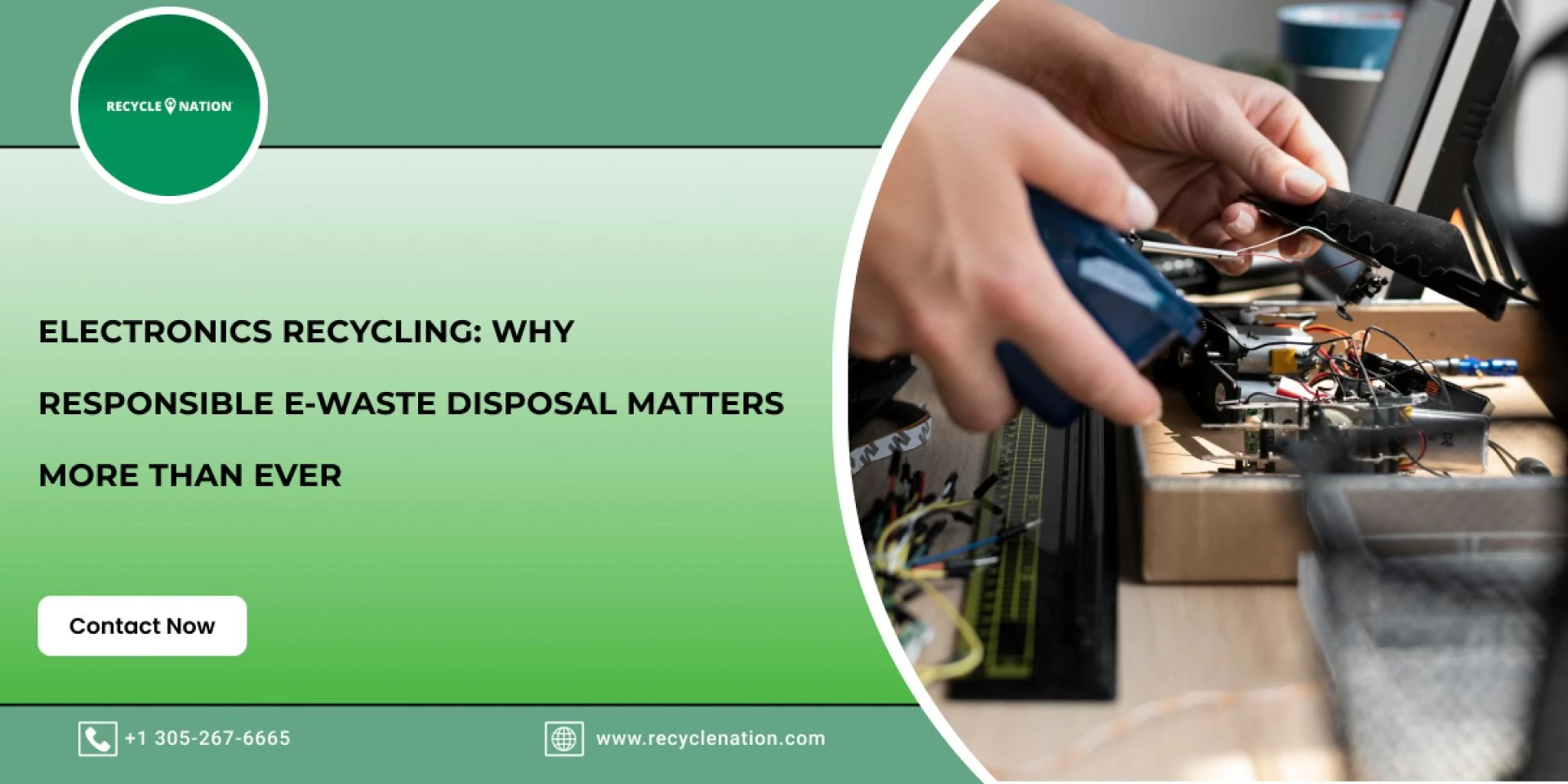

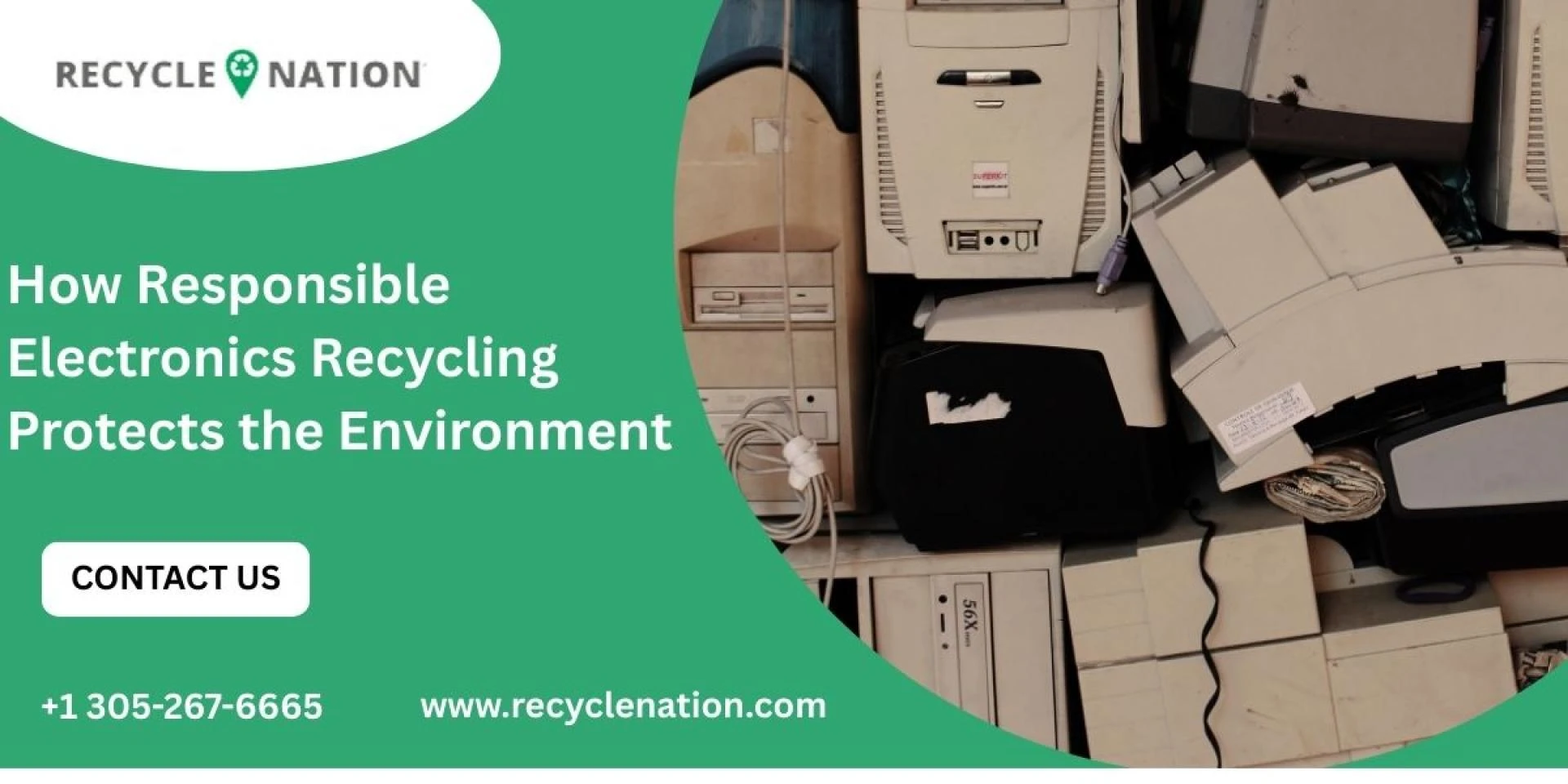
Electronics recycling plays a critical role in managing the growing volume of discarded devices generated by modern life. Smartphones, laptops, televisions, and office electronics are replaced more frequently than ever, creating a steady stream of electronic waste. Without proper handling, this waste places significant pressure on landfills, natural resources, and public health systems.
The challenge with electronic waste is not just its volume but its composition. Electronics contain a mix of valuable metals and hazardous substances. When devices are thrown away carelessly, toxic materials can seep into soil and groundwater, while recoverable resources are permanently lost. Electronics recycling addresses both of these issues through controlled, environmentally responsible processing.
The importance of electronics recycling becomes clear when considering how many useful materials are embedded in everyday devices. Metals such as copper, aluminum, and gold can be recovered and reused, reducing the need for energy-intensive mining. Recycling also lowers carbon emissions by decreasing the demand for raw material extraction and manufacturing. In this way, electronics recycling directly supports sustainability and resource conservation.
Health, Safety, and Data Protection Benefits
Electronics recycling also protects human health. Many devices contain lead, mercury, and flame retardants that are harmful when released into the environment. Certified recycling facilities follow strict guidelines to safely dismantle and process electronic components, minimizing exposure risks for workers and surrounding communities.
Another key benefit is data security. Old electronics often store personal, financial, or business data. Responsible recycling programs ensure proper data destruction, reducing the risk of identity theft and information breaches. This makes electronics recycling an important step for both individuals and organizations.
Using Recycling Location Search Tools Effectively
Access to proper recycling options is no longer a major barrier. Online tools make it easier to identify facilities that accept specific types of electronics. A reliable recycling location search helps users find nearby drop-off points for items such as computers, mobile phones, batteries, and televisions. This eliminates confusion and encourages higher participation in recycling programs.
Building Long-Term Recycling Habits
Making electronics recycling a habit starts with awareness and planning. Before replacing a device, consider repair, donation, or recycling as part of the decision process. Businesses can implement e-waste collection programs, while households can schedule regular cleanouts to responsibly dispose of unused electronics.
Electronics recycling is not just a disposal method. It is a practical strategy for conserving resources, protecting health, and supporting a more sustainable future as technology continues to advance.




























Sign in to leave a comment.