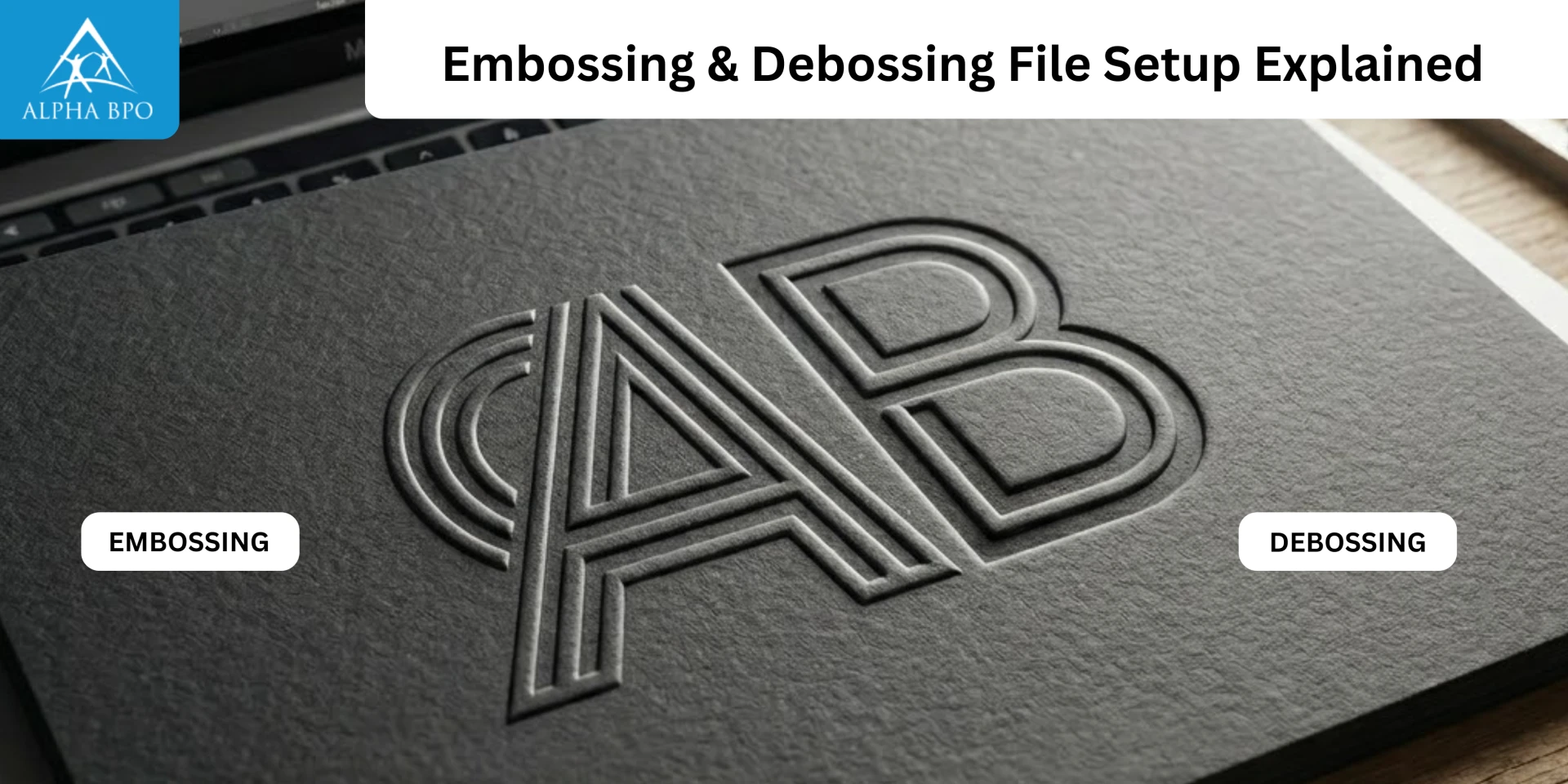

The rapid dependence on digital tools in the printing and media industry enables businesses to achieve higher growth. If you want to make your print materials stand out from the rest, embossing and debossing can help you do just that.
These two techniques help add depth to your prints in a way that ink cannot. Be it a business card, packaging, brochures, or any other print material, embossing and debossing help make a bold statement.
However, to get the best from these techniques, it is essential to ensure the file setup is correct. In this regard, prepress printing services help ensure that all elements in the file are correctly aligned and clear. This blog discusses the embossing and debossing file setup technique in detail.
What Is Embossing and Debossing?
Before we get into file setup, let us first understand what embossing and debossing are. Embossing is a technique in which the design is elevated above the surface of the paper.
This technique creates a 3D design that can be seen and touched. Debossing is the reverse of embossing. Here, the design is pressed into the paper.
Why File Setup Matters?
A well-designed concept is one thing. However, it is essential to ensure the file is correctly set up to get the best from embossing and debossing. Unlike standard prints, embossing and debossing involve accurate positioning and separation of design elements.
Commercial printing firms depend on accurate files to create metal dies used to press the design into or onto the paper. A small alignment or formatting error might result in misprints or increased costs. Therefore, proper setup is not just a technical process but a fundamental step towards attaining your desired look.
Setup A Separate Layer For Embossing and Debossing
One of the most important steps in designing your artwork for commercial printing is to create a dedicated layer for embossing or debossing.
You should keep this layer separate from your actual artwork. This process will make it easier for prepress printing services to understand what they need to process.
You should use a spot color for this layer. Give it a name like Deboss or Emboss to avoid confusion during printing.
Use Vector Graphics For Best Results
Embossing or debossing your artwork requires crisp edges, which are usually better achieved through vector graphics. Vector graphics will always look perfect regardless of their scale.
You should not use raster graphics, especially if you’re not sure of their resolution. Embossing or debossing blurry images will not look good.
If your prepress design contains text, convert it into outlines. It will prevent font problems when a commercial printing machine opens your design.
Keep The Design Simple And Clear
While it might seem like a good idea to have a detailed design embossed, a simple design will look better.
If there are small text, fine lines, or intricate designs, it may not be possible to maintain their shape when pressed into the paper. Therefore, it is best to use bold designs such as icons, logos, or short text.
A neat design looks great and minimizes the risk of errors during printing when you use a commercial printing service near me.
Proper Spacing
Another important factor to consider while embossing or debossing your designs is proper spacing. These designs need to be spaced properly to be visible. Avoid placing these designs near folds, cuts, or other designs. If there is less space, it may appear distorted. Therefore, it is best to maintain a safe distance while embossing or debossing your designs.
In general, it is best to maintain a safe distance while embossing or debossing your designs. Your printer can provide exact measurements depending on the type of paper you are using.
Paper Type And Thickness
Not all papers are suitable for embossing or debossing. Thicker papers are best for this process, as they can retain the impression.
It is best to discuss the type of paper to be used for your project with your printer. Many commercial printing companies offer free samples that can help you decide on the type of paper that will be best for your project.
Embossing With Other Printed Elements
If your project involves embossing with other printed designs, it is best to be careful while aligning the designs. For instance, when embossing a logo that is also printed in ink, it is imperative that the logo and the ink-print line up properly. If not, it can result in a final product that does not look as expected.
To avoid this process, it is crucial that you provide clear guidelines and ensure the file has been properly registered. It can be done when you use a prepress printing service that has experience in printing.
Use The Right File Format
In most cases, it is advisable to use a PDF file that includes all layers. It is because it can be transferred without losing any information. To avoid mistakes, it is imperative that you also follow a series of checks before sending the file. These processes include:
- Inspecting if the file has outlined fonts.
- Checking if the images have high resolution.
- Inspecting if the spot colors have been properly identified.
- Checking if the emboss and deboss have been clearly identified.
By doing a quick inspection, you can save a lot of time in the long run.
Work Closely With Your Printing Partner
Despite your design experience, you should work closely with the printing service. It happens because a commercial printing service may have several guidelines regarding embossing and debossing. These processes may vary depending on the printing service that you use.
Therefore, you should ask several questions to avoid mistakes that could result in a final product that does not look as expected.
Primary Mistakes To Avoid
Several mistakes can be made while preparing the file. These include:
- Small artwork
- Overly detailed artwork
- Wrong use of layers
- Poor resolution files
- Poor alignment
By considering these parameters, you can improve the efficiency and quality of your project.
When To Use Embossing or Debossing
Embossing and debossing are best used when you want your design to have a premium look. These techniques are commonly used in:
- Book covers
- Business cards
- Certificates
- Packaging
- Invitations
Many printing companies suggest embossing or debossing your branding elements, as they create a lasting impression without depending on colors.
Improve Your Business Reputation Through Embossing and Debossing During Prepress Printing
Embossing and debossing in print design are powerful ways to give your design a professional look, but only when the file setup is done correctly. If you are unsure about any aspect, it is always recommended to consult with prepress printing experts to make the process easier.
Prepress printing services have the expertise to help you with your design, ensuring it looks equally good in print as it does on your screen. If done correctly, your embossed or debossed print design is sure to have a clean and professional finish.





























Sign in to leave a comment.