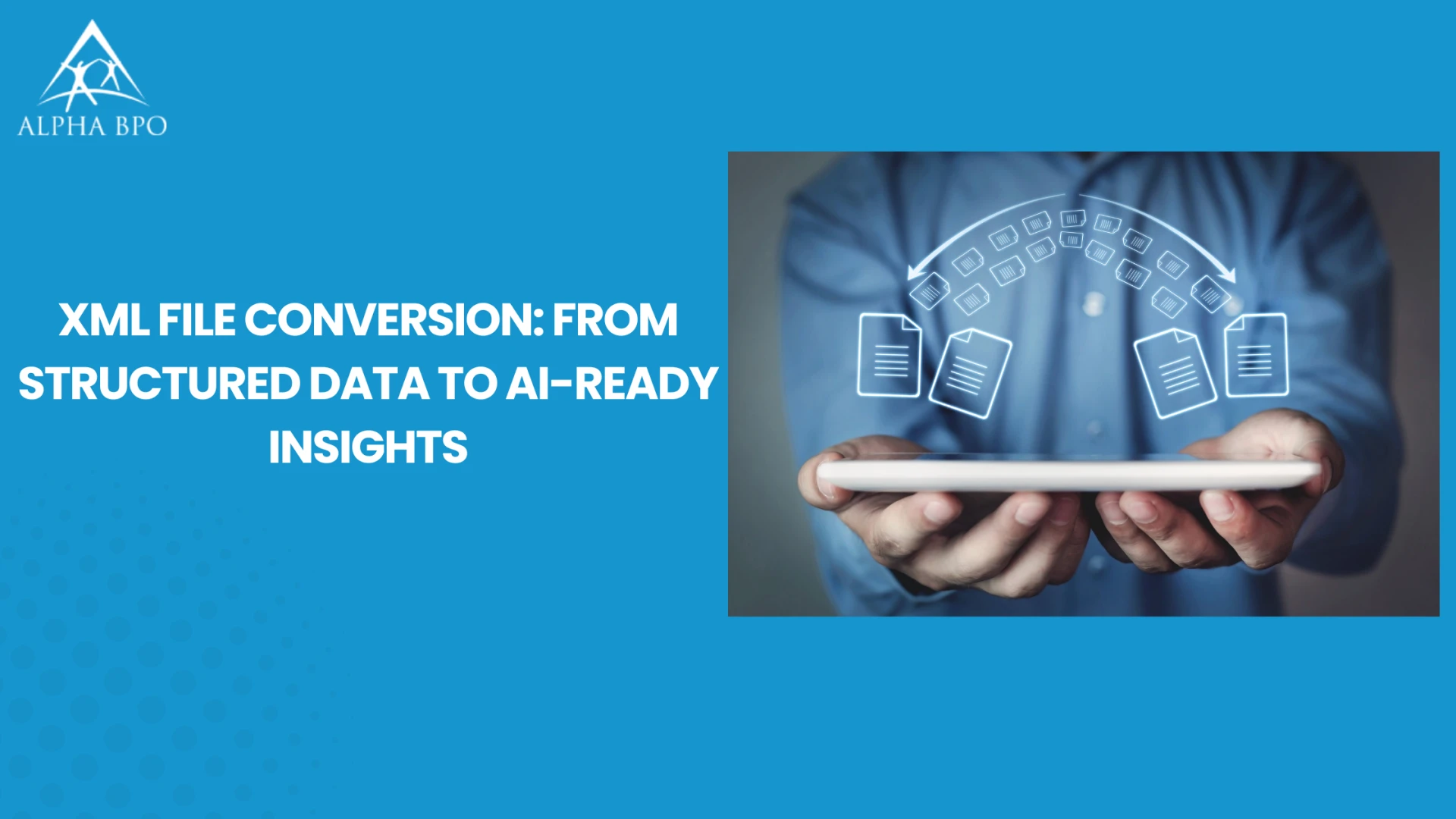

Online publishers are increasingly seeking structured data to succeed, as businesses depend on the latest digital tools and methods. Companies use advanced tools to structure content properly for publication. Working with large volumes of data has become routine for every business, and enterprises need effective techniques to share, manage, and organize it.
For this reason, companies are shifting towards XML file conversion, which plays a crucial role in data management. When implemented correctly, it helps manage XML data consistently and clearly, making it ready for modern tools like advanced artificial intelligence and machine learning systems.
Many institutions are relying on XML conversion services to streamline, simplify, and improve the accuracy of their processes. This blog explores the significance of XML file conversion in transforming structured data into AI-ready insights.
The Short Introduction to XML Format
XML, or simply Extensible Markup Language, is the most popularly used data format for storing and sharing structured data. The format brings proper management information, but its full value is unlocked only after it is transformed into the format your system and analytics tool needs.
Companies can take small, simple steps to improve data quality and generate better in
sights by understanding how XML file conversion and extensible markup language work.
Knowing The Reasons Behind XML Matters In Modern Days
XML format has been around for years, but it remains a perfect alternative option for modern data interchange across industries. It separates relevant content from the presentation so that the same file can be used across various applications without misinterpretation.
This unique flexibility makes XML documents helpful for retail, finance, healthcare, publishing, government agencies, and other businesses, and they work well with higher-level structured data. The unique advantage of XML is its ability to represent information in human- and machine-readable formats. It helps both computer systems and people to understand the XML format without confusion.
The process supports inspection against XML schema rules, helping maintain data integrity. It becomes easier to reuse, search for, and handle data when it follows a defined structure. Also, XML elements are necessary for better data processing. Many modern services, web applications, and cloud-based platforms require data in various formats, including CSV, SQL databases, JSON, and others. Due to these functions, XML conversion becomes essential.
The XML file conversion overcomes the gap between the latest tools and older systems, allowing data to flow smoothly across your advanced technology landscape.
Why Do Companies Require XML File Conversion?
Most enterprises use several tools and systems that cannot communicate with one another.
Proper conversions help streamline operational workflows by ensuring that XML documents conform to the formatting and structural requirements of various platforms.
Internal teams spend hours manually adjusting files, fixing errors, or resolving compatibility issues without proper XML conversion services. There are a few primary reasons businesses should outsource XML conversion services, such as:
Migrating From Old Systems to New Platforms
Older business applications primarily store information in the XML format. When companies upgrade or switch platforms, XML file conversion helps transfer data efficiently and securely, without losing detail.
Preparing Data For Analytics
The latest technologies, such as modern machine learning and predictive analytics, require well-organized data. For this reason, XML conversion makes it easy to prepare that data for proper processing and understanding by AI-driven tools. It produces high-quality data insights without the need for lengthy manual data cleanup.
Allowing Better Data Exchange Process
Many industries share data between partners, suppliers, vendors, or regulatory bodies. The modern conversion of XML data ensures that each side receives the required information in a format they can use right away, decreasing delays and improving accuracy.
Supporting Digital Publishing and Content Management
Many professional publishing companies use a validated XML workflow to create, edit, and share large volumes of content. Valuable conversion helps visitors navigate information smoothly across different layouts and digital formats. XML file conversion does more than reformat data in each situation. It confirms consistency, accuracy, and long-term usability.
How Does XML File Conversion Work?
The valuable conversion requires more than primary knowledge of Extensible Markup Language. However, it needs specialized tools, technical expertise, and a thorough understanding of the perfect processing of different formats. The conversion process includes the following stages:
Knowing The Original XML Structure
The experts analyze the XML schema, features, tags, and data hierarchy. It ensures that every relationship and rule in the XML file is stored during conversion.
Choosing The Correct Output Format
Different systems require different structures. The experienced team decides whether XML documents should be converted to JSON, text-based tables, other structures, or relational database entries.
Higher Data Mapping
Every XML element should be carefully matched to the proper field in the target format. This proactive step is crucial to maintain higher data integrity and avoid mismatches or missing files.
Inspecting and Cleaning
Before creating the final output, the variable XML data is checked for errors, duplicates, and missing values. Accurate data confirms that the new format is reliable and ready for various business uses.
Exporting And Transforming
The XML operational workflow proceeds to the final transmission stage after validation, where the proper XML file is converted using custom scripts and automated tools. The perfect result is primarily delivered in the required format.
Each step requires attention to accuracy and detail. As a result, many organizations choose experienced XML conversion services over handling it internally.
Advantages Of Using Professional XML Conversion Services
Professional services provide higher speed, precision, and scalability, even though it is possible to convert XML manually or with basic tools. Companies prefer skilled expert support when outsourcing XML conversion services due to various benefits.
Greater Accuracy and Quality
Skilled data experts know XML schema rules and advanced methods for handling complex structures. They validate that the converted output is clean, error-free, and accurate.
Faster Project Turnaround Times
Manual conversion takes more time to complete. However, professional teams use the latest automated tools to process large batches of XML data instantly, helping businesses prevent delays and meet project deadlines.
Remarkable Support For Complex Formats
Some XML documents include metadata, images, custom features, and nested layers. The professionals have the necessary skills to handle complex formats without data loss.
Improved Data Integrity
Every project detail is validated and checked to ensure the converted information accurately reflects the original XML format. It decreases the risks of corrupted files and system issues.
Cost-Effective And Affordable Results
Compared to hiring additional staff or handling primary errors later, outsourcing ensures reliable results from the start, saving both time and money.
Higher Support For AI And Machine Learning
Advanced data preparation is a remarkable step as more organizations adopt the latest technologies.
Transforming XML into AI-ready formats helps specialized machine learning models that process content more efficiently. These professional advantages make XML conversion services a practical solution for companies seeking reliable, scalable data management.
The Crucial Role Of XML In Digital Transformation and AI
The XML format continues to play a vital role as more companies shift toward automation and intelligent decision-making.
This format offers clarity, structure, and flexibility. After proper conversion, it becomes a strong base for analytics and automation tools. Various modern applications use XML workflow activities to handle product catalogs, financial data, medical records, client information, and e-commerce product listings.
After this data is converted into AI-friendly formats, it becomes possible to expose patterns, tailor services, forecast trends, and increase operational productivity.
XML format also works well with web services and cloud applications, allowing data interchange across different platforms. Suppose you are integrating CRM with your ERP or connecting a content management system to an e-commerce engine, XML format helps information move smoothly.
When businesses continue to grow, the unique need to confirm XML will only increase. Clear, well-structured information guides better decision-making, supports long-term success, and reinforces customer relationships.
Get Proper Structured And Secure Data With Effective XML Conversion Services
XML file conversion remains a crucial step in preparing structured information for modern applications. It helps businesses streamline business workflows, maintain data integrity, and improve data quality, while supporting machine learning and AI initiatives. Organizations can handle everything from system migrations to digital publishing and data exchange without worrying about compatibility issues or errors.
Well-structured XML data offers a clear benefit in areas where data increases growth and strategy. Companies can convert structured data into meaningful insights that support long-term performance and innovation by understanding how XML works and investing in reliable conversion processes. For many companies, the most practical way to achieve this level of accuracy is to outsource XML conversion services, which provide professional support, greater efficiency, and long-lasting value.


























Sign in to leave a comment.