

Why Lending Needs to Become Autonomous
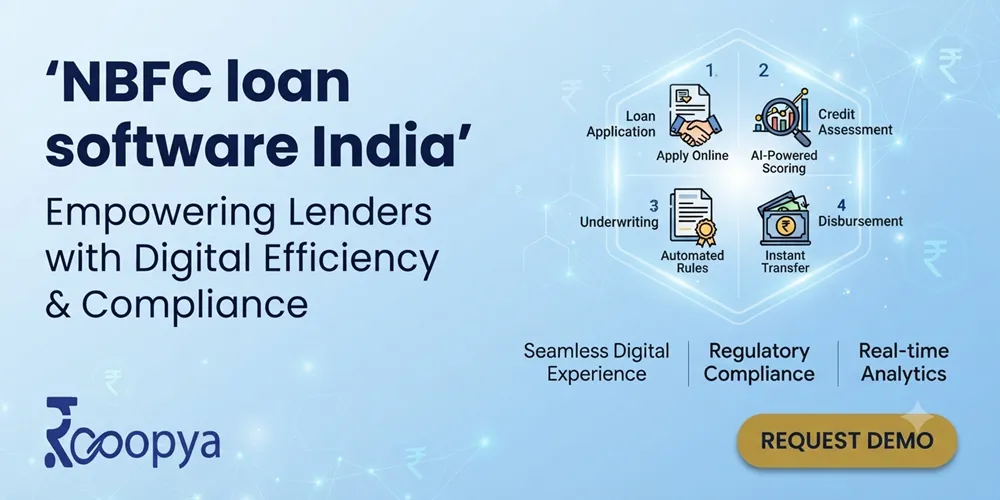
Non-Banking Financial Companies (NBFCs) sit at the centre of India's credit story. They reach borrowers that traditional banks often cannot — small businesses in tier-2 and tier-3 towns, first-time credit users, gig workers, and thin-file customers who need speed and simplicity more than paperwork. Yet most NBFCs still run their lending operations on a patchwork of spreadsheets, disconnected point solutions, and manual underwriting checklists. The result is slow turnaround times, inconsistent credit decisions, rising operational cost, and a borrower experience that cannot compete with digital-first lenders.
An end-to-end autonomous lending platform changes this equation. Instead of stitching together a loan origination tool, a separate loan management system, a manual collections process, and a reporting layer built in Excel, an autonomous platform unifies the entire lending lifecycle — from the moment a customer applies to the day the loan is fully repaid — into a single, intelligent, self-operating system. Decisions that once took a credit team days now happen in seconds. Rules that once required a developer to change now update through a no-code interface. Risk that once surfaced only at the end of a quarter is now flagged the moment it appears.
This guide explains what an end-to-end autonomous lending platform actually is, why NBFCs need one in 2026 and beyond, the core modules that make one up, how artificial intelligence powers autonomy at every stage, and what to look for when evaluating a platform for your own lending business.
What Is an End-to-End Autonomous Lending Platform?
An end-to-end autonomous lending platform is a unified software infrastructure that automates and connects every stage of the loan lifecycle: origination, underwriting, disbursal, servicing, collections, and portfolio monitoring. 'End-to-end' means the platform covers the complete journey rather than a single slice of it. 'Autonomous' means the platform is designed to operate with minimal manual intervention — it can source data, apply credit policy, make a decision, trigger a disbursal, monitor repayment behaviour, and initiate a collections action largely on its own, escalating to a human only when a case genuinely requires judgment.
This is a meaningful shift from traditional loan software. A conventional Loan Origination System (LOS) digitises the application form but still depends on a credit analyst to pull a bureau report, cross-check documents, and apply policy manually. A conventional Loan Management System (LMS) tracks EMIs and balances but does little to predict which accounts are about to slip into delinquency. An autonomous platform closes these gaps by embedding decisioning intelligence, a configurable rule engine, and predictive analytics directly into the workflow, so the system itself drives the loan forward rather than waiting for a person to push it along at every stage.
Why NBFCs Need Autonomous Lending Systems Now
Several forces are converging to make autonomous lending a necessity rather than a nice-to-have for NBFCs.
- Borrower expectations have shifted permanently. Customers who can open a bank account or book a cab in minutes expect a loan decision in a similar timeframe, not a multi-day wait.
- Competition from digital lenders and fintech NBFCs is compressing margins, so operational efficiency is no longer optional — it is the difference between a viable unit economics model and an unviable one.
- Regulatory scrutiny on fair lending, data handling, and grievance redressal is increasing, and manual processes are far harder to audit and standardise than a rules-driven system.
- Portfolio risk is more dynamic than before. Macroeconomic shocks, income volatility among self-employed and gig-economy borrowers, and evolving fraud tactics mean risk needs to be monitored continuously, not just at the point of sanction.
- Talent and cost pressures make it inefficient to scale a lending book by proportionally scaling headcount in credit, operations, and collections.
Autonomous lending platforms address each of these pressures directly: faster decisions improve conversion and customer satisfaction, automation lowers the cost to originate and service a loan, configurable rule engines make compliance changes auditable and fast to implement, and predictive risk models catch problems earlier than a monthly portfolio review ever could.
Core Components of an End-to-End Autonomous Lending Platform
A genuinely end-to-end platform is built from several interconnected modules. Understanding each one helps in evaluating whether a vendor's platform is truly comprehensive or is a single tool marketed as a full suite.
Loan Origination System (LOS)
The origination layer captures the borrower's application through a digital form, verifies identity and documents (KYC, income proof, bank statements), pulls bureau and alternative data, and runs the application through automated credit scoring. In an autonomous setup, this is not a static form-to-database pipeline — it is a dynamic workflow that adapts the data it asks for based on the loan product, the applicant's profile, and real-time verification results.
Loan Management System (LMS)
Once a loan is disbursed, the LMS takes over: amortisation schedules, EMI tracking, payment processing, statement generation, restructuring, and a customer self-service portal. A strong LMS gives both the lender and the borrower a single source of truth for the loan's status at every point in its life, and feeds servicing data back into the platform's analytics engine in real time.
No-Code Business Rule Engine (BRE)
The rule engine is where credit policy, eligibility criteria, pricing logic, and approval workflows live. A no-code BRE lets risk and business teams configure or adjust lending rules through a visual interface rather than filing a change request with engineering — which matters enormously when a regulatory update or a market shift requires policy to change quickly.
Credit Decisioning and Scoring
Autonomous decisioning engines combine traditional bureau scores with alternative data — bank transaction patterns, utility payments, digital footprint, and behavioural signals — to assess borrowers who may have thin or no credit history. This is particularly important for NBFCs serving underbanked segments, where a bureau score alone often understates genuine creditworthiness.
Collections and Recovery Automation
An autonomous collections module segments the portfolio by risk and delinquency stage, triggers the appropriate reminder or workflow automatically (SMS, IVR, app notification, or agent assignment), offers restructuring or payment plans where policy allows, and routes only the more complex or sensitive cases to a human collections agent.
Early Warning System (EWS)
Rather than discovering stress in an account only when an EMI is missed, an early warning system uses behavioural and transactional signals to flag accounts that show early indicators of distress — irregular repayment patterns, sudden changes in bank balance behaviour, or bureau updates elsewhere — so the lender can intervene before a default occurs.
Lending Analytics and Reporting
Portfolio analytics, regulatory reports, and custom dashboards give management, risk, and compliance teams a real-time view of the business rather than a monthly snapshot assembled manually. This layer is what turns operational data into decisions about pricing, product design, and risk appetite.
How Artificial Intelligence Powers Autonomy
The word 'autonomous' only holds up if AI is doing genuine work inside the platform, not just labelling existing automation. In a well-built platform, AI shows up in four specific places.
- Document intelligence: OCR and NLP models extract and verify data from identity documents, income proofs, and bank statements automatically, flagging inconsistencies or signs of tampering that a manual reviewer might miss under time pressure.
- Self-learning rule engines: machine learning models analyse historical approval and rejection patterns to suggest rule refinements, while keeping a human in the loop for final sign-off on any policy change.
- Intelligent credit decisioning: models trained on thousands of data points — well beyond a single bureau score — produce a risk assessment in milliseconds and can be recalibrated as repayment data accumulates.
- AI-driven analytics: natural-language reporting lets a risk or business user ask a plain-English question about the portfolio and receive an answer immediately, instead of waiting on a data team to build a custom report.
The combined effect of these four capabilities is a platform that gets more accurate over time, requires progressively less manual oversight for routine decisions, and gives human underwriters and risk managers more time to focus on the genuinely complex cases that need judgment rather than computation.
Business Benefits of an Autonomous Lending Platform
- Faster time to market — a no-code, pre-integrated platform can take an NBFC live with a new loan product in days rather than the months typically needed to build or heavily customise in-house systems.
- Lower cost to serve — automating origination, underwriting, and collections reduces the operational headcount needed to process a given loan volume, improving unit economics as the book scales.
- Better credit outcomes — alternative-data scoring and continuous portfolio monitoring generally improve approval accuracy and reduce delinquency compared with static, bureau-only underwriting.
- Stronger compliance posture — a rules-driven, auditable system makes it far easier to demonstrate fair, consistent, policy-based decisioning to regulators than a process built on individual underwriter judgment.
- Improved borrower experience — quicker decisions, transparent status tracking, and a self-service portal translate directly into higher conversion and repeat borrowing.
- Scalability without proportional headcount growth — because the platform absorbs routine decisioning and servicing work, loan book growth does not require a matching increase in operations staff.
What to Look for When Choosing an Autonomous Lending Platform
Not every platform marketed as 'end-to-end' or 'AI-powered' delivers genuine autonomy. When evaluating vendors, NBFCs should look closely at the following:
- True end-to-end coverage: does the platform natively cover origination, servicing, collections, and early warning, or does it require stitching together separate products from different vendors?
- No-code configurability: can business and risk teams change credit policy, workflows, and loan products themselves, or does every change need a developer and a release cycle?
- Depth of pre-built integrations: how many credit bureaus, KYC/verification services, payment gateways, and data sources come pre-integrated, and how long does adding a new one typically take?
- Speed to go live: what is the realistic onboarding timeline for a new lending product, from contract signing to the first live loan?
- Pricing model: does the platform charge a large upfront licence fee, or a usage-based model that aligns cost with actual loan volume?
- Fraud and risk controls: are fraud detection and early warning genuinely embedded in the workflow, or are they positioned as optional add-ons?
- Regulatory alignment: is the platform actively maintained to reflect current RBI and NBFC regulatory requirements, including fair practice and grievance redressal norms?
How Roopya Delivers an End-to-End Autonomous Lending Platform
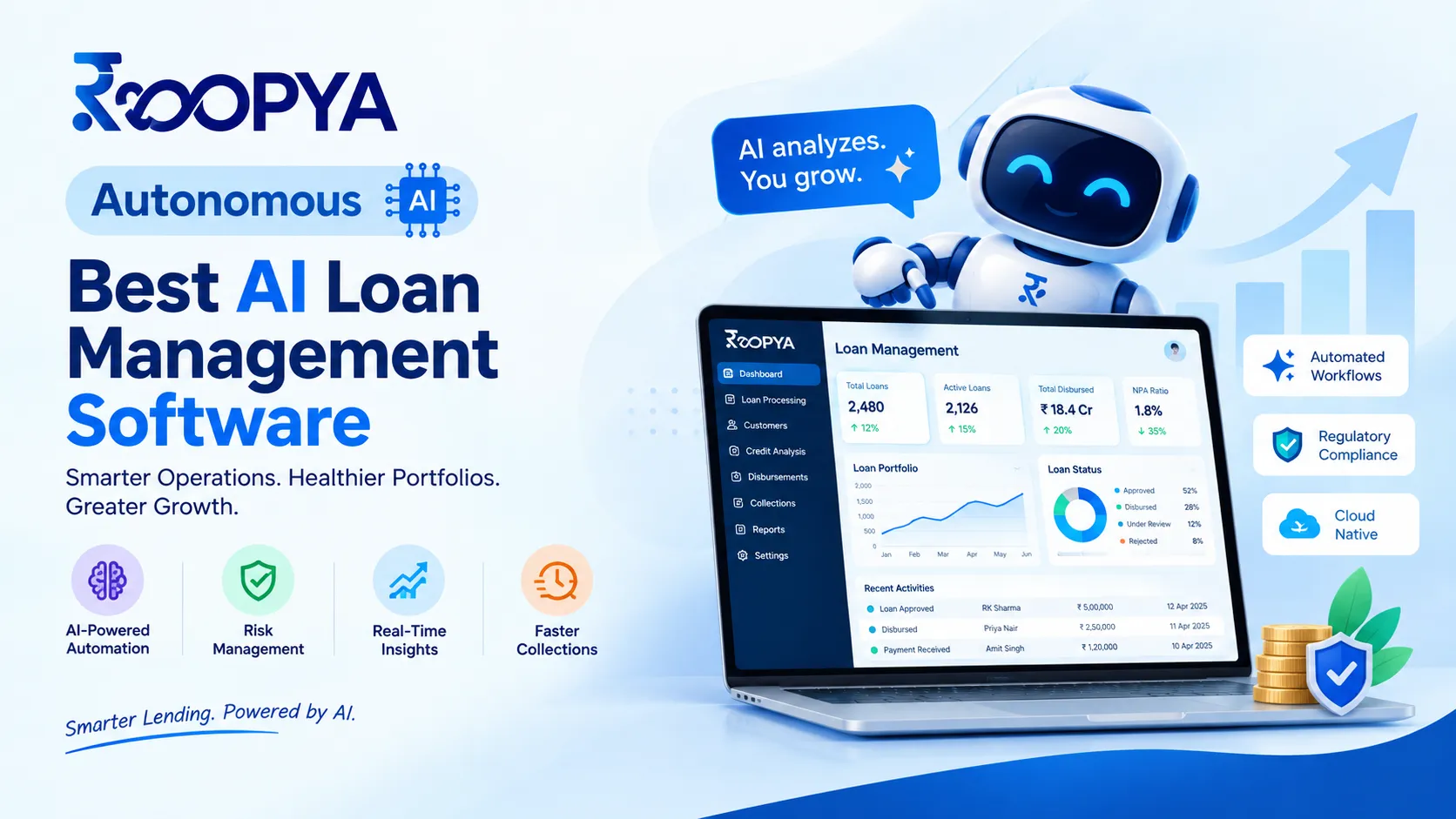
Roopya (roopya.money) is built specifically for this shift — a unified lending infrastructure that takes an NBFC, bank, or MFI from origination through collections on a single, no-code platform. Rather than positioning individual modules as separate products, Roopya brings loan origination, loan management, collections, early warning, and lending analytics together under one system, so lenders are not left integrating disconnected tools themselves.
A few characteristics define how Roopya approaches autonomous lending:
- Fast go-live: lenders can go live in as little as one day using Roopya's plug-and-play infrastructure rather than a months-long implementation project.
- Usage-based pricing: a pay-as-you-use model means lenders are not carrying a large upfront cost before the platform generates value.
- 300+ pre-integrated APIs: credit bureaus, verification services, and payment gateways are ready to use out of the box, removing a significant chunk of typical integration work.
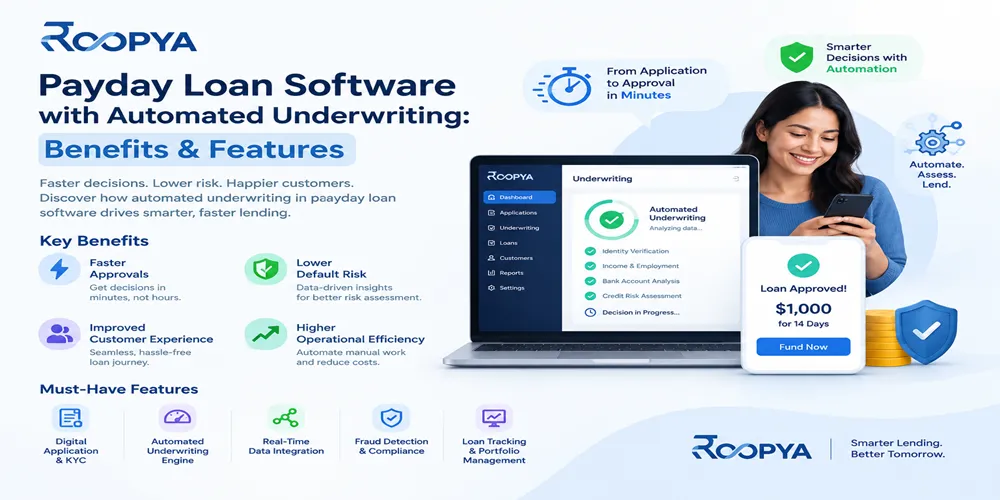
- 20+ pre-configured loan products: personal, business/SME, gold, payday, home, and auto loan journeys are available as ready templates that can be adapted rather than built from scratch.
- No-code business rule engine: credit policy and approval workflows are configured visually, so policy changes do not require engineering involvement.
- AI-powered document analysis and fraud detection: OCR- and NLP-based verification with built-in fraud checks are embedded directly into the origination workflow.
- Open API architecture: the platform connects to a lender's existing CRM, ERP, and other business systems through comprehensive REST APIs.
This combination is designed to let NBFCs move from a manual, fragmented lending operation to a genuinely autonomous one without a multi-year technology overhaul, while retaining the compliance controls and human oversight that regulated lending requires.
Implementation: What Getting Started Typically Looks Like
- Product and policy scoping: define the loan products, eligibility criteria, and credit policy to be configured in the rule engine.
- Data and integration mapping: connect bureau, KYC, banking, and payment data sources, most of which are pre-integrated on a mature platform.
- Workflow configuration: build the origination, underwriting, and collections workflows using the no-code interface, without custom development.
- Testing and compliance review: validate decisioning logic, disclosures, and reporting against internal and regulatory requirements.
- Go-live and monitoring: launch the product and monitor early performance through the analytics dashboard, refining rules as real repayment data comes in.
The Future of Autonomous Lending for NBFCs
The direction of travel is clear: lending platforms will keep absorbing more of the decisioning and servicing work that used to sit with human teams, while keeping people firmly in charge of policy, exceptions, and judgment calls. Over the next few years, expect deeper use of alternative and real-time data in underwriting, more granular early-warning signals drawn from transaction-level behaviour, conversational AI handling a larger share of routine borrower interactions, and rule engines that suggest — rather than simply execute — policy improvements based on outcomes data. NBFCs that adopt this infrastructure early are likely to compound an advantage in cost, speed, and credit quality that becomes harder for slower-moving competitors to close.
An end-to-end autonomous lending platform is no longer a futuristic concept for NBFCs — it is fast becoming the baseline infrastructure needed to compete on speed, cost, and credit quality. By unifying origination, servicing, collections, early warning, and analytics into a single no-code, AI-powered system, NBFCs can move from a fragmented, manually intensive operation to one that scales efficiently while staying compliant. Platforms like Roopya are built to make that transition practical — with fast go-live timelines, usage-based pricing, and pre-integrated infrastructure that removes much of the traditional cost and complexity of building lending technology in-house.
To see how an end-to-end autonomous lending platform would work for your NBFC's specific loan products and portfolio, request a demo at roopya.money/contact-us.
3. Frequently Asked Questions (FAQ)
What is an end-to-end autonomous lending platform?
It is a unified software system that automates and connects the entire loan lifecycle — origination, underwriting, disbursal, servicing, collections, and portfolio monitoring — so most routine lending decisions and workflows run with minimal manual intervention.
How is an autonomous lending platform different from a traditional LOS or LMS?
Traditional loan origination and loan management systems mostly digitise paperwork and tracking, but still rely on people to apply credit policy and monitor risk manually. An autonomous platform embeds a no-code rule engine, AI-based decisioning, and predictive early-warning analytics directly into the workflow, so the system itself drives most decisions.
How long does it take an NBFC to go live on Roopya?
Roopya is built for fast onboarding, with lenders able to go live in as little as one day using its plug-and-play, pre-integrated infrastructure, compared with the months typically required for in-house builds or heavily customised legacy systems.
Does an autonomous lending platform remove the need for human underwriters?
No. It automates routine, data-driven decisions and flags exceptions, but human underwriters, risk managers, and compliance teams remain responsible for policy design, edge cases, and final oversight — the platform is designed to support their judgment, not replace it.
Can NBFCs configure their own credit policy without developer support?
Yes, on a no-code business rule engine like Roopya's, risk and business teams can configure eligibility criteria, approval workflows, and pricing logic through a visual interface, without needing to raise an engineering request for every policy change.
What loan products can be launched on Roopya?
Roopya offers 20+ pre-configured loan product journeys, including personal loans, business and SME loans, gold loans, payday loans, home loans, and auto loans, which can be adapted rather than built from scratch.
Is Roopya's pricing based on upfront licensing or usage?
Roopya follows a pay-as-you-use pricing model, so NBFCs are not required to make a large upfront investment before the platform starts generating value.
How does AI improve credit decisions on an autonomous lending platform?
AI models analyse alternative data — such as bank transaction patterns and behavioural signals — alongside traditional bureau scores, which can improve approval accuracy for thin-file and underbanked borrowers and deliver a decision in milliseconds rather than days.























Sign in to leave a comment.