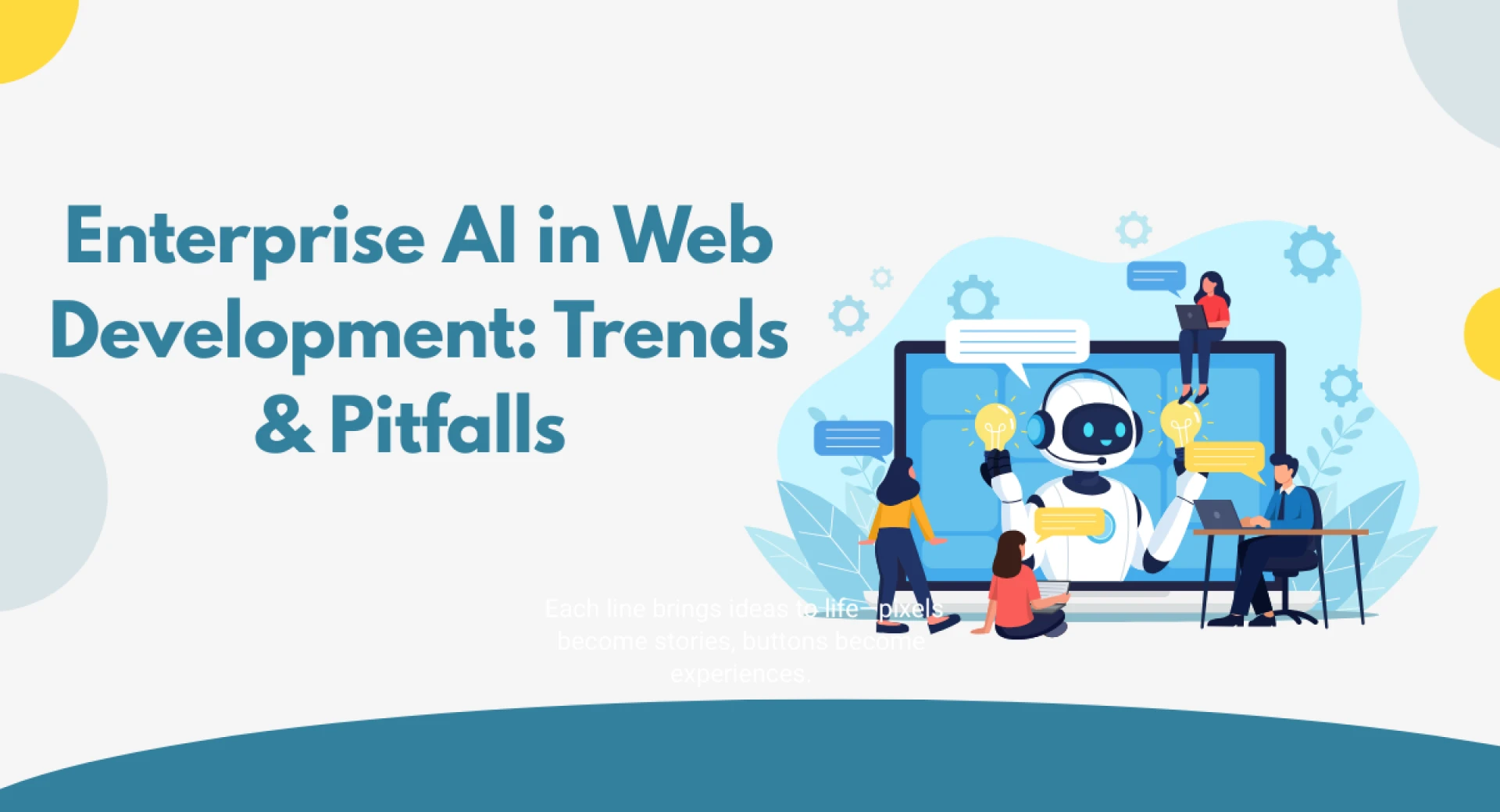

Artificial Intelligence (AI) is no longer a futuristic concept—it’s a strategic necessity for modern businesses. As organizations accelerate digital transformation, Enterprise AI is reshaping how websites and web applications are built, optimized, and scaled. From intelligent automation to predictive analytics, AI-driven systems are empowering businesses to deliver faster, smarter, and more personalized digital experiences.
For any Web Development Company looking to stay competitive, integrating Enterprise AI into development workflows is becoming essential rather than optional. However, while the opportunities are vast, there are also significant challenges that businesses must navigate carefully.
What Is Enterprise AI in Web Development?
Enterprise AI refers to large-scale artificial intelligence solutions designed specifically for business environments. Unlike basic AI tools, enterprise-level AI systems are built to handle complex data, integrate with existing infrastructure, and support long-term scalability.
In web development, Enterprise AI can power:
- Intelligent chatbots and virtual assistants
- AI-driven content personalization
- Automated testing and quality assurance
- Predictive user behavior analysis
- Smart search functionalities
- Advanced cybersecurity systems
By embedding AI into web platforms, companies can streamline operations while delivering highly customized user experiences.
Key Trends in Enterprise AI for Web Development
1. AI-Powered Personalization
Modern users expect tailored digital experiences. AI algorithms analyze browsing behavior, purchase history, and engagement patterns to dynamically adjust website content in real time. Companies like Amazon have set the benchmark by using AI to recommend products with remarkable accuracy.
For enterprises, AI-driven personalization increases engagement, boosts conversion rates, and enhances customer satisfaction.
2. Conversational AI and Chatbots
AI-powered chatbots have evolved beyond scripted responses. Leveraging natural language processing (NLP), they can understand context, sentiment, and user intent. Platforms such as IBM have developed enterprise-grade AI solutions that enable intelligent customer interactions.
These systems reduce support costs, provide 24/7 assistance, and collect valuable customer insights.
3. AI-Enhanced Cybersecurity
As web applications become more complex, security threats also grow. Enterprise AI helps detect unusual patterns, prevent fraud, and respond to cyberattacks in real time. AI systems continuously learn from new threats, strengthening security frameworks without manual intervention.
This proactive approach is critical for enterprises handling sensitive customer and financial data.
4. Automated Code Generation and Testing
AI tools now assist developers in writing, reviewing, and optimizing code. Machine learning models can identify bugs, suggest improvements, and even generate functional code snippets. This accelerates development cycles while reducing human error.
Automated testing powered by AI ensures better performance, scalability, and reliability of enterprise applications.
5. Predictive Analytics for Smarter Decisions
Enterprise AI analyzes massive datasets to uncover patterns and forecast trends. In web development, predictive analytics can anticipate user needs, optimize UI/UX design, and refine marketing strategies.
Businesses can make data-driven decisions rather than relying solely on intuition, resulting in measurable growth and operational efficiency.
Benefits of Enterprise AI in Web Development
- Improved Efficiency
AI automates repetitive tasks such as data entry, testing, and performance monitoring. Developers can focus on strategic problem-solving and innovation.
- Enhanced User Experience
Personalization engines and intelligent recommendations create smoother user journeys, increasing customer retention.
- Cost Optimization
Although initial AI integration requires investment, long-term automation significantly reduces operational costs.
- Scalability
Enterprise AI systems are designed to grow with business needs, supporting high traffic loads and complex functionalities without compromising performance.
Common Pitfalls and Challenges
While Enterprise AI offers powerful advantages, implementation is not without risks.
1. High Initial Investment
AI development requires advanced infrastructure, skilled professionals, and ongoing maintenance. Without proper planning, costs can escalate quickly.
2. Data Privacy and Compliance Risks
AI systems rely heavily on data collection. Mishandling user information can result in legal penalties and reputational damage. Businesses must comply with regulations such as GDPR and other data protection laws.
3. Integration Complexity
Many enterprises operate on legacy systems. Integrating AI into outdated infrastructure can be technically challenging and time-consuming.
4. Skill Gaps
Implementing Enterprise AI requires expertise in machine learning, data science, and advanced programming. Companies often struggle to find qualified professionals, making it essential to Hire Web Developers with AI experience and enterprise-level project exposure.
5. Over-Reliance on Automation
While automation improves efficiency, excessive dependence on AI can reduce human oversight. Strategic decisions should still involve experienced professionals to avoid algorithmic bias or misinterpretation of data.
Best Practices for Successful AI Integration
To maximize the value of Enterprise AI in web development, businesses should follow these best practices:
- Start with Clear Objectives – Define measurable goals before implementing AI solutions.
- Invest in Data Quality – AI performance depends on clean, structured, and reliable data.
- Ensure Regulatory Compliance – Prioritize data protection and transparency.
- Adopt a Scalable Architecture – Choose flexible systems that support long-term growth.
- Collaborate with Experts – Work with experienced development teams that understand both AI technologies and enterprise requirements.
Enterprise AI in Web Development: Trends & Pitfalls
The future of web development companies lies in intelligent, adaptive, and autonomous systems. As AI technologies continue to evolve, enterprises will increasingly rely on real-time analytics, hyper-personalization, and self-optimizing applications.
Businesses that strategically adopt Enterprise AI today will gain a competitive edge tomorrow. However, success requires careful planning, strong governance, and a skilled technical team capable of balancing innovation with risk management.
Conclusion
Enterprise AI is transforming web development by enhancing efficiency, personalization, and security. From predictive analytics to intelligent automation, AI-driven solutions are redefining how enterprises build and manage digital platforms.
Yet, the journey is not without challenges. High costs, integration complexity, data privacy concerns, and skill shortages can hinder progress if not addressed properly. By understanding both the trends and potential pitfalls, organizations can make informed decisions and unlock the full potential of Enterprise AI.
For businesses aiming to lead in the digital era, embracing AI in web development is no longer optional—it’s a strategic imperative.























Sign in to leave a comment.