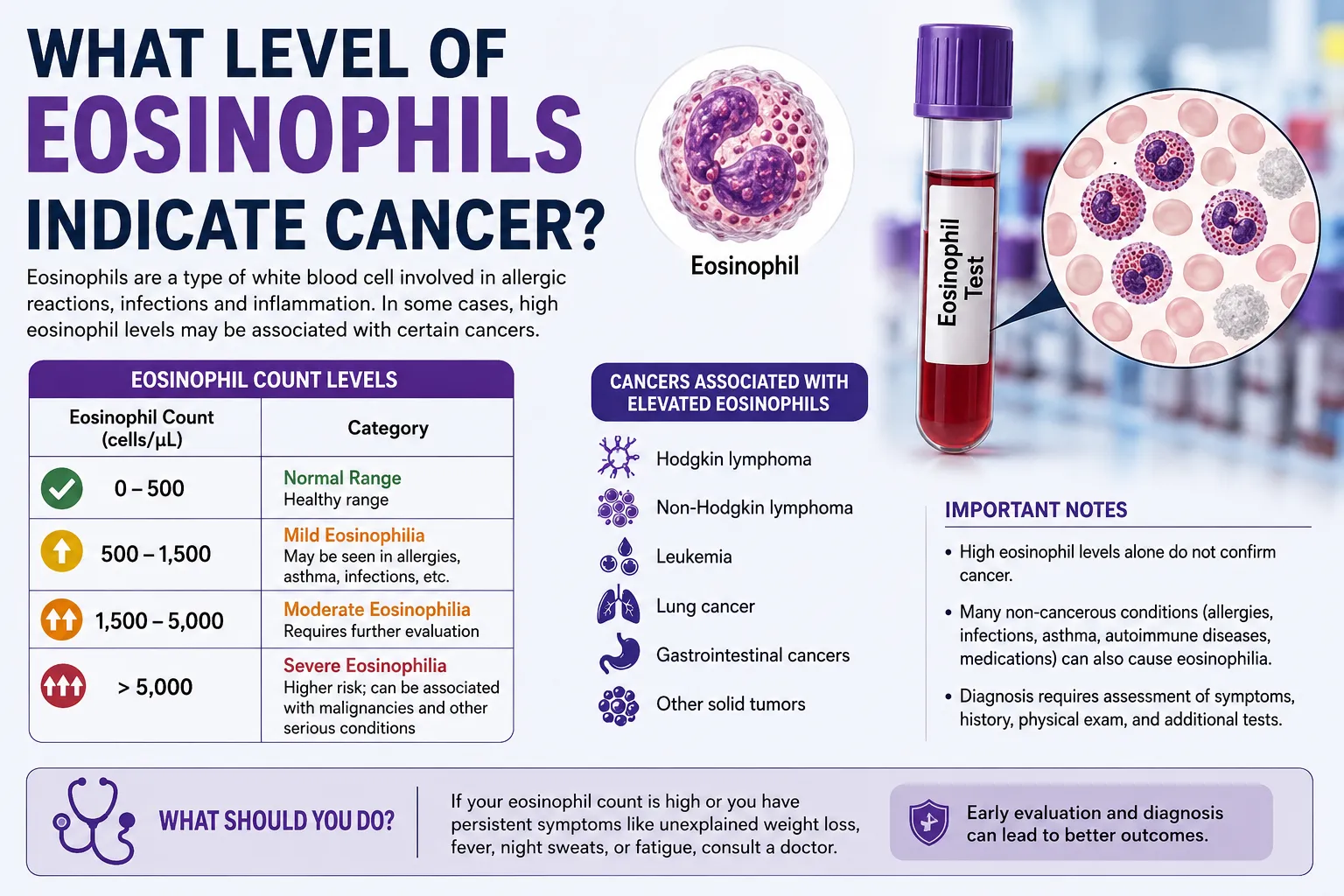

Blood tests often provide important clues about a person's overall health. Among the many components measured in a complete blood count (CBC), eosinophils are a type of white blood cell that plays a significant role in the body's immune system. They help fight parasitic infections, participate in allergic reactions, and contribute to immune responses against various diseases.
When blood test results show elevated eosinophil levels, many people become concerned and start wondering whether the increase could be related to cancer. This concern often leads to the question: What level of eosinophils indicate cancer
The answer is not straightforward. Elevated eosinophil counts alone do not confirm cancer. While certain cancers may be associated with high eosinophil levels, many non-cancerous conditions can also cause eosinophilia (an increased eosinophil count). Understanding the relationship between eosinophils and cancer requires a deeper look at normal eosinophil ranges, causes of elevation, and how doctors interpret these findings.
In this article, we will explore eosinophil levels in detail, discuss when high eosinophil counts may raise concerns about cancer, and explain the diagnostic process used by healthcare professionals.
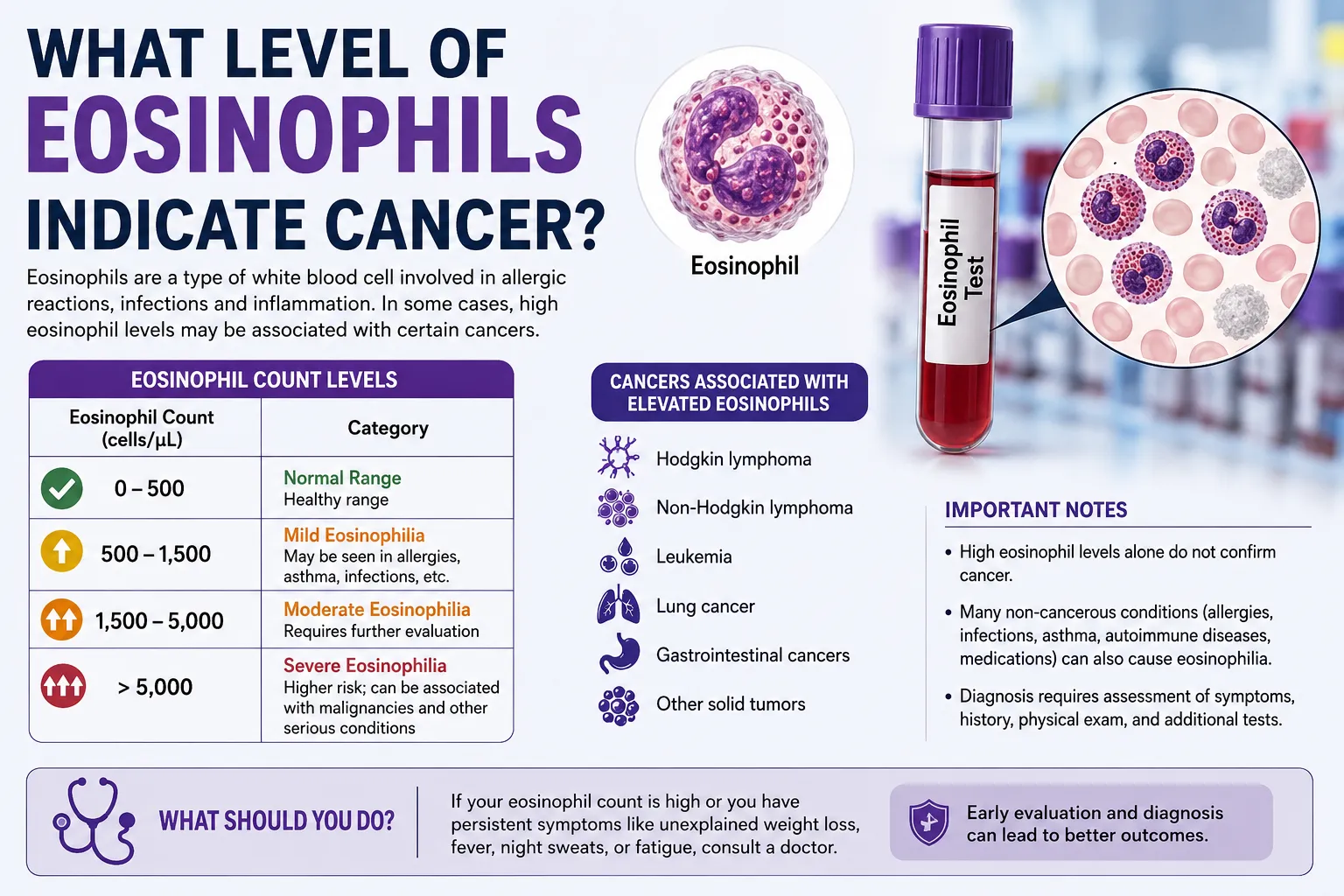
What Are Eosinophils?
Eosinophils are a subtype of white blood cells produced in the bone marrow. They are part of the immune system and help the body respond to:
- Allergic reactions
- Asthma
- Parasitic infections
- Inflammatory conditions
- Certain autoimmune disorders
Under normal circumstances, eosinophils make up a small percentage of total white blood cells. Their primary role is to release proteins and enzymes that help combat foreign invaders and regulate immune responses.
Although eosinophils are essential for health, excessively high levels can sometimes indicate an underlying medical condition that requires further investigation.
What Is a Normal Eosinophil Count?
Eosinophil levels are usually measured through a complete blood count with differential.
Normal Range
In most laboratories, the normal eosinophil count is:
- 0 to 500 eosinophils per microliter (µL) of blood
- Approximately 1% to 6% of total white blood cells
Small variations between laboratories may occur depending on testing methods and reference standards.
If eosinophil levels exceed the normal range, the condition is referred to as eosinophilia.
Classification of Eosinophilia
Doctors generally classify elevated eosinophil counts into three categories:
Mild Eosinophilia
- 500 to 1,500 eosinophils/µL
Moderate Eosinophilia
- 1,500 to 5,000 eosinophils/µL
Severe Eosinophilia
- Greater than 5,000 eosinophils/µL
The higher the eosinophil count, the more important it becomes to investigate the underlying cause. However, the severity of eosinophilia alone does not determine whether cancer is present.
Can High Eosinophil Levels Indicate Cancer?
Yes, certain cancers can be associated with elevated eosinophil levels. However, it is important to understand that eosinophilia is not a cancer-specific marker.
Most cases of elevated eosinophils are caused by non-cancerous conditions such as allergies, asthma, infections, or medication reactions.
Cancer is usually considered as a possible cause when:
- Eosinophil levels remain persistently elevated.
- No obvious allergic or infectious cause is found.
- Additional symptoms suggest an underlying malignancy.
- Other abnormal blood test findings are present.
Therefore, doctors evaluate eosinophil counts within the broader context of a patient's medical history, symptoms, and diagnostic results.
What Level of Eosinophils May Raise Suspicion for Cancer?
There is no specific eosinophil level that automatically indicates cancer.
However, persistent eosinophil counts above 1,500 eosinophils/µL, especially when no other explanation is identified, may warrant further investigation.
Doctors become increasingly concerned when:
- Eosinophil levels continue rising over time.
- Counts exceed 5,000 eosinophils/µL.
- Patients experience unexplained symptoms.
- Organ damage associated with eosinophilia develops.
- Abnormal findings appear on imaging studies or blood tests.
In these situations, healthcare providers may recommend additional testing to rule out blood cancers or solid tumors.
Cancers Commonly Associated with Eosinophilia
Several types of cancer have been linked to elevated eosinophil counts.
Hodgkin Lymphoma
Hodgkin lymphoma is one of the most well-known cancers associated with eosinophilia.
Patients may experience:
- Swollen lymph nodes
- Fever
- Night sweats
- Weight loss
- Persistent fatigue
The tumor environment can stimulate eosinophil production through the release of inflammatory substances.
Non-Hodgkin Lymphoma
Certain forms of non-Hodgkin lymphoma can also trigger elevated eosinophil counts.
Symptoms may include:
- Enlarged lymph nodes
- Abdominal discomfort
- Fever
- Fatigue
- Unexplained weight loss
Leukemia
Some blood cancers directly affect bone marrow function and can cause eosinophil abnormalities.
Examples include:
- Chronic eosinophilic leukemia
- Acute myeloid leukemia
- Certain myeloproliferative disorders
In these cases, eosinophils may increase dramatically.
Lung Cancer
Certain lung cancers may produce substances that stimulate eosinophil production.
Patients may experience:
- Persistent cough
- Chest pain
- Shortness of breath
- Coughing up blood
Gastrointestinal Cancers
Cancers involving the digestive tract may occasionally be associated with eosinophilia, particularly when tumors trigger inflammatory responses.
Other Solid Tumors
Less commonly, eosinophilia has been reported in association with:
- Cervical cancer
- Ovarian cancer
- Thyroid cancer
- Kidney cancer
- Head and neck cancers
Why Does Cancer Cause High Eosinophil Levels?
Cancer can increase eosinophil production through several mechanisms.
Cytokine Release
Tumors may release signaling molecules called cytokines that stimulate eosinophil production in the bone marrow.
Important cytokines include:
- Interleukin-5 (IL-5)
- Granulocyte-macrophage colony-stimulating factor (GM-CSF)
- Interleukin-3 (IL-3)
Immune System Activation
The body's immune response against cancer may attract eosinophils to tumor sites.
Bone Marrow Involvement
Certain blood cancers directly affect bone marrow cells, leading to abnormal eosinophil production.
These mechanisms explain why elevated eosinophil levels may occur in some cancer patients, although the finding remains non-specific.
Non-Cancerous Causes of High Eosinophil Levels
Before considering cancer, doctors usually evaluate more common causes of eosinophilia.
Allergies
Allergic conditions are among the leading causes of elevated eosinophils.
Examples include:
- Seasonal allergies
- Food allergies
- Drug allergies
- Allergic rhinitis
Asthma
Many individuals with asthma have elevated eosinophil counts, particularly eosinophilic asthma.
Parasitic Infections
Parasitic infections remain a common cause of eosinophilia worldwide.
Skin Disorders
Certain skin conditions may increase eosinophil levels.
Examples include:
- Eczema
- Atopic dermatitis
- Pemphigus
Autoimmune Diseases
Autoimmune disorders can trigger eosinophilia through chronic inflammation.
Examples include:
- Lupus
- Vasculitis
- Rheumatoid arthritis
Medication Reactions
Certain medications can cause eosinophil counts to rise.
Examples include:
- Antibiotics
- Anti-seizure medications
- Some anti-inflammatory drugs
Because these conditions are much more common than cancer, they are usually investigated first.
Symptoms That May Suggest Cancer Along With High Eosinophils
While eosinophilia alone does not indicate cancer, certain symptoms may increase concern.
These include:
- Unexplained weight loss
- Persistent fatigue
- Night sweats
- Recurrent fever
- Enlarged lymph nodes
- Persistent cough
- Blood in sputum
- Abdominal pain
- Loss of appetite
- Unexplained bleeding
If high eosinophil counts occur alongside these symptoms, further evaluation becomes essential.
How Doctors Diagnose the Cause of Elevated Eosinophils
When eosinophilia is detected, healthcare providers follow a systematic approach.
Medical History
Doctors assess:
- Allergies
- Medications
- Travel history
- Family history
- Existing medical conditions
Physical Examination
A thorough examination helps identify:
- Enlarged lymph nodes
- Skin abnormalities
- Organ enlargement
- Signs of infection
Blood Tests
Additional blood work may include:
- Repeat CBC
- Peripheral blood smear
- Inflammatory markers
- Immunological tests
- Tumor markers when indicated
Imaging Studies
Depending on symptoms, imaging may include:
- Chest X-ray
- CT scan
- PET scan
- MRI
Bone Marrow Examination
When blood cancers are suspected, a bone marrow biopsy may be necessary.
This test helps determine whether abnormal cells are producing excessive eosinophils.
Is Severe Eosinophilia Always Cancer?
No.
Even severe eosinophilia can result from non-cancerous conditions.
Some individuals develop:
Hypereosinophilic Syndrome (HES)
This rare condition involves persistent eosinophil counts above 1,500 eosinophils/µL and can cause organ damage without cancer being present.
Patients may experience:
- Heart complications
- Lung involvement
- Neurological symptoms
- Skin manifestations
Accurate diagnosis is critical because treatment depends on identifying the underlying cause.
When Should You See a Specialist?
You should consult a healthcare professional if:
- Eosinophil levels remain elevated on repeated testing.
- Symptoms persist without explanation.
- Significant weight loss occurs.
- Enlarged lymph nodes develop.
- Persistent cough or unusual bleeding is present.
Early evaluation helps identify the cause and ensures timely treatment if necessary.
For individuals seeking expert cancer evaluation and treatment, consulting the Best Oncologist in Jaipur can provide comprehensive assessment and guidance when cancer is suspected.
Treatment of Elevated Eosinophils
Treatment depends entirely on the underlying cause.
Allergy-Related Eosinophilia
Treatment may include:
- Antihistamines
- Corticosteroids
- Allergy management
Infection-Related Eosinophilia
Appropriate antiparasitic or antimicrobial therapy is prescribed.
Autoimmune Conditions
Immunosuppressive medications may be necessary.
Cancer-Related Eosinophilia
Treatment focuses on managing the cancer itself through:
- Surgery
- Chemotherapy
- Immunotherapy
- Targeted therapy
- Radiation therapy
As the underlying cancer is treated, eosinophil levels often improve.
Conclusion
The question "What level of eosinophils indicate cancer?" does not have a single definitive answer. No specific eosinophil count automatically confirms cancer. While persistent eosinophil levels above 1,500 eosinophils/µL may prompt further investigation, elevated eosinophils are much more commonly caused by allergies, infections, asthma, medications, and autoimmune disorders.
Cancer-related eosinophilia is relatively uncommon and typically occurs alongside other symptoms or abnormal findings. Healthcare professionals evaluate eosinophil counts in combination with medical history, physical examination, laboratory testing, and imaging studies to determine the true cause.
If your eosinophil count is elevated, it is important not to panic. Instead, work closely with your healthcare provider to identify the underlying reason and receive appropriate treatment. Early diagnosis and proper evaluation remain the most effective approach for maintaining long-term health and peace of mind.
Frequently Asked Questions
What are eosinophils and what role do they play in the body?
Eosinophils are a type of white blood cell produced in the bone marrow, playing a crucial role in the immune system. They help fight off parasitic infections, participate in allergic reactions, and regulate immune responses to various diseases.
What does a high eosinophil count mean?
A high eosinophil count, known as eosinophilia, can indicate various conditions, including allergic reactions, infections, or inflammation. While it may raise concerns about cancer, many non-cancerous conditions are the more common causes of elevated eosinophil levels.
Can high eosinophil levels indicate cancer?
Yes, certain cancers can be associated with elevated eosinophil levels, but eosinophilia is not a specific marker for cancer. Healthcare providers typically consider other symptoms and factors before determining if cancer might be involved.
What eosinophil count should raise concerns for cancer?
While there is no specific eosinophil level that automatically indicates cancer, counts above 1,500 eosinophils/µL, especially when persistent without other explanations, may warrant further investigation by a healthcare professional.
What are some common non-cancerous causes of elevated eosinophils?
Common non-cancerous causes of elevated eosinophils include allergies, asthma, parasitic infections, certain skin disorders, and autoimmune diseases. These conditions are typically investigated first before considering cancer.
When should I see a specialist regarding elevated eosinophils?
You should consult a healthcare professional if your eosinophil levels remain elevated on repeated tests, if you experience unexplained symptoms like significant weight loss, persistent cough, or enlarged lymph nodes. Early evaluation is key to identifying the underlying cause.
What steps do doctors take to diagnose the cause of high eosinophil levels?
Doctors typically assess a patient's medical history, conduct a physical examination, and may order additional tests such as repeat blood tests, imaging studies, or even a bone marrow biopsy if blood cancer is suspected. This thorough approach helps pinpoint the underlying cause of eosinophilia.
Is severe eosinophilia always a sign of cancer?
No, severe eosinophilia can result from non-cancerous conditions such as hypereosinophilic syndrome, which can lead to organ damage without cancer present. Accurate diagnosis is essential to determine the correct treatment.






















Sign in to leave a comment.