
Picture this. An internal complaint just landed. Before anyone officially asks a single question, a manager quietly clears out a folder of old messages "just to tidy things up." It feels harmless in the moment. It is not. That single act can shift a person from bystander to suspect in a matter of hours.
Understanding what is evidence tampering is no longer a niche legal concern reserved for courtroom dramas. It shows up in HR investigations, corporate audits, divorce proceedings, and criminal cases alike — and most people who cross the line never realize they've done it until it's too late.
Defining Evidence Tampering in Plain Terms
At its core, evidence tampering means intentionally altering, destroying, concealing, or fabricating something that could matter to an investigation or legal proceeding, with the goal of misleading the outcome.
The word "evidence" covers far more than most people assume. It isn't limited to weapons or fingerprints. It includes:
- A text message thread
- A voicemail recording
- A handwritten note
- An email exchange
- A security camera recording
If an item can tell a story about what happened, the law treats it as evidence worth protecting.
Why This Concept Deserves Everyday Attention
Most people picture evidence tampering as something cinematic — a getaway car, a burned document, a hidden weapon. In reality, the far more common version looks almost boring:
- Clearing a browser's search history before a scheduled deposition
- Deleting a group chat right after a formal complaint is filed
- "Cleaning up" a shared drive once legal counsel gets involved
None of these feel criminal in the moment. Legally, depending on intent and timing, they can carry serious consequences.
The Three Ingredients Prosecutors Must Prove
Nobody gets charged simply because a file went missing. Building a tampering case requires three elements to line up together:
- The act itself — something was physically altered, destroyed, hidden, or invented.
- Intent — the person meant to do it, specifically to influence an investigation or case.
- Materiality — the item genuinely mattered, or could reasonably have mattered, to a real legal matter.
Remove any one of these three, and the case tends to fall apart. This is exactly why intent is so heavily scrutinized in court — accidental or unrelated deletion is treated very differently from deliberate concealment.
The Four Categories of Tampering
Legal scholars and investigators typically sort tampering into four recognizable buckets:
- Destruction — shredding paperwork, breaking a device, disposing of physical evidence.
- Concealment — hiding an item, relocating it, or burying it from view.
- Alteration — editing a document, changing a timestamp, deleting digital files.
- Fabrication — planting fake evidence, writing a false statement, forging a record.
Notice that three of these four — alteration, concealment, and fabrication — happen just as easily through a keyboard as they do in a garage or storage unit. That overlap is exactly why digital behavior has become the new front line of tampering cases.
Evidence Tampering, Spoliation, Obstruction, and Witness Tampering — Not the Same Thing
These terms get used loosely online, but each has a distinct legal meaning.
| Term | Core Meaning | Typically Criminal or Civil |
| Evidence Tampering | Deliberately altering, hiding, destroying, or faking evidence | Criminal |
| Spoliation of Evidence | Losing or destroying relevant evidence, sometimes without criminal intent | Usually Civil |
| Obstruction of Justice | The broad umbrella covering any interference with legal proceedings | Criminal |
| Witness Tampering | Coercing, bribing, or threatening a witness to alter testimony | Criminal |
Think of obstruction of justice as the parent category, with evidence tampering, witness tampering, perjury, and bribery all sitting underneath it. Spoliation stands apart — it's often the civil-court cousin of the same behavior, minus the requirement to prove criminal intent.
Why Digital Tampering Is the New Frontline
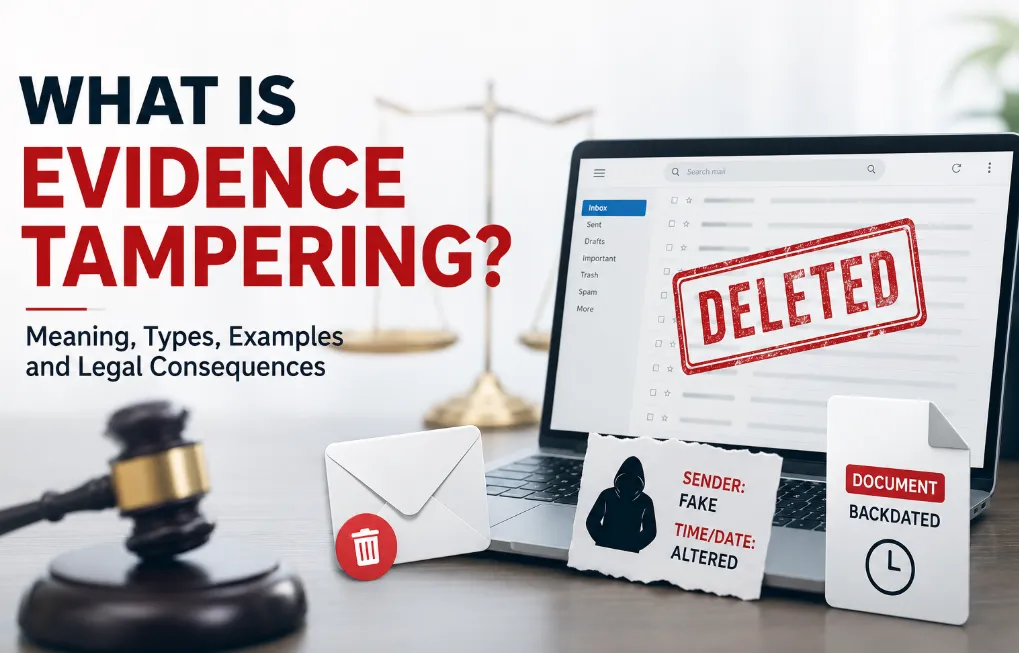
Very few tampering cases today involve a physical weapon or a dumpster. Most now happen entirely on a screen — through deleted emails, backdated documents, altered screenshots, or spoofed sender details.
The irony is that digital tampering leaves behind something physical evidence rarely could: a detailed trail.
Common Ways Digital Tampering Plays Out
- Deleted emails — a message gets removed in the belief that it's gone for good, when in reality it's often recoverable from backups or server logs.
- Forged headers — sender information gets manipulated to make a message appear as though it came from someone else entirely.
- Backdated timestamps — a document is edited, then its "created" or "modified" date is manually rolled back to hide the change.
- Doctored attachments — a PDF, spreadsheet, or image is altered after the fact and re-shared as though it were the original.
Each of these feels invisible to the person doing it in the moment. Almost none of them stay invisible once a trained investigator starts looking.
Evidence Tampering Under Indian Law
Under Indian law, this offense was historically covered by Section 201 of the Indian Penal Code, and it now continues under Section 238 of the Bharatiya Nyaya Sanhita (BNS).
The underlying principle mirrors international standards closely: knowingly making evidence of an offense disappear, or providing false information, in order to shield someone from legal consequences.
As with statutes elsewhere, intent sits at the center of the analysis. Evidence that is lost or destroyed accidentally — without knowledge that it related to an offense — generally does not meet the legal threshold for tampering.
How Investigators Actually Catch It
Here's the reassuring part: digital tampering is genuinely difficult to pull off cleanly. Deleting or editing a file doesn't erase the fact that it happened — it usually just leaves a different kind of footprint.
- Hash verification — investigators generate a unique digital fingerprint for a file the moment it's collected. If a single character inside that file changes afterward, the fingerprint no longer matches, immediately flagging tampering.
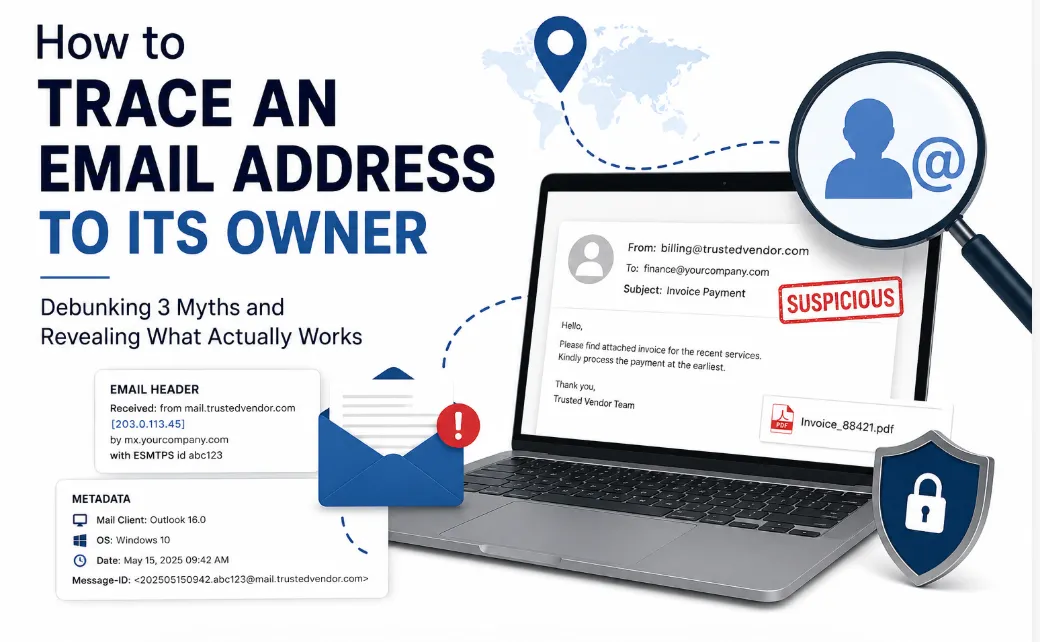
- Header and authentication analysis — routing information and cryptographic signatures on emails are examined to catch forged sender data or spoofed timestamps.
- Metadata inspection — creation dates, edit history, and device origin details act as invisible fingerprints attached to nearly every digital file.
- Deleted-item recovery — messages can often be pulled back from mailbox and archive files long after deletion, letting investigators reconstruct exactly what was removed and when.
Professionals handling these cases frequently rely on dedicated email forensics software to trace forged headers, recover deleted messages, and validate whether a file matches its original state — turning what feels like a perfect cover-up into a documented timeline.
Frequently Asked Questions
Does deleting a single email count as tampering? Only if the sender knew, or reasonably should have known, that the email could matter to an investigation — and deleted it specifically to keep it out of investigators' hands. Routine, unrelated deletion doesn't meet that bar.
Is tampering with evidence always a felony? No. It varies heavily by jurisdiction and the specifics of the case. Some regions treat it as a misdemeanor for civilians, while others classify it as a felony, and federal-level charges can carry sentences of up to 20 years.
Can accidental data loss be mistaken for tampering? It can raise suspicion, but without proof of intent to interfere with a case, accidental loss typically falls short of the legal definition of tampering — though it may still create civil liability under spoliation rules.
The Bottom Line
Evidence tampering rarely announces itself with drama. It usually looks like a quiet, seemingly reasonable decision made under stress — and that's exactly what makes it dangerous. Whether the concern is a stray email, a suspicious timestamp, or a missing message thread, the safest move is always the same: preserve first, ask questions later, and let a proper forensic review determine what actually matters.






























Sign in to leave a comment.