
There's a particular kind of pressure that comes with building a technology experience center for a major brand. Everything has to work — hardware, software, visitor flow, content — and it has to work on day one, often for an audience that includes senior executives, global media, or a head of state. The margin for error is essentially zero.
The experiences that survive this pressure share certain design DNA. Here's what that looks like, and why it produces results that slideshows and brochures never will.
Strategy 1: Make Technology Invisible
This sounds counterintuitive. But the best tech experiences are the ones where the visitor is so absorbed in what they're doing that they're not thinking about the technology making it possible. They're just having the experience.
Every technology choice must serve an experiential purpose, not a spec sheet. The question isn't "what technology can we include?" It's "what does the visitor need to feel at this moment, and what's the best way to create that?"
Sometimes the answer is a sophisticated AI avatar. Sometimes it's a simple physical object with an embedded NFC chip.
Strategy 2: Build the Emotional Arc Before the Tech Stack
The most effective experience center design processes start with a journey map that has nothing to do with technology. What does the visitor feel when they first walk in? When do they go from curious to interested? When do they go from interested to convinced? What feeling should they leave with?
Once that arc is clear, the technology choices follow naturally. IIC Lab's approach begins with brand and audience immersion — understanding what the space needs to do emotionally before deciding what it needs to do technically.
Strategy 3: Design for the Anxious Visitor
Not every person who walks in is confident with technology. Some are senior executives who haven't touched an interactive installation since a trade show years ago. Great customer experience center design creates pathways that make participation feel natural and low-stakes:
- Intuitive entry points that don't require reading instructions
- Clear visual cues that guide without condescending
- Multiple depth levels — a visitor can engage shallowly or go deep, depending on their comfort
- Graceful recovery when someone steps away mid-interaction
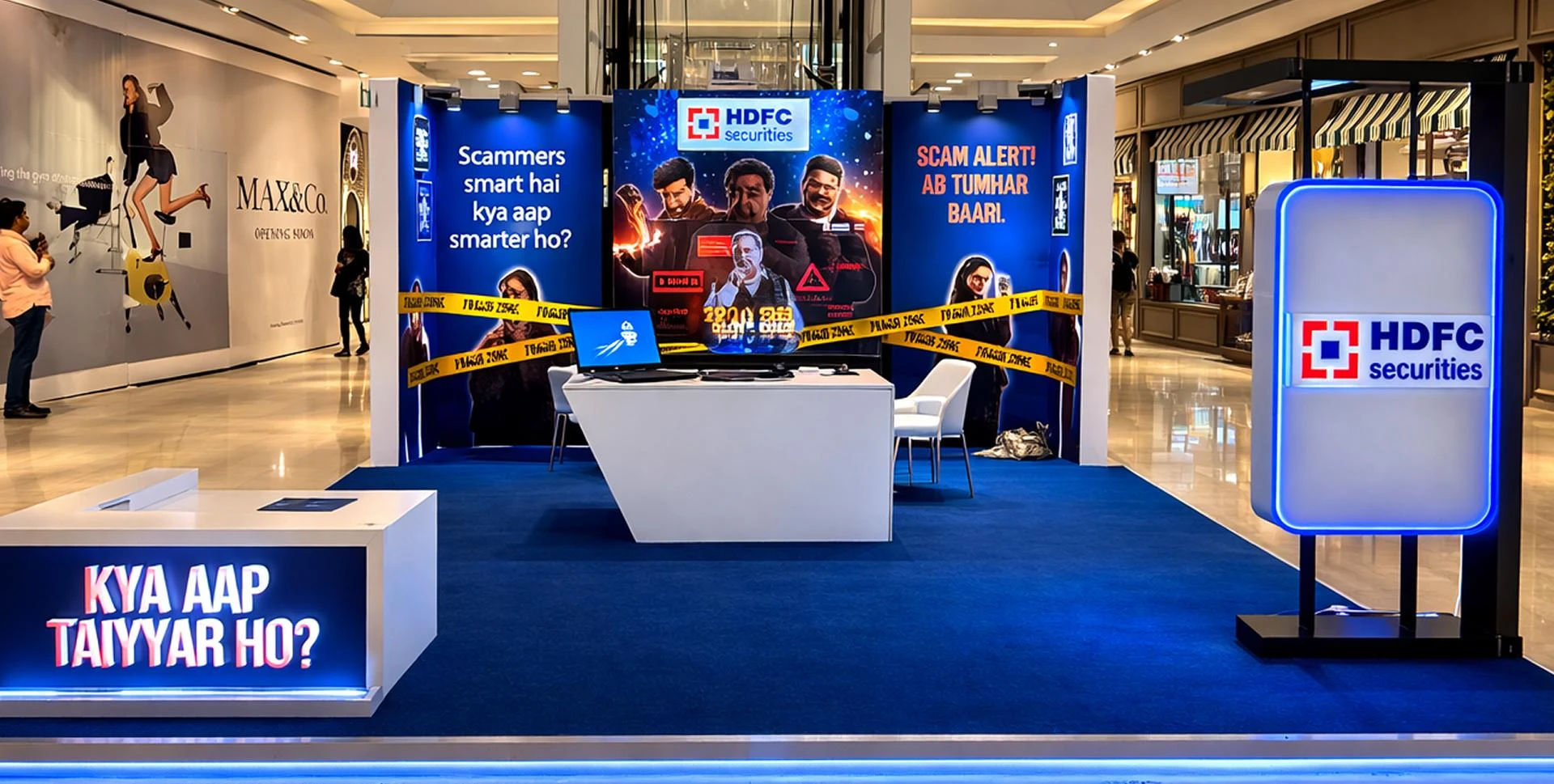
Case Study: HDFC Securities — When Technology Had to Feel Human
Financial scam awareness is not an easy brief for experiential design. But HDFC Securities wanted something that would genuinely shift how people think and behave.
IIC Lab built Outsmart the Scammer — an installation featuring a hyper-realistic MetaHuman avatar of actor Manoj Pahwa, playing the role of a financial scammer. Visitors engaged in a simulated phone call with the avatar, which used real-time AI to listen, adapt, and respond — trying to manipulate and deceive, just like a real scammer would.
The technical challenge: the pipeline had to convert speech to text, generate a contextual scammer response, synthesise it in Manoj Pahwa's voice, and animate it onto the MetaHuman character — all within 500 milliseconds. At 500ms, the conversation feels natural. At a second or more, the illusion breaks.
What it delivered:
- 2,000+ real interactions in three days
- 200,000+ impressions across footfall and content reach
- Every participant left with a personalised personality profile and reward
- 100% of sessions concluded with a digital CTA feeding directly into HDFC's online campaign
For most visitors, this was their first encounter with a real-time conversational AI avatar. The reaction wasn't "impressive technology." It was "wait — that felt real." That's the goal.
Strategy 4: Plan for the Pressure Moments
Every major installation has a high-stakes moment — a VIP visit, an inauguration, a media walkthrough. Design strategy has to account for these from the beginning.
The Jio IMC installation faced this directly. Minutes before Anant Ambani's visit, an LED panel failed. The IIC Lab team resolved it in time — but that recovery was only possible because the technical architecture had been built with contingency in mind from day one. This is the part of experience center design that doesn't make it into the brochure, but it's where the real expertise lives.
Strategy 5: Connect Physical to Digital
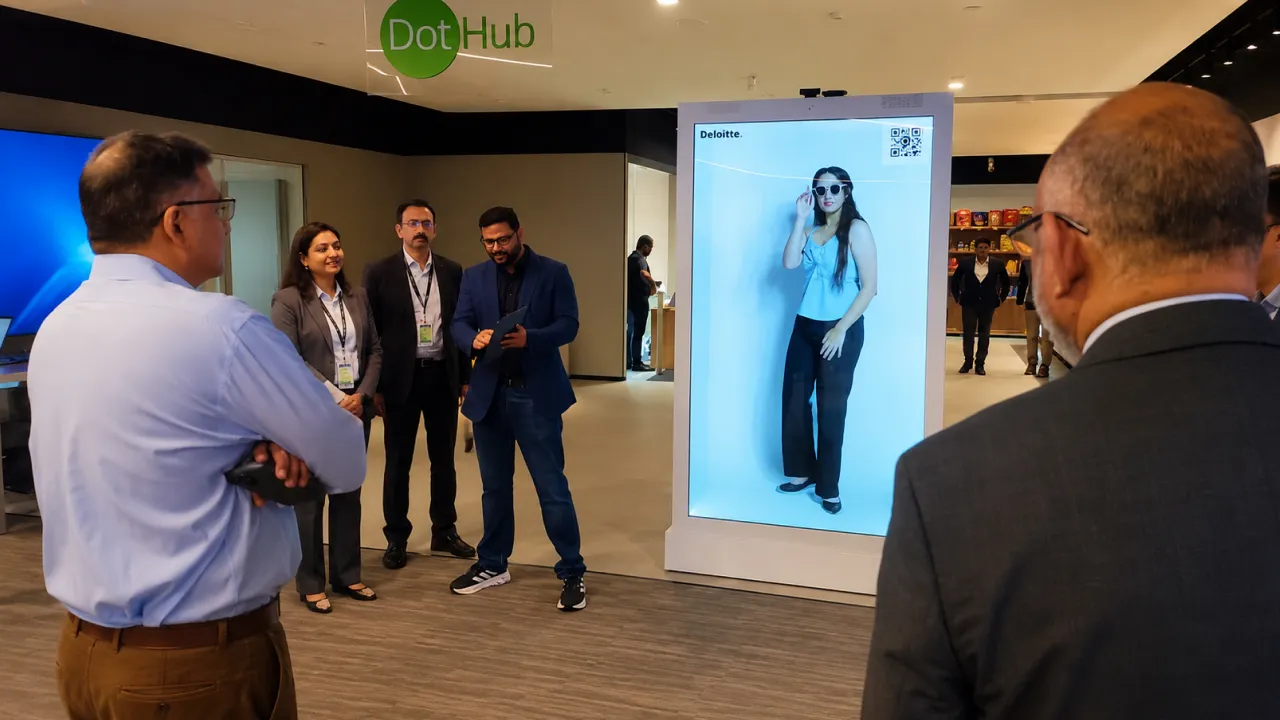
The experience shouldn't end when the visitor walks out. A well-designed technology experience center creates a digital thread — a QR code, a personalised post-visit page, a follow-up communication — that extends the experience and provides a path back into the brand relationship.
Planning a tech experience center that needs to perform under pressure? IIC Lab has done it for Deloitte, Jio, HDFC, and more. Let's talk about yours
























Sign in to leave a comment.