
You Have Three Minutes. Your Competition Has a Brochure.
Here's a scenario every marketing and sales leader knows well. A prospect enters your space. They're interested but distracted. They've seen four other brands today. They have 10 minutes if you're lucky, maybe three if you're honest.
In that window, you need to communicate what your product does, why it matters, why they should trust your brand, and why now is the right time.
A brochure cannot do that. A sales conversation is inconsistent. A standard video plays to empty rooms.
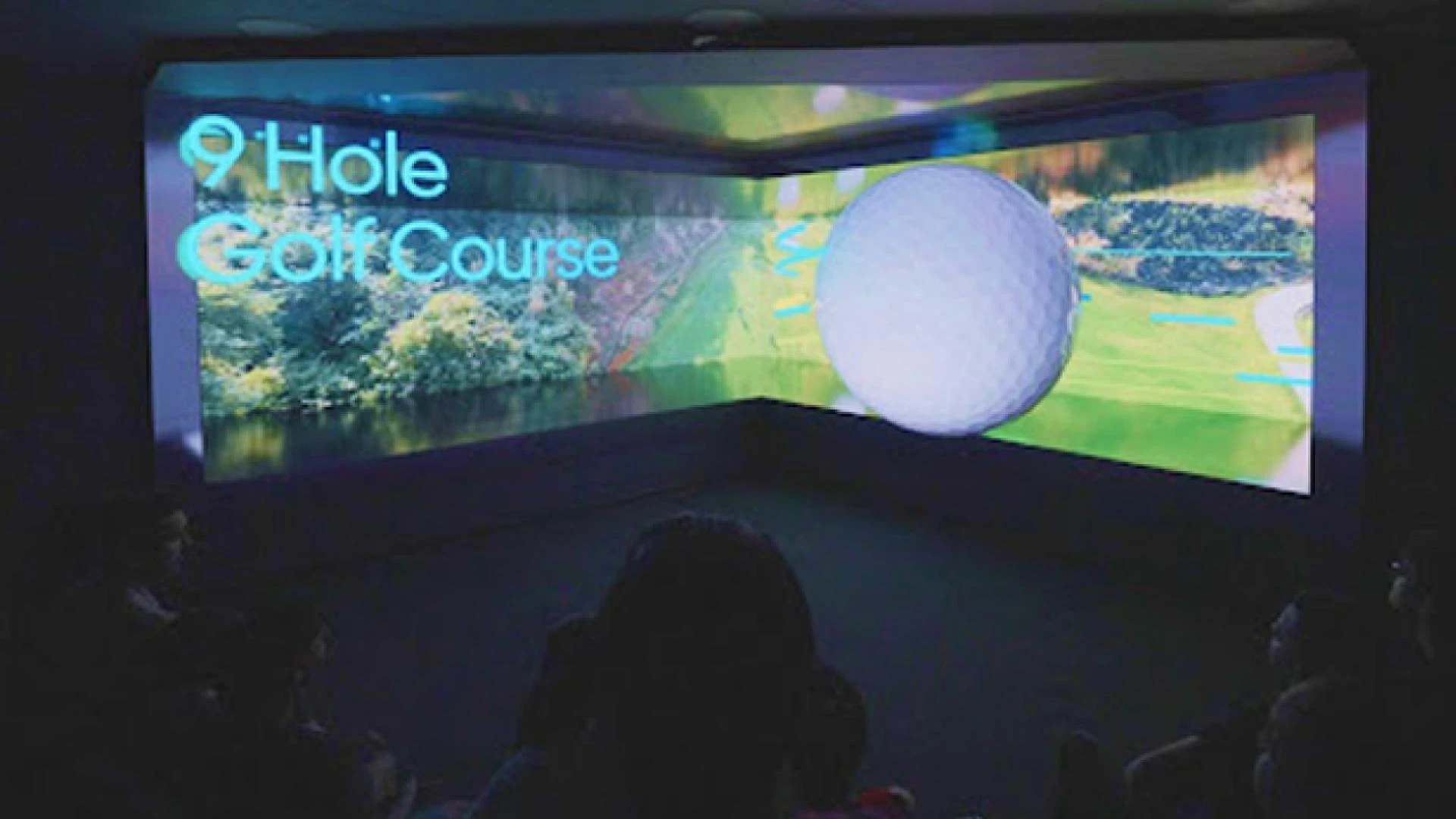
An anamorphic LED screen, built around tightly scripted 3D anamorphic content, can — and the Godrej Properties project is a precise case study in how.
The Complexity Problem in Sales Experiences
Selling a future is hard. Selling infrastructure that doesn't exist yet is harder. Doing it to a buyer who needs to make a significant financial commitment is the hardest brief in experiential marketing.
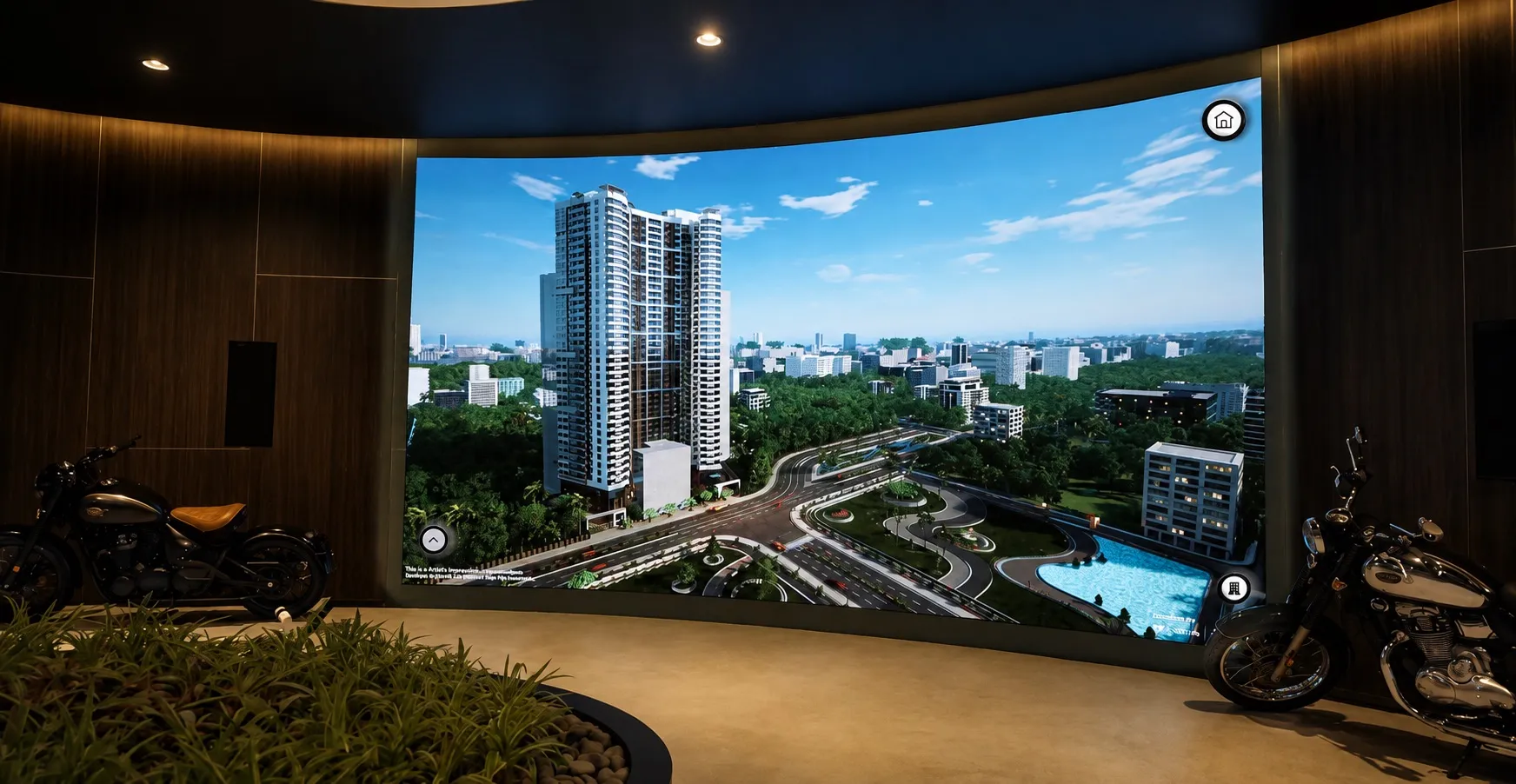
This was the exact brief Godrej handed to IIC Lab for their Panvel project. The development was tied to future infrastructure — new airports, sea links, economic hubs — none of which a buyer could physically see or touch at the time of purchase.
The challenge wasn't lack of information. The challenge was that information alone was not convincing anyone. Visitors were leaving uncertain, unable to connect what they were being told with what they could emotionally commit to.
Why 180 Seconds Is Enough — When Designed Right
IIC Lab built a 180-second immersive experience — three minutes of scripted, spatially rendered 3D anamorphic content — that transformed the sales conversion experience for Godrej. Here's why three minutes is actually sufficient when the content is engineered correctly:
Every second has a job.
The content wasn't conceived as a video. It was conceived as a sales journey. The first 30 seconds anchor the viewer in familiar geography. The next 60 seconds introduce the transformation — future infrastructure rendered in three dimensions around them. The final 90 seconds deliver the emotional payoff: life in this location, not just proximity to it.
The anamorphic format removes mental distance.
The reason complex stories are hard to tell through standard screens is that there's always a layer of abstraction — you're watching content about a thing. Anamorphic illusion collapses that distance. Viewers experience content as if the subject of the story is physically present. That's a fundamentally different cognitive state, and it's the state in which conviction forms.
Repetition without degradation.
The Godrej experience room ran 12+ hours a day and processed 5,400+ visitors per month. Every visitor — the first of the morning and the last of the evening — received the same quality of experience, the same emotional journey, the same story. No sales conversation can promise that. A well-designed anamorphic experience can.
What Makes Content Compression Work
Not every piece of content can be compressed into three minutes without losing meaning. What makes it work is the design process — and this is where most agencies get it wrong.
IIC Lab's approach to scripting for anamorphic experiences follows a discipline that most content production doesn't:
- Spatial scripting — Every visual element is designed for three-dimensional space, not a flat frame. This changes how information is sequenced and how time is used.
- Emotional arc first — The script works backwards from the desired emotional state of the viewer at the end, not forward from a list of features to communicate.
- Silence as storytelling — In a 3D anamorphic environment, some of the most powerful moments are when the content breathes — when the viewer is given space to absorb what they've just experienced.
- Exit state design — The content is designed to leave the viewer in a specific mental state — one that makes the next conversation with a sales consultant far easier to have.
The Broader Lesson for Experience Design
If you're building an experience center, a brand pavilion, a product launch environment, or any space where you need to move people from curiosity to conviction — the question of content format matters as much as the question of content strategy.
Three minutes of well-designed 3D anamorphic content can do more selling than an hour of standard AV, a stack of brochures, and three sales conversations combined.
That's not an overstatement. That's what the results from Godrej's experience room demonstrated.
If your brand has a story that needs to land in under 3 minutes, IIC Lab can build the experience that delivers it. Visit Inkincaps to start the conversation.
























Sign in to leave a comment.