Shortlisting a projection mapping company for a high-stakes brand campaign is not the same as booking a vendor for event production. The difference matters enormously — and understanding it before you start shortlisting will save you from expensive mistakes.
Automotive and FMCG brands in India face a specific set of challenges with live brand activations. The budgets are substantial. The audiences are discerning. And the margin for error at a live event, in front of a curated audience or a high-footfall public venue, is essentially zero.
So what separates the projection mapping companies worth working with from the ones that will let you down at the worst possible moment?
The Core Capability Gap
There are broadly two kinds of projection mapping companies in India. The first group does projection mapping as part of a wider audio-visual or event production offering — they have the hardware, the crew, and can execute relatively straightforward projection mapping on wall applications. For simple brand visibility or backdrop work, they're adequate.
The second group builds everything. Custom software. Custom content. Custom hardware configurations for non-standard surfaces. Real-time interactive capabilities. And critically — they approach every project from a brand strategy standpoint, not just technical execution.
For automotive and FMCG brands where brand perception is on the line, the second group is the only group that matters.
What Automotive Brands Actually Need
Car launches are among the most pressure-tested brand events in any marketing calendar. The product is complex, expensive, and emotionally loaded. Effective projection mapping for automotive campaigns needs to:
- Match the geometry of the vehicle precisely — any misalignment reads as technical incompetence on the brand's behalf
- Tell a visual story that amplifies the vehicle's specific value proposition — a family SUV and a performance sedan need completely different content treatments
- Work in the actual event environment — outdoor venues, large halls, and fashion show settings all present different projection challenges
- Perform flawlessly under live event pressure with no visible technical intervention from the crew
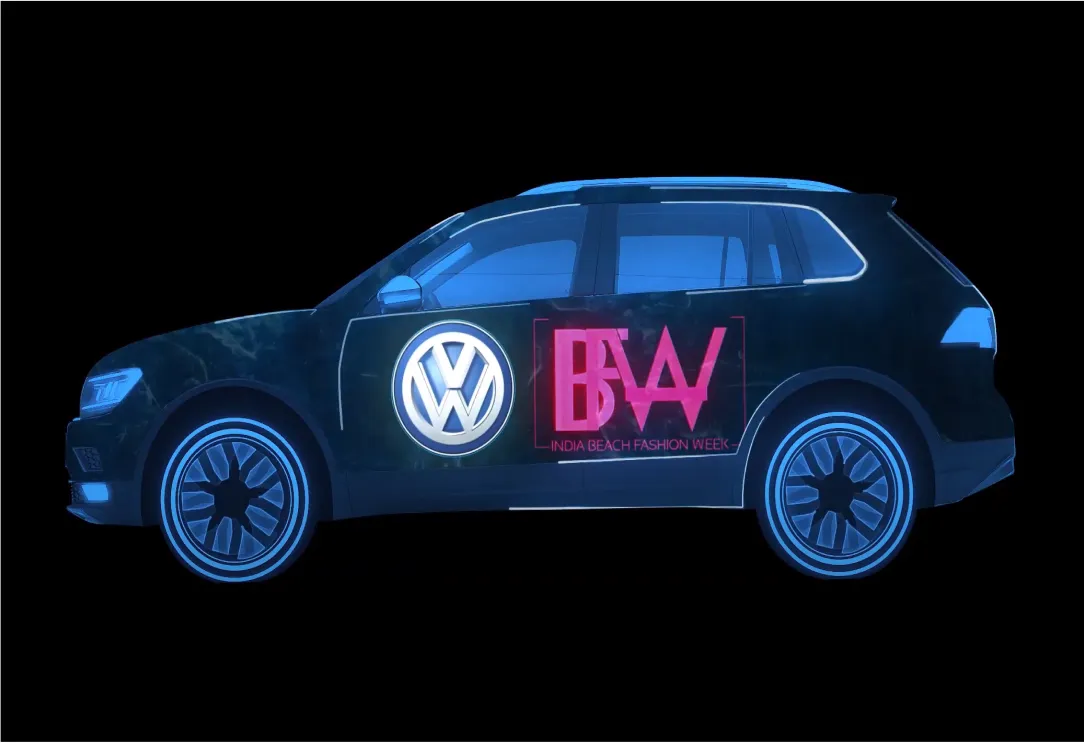
IIC Lab's work for Volkswagen at IBFW Goa demonstrates all of these in practice. The Tiguan was launching as a premium SUV at a fashion event — an audience that hadn't come specifically to see a car. The projection mapping solution had to make the car genuinely compelling to people who weren't there for it. Custom-built synchronisation software ensured that colours, animation patterns, and graphic content moved cohesively across the car's surface, turning the reveal into the fashion show's defining visual moment.
What FMCG Brands Need Differently
FMCG campaigns bring different requirements to projection mapping services. Where automotive activations are often about singular moments of drama and prestige, FMCG campaigns tend to prioritise reach, recall, and the emotional texture of how consumers feel about a product.
Key requirements for FMCG projection mapping activations:
- Scalability across multiple cities and venues without losing creative coherence
- The ability to make everyday products feel premium and worth noticing
- Integration with digital channels — AR filters, social media — to extend reach beyond the physical event
- Audience engagement mechanics that generate participation and shareable content
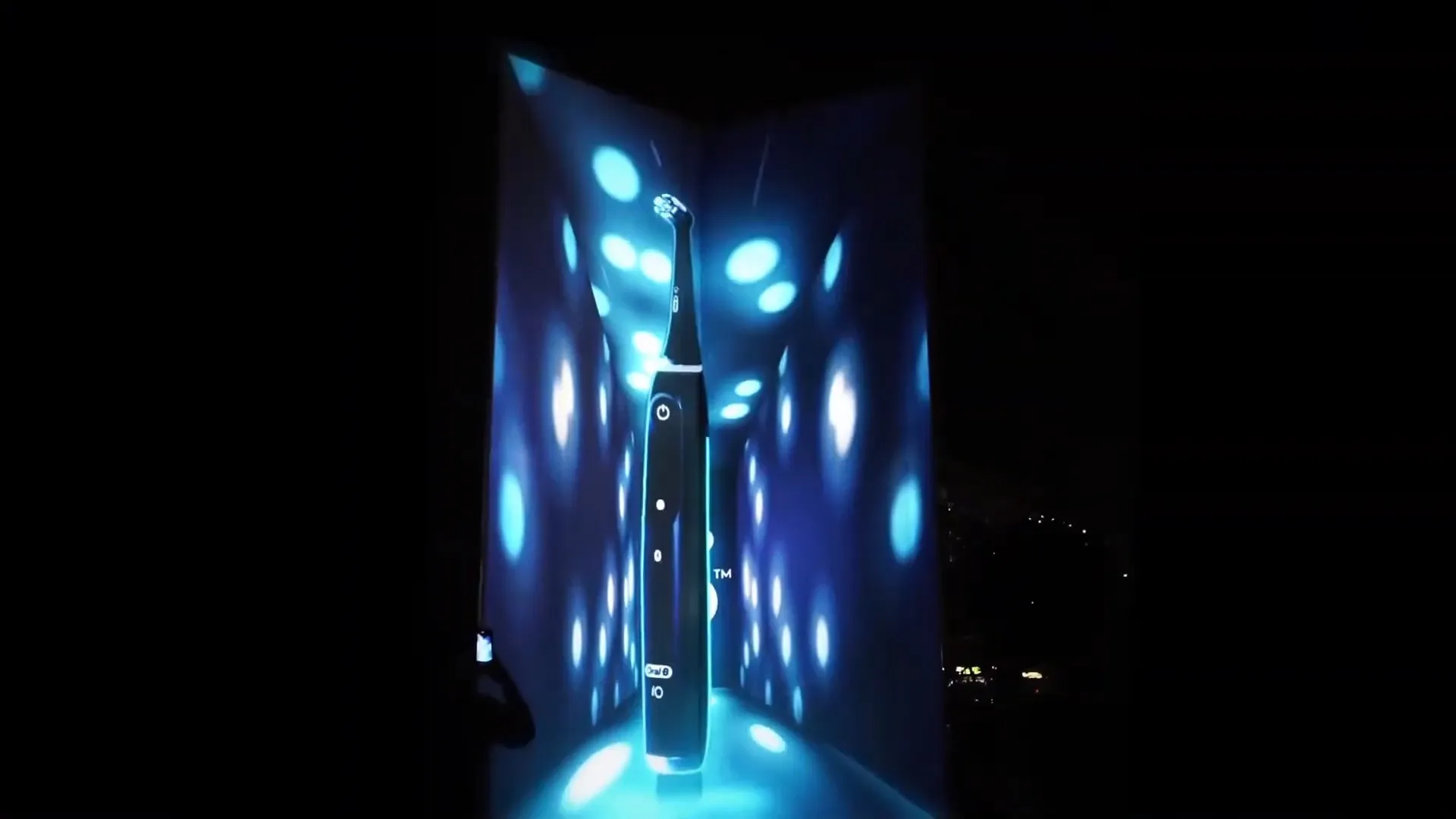
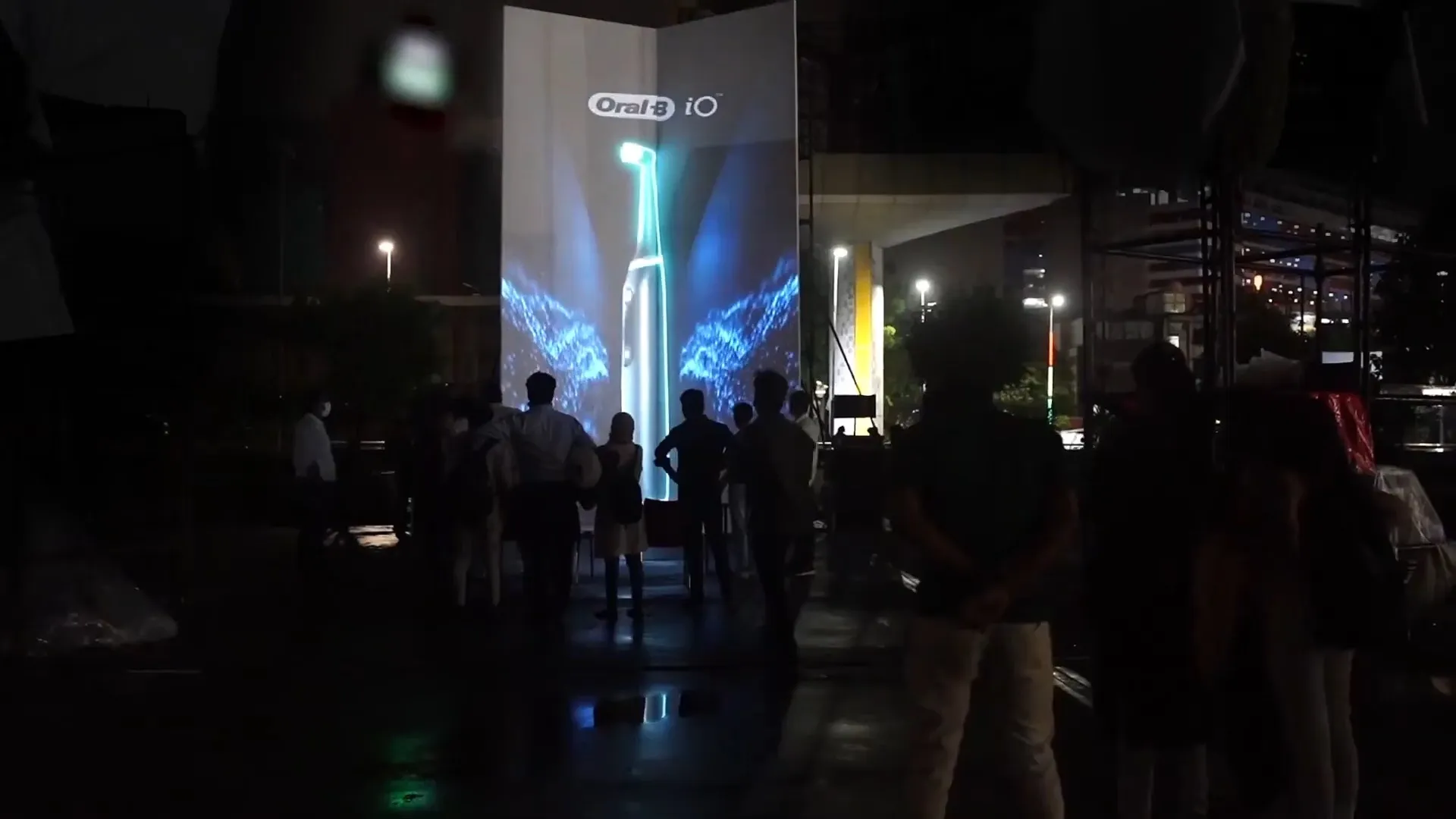
The Procter & Gamble Oral-B launch across five Indian cities is a strong example. The projection mapping solution wasn't just about one impressive evening in Gurgaon. It was a framework deployed consistently across Delhi, Jaipur, Bangalore, Mumbai, and Gurgaon — with a parallel Instagram AR filter that amplified the campaign digitally. That kind of multi-channel, multi-city thinking is what FMCG brands need from their projection mapping partner.
The Technical Criteria That Actually Matter
Software development capability is the single biggest differentiator. If a projection mapping company can only use existing software tools, they're limited to what those tools can do. Custom software development — bespoke synchronisation systems, interactive triggers, colour extraction algorithms, real-time control — unlocks the full potential of what's physically possible.
Content creation depth matters just as much. Anamorphic content has to be built with an exact understanding of the physical surface it will be projected onto. Companies that separate content creation from technical execution produce work that looks inconsistent. The best projection mapping companies treat them as a single, integrated process.
Hardware configuration experience is non-negotiable at scale. Large-surface work — a 45-foot structure, a curved vehicle surface — requires multi-projector setups with precise calibration. This is not something you want a company to learn on your campaign.
Operational reliability determines whether multi-city campaigns hold together. The technical partner needs to demonstrate that they can replicate quality consistently across different venues, different teams, and different logistical constraints.
Why Automotive and FMCG Brands Keep Coming Back to IIC Lab
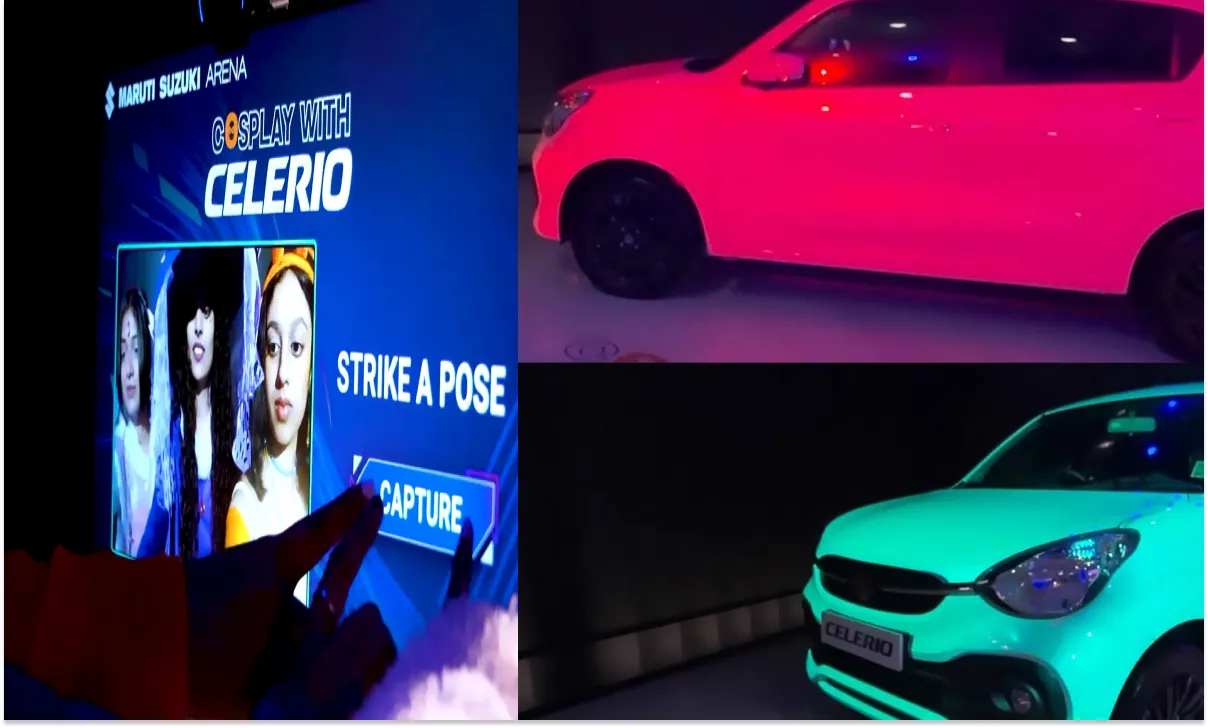
IIC Lab's portfolio spans Volkswagen, Maruti Suzuki, and Procter & Gamble — three brands with fundamentally different product categories and audience profiles, all of whom have engaged them for projection mapping solutions at significant events.
The common thread is their approach: every projection mapping brief is treated as a brand strategy problem first, and a technical execution problem second. The question isn't "what can we project?" — it's "what does this brand need to make its audience feel, and what's the best way to create that through light, surface, and technology?"
That orientation produces campaigns that feel considered rather than manufactured.
The Due Diligence Checklist
Before committing to a projection mapping company for your next campaign, ask these:
- Can you show me a projection mapping activation on a curved or irregular surface — specifically a vehicle or non-flat structure?
- Did you build the software for that activation, or were you using an existing platform?
- How do you handle technical issues during a live event?
- How many projectors did you run in parallel, and how did you handle edge blending?
- What was your role in content creation — did your team make it, or was it outsourced?
- For a multi-city campaign, how did you ensure quality consistency across venues?
The answers will tell you exactly which category of projection mapping company in India you're actually talking to.
Evaluating projection mapping partners for an upcoming campaign? IIC Lab offers full-service delivery — custom software, content creation, hardware production, and on-ground execution. Visit Inkincaps.


















Sign in to leave a comment.