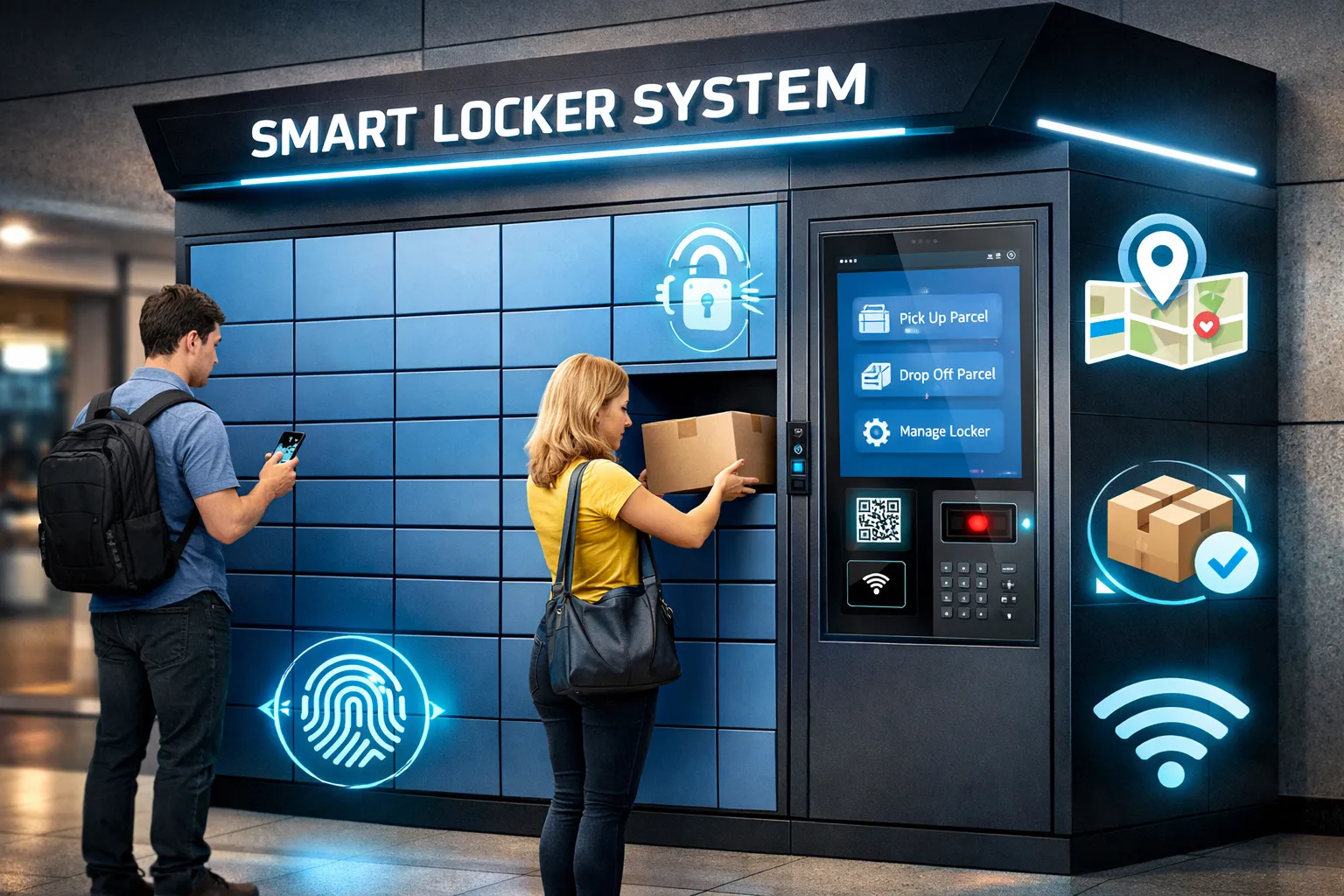

Smart Locker Systems are transforming the way UAE organisations manage asset storage, parcel handling, employee belongings, and sensitive document security across their workplaces. As the Emirates continues its rapid evolution into one of the world's most technologically advanced business environments — anchored by the UAE Vision 2031 and emirate-level smart city programmes — the era of padlocked metal cabinets and paper-based key registers is firmly over.
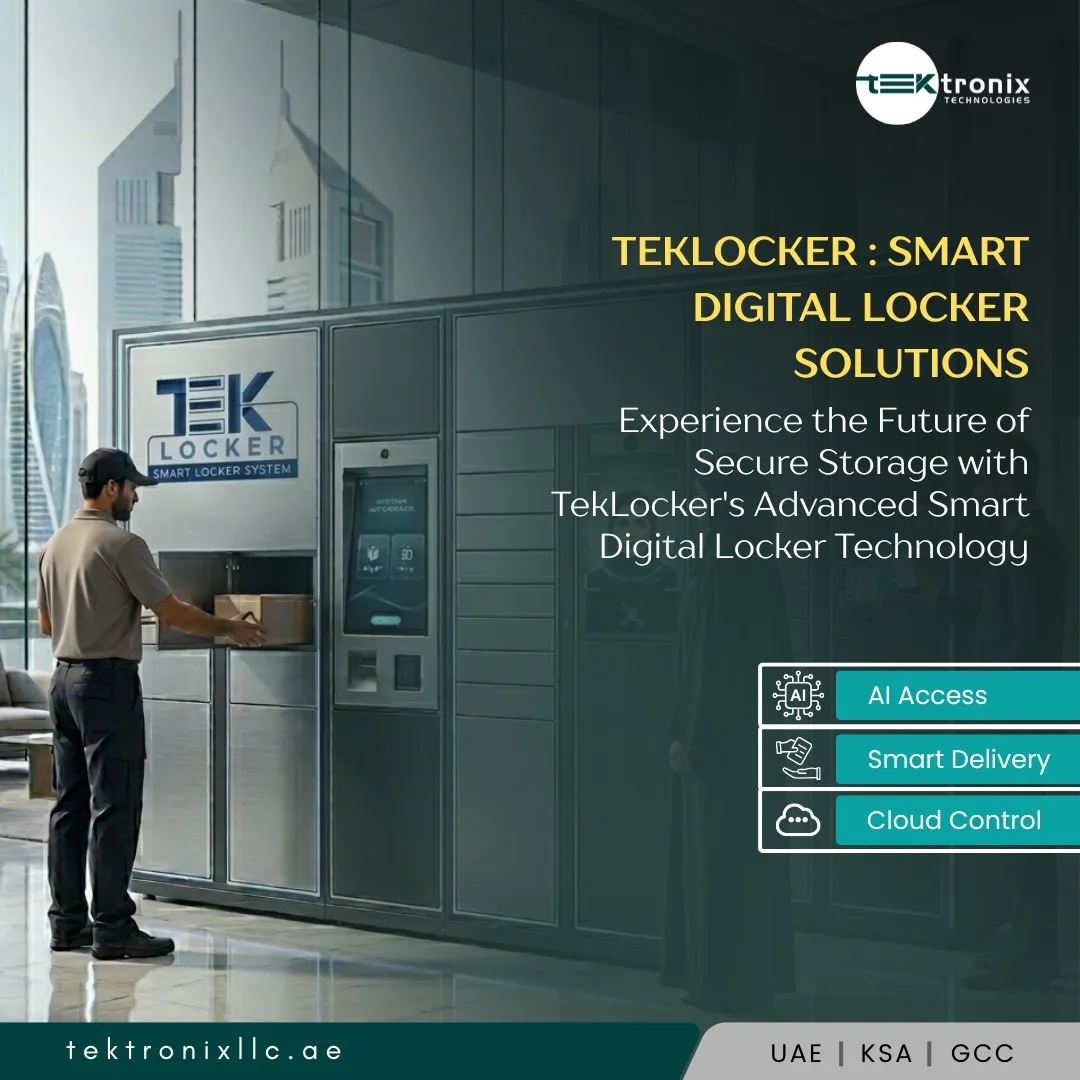
From the gleaming headquarters towers of Dubai's DIFC and Business Bay to the government ministry complexes of Abu Dhabi, from the logistics warehouses of Jebel Ali Free Zone (JAFZA) to the university campuses of Sharjah and Al Ain, forward-thinking UAE organisations are deploying intelligent locker solutions that eliminate manual processes, eliminate lost-key incidents, enforce accountability at every access point, and integrate seamlessly with the broader digital workplace ecosystem.
This comprehensive guide examines the full spectrum of smart locker technology — its core components, deployment applications, city-specific UAE context, and the practical criteria that determine which solution is right for your organisation.
1. Why Traditional Lockers Are a Workplace Liability in the UAE
Conventional locker systems — whether key-operated or combination-lock — generate a steady accumulation of operational and security problems that scale with organisational size:
- Lost keys trigger locksmith callouts, replacement hardware costs, and security re-keying exercises that consume facilities management time and budget disproportionately
- No audit trail means there is no record of who accessed which locker, when, and for how long — making theft investigations impossible to conduct with any rigour
- Static allocation wastes space: lockers permanently assigned to individuals who only use them occasionally create a chronic underutilisation problem, particularly relevant in hot-desking and hybrid working environments
- Combination code sharing is universal in practice, eliminating any meaningful security boundary between users
- Manual key management registers are administratively burdensome, prone to inaccuracy, and impossible to interrogate in real time
- No integration capability means conventional lockers exist as entirely isolated hardware with no connection to building management, access control, HR, or parcel management systems
For UAE organisations operating in competitive, compliance-conscious environments — where DIFC Data Protection Law, Abu Dhabi Global Market (ADGM) regulations, or sector-specific frameworks govern asset and data security — these vulnerabilities carry real regulatory and reputational risk. The transition to intelligent locker management is not a luxury upgrade; it is an operational and security imperative.
2. Core Technology Components: What Makes a Locker System Truly Smart
2.1 Parcel Locker System
Parcel Locker System technology addresses one of the most acute operational pain points in UAE corporate environments: the management of the ever-growing volume of e-commerce deliveries, internal mail, and sensitive documents arriving at workplace reception desks. In dense corporate towers and business parks — where a single reception team may handle hundreds of parcels daily for dozens of tenants — manual parcel management creates bottlenecks, loss risk, and privacy violations.
An intelligent parcel locker deploys a bank of compartments of variable sizes, managed by a central controller. When a courier arrives, they place the parcel in an appropriate compartment and the system immediately notifies the recipient via SMS, email, or push notification with a unique collection code. The recipient collects at their convenience — without involving reception staff, without queuing, and with a full digital chain of custody from delivery to collection.
For UAE businesses operating in multi-tenant buildings — prevalent across Business Bay, Dubai Internet City, and Abu Dhabi's Al Maryah Island — parcel locker systems provide the infrastructure for a genuinely contactless, staff-free last-mile delivery service that elevates the tenant experience and dramatically reduces reception team administrative burden.
2.2 Automated Locker System
Automated Locker System functionality extends smart locker technology beyond parcel management into the full lifecycle of employee asset and storage management. Key automation capabilities include:
- Dynamic locker allocation: the system automatically assigns an available locker to a user at the point of need — eliminating the wasted capacity of static allocation and enabling true hot-desk locker provision
- Automatic release: lockers that have been unoccupied beyond a defined period — for example, 24 hours after a temporary user's work session ends — are automatically cleared and returned to the available pool
- Automated billing and chargeback: for shared workspace operators and co-working facilities, the system automatically calculates and records locker usage for departmental chargeback or member billing
- Maintenance workflow automation: the system identifies lockers with door sensor faults, battery warnings, or access failures and automatically raises maintenance requests to the facilities management team
- Expiry notifications: users who have not collected items or returned equipment by the defined deadline receive escalating automated reminders, reducing the administrative overhead of manual follow-up
2.3 IoT Locker System
IoT Locker System architecture connects individual locker units to the internet and to each other, enabling real-time data exchange, remote diagnostics, and seamless integration with the wider smart building ecosystem. In UAE smart building environments — where Estidama Pearl certification, LEED Gold standards, and WELL Building certification are increasingly standard — IoT connectivity is the infrastructure layer that allows locker systems to contribute meaningful data to building intelligence platforms.
IoT-enabled locker benefits for UAE facility managers include:
- Real-time occupancy dashboard: instant visibility of which lockers are occupied, by whom, and since when — accessible via browser or mobile app from anywhere
- Predictive maintenance alerts: sensor data identifying door mechanism wear, electronic lock degradation, or environmental conditions before they cause failure
- Energy optimisation: intelligent lighting and climate management within locker bays triggered by occupancy sensor data
- Remote lock and unlock: facilities managers can release any locker remotely — essential for emergency access situations or when users forget their credentials
- Geo-fenced access rules: time-based and location-aware access policies that restrict locker use to approved hours and locations
2.4 RFID Locker System
RFID Locker System technology uses radio-frequency identification to authenticate users and manage locker access without physical contact or memorised codes. RFID-based lockers accept access via:
- Employee ID smart cards — enabling locker access to be controlled by the same credential already used for building access control, eliminating the need for separate locker keys or codes
- NFC-enabled smartphones — allowing employees to use their mobile device as a locker credential via tap-to-open functionality
- Wearable RFID tokens — particularly relevant in healthcare, hospitality, and industrial environments where carrying a physical card is impractical
For UAE organisations that have already deployed RFID-based access control systems — the standard in DIFC, ADGM, and major corporate campuses — RFID locker integration enables a single-credential model across the entire premises. A staff member's existing access badge authenticates them at the building entrance, the car park barrier, the office floor reader, and their locker — a genuinely unified identity experience that simplifies administration and strengthens audit trail integrity..
3. Cloud-Based Locker Management: The Intelligence Layer
Cloud-Based Locker Management platforms are the operational brain of a modern smart locker deployment. Moving locker management from on-premise controllers to the cloud unlocks a suite of capabilities that would be impossible or prohibitively expensive to deliver through traditional hardware-centric architectures:
- Multi-site centralisation: organisations operating across multiple UAE locations — a corporate group with offices in Dubai, Abu Dhabi, and Sharjah — manage all locker assets from a single cloud platform with unified reporting and consistent policy enforcement
- Instant firmware and policy updates: security policies, access rules, and system configurations are updated across all connected lockers simultaneously from the cloud — no technician visits required
- Scalable capacity management: cloud architecture scales to support tens of thousands of lockers and users without hardware infrastructure investment
- Disaster recovery and data resilience: access logs, user data, and configuration stored in the cloud are protected against hardware failure at individual locker units
- API ecosystem integration: cloud platforms expose REST APIs enabling seamless integration with HR systems, active directory, building management systems, parcel courier platforms, and corporate communication tools
- Mobile-first management: facilities managers and security administrators manage the entire locker estate from a smartphone app — checking occupancy, releasing lockers, pulling audit reports, and managing user permissions without returning to a fixed workstation
UAE data sovereignty requirements — under the Telecommunications and Digital Government Regulatory Authority (TDRA) data localisation framework and sector-specific regulations — are increasingly mandating that cloud services used by UAE organisations maintain data within UAE-jurisdiction data centres. Tektronix LLC's cloud locker management platform complies with UAE data residency requirements, ensuring full regulatory alignment for government, healthcare, and financial sector clients.
4. Locker Management Software: Features That Drive Operational Excellence
Locker Management Software is the administrative interface through which facilities managers, security teams, HR departments, and end users interact with the smart locker ecosystem. Best-in-class locker management software for UAE corporate environments delivers:
User Administration and Provisioning
Bi-directional integration with Active Directory and HR information systems ensures that locker access entitlements are automatically provisioned when an employee joins and revoked when they leave — eliminating the orphaned-access vulnerability that is a known security risk in organisations with high staff turnover. In UAE free zones and corporate campuses with large contingent workforces, automated provisioning and de-provisioning is a material security control.
Audit Trail and Access Reporting
Every locker access event — successful authentication, failed attempt, remote release, forced-open alert — is logged with a timestamp and user identifier, creating an immutable audit trail. For UAE financial institutions regulated by the Central Bank of the UAE (CBUAE) or the Securities and Commodities Authority (SCA), this audit trail is a compliance deliverable. For legal and HR teams managing internal investigations, it is the evidentiary foundation that manual key registers simply cannot provide.
Space Utilisation Analytics
Utilisation dashboards reveal which lockers are in high demand, which zones are consistently underused, and how usage patterns vary by day, time, and department. For UAE facilities managers facing pressure to optimise expensive floor plate — where commercial rental rates in DIFC, Downtown Dubai, and Al Maryah Island are among the highest globally — locker utilisation data provides the evidence base for consolidation decisions that directly reduce cost.
Reservation and Pre-Booking
Reservation functionality enables employees to pre-book a locker in advance of their office attendance day — particularly valuable in hybrid working environments where locker demand fluctuates significantly. Integration with desk booking platforms creates a unified workspace reservation experience: an employee booking a hot desk for Tuesday also reserves a locker for that day, arriving to a workspace that is fully prepared for their use.
Multi-Language Interface
Arabic and English language support across both the locker touchscreen interface and the management software is essential for UAE workplace environments. With approximately 89% of the UAE resident population being expatriates representing over 200 nationalities, interface language flexibility — extending to additional languages including Hindi, Tagalog, and Urdu — ensures universal usability across the diverse UAE workforce.
5. Smart Locker Systems UAE: National Deployment Context and Drivers
Smart Locker Systems UAE-wide adoption is being accelerated by several converging national trends that make the timing of investment particularly compelling:
- Hybrid working normalisation: the post-pandemic normalisation of hybrid working models across UAE organisations has eliminated the logic of fixed personal locker allocation, driving demand for dynamic, software-managed hot-locker solutions
- E-commerce volume growth: the UAE e-commerce market — projected by Statista to exceed USD 8 billion by 2025 — generates enormous corporate parcel volumes that overwhelm traditional reception management, creating urgent demand for automated parcel locker infrastructure
- Smart building mandates: UAE building regulations and real estate development standards — including Estidama Pearl Building Rating System and Dubai's Al Sa'fat Green Building System — increasingly specify intelligent asset management as a building feature, with locker systems counted as smart building infrastructure
- Free zone regulatory modernisation: JAFZA, Dubai Multi Commodities Centre (DMCC), Abu Dhabi Airports Free Zone (ADAFZ), and other major UAE free zone authorities are updating facility standards to include digital asset management capabilities for tenant organisations
- UAE PDPL compliance: the Federal Personal Data Protection Law imposes accountability requirements on organisations that handle employee and visitor personal data — requirements that digitised locker access management fulfils far more effectively than paper-based key registers
6. Smart Locker Systems Dubai: Smart City Integration at Scale
Smart Locker Systems Dubai deployments are being shaped by the emirate's position as a global smart city leader. Dubai's Smart Dubai strategy, the Dubai Paperless Strategy, and the Dubai 10X programme have created institutional momentum towards digital, contactless, data-driven facility management across both public and private sector environments.
High-priority Dubai deployment environments include:
- Corporate headquarters and co-working facilities in DIFC, Business Bay, Dubai Internet City (DIC), and Dubai Design District (d3) — where premium tenant experience and smart building certification drive locker technology adoption
- Retail and hospitality venues across The Dubai Mall, Mall of the Emirates, City Walk, and luxury hotel properties — where secure, branded locker solutions enhance the guest and shopper experience
- Healthcare facilities under Dubai Health Authority (DHA) regulation — where secure storage of personal protective equipment, medication, and employee valuables requires auditable, access-controlled locker management
- Government service centres and Dubai municipality facilities — where digital locker systems align with the Dubai Paperless Strategy and support contactless, efficient public service delivery
- Dubai International Airport (DXB) and Dubai World Central (Al Maktoum Airport) — where traveller storage lockers integrated with digital payment and facial recognition authentication represent the next generation of airport locker infrastructure
- Educational institutions across Knowledge and Human Development Authority (KHDA)-regulated schools and universities — where student locker management at scale benefits enormously from software-driven dynamic allocation
Tektronix LLC's Dubai project team brings deep knowledge of Dubai's smart building ecosystem, free zone tenant requirements, and DHA regulatory framework to every smart locker system deployment across the emirate.
7. Smart Locker Systems Abu Dhabi: Capital-Grade Workplace Security
Smart Locker Systems Abu Dhabi requirements reflect the capital's character as the seat of UAE federal government, home to the nation's most significant sovereign wealth institutions, and host to a rapidly growing private sector anchored by ADGM's international financial centre.
Abu Dhabi's smart locker market is driven by:
- Government and semi-government entities: Abu Dhabi's extensive network of federal and emirate-level government organisations — including those under the Department of Government Enablement (DGE) smart transformation programme — are mandating digital asset and storage management as part of broader workplace modernisation initiatives
- ADNOC and energy sector facilities: the Sultanate's energy infrastructure organisations require robust asset locker solutions for the management of specialised tools, personal protective equipment, and sensitive documentation across large industrial campuses
- ADGM financial centre: financial institutions regulated by the Financial Services Regulatory Authority (FSRA) within ADGM require locker management systems that produce the access audit trails and data security controls consistent with international financial sector compliance standards
- Zayed City and emerging smart districts: Abu Dhabi's new urban developments — including Zayed City, Yas Island's expanding commercial quarter, and Saadiyat Island's cultural district — are specifying smart locker infrastructure as a foundational element of their building management systems
- Healthcare network expansion: SEHA's growing hospital and clinic network, alongside major private health groups such as Mubadala Health and Burjeel Holdings, requires scalable locker management supporting both patient-facing and staff-facing storage across multiple facilities
Expedite Tektronix LLC's Abu Dhabi team has extensive experience navigating the emirate's government procurement processes, DOH compliance requirements, and DGE digital transformation standards — ensuring that every Abu Dhabi locker deployment is delivered on time, on scope, and fully aligned with capital-grade governance expectations.
8. Application Scenarios: Where Smart Lockers Deliver the Greatest Impact
Corporate Offices and Hybrid Workplaces
The shift to activity-based working and hybrid attendance models — prevalent across UAE multinational headquarters and professional services firms — has created a direct need for dynamic locker allocation. Employees who attend the office two or three days per week do not need a permanently assigned locker; they need a system that provides a secure, available locker on demand. Hot-locker systems driven by smart locker software eliminate wasted storage space while providing a superior employee experience.
Logistics, Warehousing, and Manufacturing
UAE logistics hubs — from JAFZA and Dubai South to KIZAD (Khalifa Industrial Zone Abu Dhabi) — employ large shift workforces who require secure personal storage for valuables and PPE. IoT-enabled locker systems integrated with workforce management platforms ensure that locker allocation aligns automatically with shift schedules, eliminating the manual key-handover processes that slow shift changeover and create accountability gaps.
Retail and Hospitality
Luxury retail environments across Dubai and Abu Dhabi's premium malls, and five-star hospitality properties on Palm Jumeirah, Yas Island, and Saadiyat Island, deploy smart locker solutions both for staff back-of-house storage and customer-facing uses — including secure personal storage for shopping guests, luggage holding for hotel day-use facilities, and click-and-collect order collection points.
Healthcare Facilities
Hospital environments present unique locker management requirements: clinical staff need secure, accessible storage for personal belongings in high-security areas; medication and controlled equipment storage demands full audit trails; and patient-facing locker facilities in waiting areas and outpatient departments require contactless, hygienic access. Smart locker solutions purpose-designed for healthcare environments address all of these needs within a single, centrally managed platform.
9. Why UAE Organisations Choose Tektronix LLC
Tektronix LLC brings verifiable expertise, demonstrated regional authority, and a proven track record of reliable delivery to every smart locker project across the UAE:
- UAE-headquartered specialist in physical security and smart facility solutions, with active project presence across Dubai, Abu Dhabi, Sharjah, Ajman, and the Northern Emirates
- Certified engineering team with formal qualifications in IoT systems integration, access control, and smart building technology
- Proven deployments across corporate, government, healthcare, education, logistics, and hospitality sectors throughout the UAE
- Technology partnerships with globally recognised smart locker hardware and software manufacturers, with UAE-market localisation expertise including Arabic interface support and UAE data residency compliance
- Comprehensive service delivery: from initial needs assessment and site survey through system design, hardware supply, installation, software configuration, user training, and ongoing managed support
- Dedicated post-commissioning support including preventive maintenance contracts, remote monitoring, firmware update management, and rapid-response engineering attendance across all UAE emirates
Conclusion
The UAE workplace is smarter, more connected, and more security-conscious than ever before — and the storage infrastructure that serves it must match that ambition. Smart locker System deliver the automated accountability, operational efficiency, and seamless digital integration that modern UAE organisations demand. Whether the priority is managing the growing volume of e-commerce deliveries through a parcel locker system, providing dynamic storage for a hybrid workforce through an automated locker system, connecting asset management to the building's IoT ecosystem, authenticating users with RFID locker credentials, managing the entire locker estate through a cloud-based locker management platform, or extracting actionable insights from locker management software — the business case is clear and the technology is proven.
From the towering corporate campuses of Dubai to the government and energy complexes of Abu Dhabi, Tektronix LLC has the expertise, the technology partnerships, and the regional track record to deliver smart locker solutions that upgrade workplace security, eliminate administrative overhead, and position your organisation at the leading edge of UAE smart building excellence.
FAQs
Q1: How does a smart locker system differ from a standard electronic locker for UAE office environments?
A standard electronic locker replaces a physical key with a PIN code or basic card reader but provides no connectivity, no management software, no audit trail, and no integration with other building systems. A smart locker system connects each locker unit to a central cloud or on-premise management platform via IoT connectivity, enabling real-time occupancy monitoring, dynamic allocation, comprehensive access logging, remote administration, and seamless integration with HR, access control, and building management systems. For UAE organisations where space optimisation, audit compliance, and digital workplace integration are priorities — which describes the overwhelming majority of corporate environments in Dubai and Abu Dhabi — the difference between a standard electronic locker and a genuine smart locker system is the difference between a tactical hardware purchase and a strategic operational upgrade.
Q2: Can a parcel locker system integrate with major UAE courier and e-commerce platforms?
Parcel locker system platforms are designed with open API architectures that support integration with major UAE courier operators — including Aramex, DHL Express UAE, Emirates Post, and Fetchr — as well as e-commerce platforms and corporate mail management systems. Integration enables couriers to receive automated locker access codes upon delivery assignment, place parcels without interacting with reception staff, and trigger immediate recipient notification upon drop-off. For UAE corporate buildings receiving high parcel volumes — particularly prevalent in Business Bay and DIFC tower environments — this integration eliminates reception desk bottlenecks and provides a fully digital chain of custody from courier handoff to employee collection.
Q3: What happens if an employee forgets their RFID card or mobile credential at an RFID locker system in a UAE office?
An RFID locker system deployed by Tektronix LLC incorporates multiple contingency access methods to handle credential loss or unavailability. Facilities managers or security administrators can remotely release any locker via the cloud management dashboard or mobile app — immediately and without requiring a physical site visit. Most deployments also incorporate a secondary authentication option — typically a secure PIN code assigned to the user — that serves as a backup credential. For environments where even, temporary loss of access would be disruptive, proximity-based mobile NFC access provides an additional failover, allowing employees to use their registered smartphone to access their locker even if they have left their access card at home.
Q4: How does cloud-based locker management handle data privacy obligations under UAE's Federal Personal Data Protection Law?
Cloud-based locker management platforms deployed by Tektronix LLC are configured for full UAE PDPL compliance. This includes: explicit consent capture at the point of user registration for the collection and processing of personal access data; role-based access controls ensuring that locker usage data is accessible only to authorised administrators; configurable automatic data purge policies that delete access logs after defined retention periods aligned with organisational data governance frameworks; data residency within UAE-jurisdiction cloud infrastructure to satisfy TDRA localisation requirements; and full audit logging of all administrative access to the management platform itself, supporting accountability at both the user and administrator levels.
Q5: What is the typical deployment timeline and ROI timeframe for a smart locker system across a mid-sized UAE corporate office?
For a mid-sized UAE corporate office deploying locker management software and hardware across 100 to 300 locker units, the typical deployment timeline runs from 3 to 8 weeks: initial site assessment and system design (1–2 weeks), hardware procurement and pre-configuration (1–3 weeks), installation and software integration (1–2 weeks), and user training and go-live support (1 week). Return on investment is typically achieved within 12 to 24 months through a combination of eliminated locksmith and key replacement costs, reduced reception team administrative burden (often 2–4 hours per day in high-parcel-volume environments), space consolidation savings from dynamic allocation replacing static assignment, and reduced liability exposure from the elimination of unauditable storage access. Tektronix LLC provides a detailed ROI projection as part of every pre-deployment consultation.
























Sign in to leave a comment.