

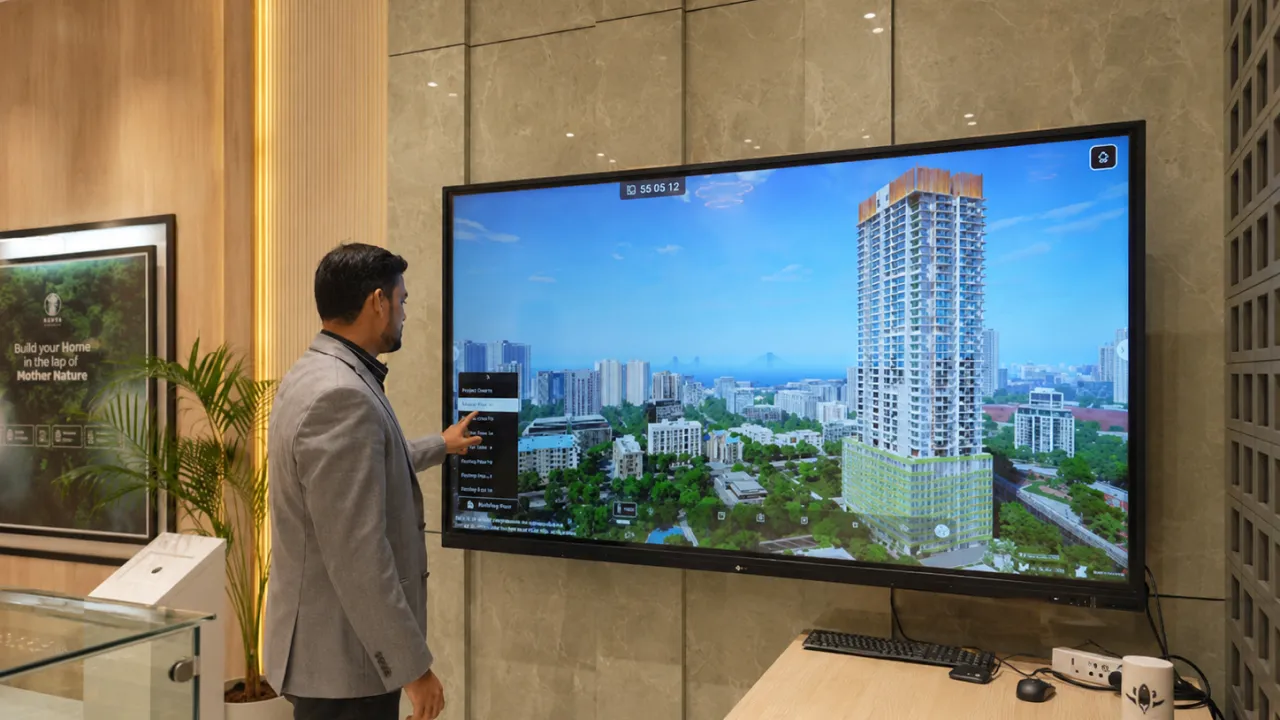
Selling an under-construction project is, at its core, an act of asking someone to trust a future. The building is not there. The lobby they will walk through every morning is a rendered image. The view they were shown is a photographer's estimate. And yet, you are asking a buyer to sign a cheque — sometimes for more than a decade's worth of savings.
That is not a small ask. And for most developers, the experience centre development process is where that trust either gets built — or quietly falls apart.
The Honest Challenge of Selling What Does Not Exist Yet
Under-construction projects carry an inherent credibility gap. A buyer's imagination can be generous or cautious depending on how well you have guided it. If the experience you offer at your sales gallery does not bridge the gap between drawings and reality convincingly, buyers default to caution.
That caution shows up in predictable ways:
- "We want to see a sample flat first."
- "Can we visit once the structure is up?"
- "We'll decide closer to possession."
Each of these responses represents a delayed sale, a slower collection, and a longer launch cycle — all consequences of a buyer who cannot yet see what they are buying.
Experience Centre Development That Closes the Visibility Gap
The solution is not always to build a sample flat. The solution is to create a sales environment where what the buyer cannot see on the construction site, they can fully experience inside your gallery.
This is what experience centre development with the right proptech looks like in practice:
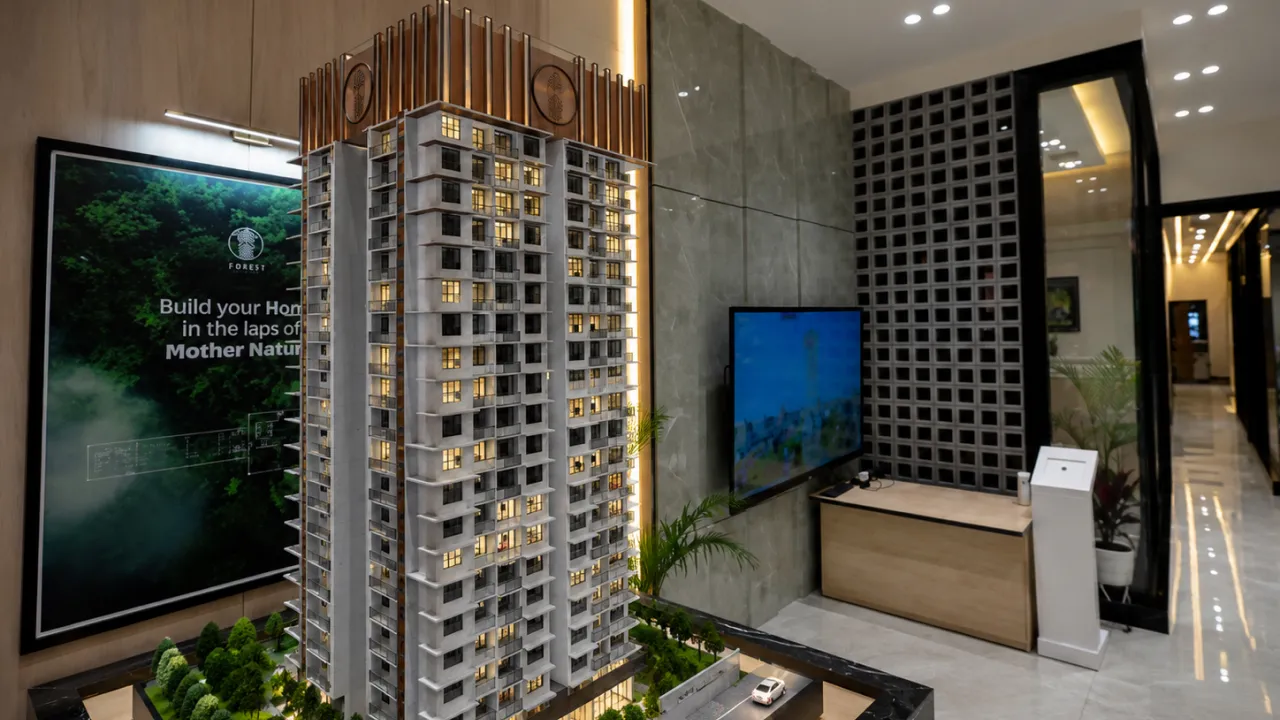
- Projection mapping on scale models. A physical scale model lit with dynamic projection content communicates far more than the model alone. Buyers see floor highlights, phase breakdowns, and architectural features come alive in a way a static model simply cannot.
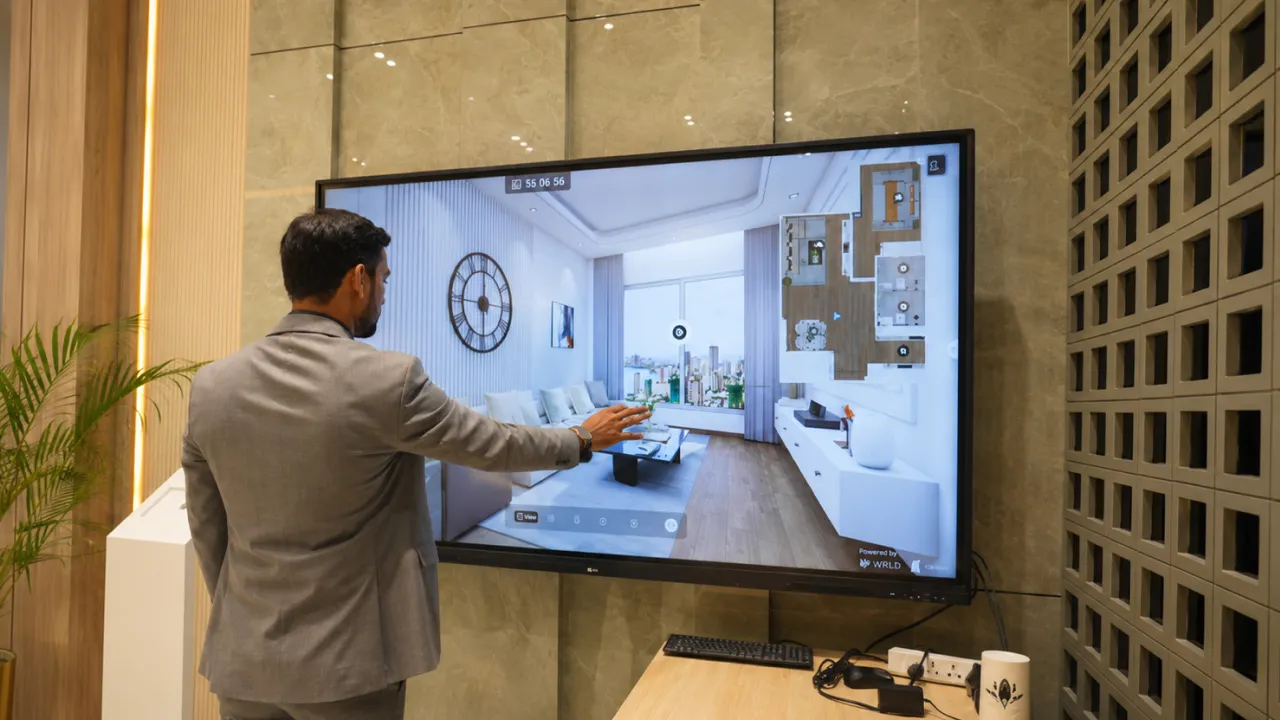
- 3D virtual walkthroughs of the finished product. Buyers walk through a photorealistic version of the completed building — lobby, corridors, specific unit types — built from the approved architectural plans. What was abstract becomes tangible.
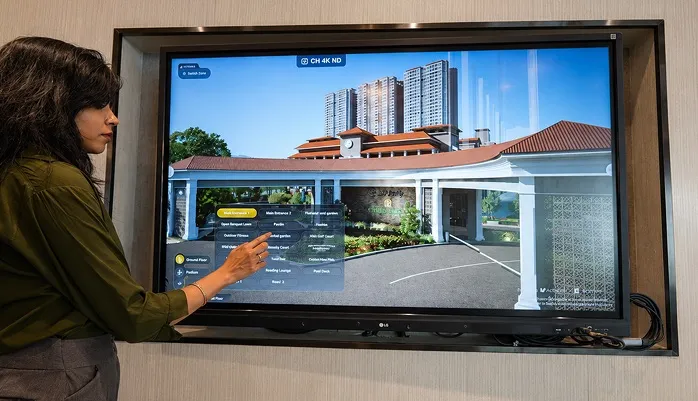
- Interactive floor-plan exploration. Rather than studying a printed floor plan, buyers navigate through a unit on a touchscreen, understanding room dimensions, storage space, and natural light entry points by actually moving through the space digitally.
- VR pods for immersive interior experience. Standing inside a 1:1 scale VR version of a unit removes almost all spatial ambiguity. Buyers know how large the master bedroom actually feels. That knowledge accelerates decisions.
Suraj Tower: Turning Site Visits into Sales Conversations
Suraj Tower's experience centre faced a challenge common to mid-construction project launches: buyers were visiting the site, seeing structural progress, but that progress gave very little indication of what the finished product would feel like. The raw concrete reality was, understandably, not closing deals.
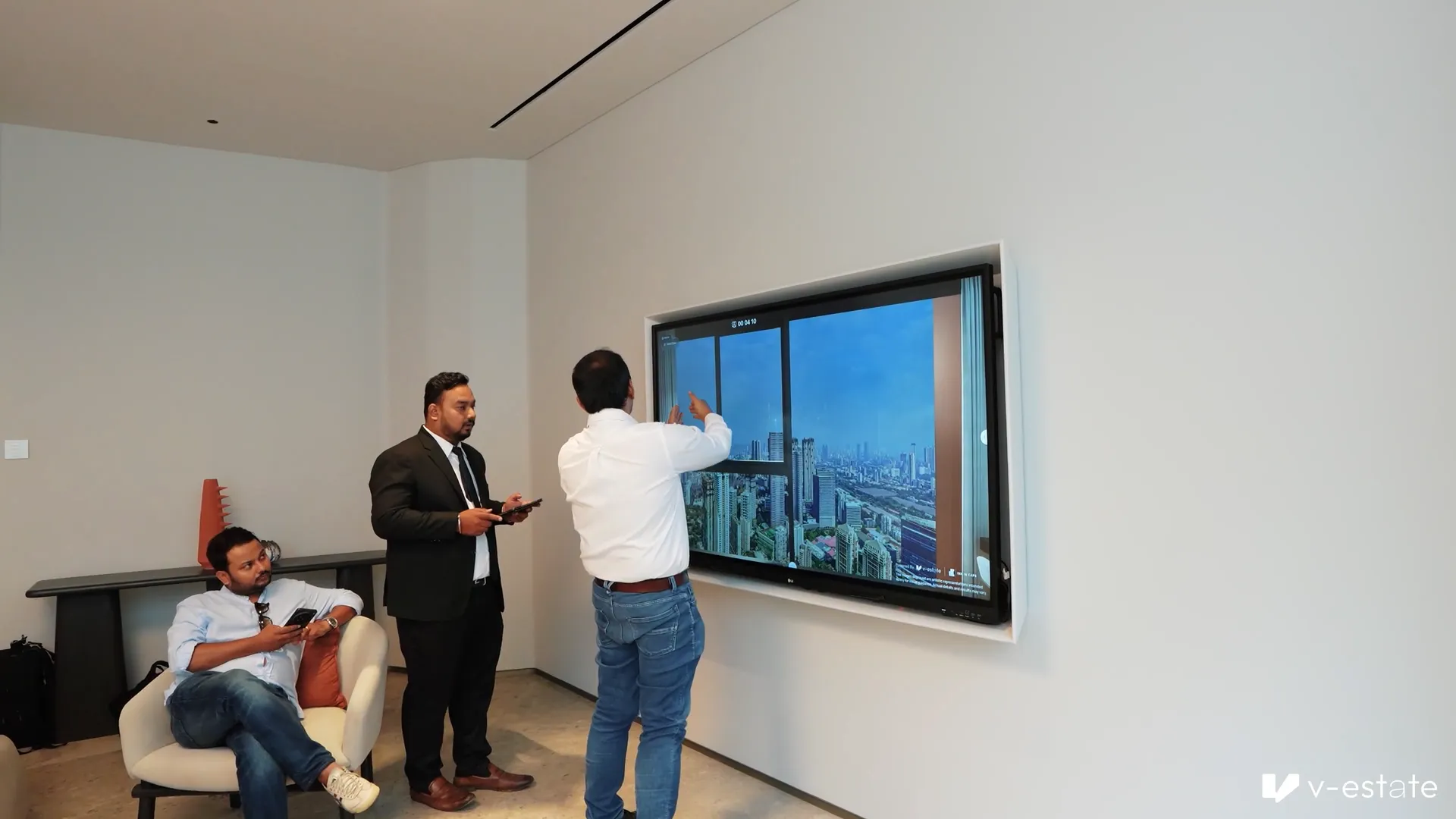
V-Estate developed an experience centre that gave buyers a complete visual narrative of the finished project — unit by unit, floor by floor, amenity by amenity. The centre ran on intuitive tablet controls managed by the sales team, meaning the buyer's journey was guided rather than overwhelming.
Critically, the setup worked offline — a non-negotiable feature for any experience centre deployed at a construction site where internet reliability is unpredictable. The presentations ran flawlessly regardless of connectivity.
Sales team feedback was consistent: buyers who went through the experience centre left with a level of confidence about the project that buyers who received a standard pitch simply did not have.
The Role of Location Storytelling in Under-Construction Sales
One dimension that often gets underweighted is location. A buyer looking at a building site surrounded by ongoing construction finds it genuinely difficult to visualise the finished neighbourhood. The roads may still be dug up. The green belt is bare land. The promised retail zone is an empty plot.
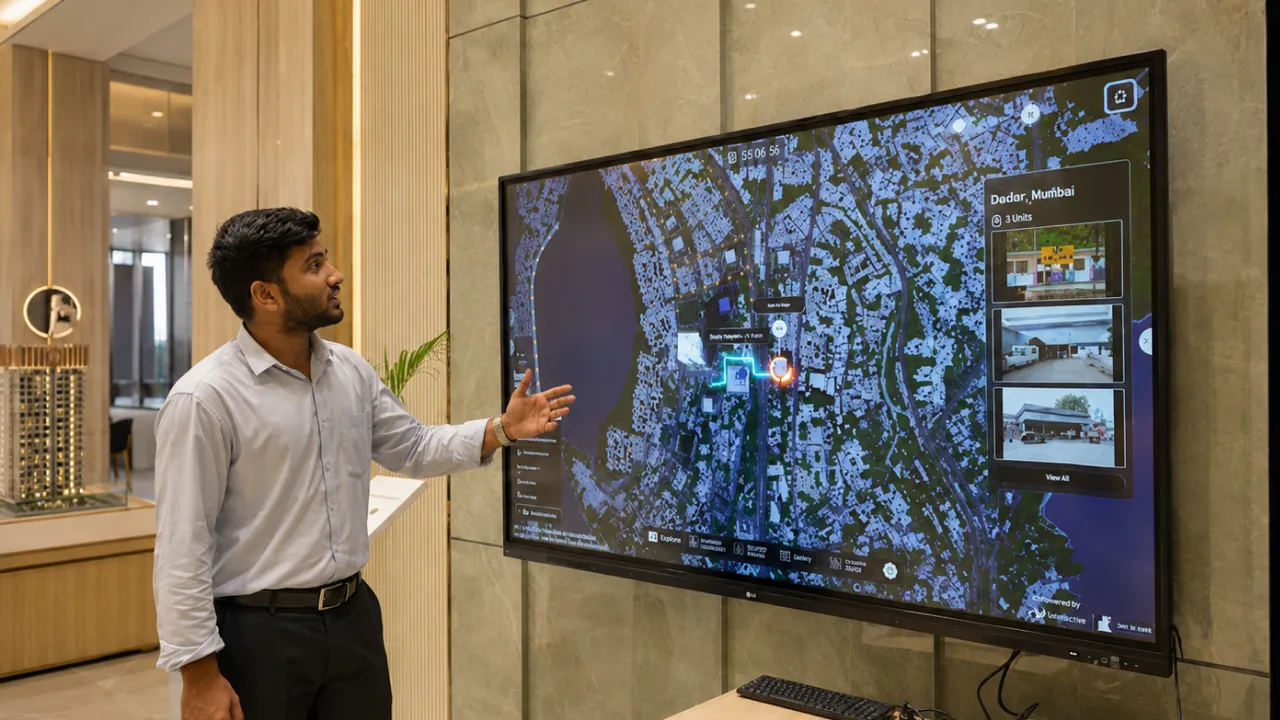
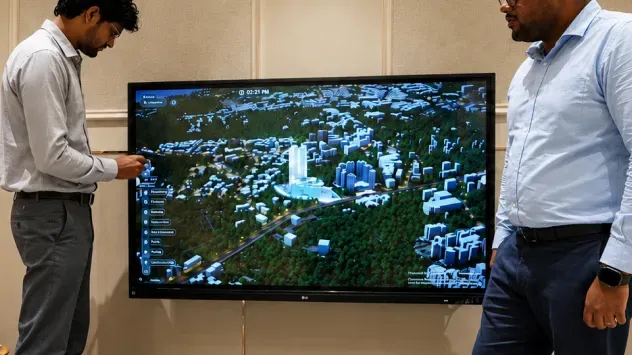
Vicinity mapping — showing the completed neighbourhood context, transit connections, schools, hospitals, and lifestyle infrastructure within a meaningful radius — tells the buyer not just what they are buying, but what life will look like once they are living in it.
For under-construction projects especially, this kind of contextual storytelling is not supplementary. It is central to the sale.
See how V-Estate's interactive sales tools handle location storytelling and project visualisation together.
Let's build the experience centre your under-construction project deserves. Book a demo with V-Estate





























Sign in to leave a comment.