

Federal procurement disputes are usually dry things; binders, redactions, and the sort of language that makes even seasoned reporters reach for tea. Yet the Anthropic case has cut through because it touches a much larger anxiety: who gets to decide whether an AI company is safe enough for government use, and on what evidence. In recent court proceedings, a judge halted the government’s supply-chain risk designation against Anthropic, raising uncomfortable questions about process, proof, and the state’s growing appetite for advanced AI tools.
The image is striking. On one side sits a company known for emphasising safety constraints in frontier models. On the other sits a federal apparatus that, according to reporting, had at one point branded that same company a supply-chain risk. Then the record began to fray under scrutiny. FedScoop’s report on the court hearing captured the judge’s irritation in unusually plain terms: the government’s record, he said, “has gotten worse.” That is not routine judicial throat-clearing. It suggests a court unconvinced that the state had assembled a coherent factual basis for a designation with serious commercial consequences.
For anyone tracking AI and automation tools, this matters well beyond one vendor. Federal agencies are becoming some of the most consequential buyers of AI systems; their procurement rules can shape which products are built, which safeguards are rewarded, and which business models survive. A paused designation does not amount to vindication on every point. But it does force a reckoning with how national security language is used in a market where policy, competition, and ethics are tightly knotted together.
If you have followed the earlier contours of the dispute, WriteUpCafe has already mapped the immediate legal turn in this overview of the halted designation. What deserves closer attention now is the broader significance: the standards of evidence the government may need to meet, the procurement ripple effects for AI firms, and the way this case lands at a moment when agencies are under pressure to adopt AI quickly without surrendering control.
When a court pauses a supply-chain risk label, it is not merely adjusting a contract dispute; it is testing the credibility of the state’s risk machinery.
How the dispute took shape
To understand why the ruling matters, it helps to start with the mechanism at issue. A supply-chain risk designation can function as a practical barrier to government business. It can affect eligibility, delay awards, and cast a long shadow over a company’s reputation with prime contractors and systems integrators. In sectors tied to defence, intelligence, and critical digital infrastructure, the label can be commercially bruising even before a final adjudication.
Anthropic’s position in the market makes the conflict especially notable. The company rose as one of the best-known frontier AI developers in the United States, competing in a field shaped by OpenAI, Google, Microsoft, Meta, Amazon-backed initiatives, and a widening set of specialised model providers. Unlike some peers, Anthropic often leaned publicly on its safety framing; that posture made reports of a federal risk designation appear, at minimum, surprising.
Recent reporting suggests the roots of the conflict may lie partly in disagreements over autonomous weapons limits and federal expectations around defence collaboration. TechTimes reported on emails indicating the Pentagon had blacklisted Anthropic over autonomous weapons limits while discussions between the parties were, in its account, still “very close”; see the TechTimes report on the emails. That account should be read carefully; leaked or disclosed correspondence can illuminate motives, but it can also flatten context. Still, if accurate, it points to a central tension in the AI market: firms are increasingly asked to be both commercially innovative and strategically useful to the state, even when their own governance rules place limits on military applications.
MSN, summarising the turnabout, noted the irony that the US had once called Anthropic a supply-chain risk while its Mythos AI was later used to find bugs in government software; see MSN’s account of that shift. The juxtaposition is more than a headline flourish. It suggests a procurement environment in which agencies may distrust a vendor institutionally while relying on its tools operationally. That is not sustainable for long.
Another useful frame appears in WriteUpCafe’s analysis of how the ruling could reshape AI procurement. The point is simple but important: once a court begins interrogating the evidentiary basis for exclusionary decisions, every agency using similar logic has reason to revisit its files.
What the judge’s halt actually signals
Courts do not halt sensitive government designations lightly. The significance lies not only in the immediate relief for Anthropic but in the judicial message implied by the intervention. Based on FedScoop’s reporting, the court appeared troubled by the quality of the government’s record and by whether the rationale for the designation had been sufficiently substantiated. In procurement and administrative disputes, the record is everything; if the file is thin, contradictory, or assembled after the fact, agencies can quickly lose the deference they usually enjoy.
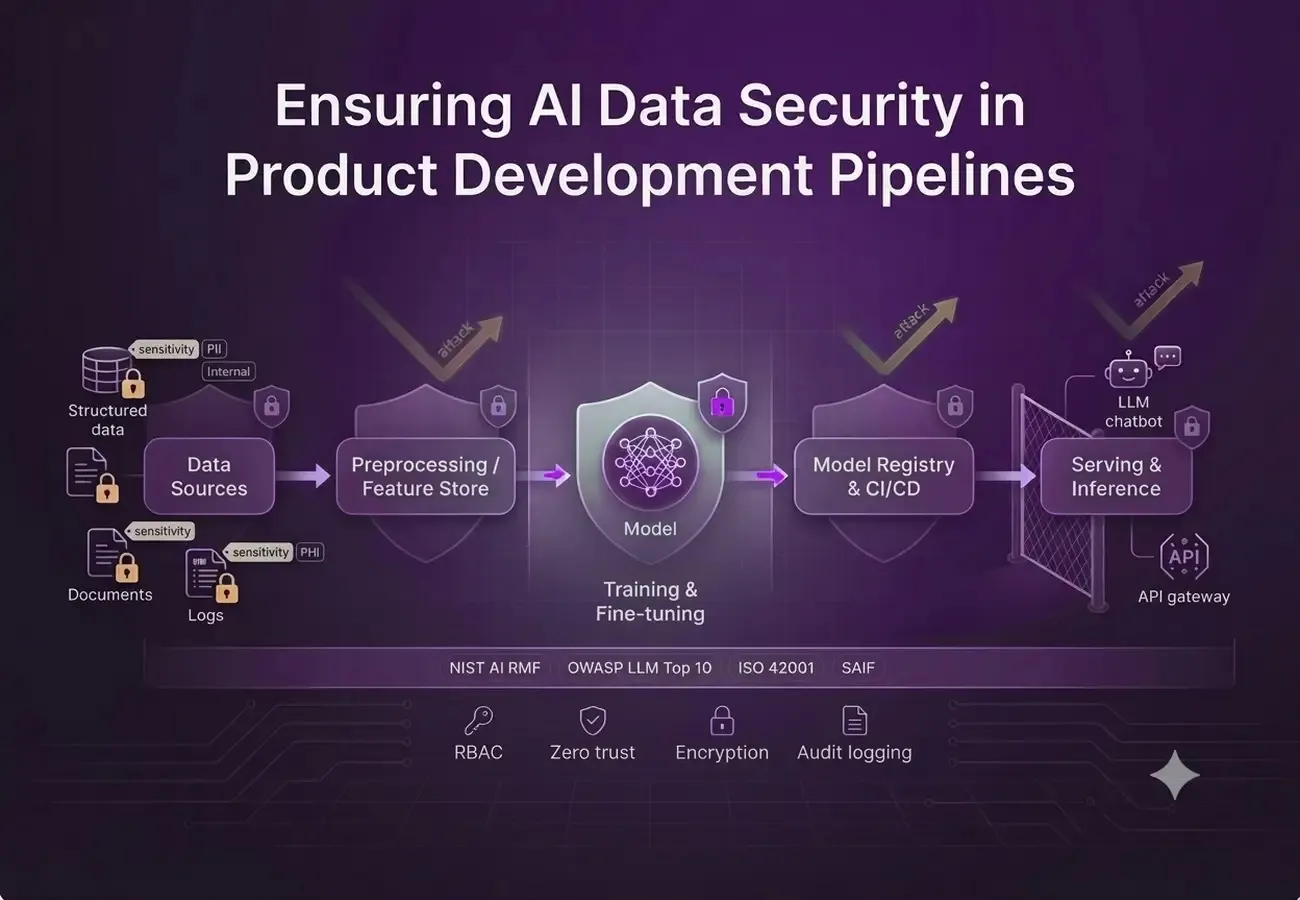
That matters because “supply-chain risk” is a capacious phrase. It can refer to foreign ownership concerns, software vulnerabilities, opaque subcontracting, data governance failures, hardware provenance, insider threats, or strategic dependence on a company whose incentives do not align with the government’s. In AI, the category becomes even wider. A model provider’s risk profile may include training data opacity, model update volatility, third-party cloud dependencies, open-source component exposure, and the possibility that safety policies could conflict with mission requirements.
Yet breadth is not the same as precision. A government designation powerful enough to shut a company out of federal work needs a clear chain of reasoning. Which risk, exactly? What evidence? What threshold? Was the company given a meaningful chance to answer? If the court sensed those links were weak, the halt becomes less surprising.
- Procedural fairness: agencies may need to show the vendor understood the allegations and had a real opportunity to respond.
- Evidentiary sufficiency: broad assertions about national security may not be enough if the underlying record is sparse.
- Consistency: continued operational use of a company’s products can undermine claims that the vendor is categorically too risky.
- Tailoring: a total or near-total exclusion may face tougher scrutiny than a narrower mitigation plan.
There is another layer. AI procurement is moving faster than the legal frameworks designed to govern it. Agencies want tools for code review, bug detection, document analysis, cyber defence, and workflow automation. Frontier vendors, meanwhile, update models frequently, alter access terms, and rely on complex technical stacks. A static designation can struggle to capture a dynamic product environment. Judges, even when deferential, may be wary of blunt administrative tools used against fast-moving technologies without equally agile evidence.
The court’s intervention suggests a distinction officials sometimes blur: concern is not proof, and strategic discomfort is not the same thing as a documented supply-chain threat.
Why this case matters for AI procurement across government
The federal government is no ordinary customer. Its procurement choices can validate a technology category, redirect venture funding, and shape compliance norms for the whole market. That is particularly true in AI and automation tools, where government demand spans civilian agencies, defence buyers, and contractors building bespoke systems on top of commercial models.
If Anthropic’s designation remains stalled or is ultimately weakened, agencies may need to rethink how they screen AI suppliers. The old procurement logic for hardware makers and telecom vendors does not map neatly onto model developers. A large language model company may depend on outside cloud providers, foundation model checkpoints, reinforcement learning pipelines, safety fine-tuning layers, and API distribution partners. Risk exists; no serious observer denies that. The problem is that the risk cannot be assessed with slogans.
Several practical consequences are already visible.
- Vendors now have a stronger incentive to challenge adverse designations rather than accept them quietly.
- Agencies may move toward more granular mitigation requirements instead of binary exclusion.
- Prime contractors will likely demand clearer contractual language on model provenance, update controls, and incident reporting.
- Procurement lawyers and compliance teams will gain influence as AI deals become more contested.
There is also a market-structure question. If a government can sideline one frontier AI vendor on an underdeveloped record, competitors may benefit not because their systems are safer but because they are politically easier. That would distort the market in a way that punishes transparency. A company with explicit safety restrictions or public governance principles could become more vulnerable to bureaucratic friction than a less transparent rival.
That concern sits close to the heart of the present case. Reports indicating friction over autonomous weapons limits suggest that policy disagreement may have mingled with supply-chain analysis. If so, the procurement process risks becoming a venue for pressuring AI firms to align with mission preferences that extend beyond ordinary security review. Governments are entitled to choose suppliers who meet operational needs. They are on shakier ground when they use risk labels to penalise positions that are, in substance, ethical or governance choices.
This is why the case has drawn such close attention from procurement specialists and AI policy watchers alike. As another WriteUpCafe analysis argues, the ruling could redraw federal AI buying not by opening the gates indiscriminately, but by forcing agencies to define risk with far more discipline.
The 2026 context: faster adoption, sharper scrutiny
The timing is not incidental. By 2026, AI adoption inside government has become both more ambitious and more visible. Agencies are no longer merely piloting chat interfaces for internal knowledge retrieval. They are testing coding assistants, anomaly detection systems, contract analysis tools, document triage workflows, and cyber products built atop foundation models. That expansion means procurement disputes now carry operational consequences; a blocked vendor may delay a programme, weaken competition, or narrow the set of available capabilities in specialised tasks.
The Anthropic matter arrives amid a broader shift in how governments think about AI sovereignty and dependency. Officials increasingly worry about concentration risk: too much reliance on a tiny number of model providers, cloud platforms, or chip supply chains. They also worry about opacity. If a model changes behaviour after an update, who bears responsibility for downstream failures in a regulated environment? These concerns are real, but they do not always point toward exclusion. In many cases they point toward auditing, version control, sandboxing, and contractual safeguards.
Recent developments make the contradiction harder to ignore. MSN’s report that Anthropic’s Mythos AI has been used to identify bugs in government software undercuts any simple narrative that the company was too dangerous to touch. If one arm of government sees enough value and trustworthiness to deploy a tool in a bug-finding context, another arm must explain with care why the vendor remains a systemic risk. Agencies can disagree, of course. But courts may ask whether those disagreements reflect differing missions or a muddled record.
Meanwhile, the politics of AI safety have become more complicated. In 2023 and 2024, safety rhetoric often conferred reputational advantage. By 2026, some defence and security circles appear more impatient with firms that place hard limits on military use cases. That shift may help explain why a company once praised for restraint could later face exclusionary pressure. It is a reminder that “responsible AI” is not a fixed badge; it is interpreted through institutional needs, and those needs can change quickly.
For companies selling into government, the lesson is plain. Technical excellence is no longer enough. Governance design, documentation quality, and the ability to defend one’s architecture under adversarial review are now part of the product.
The unresolved tension over autonomous weapons and vendor independence
Beneath the legal wrangling lies an uncomfortable philosophical question. How much independence can an AI company retain when its most lucrative customers may be states seeking strategic advantage? Anthropic’s reported stance on autonomous weapons appears to have become part of the background to this conflict. If the TechTimes account of internal communications is substantially accurate, then the dispute was never only about software provenance or cybersecurity posture. It was also about whether a frontier AI company could draw ethical lines and still remain in the government’s good graces.
This matters because the AI sector has spent years promising that governance principles are meaningful. Many firms have published acceptable-use policies, safety commitments, and escalation frameworks. Such documents are often criticised, sometimes fairly, as public-relations artefacts. But if a company is effectively punished for following its own stated limits, the signal to the market is corrosive. It says governance is welcome only until it inconveniences a buyer.
There is a historical echo here. In other technology sectors, from encryption to cloud hosting, governments have often preferred pliant vendors over principled ones when strategic pressures rise. AI intensifies that pattern because the tools are dual-use by nature. A coding assistant can support civilian software modernisation; a model tuned differently can aid cyber operations or targeting workflows. The line between administrative automation and military utility is often thinner than the marketing suggests.
- For AI vendors, the risk is that ethical constraints become procurement liabilities.
- For governments, the risk is that pressure tactics deter the very transparency they claim to want.
- For the market, the risk is consolidation around firms best able to absorb political demands rather than those with the strongest safeguards.
None of this means governments must buy from companies whose policies conflict with mission requirements. They may decide not to. The issue is whether that decision is made openly, on stated operational grounds, or obscured behind a broader “supply-chain risk” label that implies technical or security deficiencies not clearly established in the record. Courts tend to care about that distinction; so should taxpayers.
What companies and agencies should watch next
The immediate legal path may turn on further briefing, record development, or settlement dynamics. But the wider field should not wait for a final merits decision to draw lessons. Procurement teams, in-house counsel, chief information security officers, and public-sector sales leaders all have reasons to study this case closely.
First, expect more rigorous documentation requests. Agencies burned by judicial scepticism are likely to ask vendors for clearer explanations of training pipelines, third-party dependencies, software bills of materials where applicable, model update governance, and incident response procedures. That will be especially true where AI tools touch sensitive codebases, classified workflows, or citizen data.
Second, watch for a shift from exclusion to mitigation. Rather than branding a vendor broadly risky, agencies may prefer narrower controls: isolated deployments, human-review requirements, restricted data classes, approval gates for model updates, and independent red-team testing. Such measures are administratively heavier, but they are easier to defend if challenged.
Third, industry coalitions may push for more standardised AI procurement criteria. The current patchwork invites inconsistency. One agency’s acceptable model governance can be another’s disqualifying concern. Over time, pressure will build for common baselines that distinguish between technical security risk, policy disagreement, and mission-fit questions.
For readers looking at the strategic implications rather than the courtroom drama, this WriteUpCafe piece on post-ruling strategies offers a useful companion. The central idea is that AI vendors need a procurement posture, not just a product roadmap.
- Audit your dependency chain before the government does.
- Separate ethical use restrictions from technical risk documentation so neither is misunderstood.
- Prepare a litigation-ready administrative response for any adverse designation.
- Build evidence of trusted performance in low-risk government use cases first.
The final thing to watch is whether the Anthropic dispute becomes a precedent in spirit, even if not formally. Agencies learn from embarrassment. A judge questioning the government’s record in a high-profile AI matter will be noticed across procurement offices. The result may be healthier: fewer sweeping labels, more precise analysis, and a procurement culture that treats advanced AI neither as magic nor menace, but as infrastructure requiring disciplined oversight.
A ruling that may outlast the case itself
Some legal fights fade as soon as the docket quiets. This one is likely to linger because it captures a defining problem of the AI era: institutions want the power of frontier systems, but they have not yet built stable ways to evaluate, constrain, and buy them. The halted designation against Anthropic exposes that gap. It suggests the government may have moved faster with a risk label than with the evidentiary craftsmanship needed to sustain it.
That is not merely a win for one company. It may be a warning to both sides. For agencies, national-security vocabulary cannot substitute for administrative precision. For vendors, a reputation for safety will not shield them from political conflict, especially where defence applications are concerned. And for the public, the case is a reminder that procurement decisions often shape technology policy more quietly than legislation does.
I find myself thinking of library marginalia; the small pencilled notes that tell you what a previous reader feared, admired, or mistrusted. Court records can feel much the same. They reveal not just facts but habits of mind. In this dispute, the emerging annotation is clear enough: if the state wishes to call an AI company a supply-chain risk, it may need to show its workings with far more care.
That would be a healthy development. AI procurement needs scepticism; it also needs fairness. The judge’s halt does not settle every argument around Anthropic, autonomous weapons, or federal buying. But it may help establish something sturdier than a headline: that in a field crowded with urgency, evidence still matters.





























Sign in to leave a comment.