

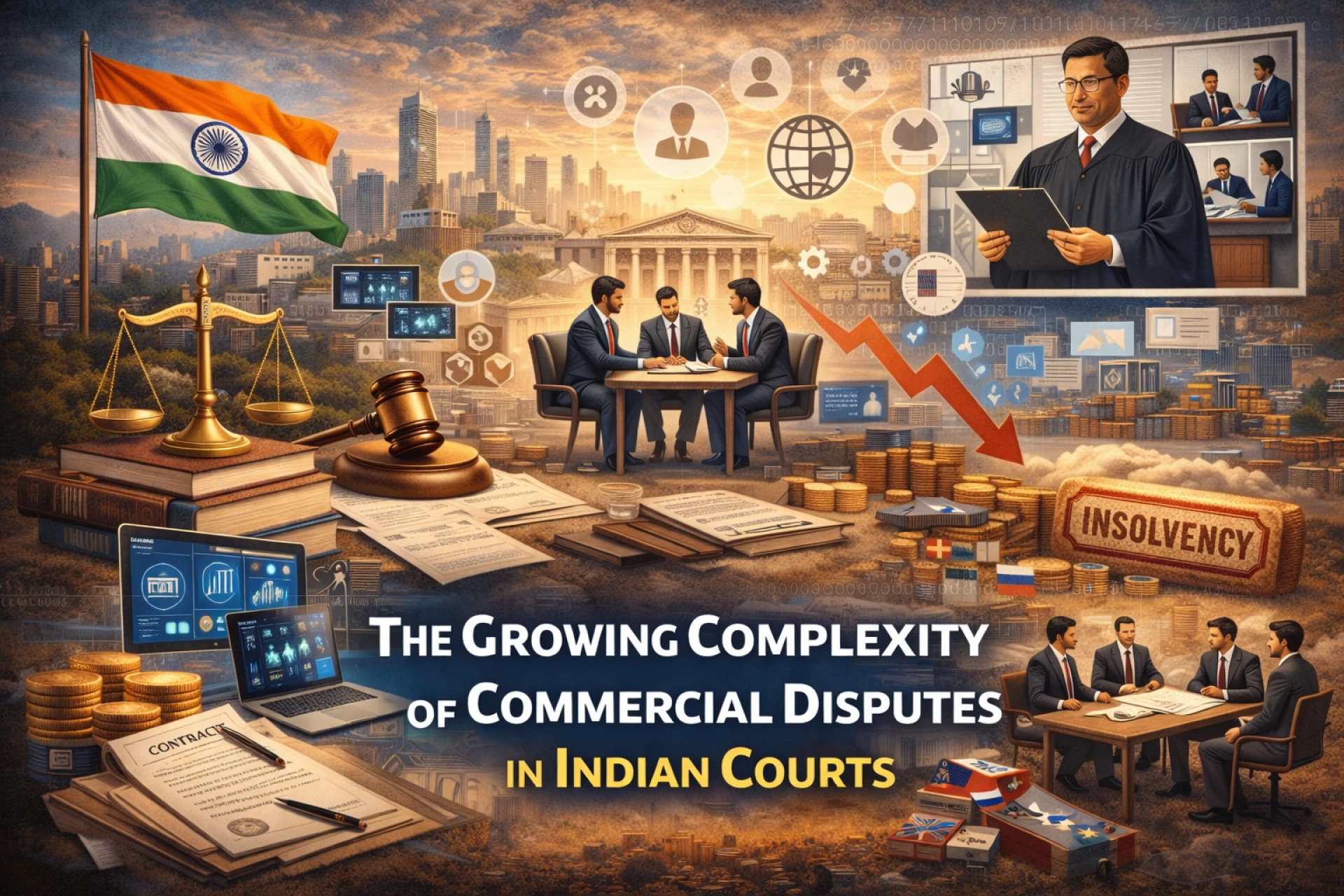
Civil litigation in India has become significantly more complex over the last decade. Courts today are handling disputes involving large commercial transactions, digital evidence, cross border agreements, infrastructure projects, intellectual property rights, and multi party contractual arrangements. The nature of civil disputes is evolving alongside economic growth, urban expansion, and technological advancement.
Businesses and individuals now face legal conflicts involving higher financial stakes, complicated procedural issues, and extensive documentation. As a result, civil litigation requires greater legal strategy, stronger case management, and deeper understanding of procedural law.
Understanding the factors increasing complex civil litigation in India is essential for companies, professionals, investors, and ordinary litigants navigating the modern legal system.
Rapid Growth of Commercial Transactions
India’s expanding economy has led to a substantial rise in commercial activity across sectors such as infrastructure, technology, real estate, manufacturing, finance, and telecommunications.
As businesses enter larger and more sophisticated transactions, disputes naturally become more complicated. Modern commercial agreements often involve:
- Multiple contractual obligations
- Technical performance standards
- International parties
- Digital payment systems
- Regulatory compliance requirements
When disputes arise, courts must examine detailed documentation, financial records, expert evidence, and contractual interpretations.
The growing number of commercial disputes in india reflects the increasing complexity of modern business relationships and evolving commercial practices.
Expansion of Real Estate and Infrastructure Projects
Large scale infrastructure and real estate development has become a major contributor to civil litigation across India.
Construction disputes often involve several stakeholders including:
- Developers
- Contractors
- Investors
- Financial institutions
- Government authorities
- Homebuyers
These disputes may concern delayed possession, contractual breaches, defective construction, land ownership conflicts, or regulatory approvals.
Infrastructure litigation also tends to involve massive documentation and technical evidence, making proceedings highly complex and time consuming.
Increase in Multi Party Litigation
Civil disputes today frequently involve multiple parties with interconnected rights and obligations. Earlier, many civil suits were limited to straightforward disputes between two parties. Modern litigation is rarely so simple.
Multi party litigation is common in:
- Joint ventures
- Shareholder disputes
- Construction projects
- Insolvency related claims
- Property development matters
- Corporate contractual disputes
When several parties participate in one dispute, procedural coordination becomes more difficult. Courts must determine liability, contractual responsibility, and evidentiary relevance for each party separately.
This increases both the duration and complexity of litigation.
Rise of Digital and Electronic Evidence
Technology has transformed the nature of civil disputes. Courts now regularly deal with electronic evidence including:
- Emails
- WhatsApp conversations
- Online agreements
- Cloud based records
- Digital payment histories
- Electronic invoices
- Video recordings
Electronic evidence requires careful authentication and technical verification. Lawyers must understand data preservation, admissibility standards, and cyber related evidentiary issues.
Digital communication has also increased the volume of material produced during litigation, making document management more challenging.
Cross Border Business Relationships
Globalisation has increased cross border commercial relationships involving foreign investors, multinational corporations, and international service providers.
As international transactions grow, Indian courts increasingly encounter disputes involving:
- Foreign governing laws
- International arbitration clauses
- Cross border enforcement issues
- Foreign evidence
- Multi jurisdictional contracts
These matters require courts and lawyers to address both domestic legal principles and international legal frameworks.
Cross border disputes are often procedurally demanding and require specialised legal expertise.
Changing Regulatory Environment
India’s legal and regulatory framework continues to evolve rapidly. Businesses today operate under extensive compliance obligations relating to taxation, environmental regulation, data protection, securities law, consumer rights, and corporate governance.
Frequent regulatory changes can lead to contractual disagreements, compliance disputes, and commercial uncertainty.
Civil litigation becomes more complicated when courts must interpret overlapping statutes, policy notifications, and sector specific regulations.
Regulatory disputes also tend to involve technical expert evidence and detailed legal analysis.
Increasing Awareness of Legal Rights
Public awareness regarding legal rights has grown considerably in recent years. Businesses and individuals are now more willing to pursue legal remedies for contractual breaches, property claims, financial losses, and professional negligence.
This rise in legal awareness has contributed to an increase in:
- Recovery suits
- Consumer litigation
- Partnership disputes
- Shareholder conflicts
- Property related claims
As more litigants approach courts with sophisticated claims, civil litigation naturally becomes more detailed and complex.
Growth of Corporate and Shareholder Disputes
Corporate expansion has resulted in a higher number of internal business conflicts involving directors, shareholders, investors, and management teams.
These disputes often involve issues such as:
- Breach of fiduciary duties
- Mismanagement allegations
- Minority shareholder rights
- Financial irregularities
- Exit disputes
- Valuation disagreements
Corporate litigation usually involves financial audits, accounting records, internal communications, and technical corporate documentation.
The commercial impact of these disputes also increases litigation intensity.
Delays and Procedural Complexity
Although Indian courts are introducing procedural reforms, civil litigation still faces significant delays in many jurisdictions.
Complex litigation becomes even more difficult when cases involve:
- Repeated adjournments
- Large volumes of evidence
- Multiple interim applications
- Witness examination delays
- Jurisdictional objections
Lengthy proceedings often increase costs and procedural burdens for litigants.
Courts are attempting to address these issues through stricter case management systems and procedural monitoring, particularly in commercial courts.
Arbitration and Related Court Proceedings
Arbitration has become increasingly popular for resolving commercial disputes. However, arbitration itself has also contributed to complex litigation in certain situations.
Court proceedings may arise regarding:
- Appointment of arbitrators
- Interim relief
- Jurisdictional objections
- Enforcement of arbitral awards
- Challenges to arbitral decisions
Many businesses now seek advice from the best law firms for arbitration in india to manage sophisticated commercial disputes and minimise procedural risks.
Arbitration related litigation often involves high value claims and technical legal questions.
Greater Judicial Scrutiny in Commercial Matters
Indian courts are increasingly adopting structured case management practices, especially in commercial litigation. Judges now expect stronger procedural compliance and more organised documentation.
Courts require parties to:
- File detailed pleadings
- Submit evidence within timelines
- Identify disputed issues early
- Avoid unnecessary adjournments
While these reforms improve efficiency, they also demand greater preparation from litigants and lawyers.
Complex cases now require extensive strategic planning from the earliest stages of litigation.
Role of Technology in Expanding Litigation Scope
Technology has not only changed evidence collection but also expanded the nature of disputes themselves.
Civil courts now deal with matters involving:
- Data privacy concerns
- Online fraud claims
- Software agreements
- Digital service disputes
- Intellectual property conflicts
- E commerce transactions
Technology driven disputes often require expert witnesses and specialised legal analysis.
As India’s digital economy grows, civil litigation is likely to become even more technically demanding.
Impact on Businesses and Individuals
The rise in complex litigation has significant implications for both businesses and individuals.
Businesses Must Focus On
- Strong contractual drafting
- Compliance systems
- Record management
- Risk assessment
- Early dispute resolution strategies
Individuals Should Prioritise
- Proper documentation
- Timely legal advice
- Awareness of contractual obligations
- Understanding procedural rights
Proactive legal planning can reduce the likelihood of prolonged disputes and financial exposure.
Future of Complex Civil Litigation in India
Civil litigation in India is expected to continue evolving alongside economic and technological growth.
Future trends may include:
- Greater use of digital courts
- Expansion of online dispute resolution
- Increased reliance on artificial intelligence tools
- Faster commercial adjudication systems
- Stronger mediation frameworks
At the same time, disputes themselves are likely to become more sophisticated due to changing business models and digital transactions.
Conclusion
Complex civil litigation in India is increasing due to economic expansion, technological advancement, regulatory developments, and evolving commercial relationships. Courts today are handling disputes involving larger financial stakes, multiple parties, digital evidence, and cross border legal issues.
Businesses and individuals must adapt to this changing legal environment through better documentation, stronger compliance practices, and early legal planning.
As India’s civil justice system continues modernising, effective litigation strategy and procedural awareness will become increasingly important for navigating complex legal disputes successfully.
































Sign in to leave a comment.