
Startup ecosystems around the world continue to expand at a remarkable pace. Entrepreneurs bring new ideas, technologies, and business models into the market every day. Innovation drives these ventures, yet innovation alone does not guarantee success. Protection of ideas and brand identity plays a crucial role in ensuring sustainable growth.
Intellectual property rights offer legal protection for innovations, creative works, brand elements, and confidential business knowledge. For startups, these rights often represent the most valuable assets within the organisation. As competition intensifies across industries, strong intellectual property strategies have become essential for startup survival and long term development.
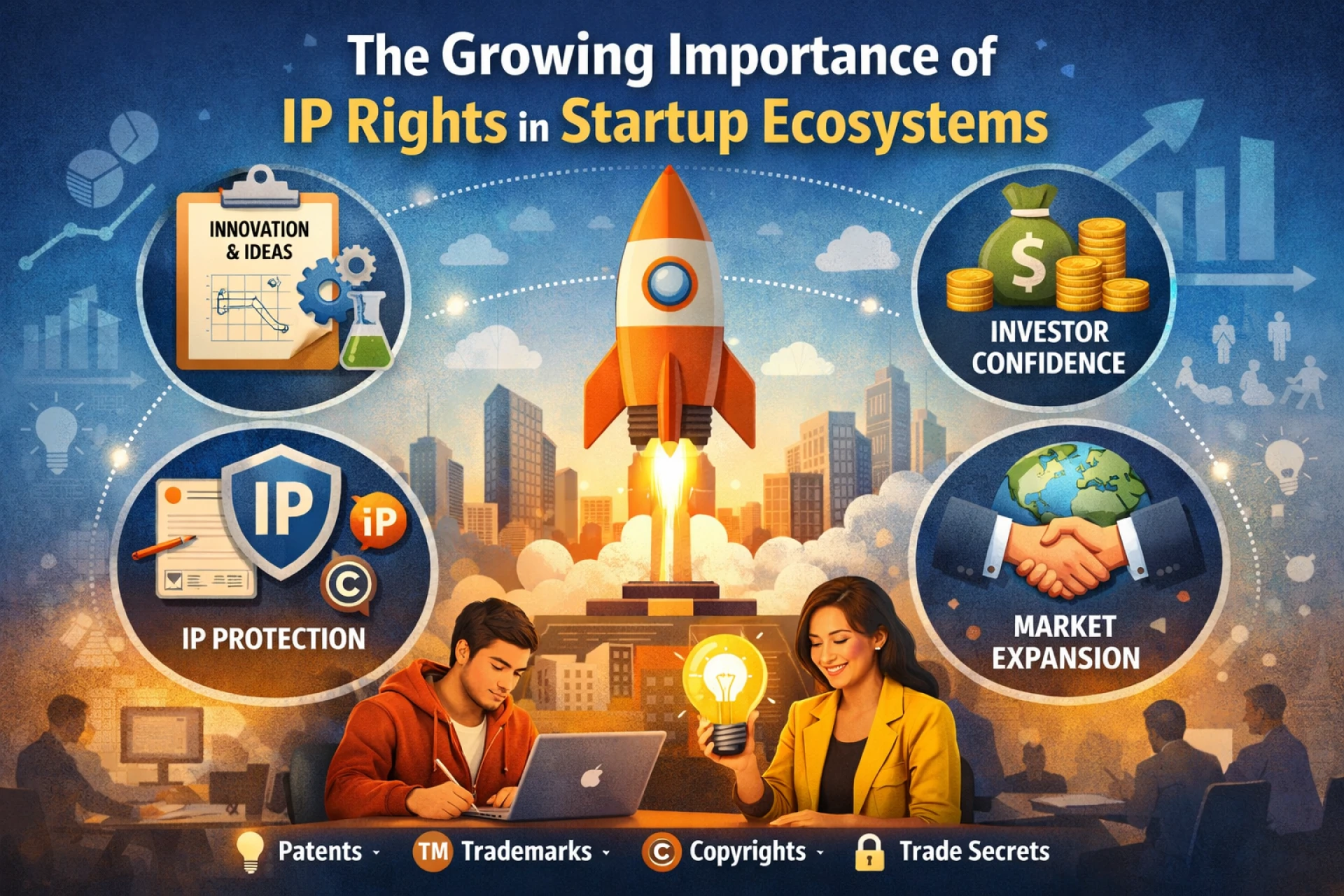
In modern entrepreneurial ecosystems, intellectual property protection supports innovation, attracts investment, and strengthens market position.
Intellectual Property as a Core Startup Asset
Unlike traditional businesses which rely heavily on physical assets, startups often depend on intangible assets. Software platforms, mobile applications, innovative technologies, brand identity, and creative content form the foundation of many startup ventures.
Intellectual property rights provide legal ownership over these assets. Patents protect technological inventions and technical solutions. Trademarks protect brand names, logos, and product identity. Copyright safeguards digital content, software code, and creative works. Trade secrets protect confidential business processes and strategies.
For startups, these legal protections transform innovative ideas into secure commercial assets. Intellectual property allows founders to maintain control over their creations while building competitive advantage in the marketplace.
Encouraging Innovation and Research
Innovation forms the backbone of startup ecosystems. Entrepreneurs invest time, resources, and expertise to develop new products or services. Without proper legal protection, competitors could replicate these innovations quickly.
Intellectual property rights provide exclusive rights over inventions and creative outputs. Patent protection allows inventors to commercialise technology without immediate imitation. This exclusivity encourages research and development by ensuring innovators receive fair commercial returns.
Many technology startups rely on patents to protect complex systems such as artificial intelligence applications, biotechnology solutions, or advanced engineering processes.
By safeguarding innovation, intellectual property rights create an environment where creativity and experimentation can thrive.
Strengthening Brand Identity in Competitive Markets
A startup brand represents more than a company name. It reflects the reputation, quality, and identity of the business. In crowded markets, strong brand recognition helps startups attract customers and establish credibility.
Trademark registration protects brand elements from imitation. A registered trademark prevents competitors from using identical or confusingly similar marks within the same industry.
Without trademark protection, startups may face brand dilution or consumer confusion. Competitors could exploit brand recognition by introducing similar products under misleading identities.
Many entrepreneurs consult an ip attorney in India during early stages of brand development to ensure proper trademark registration and legal protection.
Strong brand protection strengthens customer trust and enhances market presence for emerging businesses.
Intellectual Property and Investor Confidence
Investors play a crucial role in startup ecosystems. Venture capital firms and angel investors often evaluate intellectual property portfolios before providing funding.
A well structured intellectual property strategy signals strong innovation capability and long term market potential. Patents demonstrate technological originality. Trademarks show commitment to brand development. Copyright registration reflects protection of digital products and creative works.
For investors, protected intellectual property reduces risk. It ensures competitors cannot easily replicate the startup innovation or brand identity.
Many successful startup funding rounds involve careful review of intellectual property ownership and legal compliance. Founders who prioritise IP protection often improve their chances of attracting investment.
Supporting Market Expansion and Partnerships
Startups frequently seek partnerships with established companies, distributors, or technology collaborators. Intellectual property rights provide a secure framework for such collaborations.
Licensing agreements allow startups to share technology or brand assets while maintaining ownership rights. These agreements generate revenue and expand market reach without significant infrastructure investment.
For example, a startup which develops innovative software may license technology to multiple companies across different sectors. Trademark licensing also allows brand expansion into new product categories.
Strong intellectual property protection ensures startup founders retain control over their innovations while pursuing strategic partnerships.
Addressing Risks in Digital Business Environments
Many modern startups operate within digital ecosystems. E commerce platforms, software applications, and online services allow rapid scaling and global reach. However, digital environments also increase risk of intellectual property infringement.
Counterfeit products, unauthorised content distribution, and domain name misuse frequently affect online businesses. Competitors may attempt to replicate software features or copy digital designs.
Effective intellectual property enforcement becomes essential for startups operating in such environments. Monitoring digital platforms and taking legal action against infringement helps maintain brand integrity.
Entrepreneurs often rely on experienced legal professionals such as top trademark lawyers in India to handle complex trademark disputes, online infringement issues, and brand protection strategies.
Strong enforcement ensures startup innovations and brand identities remain secure even in rapidly evolving digital markets.
Protecting Confidential Business Knowledge
Many startup innovations involve confidential knowledge rather than publicly disclosed inventions. Proprietary algorithms, product formulas, customer analytics, and marketing strategies often represent critical competitive advantages.
Trade secret protection helps safeguard such confidential information. Unlike patents, trade secrets remain protected as long as secrecy is maintained.
Startups usually implement confidentiality agreements, employee contracts, and internal security policies to protect sensitive information.
Protecting trade secrets ensures competitors cannot access valuable business knowledge through unauthorised disclosure or misappropriation.
Intellectual Property and Global Startup Expansion
Startup ecosystems increasingly operate on a global scale. Digital businesses often reach international audiences within a short time. Global expansion requires careful management of intellectual property rights across multiple jurisdictions.
International registration systems allow startups to seek trademark or patent protection in several countries. Securing protection early prevents potential disputes with foreign competitors or copycat brands.
Startups entering international markets must also consider regulatory compliance, licensing arrangements, and cross border enforcement strategies.
Effective intellectual property management therefore becomes a critical component of global business planning.
Role of Government Initiatives and Innovation Policies
Government policies supporting entrepreneurship have strengthened startup ecosystems in India and across many regions. Innovation focused initiatives encourage research, technology development, and commercialisation of new ideas.
Simplified intellectual property registration procedures and reduced filing fees for startups help promote early protection of innovations. Awareness programmes also educate entrepreneurs about importance of intellectual property rights.
Universities, incubators, and startup accelerators now provide guidance on patent filing, trademark registration, and intellectual property strategy.
These initiatives contribute to a more robust innovation environment where startups can protect ideas and transform them into successful businesses.
Conclusion
Startup ecosystems depend on creativity, innovation, and entrepreneurial ambition. Intellectual property rights play a crucial role in protecting these elements. By safeguarding inventions, brand identity, creative works, and confidential knowledge, intellectual property creates a secure environment for business growth.
For startups, intellectual property often represents the most valuable asset within the organisation. Strong protection encourages innovation, attracts investment, supports partnerships, and strengthens market competitiveness.
As global startup ecosystems continue to expand, intellectual property strategies will remain essential for sustainable success. Entrepreneurs who prioritise IP protection from early stages position their ventures for stronger growth and long term resilience in an increasingly competitive innovation economy.















Sign in to leave a comment.