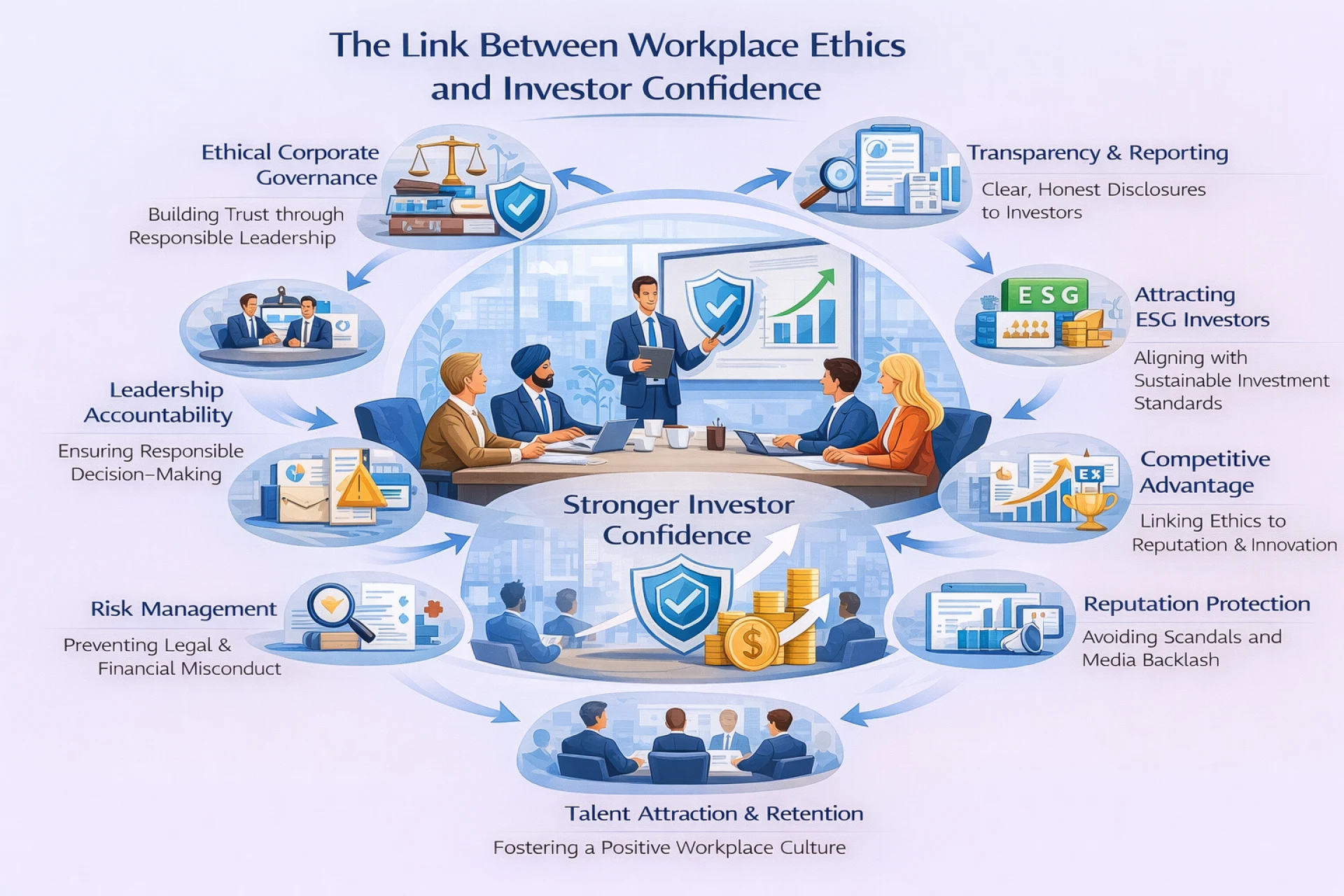

Investor confidence rests on more than financial performance. It reflects trust in governance, culture, and long term resilience. In recent years, workplace ethics has emerged as a central pillar in investment decisions. Investors no longer focus only on revenue and growth. They examine how organisations treat people, manage risk, and uphold integrity.
The connection between workplace ethics and investor confidence is direct and measurable. Ethical cultures reduce exposure to legal disputes, regulatory sanctions, and reputational harm. They strengthen leadership credibility and improve operational stability. In contrast, weak internal controls or toxic workplace practices can erode market value within days.
This article explores how workplace ethics influences investor perception, valuation, and sustained capital support.
Workplace Ethics as a Governance Indicator
Workplace ethics refers to principles guiding behaviour within an organisation. It covers fair treatment, accountability, transparency, and respect. It also includes effective grievance mechanisms and leadership responsibility.
For investors, ethics functions as a proxy for governance quality. Strong governance signals disciplined management. It suggests leadership understands compliance obligations and risk exposure.
Institutional investors and private equity funds conduct due diligence on employment practices. They assess codes of conduct, whistleblowing systems, and complaint resolution processes. A robust ethical framework reduces uncertainty.
In the United Kingdom, oversight bodies such as the Financial Conduct Authority emphasise governance and culture in supervisory reviews. Globally, frameworks such as the Organisation for Economic Co operation and Development corporate governance principles reinforce the importance of integrity and transparency.
Investors align portfolios with businesses demonstrating responsible leadership.
Ethical Culture and Risk Management
Risk remains central to investment analysis. Ethical lapses create legal and financial exposure. Claims of discrimination, harassment, or retaliation often lead to costly litigation and reputational damage.
Workplace misconduct can trigger regulatory scrutiny. Fines, settlements, and loss of contracts follow. Public companies may experience share price volatility. Private firms face funding delays or withdrawal of capital.
An ethical culture reduces such volatility. Clear reporting channels and prompt investigations prevent escalation. Employees feel safe raising concerns internally rather than through public platforms.
From an investor perspective, prevention reduces unpredictable losses. It strengthens forecast reliability. Ethical systems serve as internal early warning mechanisms.
Environmental Social and Governance Metrics
Environmental Social and Governance criteria now influence mainstream investment strategy. Ethical workplace practices fall within the Social and Governance pillars.
Asset managers often rely on ESG ratings to screen investments. Poor workplace culture can lower ESG scores. This affects inclusion in responsible investment funds.
Large institutional investors, including pension funds and sovereign wealth funds, publish stewardship expectations. They expect companies to demonstrate respect for employee rights and inclusive practices.
Failure to meet these expectations may restrict access to long term capital. Ethical leadership supports higher ESG ratings and attracts mission aligned investors.
Reputation as an Intangible Asset
Reputation holds significant value in capital markets. It affects brand strength, recruitment, and stakeholder trust.
Workplace scandals spread rapidly through media and digital platforms. Public reaction can be swift and unforgiving. Investors respond to reputational shocks with caution.
Conversely, organisations known for integrity and fairness enjoy stable investor relations. Transparent communication during crises strengthens credibility.
Reputation influences valuation multiples. Ethical companies often command premium investor interest due to perceived stability.
Leadership Accountability and Investor Perception
Investors scrutinise leadership conduct. They assess whether senior executives model ethical behaviour. Tone at the top matters.
Boards play a crucial role. Independent oversight of workplace issues demonstrates seriousness. Clear reporting lines to audit or risk committees reinforce accountability.
When leaders address concerns openly and implement corrective action, investor trust increases. Silence or denial has the opposite effect.
Ethics therefore becomes a leadership test. Investors evaluate not only policies but lived practice.
Workplace Ethics and Talent Retention
Talent stability supports consistent performance. High turnover disrupts operations and increases costs.
Ethical workplaces attract skilled professionals. Employees seek safe, respectful environments. Positive culture enhances engagement and productivity.
Investors recognise this link. Stable teams deliver reliable output. Ethical environments reduce the risk of sudden departures by key personnel.
In sectors driven by intellectual capital, such as technology and financial services, culture directly influences competitive advantage.
Legal Compliance and Preventive Structures
Compliance forms a baseline expectation. Yet effective compliance requires active education and monitoring.
Regular awareness programmes and internal audits strengthen prevention. External advisors often support these initiatives. Independent reviews conducted by experienced POSH Consultants can help organisations identify procedural gaps and reinforce credibility with stakeholders.
Such engagement demonstrates proactive governance. Investors value preventive action over reactive settlement.
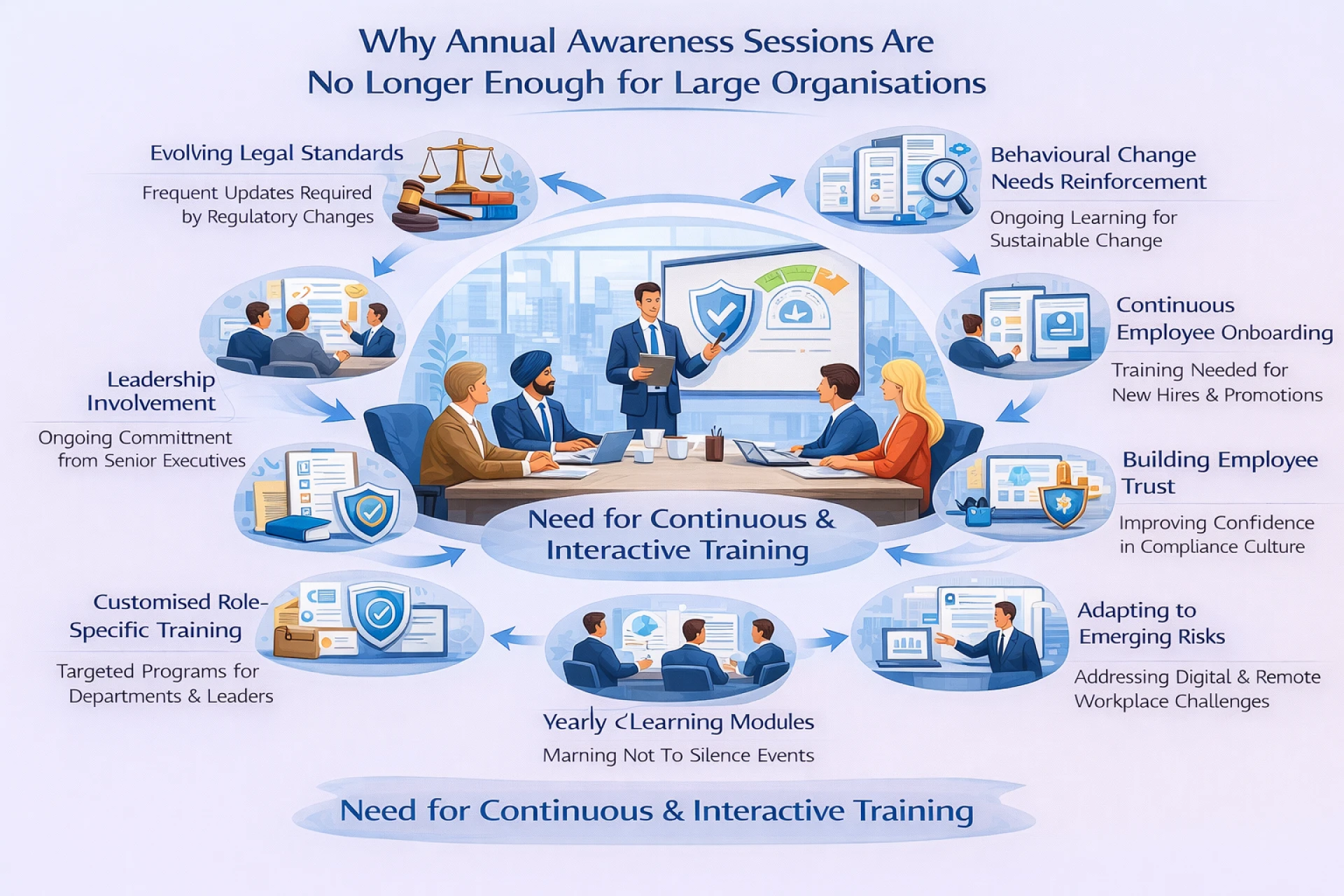
Training also plays a vital role. Structured and periodic sessions delivered through Posh Training services build understanding across hierarchical levels. Continuous education reduces the likelihood of misconduct and reinforces accountability.
When investors observe consistent compliance efforts, they perceive reduced litigation risk.
Transparency and Reporting Standards
Transparency shapes investor decision making. Ethical companies provide clear disclosures on workplace practices. Annual reports often include information on complaints data, diversity metrics, and policy updates.
Disclosure builds confidence. Concealment raises suspicion.
Many jurisdictions encourage non financial reporting. Investors increasingly demand measurable data on workplace conduct.
Transparent reporting signals maturity in governance. It enables informed evaluation rather than speculation.
Crisis Response and Market Reaction
Crises test ethical foundations. Allegations of misconduct may surface unexpectedly. Investor response depends on organisational reaction.
Prompt investigation, independent oversight, and clear communication can limit damage. Delayed response intensifies scrutiny.
Capital markets react to uncertainty. Effective crisis management reassures investors.
Preparedness stems from established ethical systems. Organisations with mature frameworks respond with discipline and consistency.
Long Term Value Creation
Ethics supports sustainable growth. Short term gains achieved through exploitation or concealment rarely endure.
Investor confidence thrives on predictability. Ethical cultures create stable operating conditions. They reduce surprises and strengthen stakeholder relationships.
Long term investors prefer businesses with enduring values. Ethical commitment aligns with this perspective.
Research in behavioural finance suggests trust reduces perceived risk. Reduced perceived risk supports lower cost of capital.
Therefore workplace ethics indirectly influences funding costs and expansion capacity.
Global Investment Landscape
Globalisation has expanded investor scrutiny. International funds compare governance standards across jurisdictions.
Multinational corporations must meet varied regulatory expectations. Ethical consistency across regions strengthens credibility.
Cross border investors often apply uniform standards. A failure in one jurisdiction can affect global valuation.
Workplace ethics therefore carries international significance. It transcends local compliance.
Practical Steps to Strengthen Ethical Confidence
Organisations seeking to enhance investor confidence should consider practical measures:
- Establish clear codes of conduct with board oversight.
- Provide confidential reporting mechanisms.
- Conduct periodic internal audits.
- Deliver continuous role specific training.
- Engage independent experts for policy review.
- Publish transparent annual disclosures.
- Monitor leadership accountability metrics.
These steps demonstrate structured governance rather than symbolic commitment.
Conclusion
Workplace ethics and investor confidence are closely connected. Ethical culture reduces legal exposure, strengthens reputation, and enhances governance credibility. Investors interpret strong internal systems as indicators of disciplined management and lower risk.
In an era where capital flows respond swiftly to reputational events, integrity becomes a strategic asset. Organisations which embed ethics into daily operations position themselves for stable growth and sustained investor trust.
Investor confidence is not secured through financial metrics alone. It grows from consistent conduct, transparent reporting, and accountable leadership. Workplace ethics therefore stands at the centre of modern investment evaluation.




























Sign in to leave a comment.