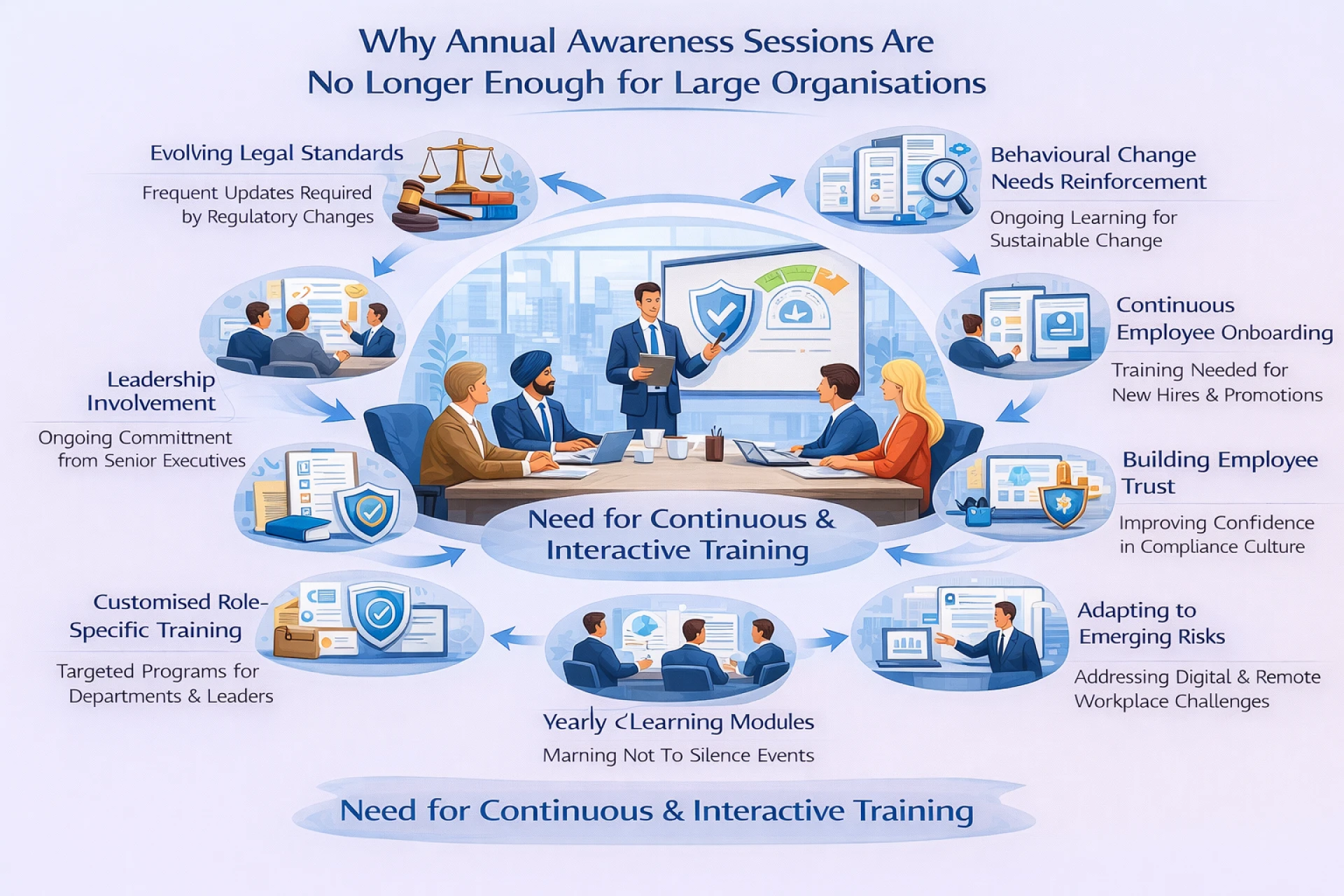

Large organisations operate in an environment shaped by regulation, public scrutiny, and evolving workforce expectations. In such a climate, compliance cannot rely on a single annual awareness session. While yearly programmes once met formal requirements, they no longer address the complexity of modern corporate risk.
Today, organisations must adopt continuous and structured engagement. A one time session may inform. It rarely transforms behaviour. It does not sustain cultural change. For large enterprises with diverse teams and multiple locations, the limitations are even more visible.
The Limits of Annual Awareness
Annual awareness sessions often focus on policy overview. Employees gather, review slides, sign attendance sheets, and return to daily work. Information is delivered in bulk. Retention is uncertain.
Behavioural science shows learning requires reinforcement. Concepts fade when not revisited. New employees join throughout the year. Role changes create new responsibilities. Static annual sessions cannot respond to these shifts.
In large organisations, workforce diversity adds further complexity. Cultural backgrounds, seniority levels, and job functions vary widely. A single generic session fails to address nuanced risks.
Evolving Legal Expectations
Regulators increasingly assess the effectiveness of compliance measures. They look beyond attendance records. They examine whether training is practical, updated, and role specific.
Courts often consider whether employers took reasonable preventive steps. If an incident occurs months after a basic annual presentation, reliance on that session alone may appear insufficient.
Continuous training demonstrates diligence. It reflects active governance rather than passive compliance. Independent reviews by experienced POSH Consultants often reveal gaps in programmes built solely around yearly events.
The Changing Nature of Workplace Risk
Workplace risk has expanded. Remote working, digital communication, and cross border teams introduce new scenarios. Misconduct may occur through virtual platforms. Informal interactions blur professional boundaries.
An annual lecture cannot address these dynamic risks. Regular engagement allows organisations to respond to emerging challenges. Short refreshers, scenario discussions, and department specific workshops provide relevance.
Large organisations must adapt content to operational realities. What applies in a corporate office may differ from manufacturing sites or field operations.
Behavioural Change Requires Reinforcement
Awareness does not equal understanding. Understanding does not guarantee action. Behavioural change demands repetition and practical application.
Micro learning modules delivered throughout the year improve retention. Interactive sessions encourage discussion. Case studies illustrate consequences. Role play exercises build confidence in reporting and response.
Such layered learning creates deeper impact. It normalises conversations around workplace conduct. It embeds compliance into daily operations.
The Importance of Leadership Engagement
Employees observe leadership behaviour closely. If training appears routine and detached from leadership priorities, credibility suffers.
Large organisations benefit from visible leadership participation in periodic sessions. When senior executives communicate expectations regularly, standards gain legitimacy.
Annual sessions rarely allow sustained leadership messaging. Ongoing programmes create multiple touchpoints. These reinforce tone at the top.
Addressing New Joiners and Promotions
Large enterprises hire continuously. Waiting for the next annual session leaves new employees without guidance for months. Early induction training is essential.
Promotions also create risk. Managers acquire responsibility for handling complaints and maintaining team culture. They require specialised instruction beyond general awareness.
Structured Posh Training services provide tailored modules for different roles. This targeted approach ensures relevance and accountability.
Data Driven Compliance
Modern governance relies on measurable indicators. Annual sessions offer limited data beyond attendance. Continuous programmes allow deeper analysis.
Organisations can track participation rates across departments. Feedback surveys measure understanding. Assessment tools evaluate knowledge retention. Complaint trends may indicate training impact.
Regular review of this data informs improvement. It also strengthens board oversight.
Enhancing Employee Trust
Trust grows through consistency. When organisations engage employees throughout the year, it signals commitment. Sporadic engagement may create perception of formality rather than sincerity.
Employees who see regular communication feel valued. They are more likely to report concerns early. Early reporting reduces escalation and reputational damage.
Trust also protects legal interests. Demonstrable effort to educate and engage staff supports reasonable defence in disputes.
Cost of Complacency
Some organisations view continuous training as resource intensive. However, the cost of inadequate prevention can be far higher. Litigation expenses, regulatory penalties, and reputational harm may exceed the investment required for structured engagement.
Large organisations carry amplified exposure. Media attention, investor scrutiny, and public accountability intensify impact. Preventive measures reduce vulnerability.
Integrating Technology
Digital platforms enable scalable training. Short online modules, periodic quizzes, and interactive webinars reach dispersed teams efficiently. Technology supports documentation and audit readiness.
However, digital delivery should complement rather than replace human interaction. Sensitive topics require discussion. Facilitated sessions encourage reflection and empathy.
A blended approach combines efficiency with depth.
Continuous Improvement and Review
Risk landscapes evolve. Legal developments reshape obligations. Social expectations shift. Annual static content quickly becomes outdated.
Periodic review ensures alignment with current standards. External audits may identify blind spots. Feedback from employees highlights practical concerns.
This iterative process strengthens compliance frameworks and cultural resilience.
Creating a Learning Culture
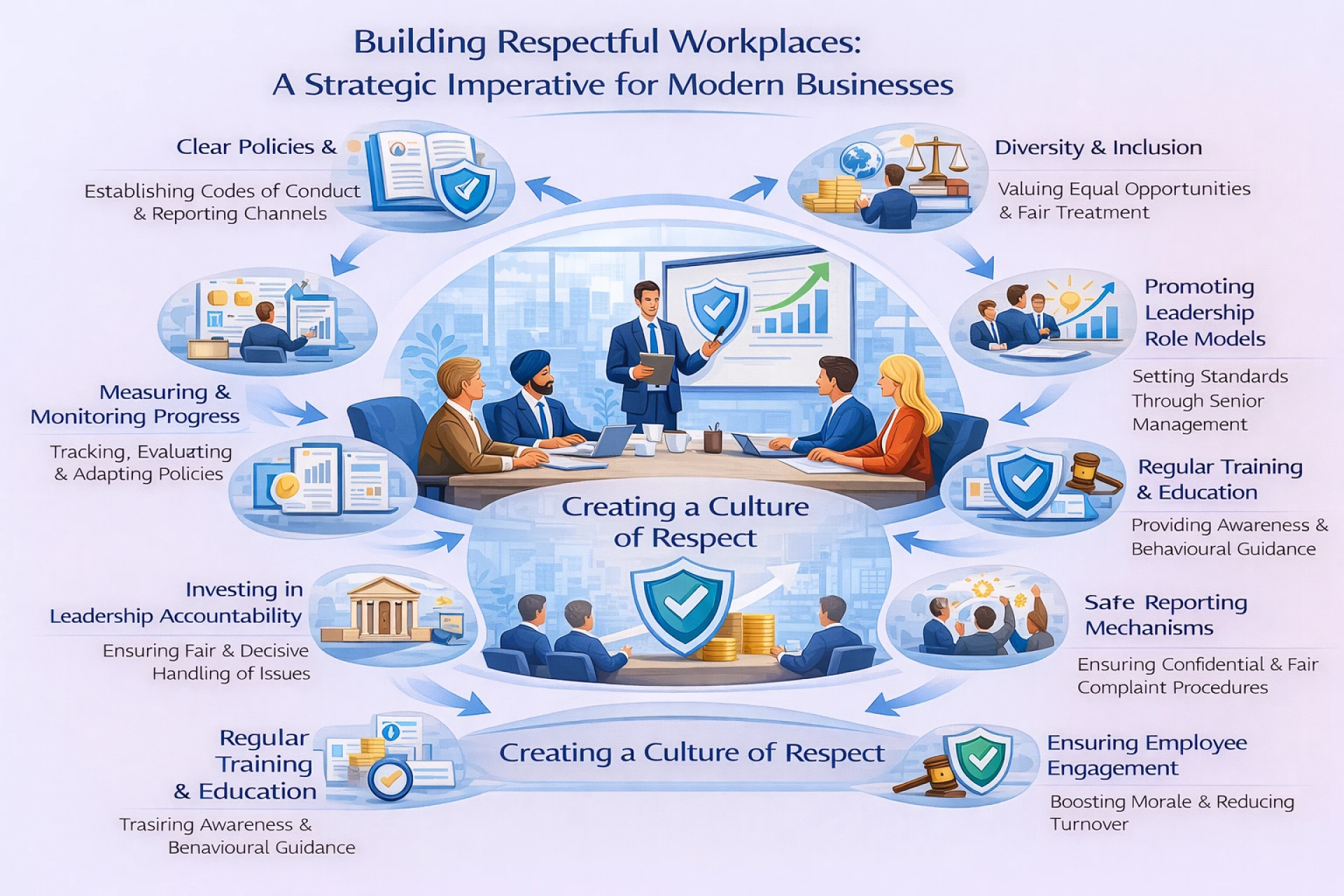
Large organisations benefit from embedding learning within daily operations. Instead of treating awareness as an event, it becomes an ongoing dialogue.
Short reminders in team meetings. Leadership messages on ethical conduct. Regular scenario discussions. These actions reinforce standards consistently.
When compliance becomes part of routine conversation, behaviour aligns naturally.
Conclusion
Annual awareness sessions once satisfied formal compliance requirements. In today’s complex environment, they are no longer enough for large organisations. Expanding workforce diversity, evolving legal standards, and heightened public scrutiny demand continuous engagement.
Structured, role specific, and regularly updated training enhances understanding and accountability. It strengthens governance. It builds trust. It reduces risk.
Large organisations must move beyond symbolic annual events. Continuous education, supported by expert guidance and measurable outcomes, offers a more resilient path. In a landscape where culture and compliance intersect, sustained engagement is not an optional enhancement. It is a strategic necessity.






























Sign in to leave a comment.