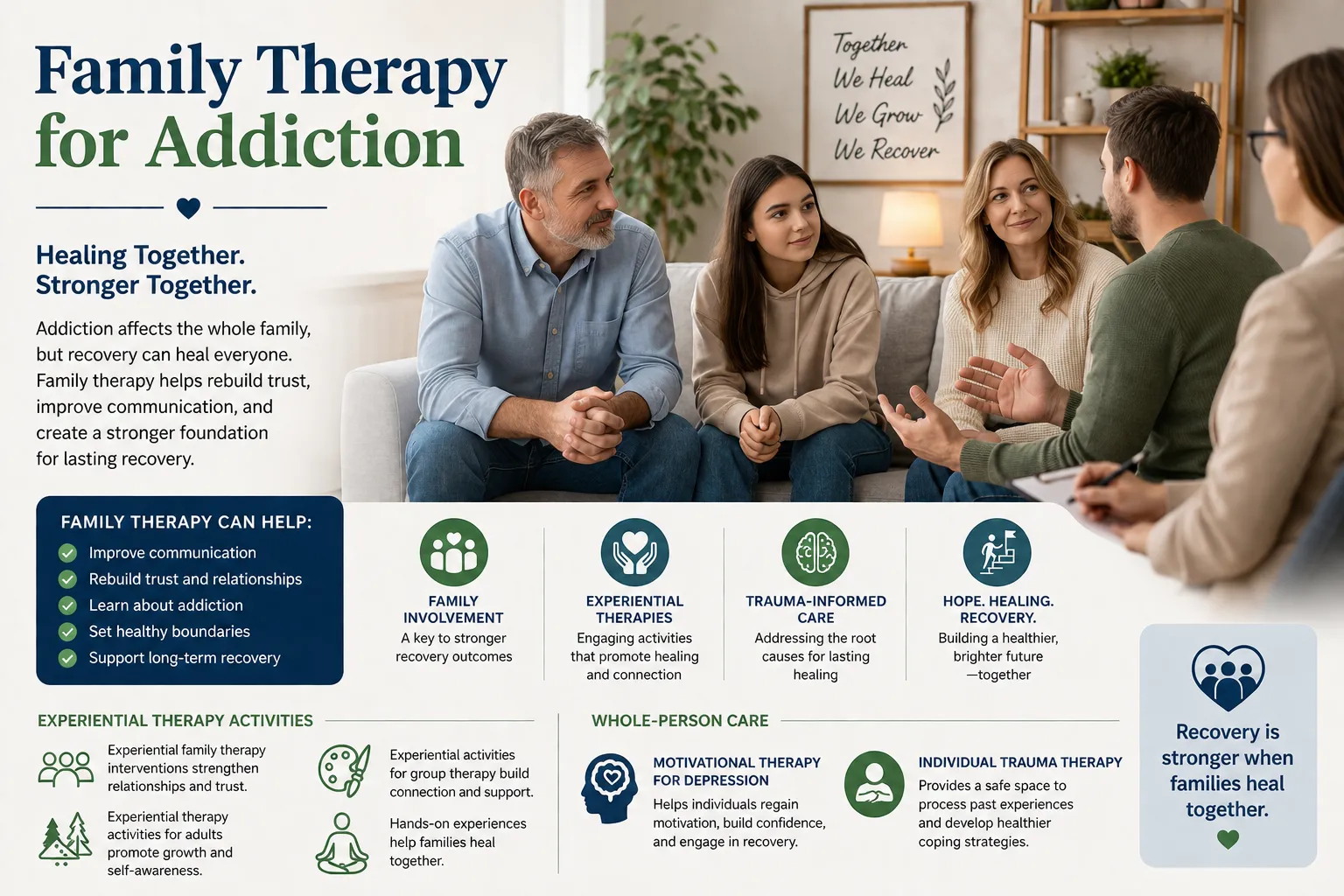
Addiction rarely affects just one person—it impacts spouses, parents, children, siblings, and close friends. While individual treatment is essential, lasting recovery often requires healing damaged relationships and rebuilding trust. That's where family therapy for addiction becomes one of the most valuable components of comprehensive treatment.
At WisHope Recovery, we believe recovery extends beyond the individual. Our family-centered approach helps loved ones understand addiction, improve communication, establish healthy boundaries, and become active participants in long-term recovery.
Whether someone is entering treatment for the first time or rebuilding life after relapse, involving the family can significantly improve treatment outcomes and emotional well-being.
What Is Family Therapy for Addiction?
Family therapy for addiction is a structured form of counseling that includes family members in the recovery process. Rather than focusing only on the person experiencing substance use disorder, therapy addresses the emotional, behavioral, and relational patterns that influence recovery.
Sessions are guided by licensed therapists who help families:
- Improve communication
- Resolve conflict
- Build healthier relationships
- Learn about addiction as a medical condition
- Reduce enabling behaviors
- Develop healthy coping skills
- Support sustainable recovery
Family therapy recognizes that healing happens together, not in isolation.
Why Family Therapy Matters During Addiction Recovery
Substance use disorders often create long-lasting emotional wounds. Loved ones may experience:
- Broken trust
- Chronic stress
- Anxiety
- Depression
- Financial strain
- Emotional exhaustion
- Feelings of guilt or resentment
Without addressing these issues, unhealthy relationship patterns may continue even after sobriety begins.
Family therapy creates a safe environment where everyone can express emotions, understand each other's experiences, and work toward healthier relationships.
Benefits of Family Therapy for Addiction
1. Improves Communication
Many families struggle with communication after years of addiction.
Therapy teaches individuals how to:
- Listen actively
- Express emotions respectfully
- Resolve disagreements
- Reduce blame and criticism
Healthy communication builds stronger family connections.
2. Rebuilds Trust
Trust isn't restored overnight.
Family therapy helps loved ones:
- Understand accountability
- Recognize consistent healthy behaviors
- Set realistic expectations
- Celebrate recovery milestones
Trust grows through repeated positive experiences rather than promises alone.
3. Educates Families About Addiction
Many people mistakenly believe addiction is simply a lack of willpower.
Therapists educate families about:
- Brain chemistry
- Mental health
- Trauma
- Triggers
- Recovery stages
- Relapse prevention
This understanding reduces stigma while encouraging empathy.
4. Helps Prevent Relapse
Family support is one of the strongest protective factors against relapse.
Therapy helps families:
- Identify warning signs
- Reduce unhealthy conflict
- Encourage accountability
- Support recovery routines
- Create healthier home environments
A supportive household often improves long-term treatment success.
Common Family Therapy Approaches
Every family has unique needs, which is why treatment plans are individualized.
Common approaches include:
Structural Family Therapy
Focuses on improving family roles, boundaries, and communication.
Behavioral Family Therapy
Encourages positive behaviors while reducing conflict.
Cognitive Behavioral Family Therapy
Helps family members identify unhealthy thinking patterns that affect relationships.
Systemic Family Therapy
Looks at the family as an interconnected system where each person's behavior influences others.
The Role of Experiential Family Therapy
Many individuals find it difficult to express emotions through conversation alone.
That's where experiential family therapy interventions become especially valuable.
Experiential therapies encourage healing through shared experiences rather than traditional talk therapy.
Examples include:
- Art projects
- Guided role-playing
- Nature-based activities
- Family problem-solving exercises
- Mindfulness practices
- Creative expression
These interventions often reveal emotional patterns that words cannot.
Experiential Therapy Activities That Strengthen Recovery
Modern addiction treatment frequently combines family counseling with experiential therapy activities that promote connection and emotional growth.
Examples include:
- Trust-building exercises
- Collaborative art sessions
- Guided storytelling
- Family obstacle courses
- Outdoor team challenges
- Music therapy
- Mindfulness exercises
These experiences encourage families to rebuild relationships naturally.
Experiential Therapy Activities for Adults
Adults recovering from addiction often benefit from hands-on therapeutic experiences.
Popular experiential therapy activities for adults include:
- Journaling workshops
- Guided meditation
- Equine-assisted therapy
- Hiking therapy
- Art therapy
- Cooking together
- Problem-solving challenges
- Emotional awareness exercises
These activities reduce stress while improving emotional regulation.
Experiential Activities for Group Therapy
Recovery is strengthened through community support.
Many treatment centers include experiential activities for group therapy such as:
- Trust circles
- Recovery storytelling
- Team-building games
- Creative writing
- Art collaboration
- Mindfulness groups
- Recreational therapy
- Group reflection exercises
Group experiences remind participants they are not alone in recovery.
Addressing Mental Health Alongside Addiction
Many people entering addiction treatment also struggle with:
- Depression
- Anxiety
- PTSD
- Trauma
- Chronic stress
Integrated care is essential.
Motivational Therapy for Depression
Some individuals lose hope during recovery because depression reduces motivation and confidence.
Motivational therapy for depression helps individuals:
- Build confidence
- Set achievable goals
- Increase treatment engagement
- Develop healthier routines
- Strengthen internal motivation
When combined with addiction treatment, motivational approaches often improve participation and long-term outcomes.
Healing Trauma Through Individual Therapy
Many substance use disorders develop alongside unresolved trauma.
While family counseling improves relationships, individual trauma therapy allows people to safely process personal experiences that may contribute to addiction.
Therapists may help individuals:
- Process traumatic memories
- Develop healthy coping strategies
- Reduce emotional triggers
- Improve emotional regulation
- Build resilience
Healing trauma often strengthens recovery while improving overall mental health.
What Happens During Family Therapy Sessions?
Although every treatment plan is different, sessions commonly include:
Assessment
Therapists learn about family dynamics, communication styles, and recovery goals.
Education
Families learn about addiction, relapse prevention, and recovery expectations.
Skill Building
Sessions focus on:
- Communication
- Conflict resolution
- Emotional regulation
- Healthy boundaries
Healing Conversations
Family members share thoughts and feelings in a supportive, therapist-guided environment.
Recovery Planning
Everyone develops practical strategies to support long-term recovery at home.
Healthy Boundaries Are Essential
Family therapy isn't about fixing one person.
It's about creating healthier relationships for everyone.
Healthy boundaries may include:
- Encouraging responsibility
- Avoiding enabling behaviors
- Respecting personal space
- Supporting treatment participation
- Maintaining honest communication
Healthy boundaries strengthen both recovery and family relationships.
How Families Can Support Recovery at Home
Recovery continues after formal treatment ends.
Families can help by:
- Attending therapy consistently
- Participating in educational programs
- Practicing healthy communication
- Celebrating progress
- Encouraging self-care
- Reducing unnecessary conflict
- Supporting relapse prevention plans
- Remaining patient throughout recovery
Small, consistent acts of support can make a meaningful difference over time.
Why Choose WisHope Recovery?
At WisHope Recovery, we understand that addiction affects the entire family—not just the individual. Our compassionate, evidence-based programs integrate family involvement into the recovery journey, helping loved ones heal together.
Our comprehensive approach may include:
- Family therapy for addiction
- Individual counseling
- Group therapy
- Trauma-informed care
- Individual trauma therapy
- Motivational therapy for depression
- Evidence-based behavioral therapies
- Experiential therapy activities
- Experiential family therapy interventions
- Personalized aftercare planning
Our experienced clinical team works collaboratively with individuals and families to foster healthier relationships, improve communication, and support lasting recovery. By addressing both substance use and the emotional challenges that accompany it, we help create a stronger foundation for lifelong wellness.
Frequently Asked Questions
Is family therapy effective for addiction recovery?
Yes. Research shows that family involvement can improve treatment engagement, strengthen relationships, and reduce the risk of relapse by creating a more supportive recovery environment.
Who should attend family therapy?
Depending on the individual's needs, therapy may include spouses, parents, siblings, adult children, or other close family members who play an important role in recovery.
Can family therapy help after treatment?
Absolutely. Continuing family therapy after residential or outpatient treatment can help maintain healthy communication, reinforce recovery strategies, and address new challenges as they arise.
How are experiential therapies used in family treatment?
Experiential approaches use structured activities, creative expression, role-playing, and team-building exercises to help families process emotions, improve communication, and rebuild trust in ways that traditional conversation alone may not achieve.
Does family therapy replace individual counseling?
No. Family therapy complements—not replaces—individual counseling. Many people benefit from both family sessions and individual trauma therapy, allowing them to heal personal experiences while improving family relationships.
Begin Healing Together with WisHope Recovery
Recovery is strongest when families heal together. Through compassionate care, evidence-based therapies, and a whole-person approach, WisHope Recovery helps individuals and their loved ones rebuild trust, improve communication, and create a healthier future.
Whether you're seeking support for yourself or a loved one, family therapy can be a powerful step toward lasting recovery. Contact WisHope Recovery today to learn how our integrated treatment programs can help your family move forward—together.




























Sign in to leave a comment.