

Let me start with something I hear almost every week. A client sits down, worn out from years of being told their pain is "just stress" or "all in their head," and they ask me the same quiet question. Why does my whole body hurt when every test says I am fine?
If that sounds like you, I want you to know something first. You are not imagining it. And the fact that your bloodwork looks "normal" does not mean nothing is wrong. It usually means nobody has looked in the right place yet.

I have worked with a lot of people living with fibromyalgia. Over time, one pattern keeps showing up again and again. It is not just about pain. It is about energy. The kind of energy your cells are supposed to make and, for a lot of these folks, simply are not making enough of.
Let me walk you through what I mean, in plain words.
Fibromyalgia Is Not Just a Pain Problem
Most people think of fibromyalgia as a pain condition, and yes, the pain is real and often everywhere. But the people I work with rarely describe only pain. They describe a bundle. Deep tiredness that sleep does not fix. Brain fog that makes them lose words mid-sentence. Trouble sleeping even when they are exhausted. Skin and muscles that feel sore to the touch for no clear reason.
When you see all of that together, it stops looking like a simple muscle problem. It starts looking like an energy problem. And that points to one place in particular: the tiny power plants inside your cells.
Every cell in your body has little engines that make the energy you run on. Your muscles need it. Your brain needs it. Your nerves need it. When those little engines slow down, the tissues that need the most energy are the first to complain. That is your muscles, your nerves, and your brain. Which, funny enough, is exactly where fibromyalgia hits hardest.
So the real question becomes: why would those engines slow down in the first place? A lot of the time, the answer is that they are missing the raw materials they need to do their job. And that is where nutrients come in.
Magnesium: The One That Keeps Coming Up
If I had to point to a single nutrient that shows up low again and again in these clients, it would be magnesium.
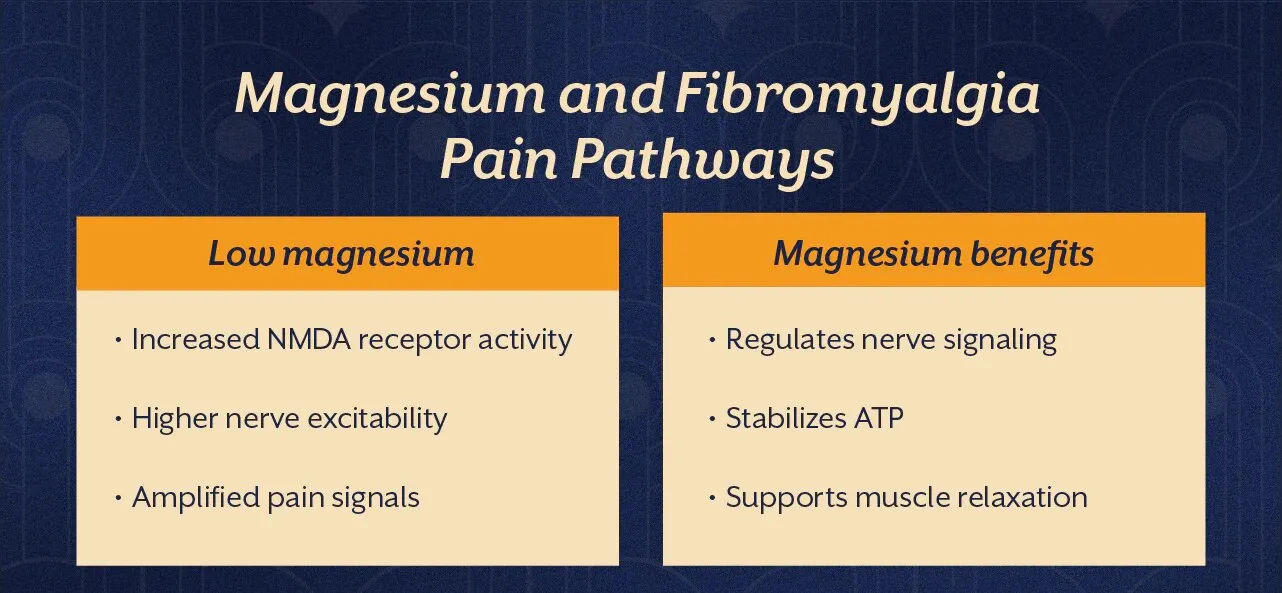
Here is why it matters so much. That energy your cells make does not work on its own. It needs magnesium to stay stable and actually be usable. Think of magnesium as the partner that holds your energy steady so your body can spend it. Without enough of it, the energy your cells make gets shaky and inefficient, even if everything else is in place.
Magnesium does a second job too, and this one is big for pain. It helps calm the switches in your nervous system that control how loudly pain signals get sent. When magnesium runs low, those switches get twitchy. Pain that should feel like a whisper starts shouting. That is one reason so many people find magnesium helpful as part of a natural fibromyalgia pain relief plan. It is not masking the pain. It is helping turn the volume back down to where it should be.
Now, not all magnesium is the same, and this trips people up constantly. The cheap forms you find at any corner shop often run straight through you and cause loose stools before they ever do much good. The form I usually point people toward is magnesium glycinate, sometimes called bisglycinate. It absorbs well and is gentle on the stomach, which matters when you are taking it daily.
CoQ10: Fuel for the Little Engines
The next piece is a nutrient called CoQ10.
If magnesium keeps your energy stable, CoQ10 helps your cells actually produce it. It sits right inside those little engines I mentioned and helps run the process that makes your energy in the first place. When CoQ10 is low, the whole production line slows down, and you feel it as that heavy, bone-deep tiredness where even small tasks feel like too much.
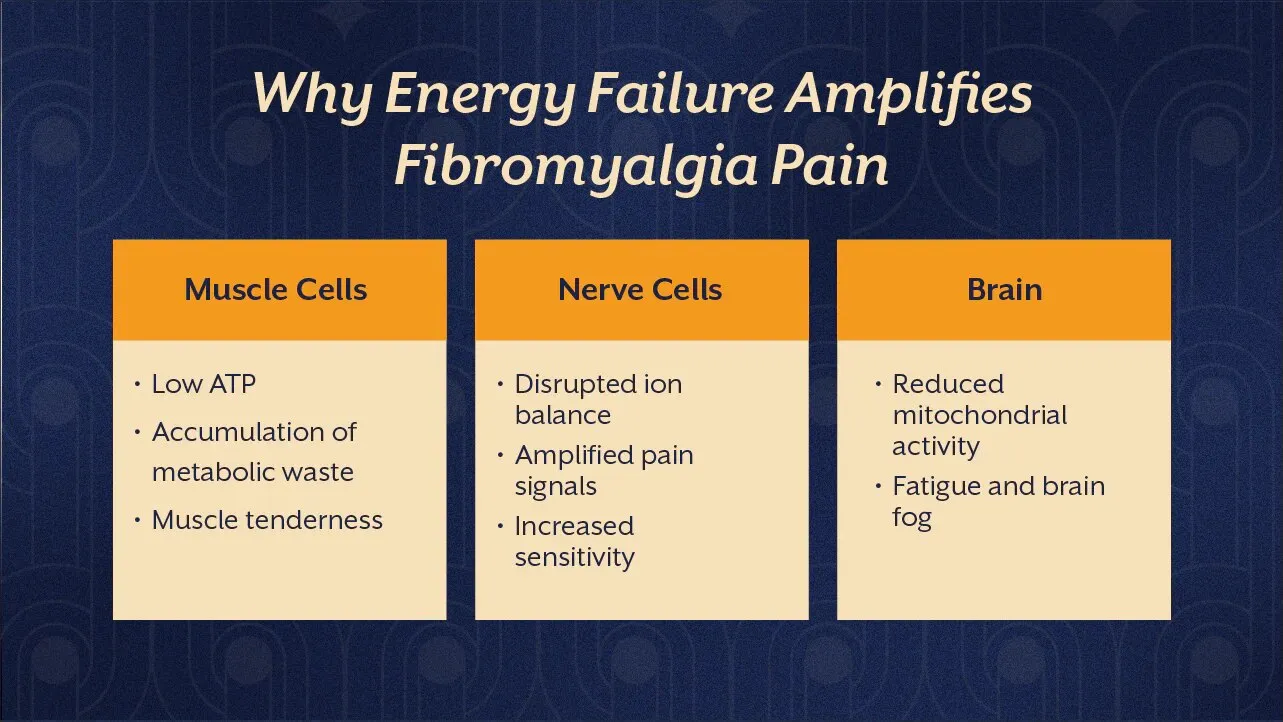
Low CoQ10 shows up often in people dealing with fibromyalgia and constant fatigue. That is why CoQ10 for fibromyalgia is something I bring up so often. On top of helping make energy, it also acts as a shield, protecting those little engines from the wear and tear that comes from running hard all day. So it helps in two ways at once. More fuel, and better protection.
B Vitamins: The Spark Plugs
Then there are the B vitamins, and I like to think of them as the spark plugs.
You can have fuel and a stable engine, but without a spark, nothing runs. B vitamins are what get the reactions going. They help turn your food into usable energy, and they help your brain make the chemicals that steady your mood and sleep. When they run low, two things tend to happen together. The tiredness gets worse, and the mood and fog get worse right alongside it. That combination is so common in fibromyalgia that I almost expect it.
One thing worth knowing. Some people do not process regular B vitamins well because of how their body is wired. For them, the "activated" or already-converted forms work far better, because the body can use them straight away without extra steps. If you have taken a basic B vitamin before and felt nothing, this might be why.
Why One Pill Alone Rarely Works
Here is the part I really want you to take away, because it is the mistake I see most often.
People go looking for the one magic supplement. They try magnesium alone for a month, feel a little something, then give up. Or they try CoQ10 alone and decide it did not work. I understand the instinct, but it misses how the body actually runs.
These nutrients are a team. Magnesium keeps your energy stable, CoQ10 helps make it, and B vitamins get the whole thing firing. Pull one out and the others cannot fully do their job. It is like having a car with fuel and spark but a dead battery. Everything has to be there together for the engine to actually turn over.
That is why the people who tend to do best are not chasing single pills. They are supporting the whole system at once. In practice, a fuller fibromyalgia nutrient stack usually looks something like this: magnesium to steady your energy and calm pain signals, CoQ10 to help produce energy, a good B complex to spark the reactions, omega 3 to support your cells and settle inflammation, and vitamin D to support your muscles and immune balance. You do not always need every single one, but you need to think in terms of a system, not a silver bullet.
The Part I Never Skip
I will be honest with you about something, because I would rather you hear it from me than learn it the hard way.
Supplements are not the whole answer. They are a piece. I have watched people pour money into every bottle on the shelf while their sleep stayed broken, their stress stayed sky-high, and their gut stayed a mess. No nutrient can outwork those things if they stay ignored.
So when someone comes to me, I do not hand them a list of pills on day one. We look at the whole picture first. How are you sleeping? What is your stress actually doing to you? Is your gut absorbing anything you swallow, or is it passing straight through? Two people with the exact same diagnosis can need completely different things, and the only way to know is to actually look. If you want to understand the mindset we bring to that kind of root cause work, this piece on whether Semaglutide fixes the root cause or just hides it walks through exactly how we think about it.
The goal is never to chase symptoms around forever. It is to figure out what is actually driving them, then support your body properly so it can do what it was built to do.
The Bottom Line
Fibromyalgia is not "all in your head," and it is not something you just have to live with quietly. Underneath the pain and the exhaustion, there is very often a real, physical story about cells that cannot make enough energy, and nutrients that have quietly run low.

Magnesium helps steady that energy and calm your pain signals. CoQ10 helps your cells make energy again. B vitamins get the whole process moving. Together, with the right support around them, they can help a lot of people feel more like themselves.
But please do not try to piece this together alone from random internet advice. Your body, your history, and your deficiencies are your own. The smartest move is to understand what is actually going on with you first, then build a plan around that. If you want a hand doing exactly that, you can start with a root cause consult with our team over at iThrive, where we look at what is really driving your symptoms before recommending a single thing.
Frequently Asked Questions
Why is magnesium so important for fibromyalgia?
Magnesium does two big jobs. It helps keep your cellular energy stable and usable, and it helps calm the nervous system switches that control pain. Many people with fibromyalgia are low in magnesium, and that shortage can make both the pain and the fatigue feel worse.
Which form of magnesium is best?
For most people, magnesium glycinate (also called bisglycinate) is a solid choice. It absorbs well and is gentle on digestion, so it does not cause the loose stools that cheaper forms often do. That matters when you are taking it every day.
Can CoQ10 really help with fibromyalgia fatigue?
It often helps. CoQ10 supports the process your cells use to make energy, and low levels are common in people with fibromyalgia and ongoing tiredness. Bringing it back up can help restore some of that missing energy, which is why so many nutrient plans include it.
Do I need to take all of these supplements together?
Not always, but they do work as a team. Magnesium, CoQ10, and B vitamins each support a different part of how your body makes and uses energy. Supporting them together tends to work far better than leaning on any single one alone. What you specifically need depends on your own body and deficiencies.
Will supplements replace my medical treatment?
No, and they are not meant to. Good nutrient support works alongside proper medical care, not instead of it. The goal is to fix the deficiencies quietly making things worse, so your body has a better foundation to work from.






























Sign in to leave a comment.