
Over the last year or so, one question keeps landing in my inbox. People want to know about a tiny peptide called KPV. Most of them found it while going down a late-night rabbit hole looking for something, anything, that might quiet down the inflammation they have been fighting for years. Gut that never feels settled. Skin that flares for no clear reason. Joints that ache more than they should for someone their age.
So let me talk to you the way I would if you were sitting across from me. No hype. Just what this peptide is, what it seems to do, and where it fits.
What Is KPV Peptide, Really?
KPV is about as small as a peptide gets. It is made of just three amino acids: lysine, proline, and valine. That is where the name comes from. K, P, V.
Here is the part I find interesting. KPV is actually a small piece of a larger hormone your body already makes called alpha-MSH. That parent hormone helps manage a bunch of things, including how much inflammation your body runs. When researchers looked closer, they realized a lot of that calming effect could be traced back to this one small fragment. KPV.
Being small turns out to be an advantage. Smaller peptides are usually easier to make, tend to be more stable, and often cause fewer unwanted effects than bigger molecules. So you get a lot of the benefit of the parent hormone in a much simpler package.
Why People Care: It Calms Inflammation Without Switching Off Your Defenses
This is the whole reason KPV gets attention, so I want to be clear about it.
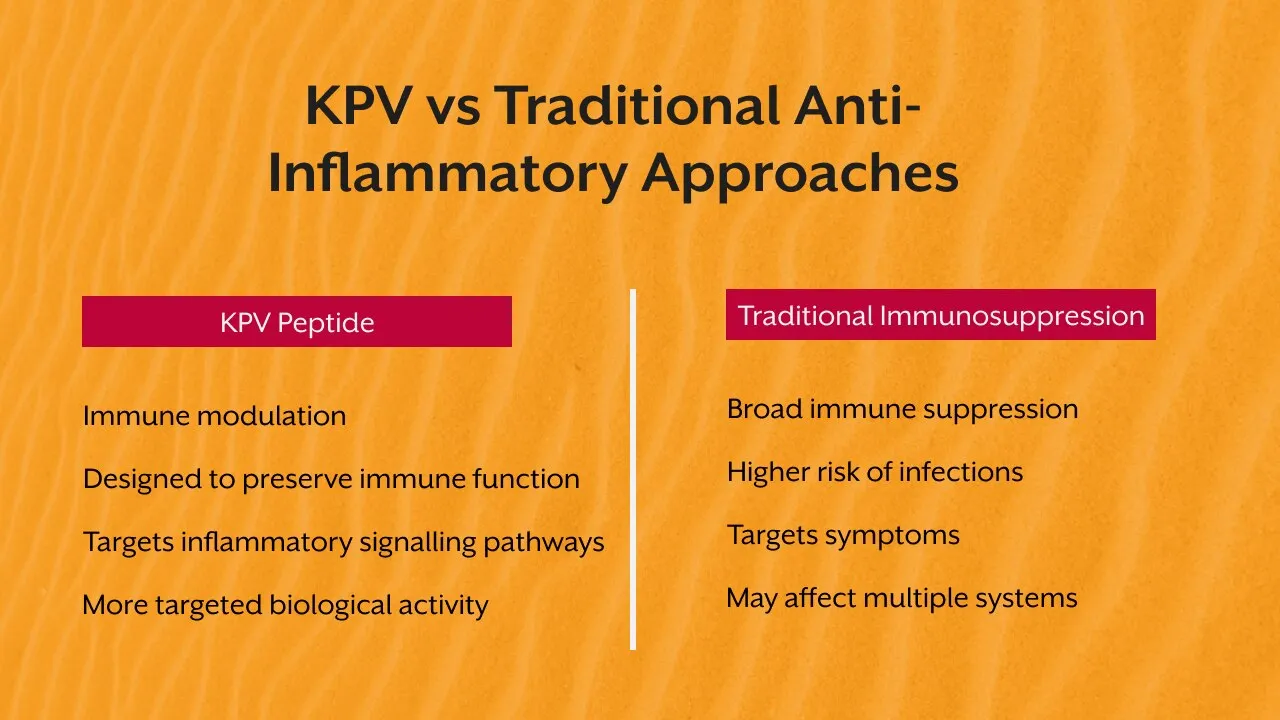
Most drugs that fight chronic inflammation work by suppressing your immune system. They turn the volume down on everything. That helps the inflammation, sure, but it can also leave you more open to infections and other problems.
KPV seems to work differently. Instead of shutting the system down, it looks like it helps bring an overactive response back into balance. Think of it less like cutting the power and more like turning down a thermostat that got stuck too high. Your defenses stay on. The excess inflammation cools off.
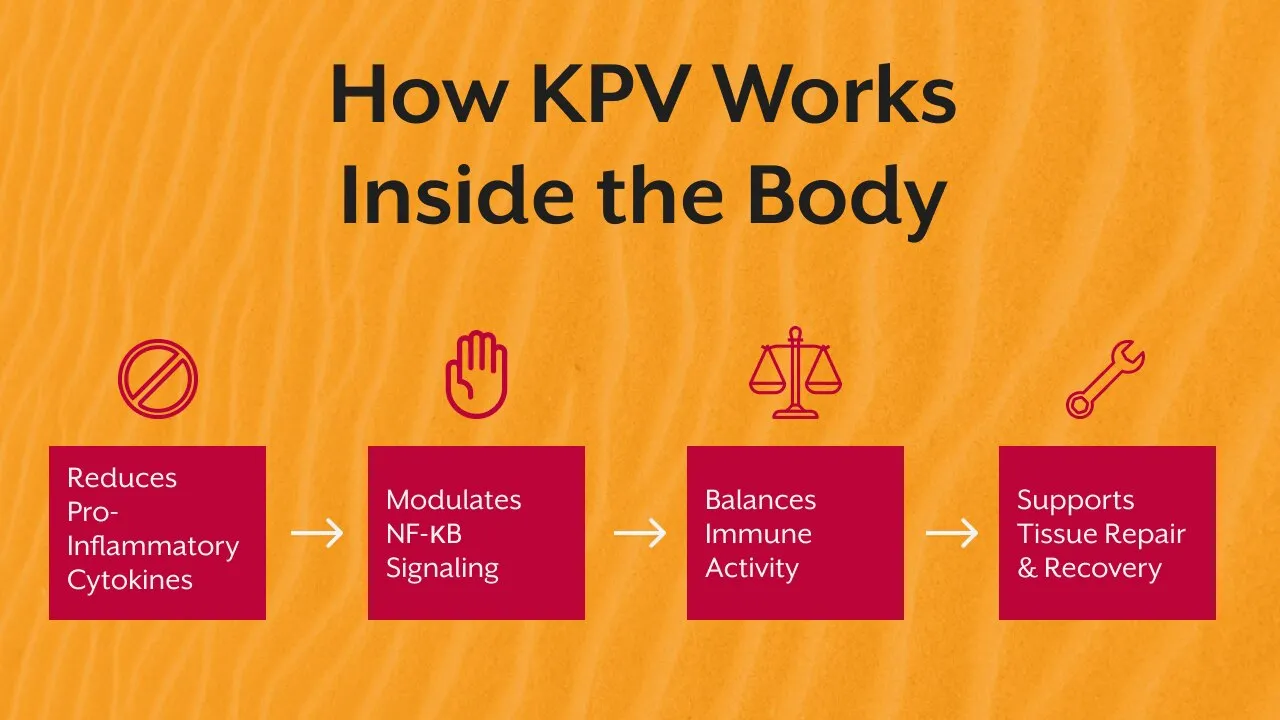
As an anti-inflammatory peptide, it appears to do this in a few ways at once. It lowers the signals that drive inflammation, like TNF-alpha and IL-6. It calms a master switch called NF-kB that controls a lot of inflammatory genes. And it seems to help tissue repair itself instead of staying stuck in a damaged, inflamed state.
KPV for Gut Health: Where the Research Looks Most Promising
If there is one area where KPV has people genuinely excited, it is the gut.
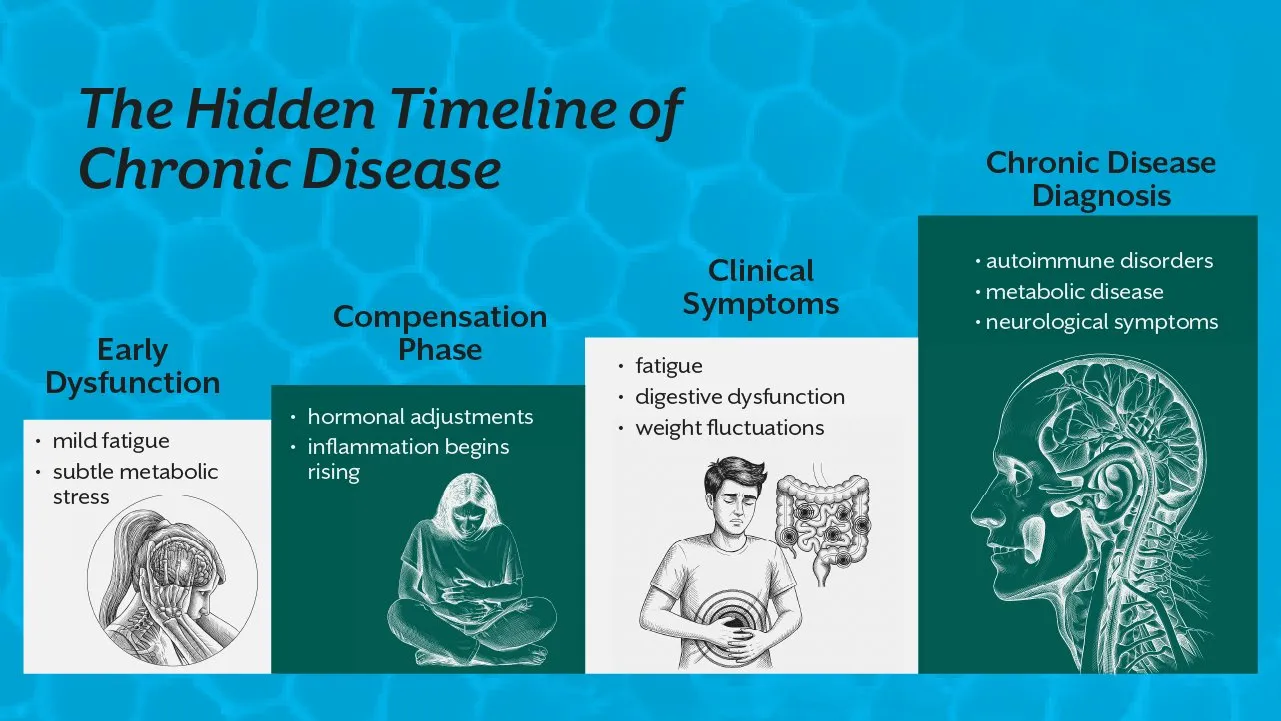
Conditions like Crohn's disease and ulcerative colitis, which fall under inflammatory bowel disease, involve long-term inflammation in the digestive tract. The usual symptoms are rough: belly pain, diarrhea, bleeding, fatigue, weight loss. Many treatments help, but they often come with that same trade-off of dialing down the whole immune system.
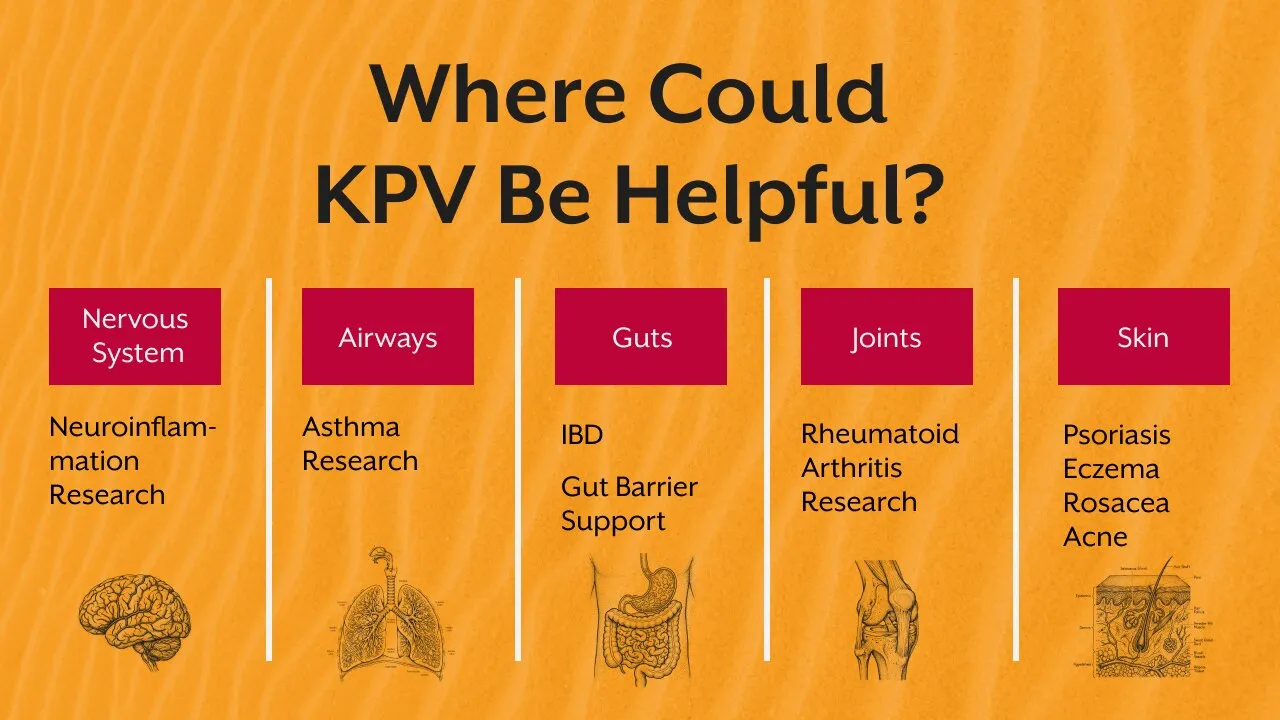
Early research on KPV for gut health suggests it may lower inflammation right in the intestinal lining while helping the gut barrier stay strong. That barrier matters more than most people realize. When it gets leaky, all sorts of problems follow. In animal studies, KPV brought down the severity of gut disease noticeably.
I want to be honest here. This is still mostly early-stage research. But the direction is encouraging, and it lines up with something I see constantly in practice: when the gut is inflamed, very little else in the body works the way it should.
If you want to understand how gut healing fits into a bigger peptide picture, this breakdown of the KLOW peptide blend is worth a read, since KPV is one of the four peptides in that stack.
KPV for Skin: Psoriasis, Eczema, Rosacea, and Acne
Your skin is one of the first places inflammation shows up, so it makes sense that KPV for skin is another active area of interest. It helps that KPV appears to have both anti-inflammatory and antimicrobial properties.
For psoriasis, which is driven by an overactive immune response and too-fast skin cell growth, KPV may help by calming those inflammatory signals and supporting skin repair. That could mean less redness, flaking, and irritation.
For eczema, the skin deals with inflammation, itching, and a weak barrier. Since KPV works on both inflammation and repair, it may hit more than one part of the problem at once.
Rosacea and acne both involve inflammation too, and acne adds a bacterial piece. Because KPV seems to work on inflammation and microbes together, researchers are looking at it for both. The research is early, but the logic is solid.
What About Autoimmune and Joint Issues?
Because KPV calms inflammation without broadly suppressing immunity, it is being studied for several autoimmune inflammation conditions.
Rheumatoid arthritis is a good example. It is an autoimmune condition where the joints stay chronically inflamed and slowly get damaged. KPV is being looked at for its potential to reduce that joint inflammation and limit the collateral tissue damage that comes with it. Asthma and certain nerve-related inflammatory conditions are on the research radar too.
None of this is settled science yet. But the pattern is consistent: wherever unwanted inflammation is the problem, KPV is a candidate worth studying.
How KPV Is Used and Dosed
I will be straight with you. Because KPV is still mostly investigational, there is no official, universally agreed dose. Researchers are still working that out. What we do know is that it is being explored in three main forms.
Oral KPV is appealing for gut issues because you can target the digestive tract directly. Special formulations aim to keep the peptide stable so it survives long enough to work where it is needed.
Topical KPV is being studied for skin concerns like psoriasis, eczema, rosacea, and wound healing, since you can apply it right where the problem is.
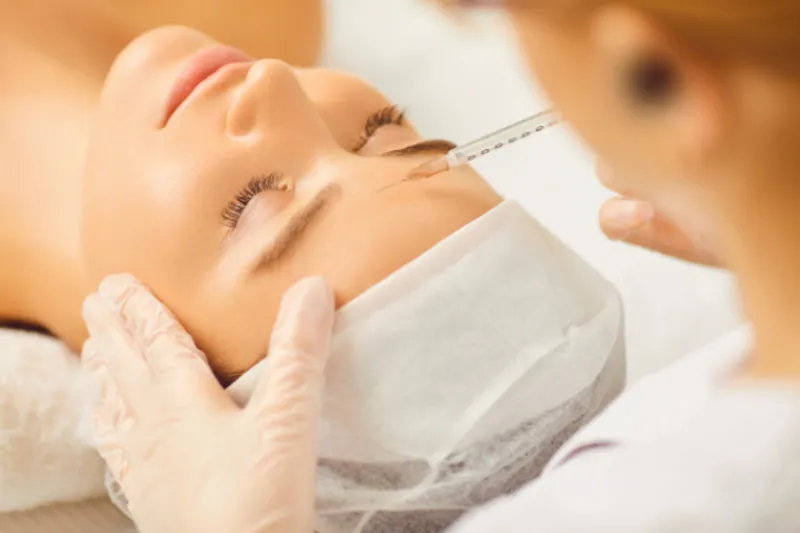
Injectable KPV is used when you want it working throughout the body. Injecting skips the digestive system, so more of the peptide actually gets absorbed. It usually comes as a freeze-dried powder that gets mixed with bacteriostatic water before use, and it needs proper sterile technique and storage.
This is exactly the kind of thing you should never wing on your own based on a forum post. Dosing, form, and whether it even makes sense for you depends on your specific situation.
Is KPV Safe?
Early signs are reassuring. Because KPV is based on a sequence your body already makes, researchers think it may be well tolerated, with the potential for fewer side effects and little of that broad immune suppression I mentioned earlier.
That said, the honest answer is that we do not have long-term human data yet. Questions about long-term safety, exact dosing, drug interactions, and use during pregnancy or breastfeeding are still open. Anyone who tells you it is completely proven and risk-free is getting ahead of the evidence.
The Part Most People Skip
Here is what I have learned working with people since 2019. Peptides are tools. Good ones, sometimes remarkable ones. But they are not a foundation.
I have seen people chase peptide after peptide while ignoring the basics that were quietly driving their inflammation the whole time. Poor sleep. Chronic stress. Low vitamin D. A gut that needed real attention. When those things stay broken, no peptide is going to carry the whole load.
That is why we do not hand anyone a protocol on day one. We look at what is actually going on first. Two people with the same symptoms can have completely different root causes, and the right peptide for the wrong person helps about as much as no peptide at all. If you want to see how we think about getting to the actual cause instead of just quieting symptoms, this piece on whether Semaglutide fixes the root cause or just hides it walks through that mindset.
The Bottom Line
KPV is a small peptide with a big amount of promise. It calms inflammation, seems to keep your immune system working instead of shutting it off, supports the gut barrier, helps skin, and may play a role in autoimmune and joint issues. The early research is genuinely exciting.
But it is still early. The smart move is not to self-experiment based on a trend. It is to understand your own biology first, then decide whether KPV belongs in your plan. If you want help figuring that out, you can start by booking a root cause analysis with our team over at iThrive, where we look at what is actually driving your symptoms before recommending anything.
FAQs
What is KPV peptide used for?
KPV is mainly studied for calming inflammation and balancing the immune system. Research is looking at it for inflammatory bowel disease, skin conditions like psoriasis and eczema, wound healing, autoimmune issues, and general chronic inflammation.
Can KPV help with gut problems like IBD or a leaky gut?
Early research suggests KPV may lower inflammation in the gut lining and help keep the intestinal barrier strong. That combination is why it gets so much attention for digestive issues, though most of the strong evidence so far is from animal studies.
How is KPV different from other peptides?
A lot of peptides focus on tissue repair or growth signals. KPV stands out because its main job is calming inflammation, and it seems to do that without broadly shutting down your immune defenses.
Is KPV peptide safe?
Early studies suggest it may be well tolerated, partly because it is based on a sequence your body already produces. But long-term human data is still limited, so whether it suits you depends on your health history, medications, and overall situation.
Should I take KPV on its own or as part of a plan?
Peptides usually work best inside a proper plan, not as a standalone fix. It is worth identifying whether inflammation, gut trouble, or immune imbalance is actually driving your symptoms before starting anything, so you are treating the cause and not just the surface.






























Sign in to leave a comment.