
If you have PCOS, you already know the routine. Count your calories. Cut your carbs. Walk more. Eat less. And still, month after month, nothing really changes. Your weight sits in the same place. Your periods stay irregular. The acne keeps showing up on the same spots on your chin. And somewhere along the way, you start to wonder if the problem is you.
It is not you.
After working with women who have tried every diet plan under the sun, one thing keeps coming up. Most nutrition advice for PCOS is built around one idea, eat less and move more. It sounds fair. It sounds simple. But PCOS was never a simple calorie problem, and treating it like one is exactly why so many women feel stuck.
The Calorie Trap Everyone Falls Into
Why Eating Less Doesn't Fix PCOS
When you cut calories hard, your body reads it as a threat, not a health choice. Your metabolism slows down to protect you. Your energy drops. Your cravings get louder, not quieter. For someone with PCOS, whose body already struggles to use insulin properly, this kind of restriction can actually make hormone balance worse, not better.
Think about it this way. If your car engine is misfiring, putting less fuel in the tank does not fix the engine. It just means you go slower and stall more often. PCOS works the same way. The issue is not how much you eat. It is how well your body is using what you eat.
What Happens Inside Your Body When You Diet Too Hard
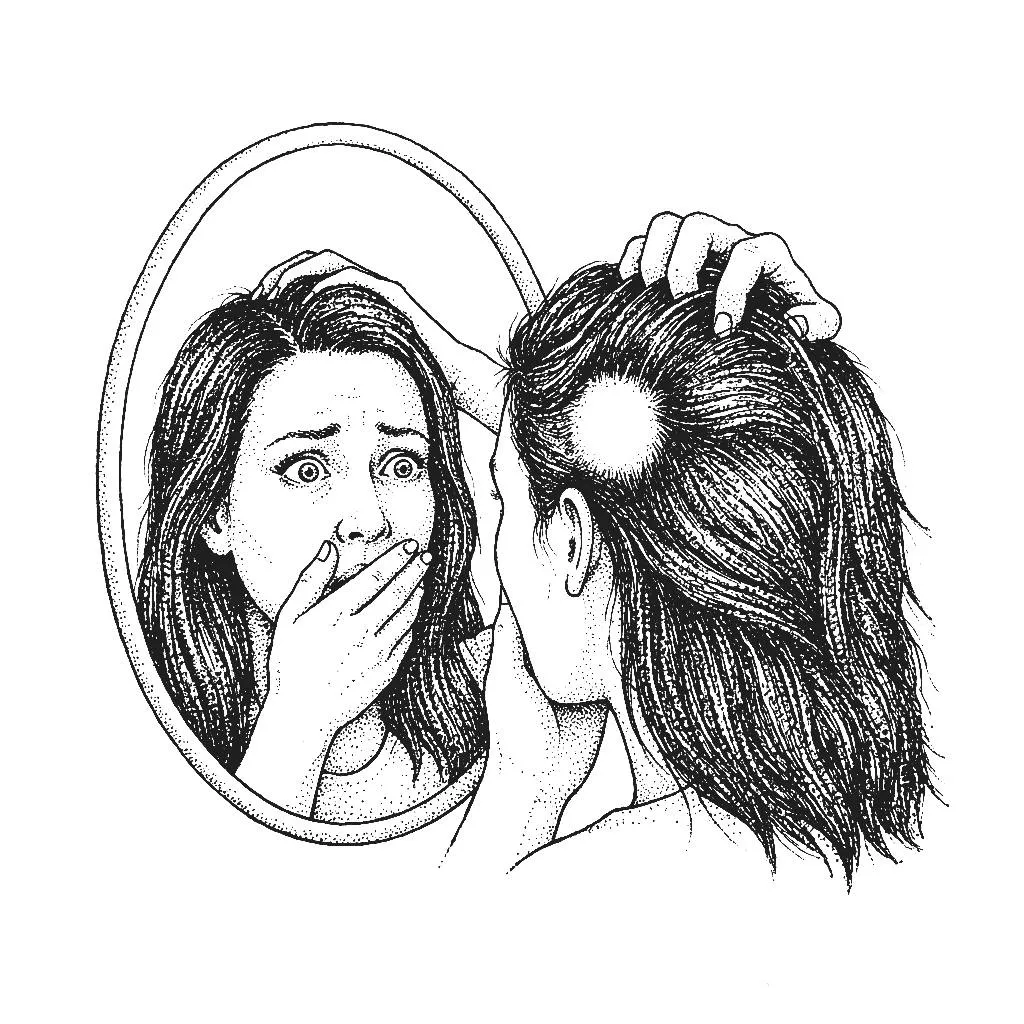
Every cell in your body needs energy to work properly, including the cells in your ovaries. When you starve your body of proper nutrition, your cells cannot produce energy the way they should. Over time this shows up as fatigue, hair thinning, mood swings, and a cycle that refuses to regulate, even though the scale might be moving down.
Insulin Resistance Is the Real Story, Not Sugar Alone
Most nutrition courses teach insulin resistance as a sugar problem. Cut sugar, fix insulin, done. But that is only half the picture.
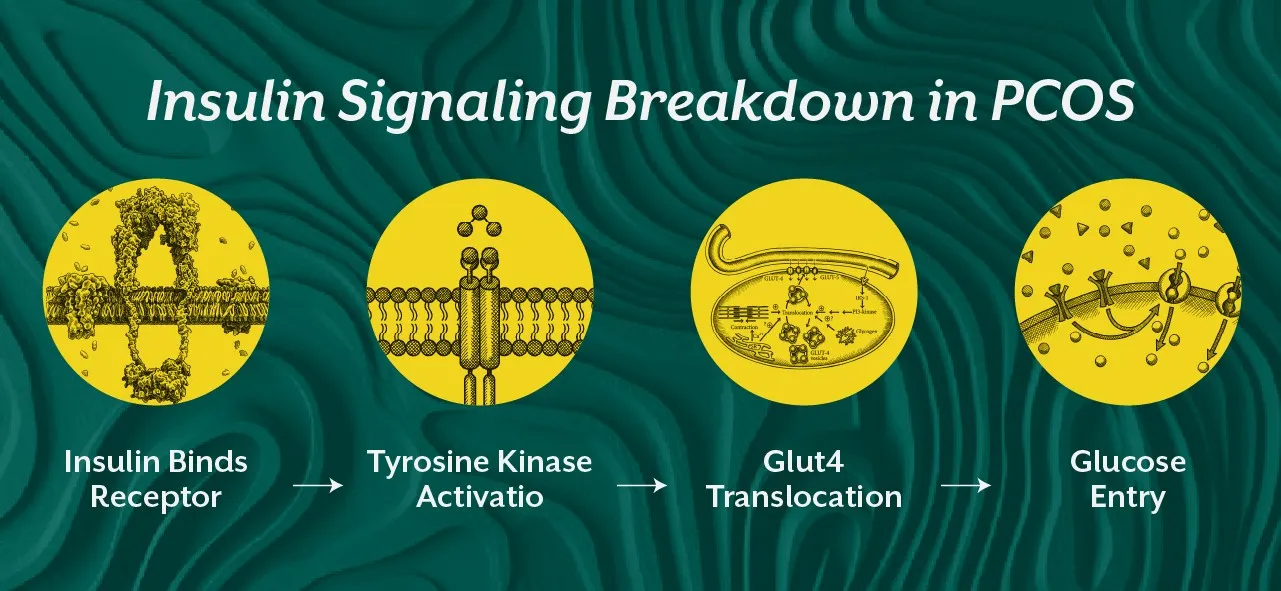
In PCOS, insulin resistance usually means your cells stop listening to insulin properly. Your pancreas responds by making even more insulin to get the same job done. That extra insulin does not just sit quietly in the background. It tells your ovaries to produce more male hormones, and that is where a lot of the classic PCOS symptoms come from, the acne, the extra hair growth, the missed periods.
This is why so many women eat perfectly clean and still see no change. You cannot out diet a signaling problem. You need to help your body respond to insulin better, not just avoid sugar completely.
Simple Things That Genuinely Help Insulin Work Better
- Eating protein at every meal, not just dinner
- Adding a short walk after meals, even ten minutes helps
- Strength training two or three times a week, since muscle is where a lot of blood sugar gets used up
- Getting enough sleep, because tired bodies are naturally more insulin resistant
None of these are extreme. They are just consistent, and consistency is what most fad diets never teach.
The Part No One Talks About, Your Nervous System
Here is something most PCOS diet plans completely skip. Stress is not just a feeling. It is a hormone event.
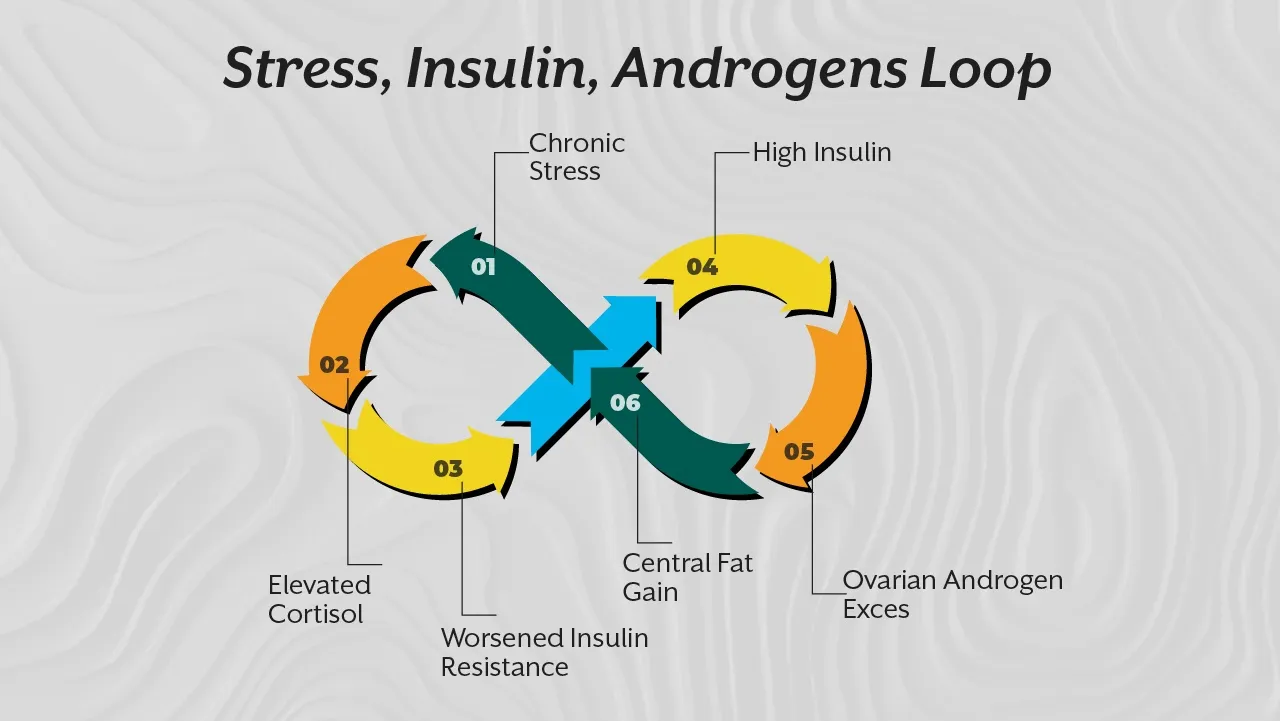
When you are constantly stressed, your body pumps out more cortisol. Cortisol raises blood sugar, which raises insulin, which raises androgens, which worsens PCOS symptoms. It becomes a loop, and no amount of clean eating can fully break that loop if your nervous system stays stuck in fight or flight mode.
Women with PCOS often carry more stress than they realize, some of it from the condition itself, and some of it from years of being told to just try harder. Calming the nervous system is not a soft, optional step. It is part of the actual treatment.
Small Habits That Calm the Body
- Slow breathing for five minutes before meals
- A regular sleep schedule, even on weekends
- Reducing screen time late at night
- Giving yourself permission to rest without guilt
What Actually Works, Based on Real Experience
Forget the extreme plans. What tends to work for PCOS over the long run looks a lot more boring than most influencers make it sound.
Eat enough food, especially enough protein. Include healthy fats, since they support hormone production. Move your body in ways that build strength, not just burn calories. Sleep like it matters, because it does. And be patient, because hormones shift slowly, not overnight.
This is also the kind of approach taught in depth through functional nutrition education, where PCOS is looked at as a whole body condition rather than a list of symptoms to manage one by one. If you want to go deeper into this way of thinking, you can explore more on the iThrive homepage.
Frequently Asked Questions
Why am I not losing weight with PCOS even though I eat very little?
Eating too little can slow your metabolism and increase stress hormones, both of which make PCOS symptoms worse. Weight loss with PCOS usually improves when the body feels safe and well fed, not deprived.
Is insulin resistance the same as diabetes?
No. Insulin resistance means your body needs more insulin than normal to manage blood sugar. It can lead to diabetes over time if left unmanaged, but it is not the same condition. You can read more about this connection through trusted resources like Cleveland Clinic.
Can PCOS be managed without medication?
Many women see real improvement through nutrition, movement, sleep, and stress management, though this depends on individual symptoms and severity. It is always worth discussing your specific case with a qualified doctor. Organizations like NICHD offer solid, research backed information on PCOS as a starting point.
How long does it take to see changes in PCOS symptoms?
Most women notice small shifts within eight to twelve weeks of consistent habits, though full cycle regulation can take longer since hormones move slowly by nature.
Does exercise really help PCOS or is it just about weight loss?
Exercise, especially strength training, helps your muscles use blood sugar more efficiently regardless of whether you lose weight. This is one of the most overlooked tools in PCOS care.
The Bottom Line
PCOS is not a discipline problem. It is not something you caused by eating one extra meal or skipping the gym once. It is a whole body pattern involving insulin, hormones, and your nervous system, and it deserves a plan that respects that complexity instead of shrinking it down to calories in and calories out.
If your current approach feels like punishment, it is probably not the right one. The right approach should feel sustainable, and honestly, a little more human.



























Sign in to leave a comment.