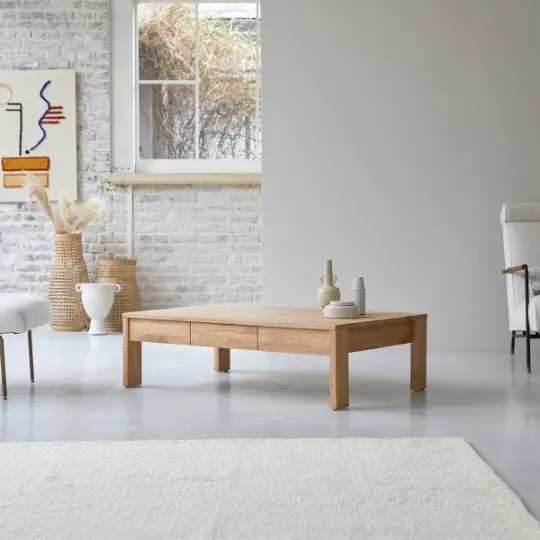

Let’s be honest: living rooms get beat up. Between feet kicked up after long workdays, quick dinner plates resting on coffee books, and endless hot mugs, the table sitting in the middle of your rug takes a serious beating. A few years ago, I bought a cheap particle-board centerpiece for my apartment. Within eight months, the edges were peeling, and water rings had permanently ruined the veneer. That was the moment I stopped buying temporary furniture and started paying attention to real wood.
If you want a living room center that actually holds up, an oak wood coffee table is easily one of the most reliable choices you can make. Real timber brings a kind of warmth and stability to a room that flat-pack plastic simply cannot replicate.
Whether you’re overhauling your entire space or just trying to swap out an old eye-sore, picking the right cut, size, and style takes a little planning. Here is what I’ve learned about making the right choice, keeping it looking great, and avoiding the common pitfalls.
Why Pick an Oak Wood Coffee Table?
There is a reason craftspeople have built with oak for generations. It isn’t just about looking traditional, it’s mostly about how the wood behaves over time.
- It Takes a Beating: Oak is dense. Unlike soft pines that dent if you drop a TV remote, oak stands up to daily family life surprisingly well.
- It Matches Everything: Whether your walls are bright white Scandinavian style, dark Moody blue, or plain neutral concrete, an oak coffee table slips into the room without clashing.
- Every Piece Looks Different: Because the grain grows naturally with knots and subtle shade shifts, no one else is going to have the exact same pattern as yours.
Breaking Down the Style Options
When you start browsing through timber catalogs, it quickly becomes clear that oak furniture isn’t just one single look. Designers use different shapes and frame styles depending on what a room needs.
1. Classic Solid Build
- Practical Features: Heavy, thick timber, rich grain
- Best Fit For: Larger rooms, rustic modern themes
2. Storage Coffee Table
- Practical Features: Deep drawers, open lower shelves
- Best Fit For: Busy living rooms, small apartments
3. Curved / Round Cut
- Practical Features: Smooth edges, easy traffic flow
- Best Fit For: Families with kids, tight couch setups
4. Metal + Oak Hybrid
- Practical Features: Black iron legs, clean timber top
- Best Fit For: Loft apartments, modern industrial
1. Solid Timber Builds
If you want something heavy that isn't going to slide across the floor when someone leans on it, full solid construction is the answer. These pieces focus purely on thick planks and raw wood textures.
2. Built-in Storage Styles
If your living room doubles as an office or a playroom, a coffee table with slatted lower shelves or hidden drawers is a lifesaver. It gives you a quick place to toss remotes, game controllers, and stray mail before guests walk in.
3. Softening the Room with Curves
If your living room feels overly boxy, especially if you have a large L-shaped sectional, a round oak wood coffee table breaks up those hard parallel lines. Plus, if you have toddlers running around, eliminating sharp corners saves a lot of headaches.
4. Hybrid Metal and Wood Designs
If pure wood feels a bit too traditional for your apartment, look for frames that pair light oak surfaces with matte black metal legs. It gives you that clean industrial contrast without feeling cold.
Realistic Ways to Style Your Space
Styling furniture shouldn't mean turning your living room into an unusable museum. You still need room to put down your drink.
- Avoid Overcrowding: Leave at least half the surface completely open. A good rule of thumb is grouping items in a corner using a small tray, a single thick book, and a short plant.
- Play with Heights: If everything on the table sits flat, it looks boring. Pair a flat catch-all dish with a taller ceramic vase or candleholder to give the arrangement some dynamic balance.
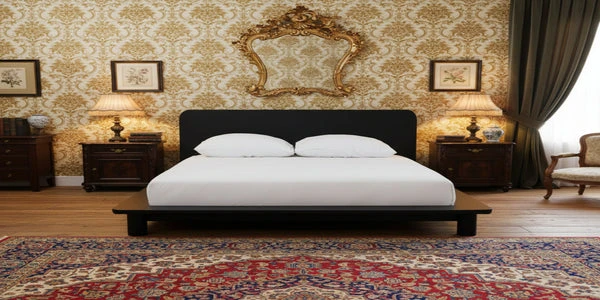
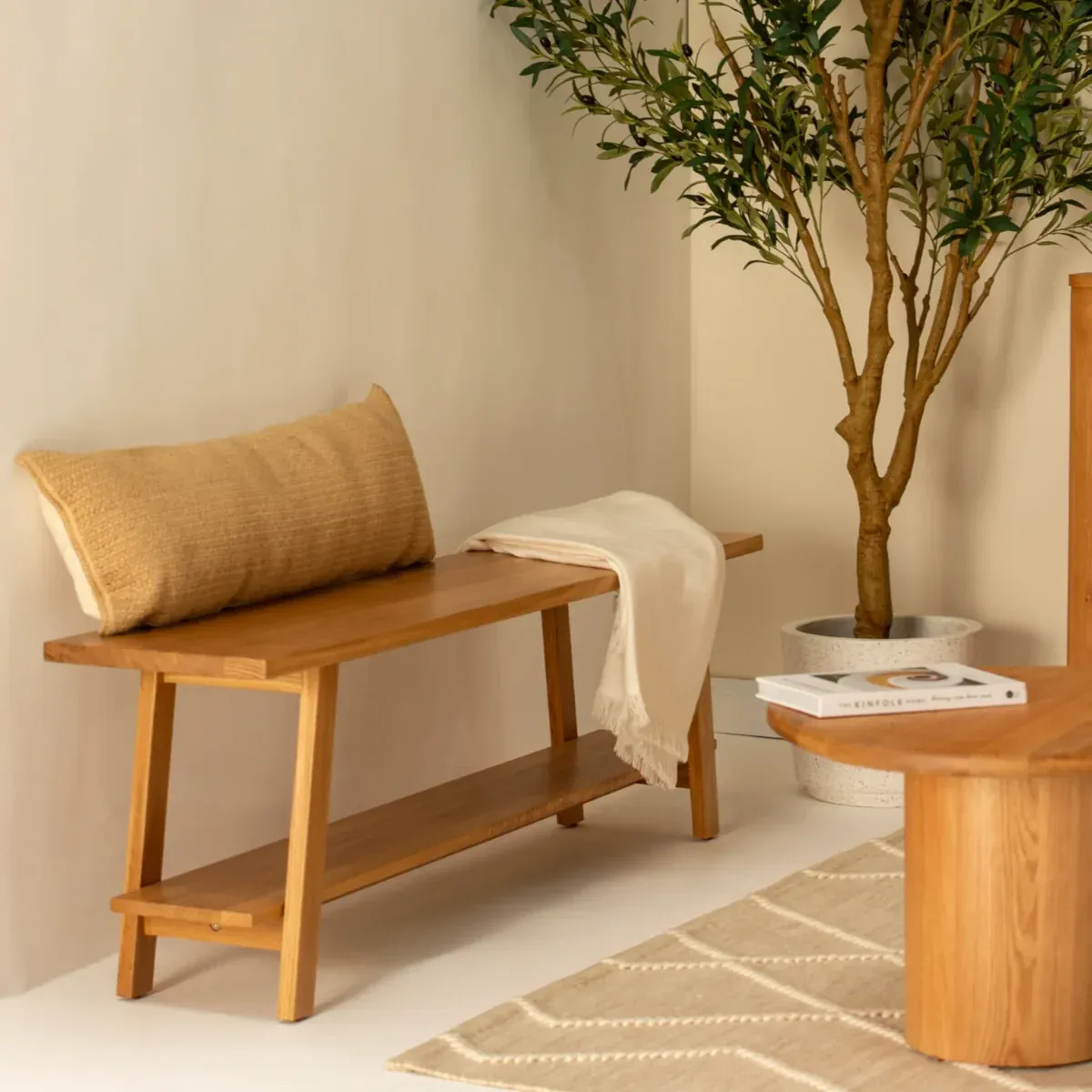
- Connect Your Rooms: If your kitchen, dining, and living areas bleed into one another, try carrying matching wood tones into adjacent spaces. Pairing your central living room pieces with similar tones in your bedroom, like simple oak wood beds or side tables, helps the whole home feel thoughtfully connected.
Realistic Upkeep and Everyday Care
Solid wood is tough, but it isn't indestructible. A few simple maintenance habits will prevent permanent damage and keep the timber looking rich for decades:
- Skip the Harsh Cleaners: Don't spray generic glass cleaners or heavy bleach sprays on raw wood finishes. Stick to a dry or slightly damp microfiber cloth to pick up dust.
- Catch Liquids Fast: Water stains happen when spills sit unnoticed for hours. Keep a rag handy and wipe up stray moisture right away.
- Coasters Are Non-Negotiable: Condensation from icy soda cans or heat from freshly brewed tea can cloud the seal on wood. Keep a set of cork or leather coasters sitting right on the table.
- Watch the Sunlight: If your table sits right next to a floor-to-ceiling south-facing window, the side hitting direct sunlight will bleach faster than the rest. Sheer curtains help diffuse harsh rays.
- Oil It Occasionally: Once or twice a year, rub down the surface with a good quality wood wax or clear oil. It feeds the timber and hides tiny surface micro-scratches seamlessly.
Concluding Thoughts
When you choose home furnishings, buying well-made Solid Wood Furniture is always cheaper in the long run than replacing cheap laminate every few seasons. Real timber ages gracefully; small scratches turn into natural character rather than ugly eyesores.
While doing research on manufacturers that balance hand-finished detail with contemporary shapes, looking through the catalog at Nismaaya Decor really stood out. Their focus on clean joinery, durable finishes, and functional storage makes finding a reliable center for your home effortless. Stick to solid construction, care for it simple and early, and your table will easily outlast the sofa sitting next to it.

























Sign in to leave a comment.