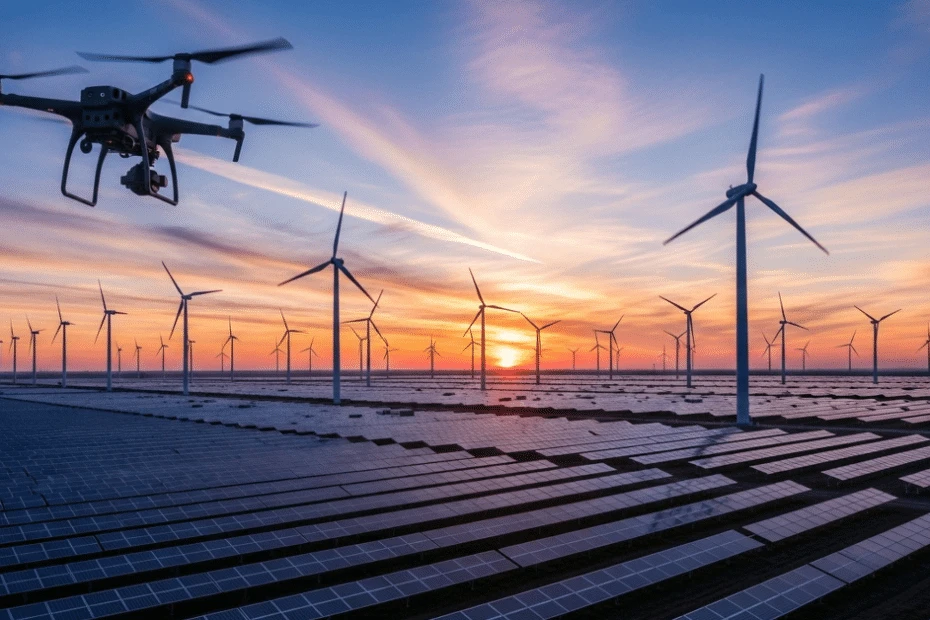

Drones are everywhere now. Farmers use them to check crops. Real estate agents take aerial photos of properties. Surveyors map construction sites. Film crews capture footage from angles that were impossible a few years ago. The technology has opened up new ways of working across many industries, and South Africa is no different.
But here is the thing most people do not realise: you need a licence to fly a drone commercially in South Africa. The South African Civil Aviation Authority treats drones the same as any other aircraft. If you want to use one for work, you need proper training and certification. Flying without it puts you on the wrong side of the law.
Why Licences Matter
The regulations exist for good reasons. A drone is not a toy. Even a small quadcopter can cause serious harm if it hits someone or crashes into something. Larger commercial drones can weigh several kilograms and fly at speeds that make collisions dangerous.
There are also other aircraft to think about. Drones share airspace with planes and helicopters. A drone in the wrong place at the wrong time could cause a mid-air collision. The rules about where you can fly, how high, and how close to airports exist to prevent this.
Privacy is another concern. Drones with cameras can see into private spaces. There are laws about what you can photograph and film, and drone operators need to understand these.
When you complete proper training, you learn all of this. You understand the regulations, know where you can and cannot fly, and have the skills to operate safely. This protects you, protects others, and protects your business from legal problems.
Who Needs Training
If you fly a drone for fun and stay within certain limits, you do not need a licence. Recreational flying has different rules. But the moment you use a drone for any commercial purpose, training becomes required.
Commercial use includes obvious things like aerial photography for paying clients, surveying work, or agricultural monitoring. But it also includes less obvious situations. If you are a real estate agent taking photos of your own listings, that counts as commercial use. If your company uses drones for inspections, the pilots need licences.
Many people start flying drones as a hobby and then see business opportunities. That transition from hobby to work is where training comes in. You might be a skilled flyer already, but without the proper certification, you are not allowed to charge for your services or use the drone as part of your job.
What Training Involves
A drone flight course in South Africa covers both theory and practical flying. The theory portion is substantial because there is a lot to learn beyond just how to move the sticks.
Air law is a major component. You learn about the regulations that govern drone operations, including where you can fly, altitude limits, and requirements for different types of operations. You learn about airspace classifications and why certain areas are restricted.
Meteorology training teaches you about weather conditions and how they affect flying. Wind, rain, and visibility all impact drone operations. Understanding weather helps you plan flights safely and know when to stay on the ground.
Navigation and flight planning cover how to prepare for missions. You learn to read maps, understand coordinates, and plan routes that comply with regulations. Proper planning prevents problems in the air.
Human factors training addresses the pilot’s role. Fatigue, stress, and distraction can all lead to accidents. You learn to recognise these factors and manage them.
The practical training puts you in control of a drone under instructor supervision. You practise take-offs, landings, manoeuvres, and emergency procedures. The goal is to build the flying skills needed to pass a practical test conducted by an examiner.
The Certification Process
Getting certified in South Africa follows a structured path. Drone pilot training programmes take you through each step.
You need to pass written examinations on the theory subjects. These are administered by the training provider and cover everything taught in the ground school portion. You need to achieve the required pass marks before moving to practical training.
A Class 3 aviation medical certificate is required. This is similar to what pilots of manned aircraft need, though the requirements are less strict. You visit a designated aviation medical examiner who checks your vision, hearing, and general health.
An English language proficiency assessment may be required depending on your circumstances. Aviation uses English as its international language, and controllers and other pilots need to understand you.
A restricted radio licence is another requirement. You need to be able to communicate on aviation frequencies, and this licence certifies that you know the proper procedures.
Once you complete theory, practical training, and have all the supporting documents, you sit for a skills test with a designated examiner. This test covers both ground evaluation and practical flying. Pass this, and the training provider submits your application to the Civil Aviation Authority for your Remote Pilot Certificate.
How Long Does It Take
Training duration depends on several factors. Full-time programmes typically run two to three weeks. Part-time options take longer as they fit around your other commitments.
If you already hold a pilot licence for manned aircraft, the process is shorter. You receive credit for subjects you have already studied, so you only need to cover drone-specific material. This can reduce the theory component significantly.
Your starting skill level with drones also matters. Someone who has flown recreationally for years might progress through practical training faster than a complete beginner. But everyone still needs to demonstrate competence to pass the skills test.
The paperwork side can add time. Getting your medical certificate, radio licence, and English proficiency assessment sorted all takes scheduling and appointments. Some training providers help coordinate these, while others leave it to you.
Costs to Expect
Thinking about drone pilot course prices is natural when planning your training. The full cost includes several components.
The training course itself is the main expense. Prices vary between providers based on location, facilities, and what is included. Some programmes bundle everything into one fee, while others charge separately for theory, practical training, and exam fees.
Medical certification has its own cost. The examination fee goes to the aviation medical examiner, and this is typically not included in training fees.
Radio licence examination and English proficiency testing add to the total if required. These might be done through the training provider or separately.
Finally, there are fees payable to the Civil Aviation Authority for processing your licence application and issuing your certificate.
When comparing training options, make sure you understand what is included in the quoted price and what you will need to pay separately. The total investment is significant, but it opens the door to paid work that you would not be able to do otherwise.
Types of Drone Operations
Training typically qualifies you for specific types of operations. The most common is multi-rotor, which covers the quadcopter-style drones that most people think of. These are used for photography, inspections, and short-range work.
Fixed-wing drones are different. They look more like small planes and are used for covering larger areas, such as agricultural surveys or mapping projects. If you want to operate fixed-wing drones, you need a specific rating for that.
VTOL drones combine features of both. They take off and land vertically like a multi-rotor but fly efficiently like a fixed-wing. These are becoming more common for longer missions.
Beyond visual line of sight operations, called BVLOS, allow you to fly the drone where you cannot see it directly. This requires additional training and certification beyond the basic licence because the risks are higher when you cannot see the aircraft.
Night flying is another advanced operation that needs extra training. Flying in darkness introduces challenges that daylight operations do not have.
Most people start with a basic multi-rotor certification and add additional ratings as their work requires them.
Finding Work as a Drone Pilot
A UAV drone pilot training certificate is your entry ticket, but finding work takes more than just passing the test.
Some pilots work for companies that offer drone services. Survey firms, inspection companies, and aerial photography businesses hire licensed pilots. These jobs provide steady work and let you build experience without having to find your own clients.
Others work as freelancers or start their own drone service businesses. This gives you more control but also means finding clients, handling business administration, and investing in your own equipment.
Adding skills beyond flying helps. If you can process the data your drone collects, such as creating maps from survey footage or editing video from shoots, you become more valuable. Many clients want a complete service rather than just someone to fly the drone.
Building a portfolio of work helps attract clients. Even if you start with unpaid projects to get footage, having something to show demonstrates what you can do.
Networking in industries that use drones can lead to opportunities. Construction, mining, agriculture, real estate, and film production all use drone services. Making contacts in these sectors can bring referrals.
Staying Current
Your licence is not permanent without maintenance. Like other aviation licences, Remote Pilot Certificates need to be kept current through regular flying and periodic renewals.
Regulations also change. The Civil Aviation Authority updates rules as the drone industry develops. What was allowed last year might be restricted now, or new opportunities might have opened up. Staying informed about regulatory changes is part of being a professional pilot.
Technology changes quickly too. New drone models come out regularly with improved capabilities. Software for flight planning, data processing, and fleet management keeps advancing. Continuing to learn keeps you competitive.
Many pilots join professional associations or online communities where they share information and stay connected to industry developments.
Making the Decision
If you are thinking about becoming a commercial drone pilot, the first step is understanding what is involved. A proper drone course gives you the foundation to work legally and safely.
Consider what you want to do with the certification. Are you adding drone services to an existing business? Starting something new? Looking for employment with a company? Your goals affect which training programme makes sense and what additional skills you might need.
Research training providers in your area. Look at what they offer, how long their programmes run, and what graduates say about their experience. Visit facilities if you can. Talk to the instructors.
Factor in the full cost, including everything you will need to get certified. Make sure you can commit the time required for training and all the supporting requirements.
The drone industry in South Africa is growing. More businesses are finding uses for aerial technology, and that means more demand for trained pilots. Getting certified now puts you in a position to take advantage of these opportunities.
If you have the interest and are willing to put in the work, becoming a licensed drone pilot is achievable. The training exists to help you get there safely and legally. From there, what you do with that certification is up to you.




























Sign in to leave a comment.