
Catalog No.GC67896
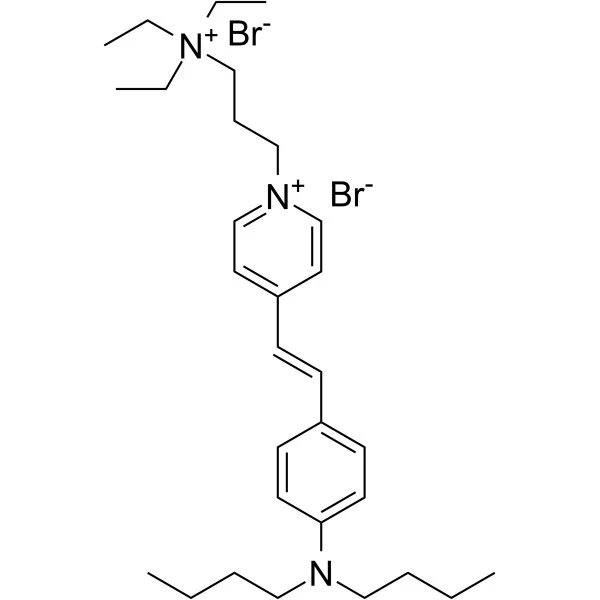
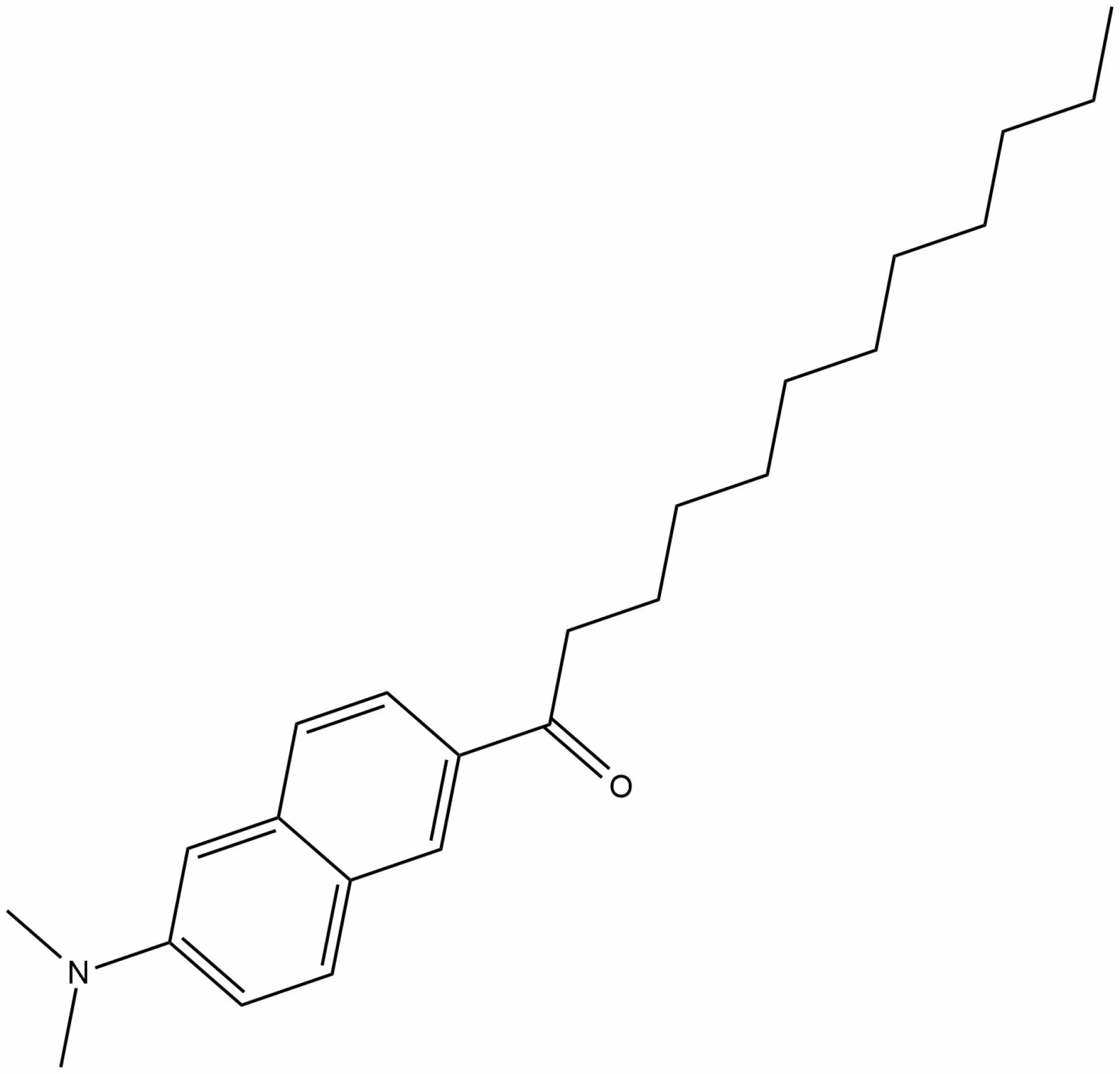
FM1-43 is a water-soluble styrene dye with strong lipophilicity.
Description
FM1 43 is a water-soluble styrene dye with strong lipophilicity. FM 1-43 membrane probe is a reagent that can specifically bind to cell membranes and inner membrane organelles to generate fluorescence. FM1-43 is widely used as endocytosis and excision membrane structure markers, and can be used to identify actively firing neurons and research Mechanisms of activity-dependent vesicle cycling[1]. In actively releasing neurotransmitters, the FM1-43 dye is internalized into recycled synaptic vesicles, causing the nerve terminals to become brightly stained. Non-specific staining of cell surface membranes from FM1-43 can be simply washed off before observation[2]. FM1-43 is nontoxic to cells, barely fluoresces in aqueous media, but fluoresces strongly after insertion into the outer leaflet of the cell membrane. FM1-43 also reduces the ototoxic effects of the aminoglycoside antibiotic neomycin sulfate[3].
References:
[1]. Audrey C Brumback, et al. Using FM1-43 to study neuropeptide granule dynamics and exocytosis.2004 Aug;33(4):287-94. doi: 10.1016/j.ymeth.2004.01.002.
[2]. J J Renger,C Egles, G Liu. A developmental switch in neurotransmitter flux enhances synaptic efficacy by affecting AMPA receptor activation.2001 Feb;29(2):469-84. doi: 10.1016/s0896-6273(01)00219-7.
[3]. J E Gale, et al. FM1-43 dye behaves as a permeant blocker of the hair-cell mechanotransducer channel. J Neurosci. 2001 Sep 15;21(18):7013-25.
Protocol
This protocol provides a guide only and should be modified according to your specific needs.
1. Preparation of FM1-43 cell membrane staining solution
(1) Prepare DMSO storage solution: the storage solution is prepared with DMSO at a concentration of 1-5mM.
Note: Store the unused stock solution in aliquots at -20°C or -80°C in the dark and avoid repeated freezing and thawing.
(2) Preparation of working solution: Use an appropriate buffer (such as: serum-free medium, HBSS or PBS) to obtain a 5-20 μM FM working solution[1].
Note: The final concentration of the working solution needs to be optimized according to different cell lines and experimental systems. It is recommended to start from the recommended concentration and explore the optimal concentration in the range of 10 times.
2. Suspension Cell Staining with FM1-43 Dye
(1) The suspended cells were centrifuged at 4°C, 1000-1500rpm for 3-5 minutes, and the supernatant was discarded. Wash twice with PBS for 5 minutes each.
(2) Add 1mL of FM1-43 working solution (recommended concentration: 10μM), incubate at room temperature for 5-30 minutes, the optimal incubation time is different for different cells.
(3) The cell test tube was centrifuged at 1000-1500 rpm for 5 minutes.
(4) After the incubation, centrifuge at 1000-1500rpm for 5 minutes, remove the supernatant, add PBS to wash 2-3 times, 5 minutes each time.
(5) Resuspend the cells with serum-free cell culture medium or PBS. Observed by fluorescence microscopy or flow cytometry.
3. FM1-43 Dye Staining of Adherent Cells
(1) Culture adherent cells on sterile coverslips.
(2) Remove the coverslip from the medium, aspirate excess medium, and place the coverslip in a humid environment.
(3) Add 100uL of FM1-43 working solution from one corner of the cover slip, shake gently to make the dye evenly cover all the cells.
(4) Incubate at room temperature for 5-30 minutes, and the optimal incubation time is different for different cells.
(5) Discard the working solution, and wash the coverslip 2-3 times with the culture medium.
4. Microscopic examination: FM1-43 excitation/emission light is 480/598nm respectively[2].
Note:
1) Fluorescent dyes have quenching problems, please try to avoid light to slow down fluorescence quenching.
2) For your safety and health, please wear a lab coat and disposable gloves for operation.
References:
[1]. J J Renger,C Egles, G Liu. A developmental switch in neurotransmitter flux enhances synaptic efficacy by affecting AMPA receptor activation.2001 Feb;29(2):469-84. doi: 10.1016/s0896-6273(01)00219-7.
[2]. Adriana Della Pietra, Nikita Mikhailov, Rashid Giniatullin. FM1-43 Dye Memorizes Piezo1 Activation in the Trigeminal Nociceptive System Implicated in Migraine Pain. 2023 Jan 14;24(2):1688. doi: 10.3390/ijms24021688.
























Sign in to leave a comment.