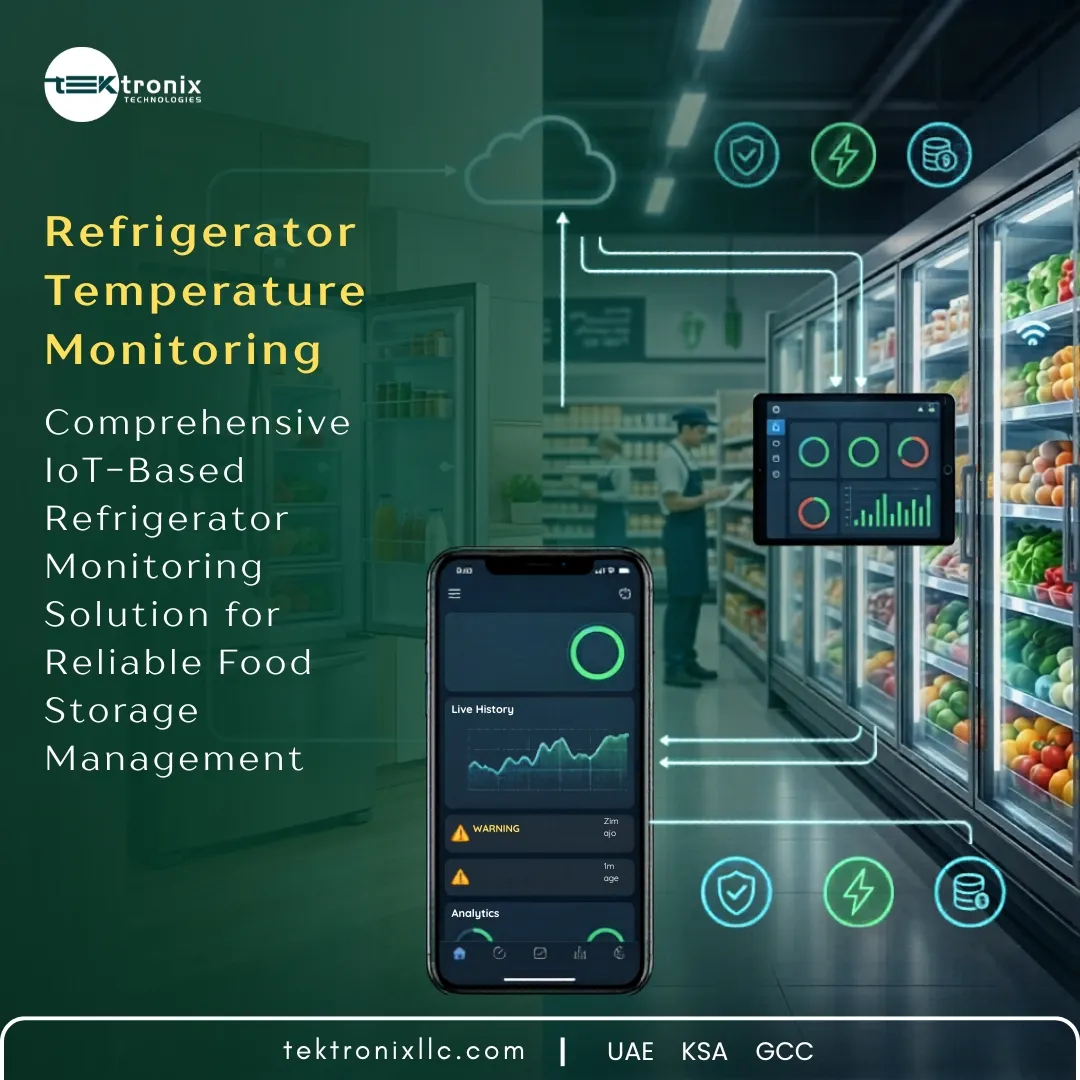

Dependable Refrigerator Monitoring is no longer a supplementary feature reserved for pharmaceutical giants or large hospital networks—it is a foundational operational requirement for every organization in Oman and the GCC that stores temperature-sensitive goods, biological specimens, vaccines, food products, or chemical reagents. In a region where ambient temperatures routinely exceed 45°C and power infrastructure, however robust, remains susceptible to episodic interruption, the consequences of an undetected cold-chain breach can be catastrophic: spoiled pharmaceutical inventory worth tens of thousands of riyals, compromised vaccine efficacy at public health facilities, food safety violations triggering regulatory action, and irreplaceable biological samples lost forever. Tektronix LLC engineers, supplies, and supports intelligent cold-chain monitoring solutions purpose-built for the climatic and operational realities of Oman and the broader Gulf market.
Why Refrigerator Monitoring Is Mission-Critical in Oman & GCC
The Gulf Cooperation Council’s extreme climate creates cold-chain challenges that simply do not exist in temperate regions. A refrigeration unit that malfunctions silently during a summer night in Muscat—when ambient temperatures may still exceed 35°C at midnight—can breach critical temperature thresholds within minutes rather than hours. Without an automated monitoring layer, facility staff may not discover the failure until the following morning shift, by which point an entire stock of insulin, measles vaccines, or oncology biologics may be irretrievably compromised.
Beyond the immediate product loss, the regulatory consequences in Oman are significant. The Ministry of Health’s pharmaceutical storage guidelines, the Oman Food Safety Centre’s cold-chain requirements for food businesses, and the standards mandated by international accreditation bodies such as the Joint Commission International (JCI) and the College of American Pathologists (CAP) all require documented, continuous temperature monitoring with auditable logs. Organizations that cannot produce these records during inspections face licence suspension, re-accreditation failure, and substantial financial penalties.
Core Technologies Powering Intelligent Cold-Chain Protection
Temperature Monitoring Solutions
Temperature Monitoring Solutions from Tektronix LLC are architected as end-to-end platforms rather than individual products, integrating sensor hardware, wireless communication infrastructure, cloud or on-premises data processing, and a user-facing dashboard into a single coherent system. This platform approach eliminates the integration gaps that create blind spots in piecemeal, multi-vendor setups—ensuring that every measurement from every monitored unit is captured, validated, timestamped, and stored in a tamper-evident audit trail from the moment of commissioning.
Our temperature monitoring platforms support GCC-prevalent communication protocols including Wi-Fi, cellular LTE, Zigbee, and LoRaWAN—allowing deployment flexibility across facilities with varying infrastructure maturity, from a single-room clinic in a remote Omani governorate to a multi-building hospital complex in Muscat or a multi-temperature warehouse at a Salalah logistics hub.
Smart Sensors
Smart Sensors form the perceptual layer of any effective cold-chain monitoring system. Unlike conventional bi-metallic or basic thermistor probes that provide a single point-in-time reading when manually checked, smart sensors operate as autonomous IoT devices—sampling temperature (and optionally humidity, door status, and power supply state) at configurable intervals ranging from every 30 seconds to every 15 minutes, and transmitting encrypted readings continuously to the monitoring platform.
Tektronix LLC specifies and deploys smart sensors calibrated to NIST-traceable standards, with measurement accuracy of ±0.1°C to ±0.5°C depending on the application class. For pharmacy-grade applications requiring compliance with WHO PQS standards, USP <1151>, or GDP guidelines, we deploy Class A accuracy sensors with annual recalibration schedules documented in a certificate of calibration—providing the audit evidence that regulatory inspectors require.
Remote Temperature Monitoring
Remote Temperature Monitoring transforms the cold-chain oversight model from periodic manual checks—which typically occur at most twice per shift, leaving up to twelve hours of unmonitored exposure between readings—to continuous, automated surveillance that operates around the clock, 365 days a year, without dependence on staff presence or manual intervention. Facility managers, pharmacists-in-charge, laboratory quality managers, and supply chain directors can access a live dashboard of all monitored units from any internet-connected device, viewing current temperatures, historical trend graphs, alarm histories, and compliance reports without setting foot in the facility.
For organizations with multiple sites across Oman—a hospital group with facilities in Muscat, Sohar, and Salalah, or a pharmaceutical distributor with warehouses in multiple governorates—the remote visibility layer is transformative: a single quality manager can oversee the cold-chain integrity of every location simultaneously, receiving the same instant notification whether a temperature excursion occurs in the main capital campus or a remote rural clinic.
Temperature Data Loggers
Temperature Data Loggers serve as the continuous recording backbone of a compliant cold-chain program, capturing and storing temperature readings at defined intervals in non-volatile internal memory that preserves the record even through power outages, communication failures, or deliberate tampering with the monitoring system. In regulatory terms, a validated data logger provides the ‘black box’ of a refrigeration unit’s thermal history—an indisputable record of every temperature the unit experienced over its monitoring period.
Tektronix LLC deploys both standalone USB data loggers—which record locally and transfer data when physically retrieved—and networked loggers that combine local storage with real-time wireless transmission, providing both the regulatory assurance of a self-contained physical record and the operational benefit of live remote visibility. For in-transit cold-chain monitoring—pharmaceutical shipments from Muscat airport to regional distribution points, or cold-chain food deliveries across the GCC—single-use or multi-use trip loggers with PDF report generation provide receiver-ready documentation without requiring specialist software at the receiving facility.
Temperature Alerts
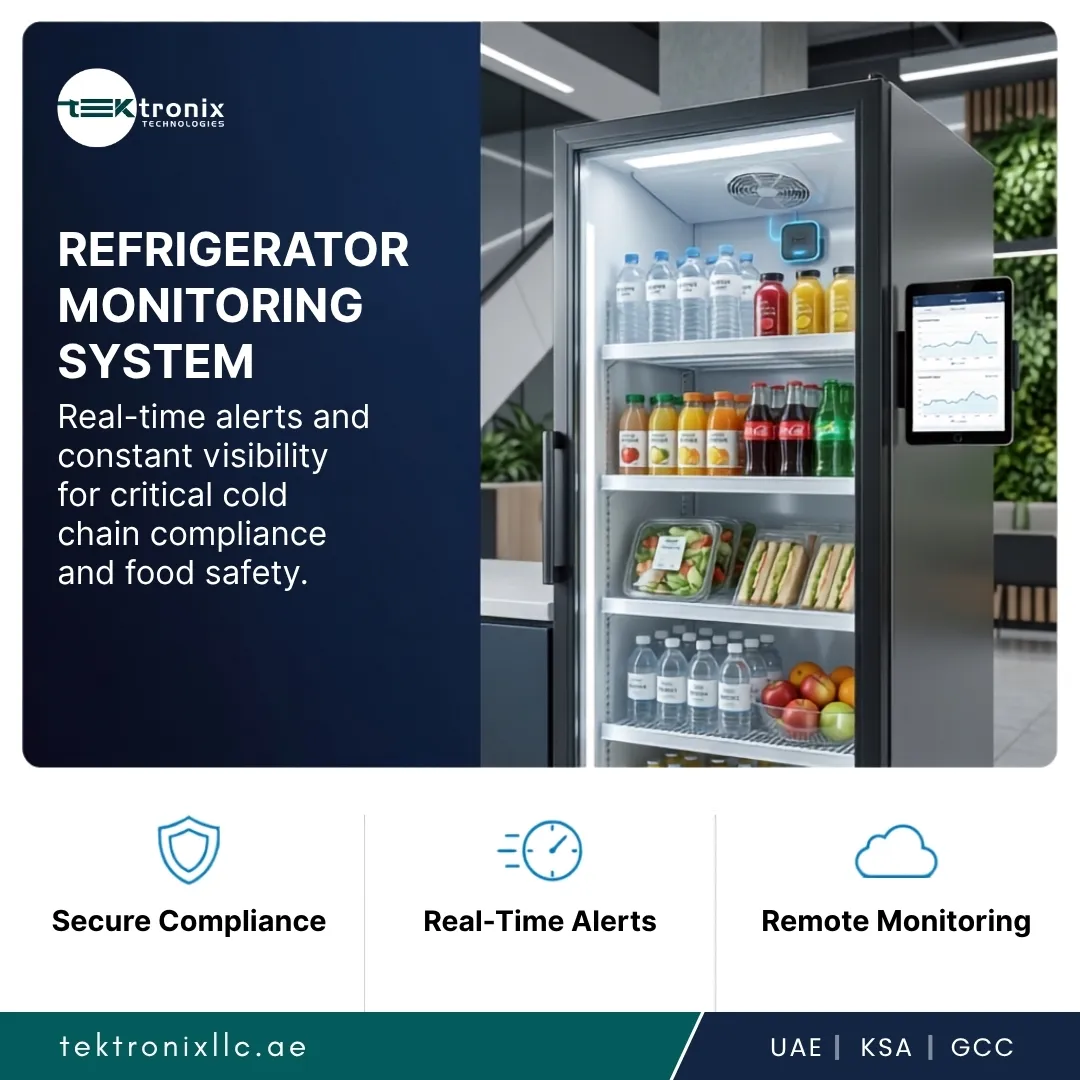
Temperature Alerts are the operational heart of a real-time monitoring system—the mechanism that converts a passive recording function into an active intervention capability. A temperature excursion that is detected and corrected within 15 minutes may result in zero product loss; the same excursion detected six hours later during a manual check can result in total inventory write-off. Tektronix LLC’s monitoring platforms support multi-tier, multi-channel alert escalation: an initial SMS and email notification to the responsible pharmacist or laboratory manager when temperature crosses the first warning threshold; an escalation to the facility manager and on-call engineer if no acknowledgement is received within a configurable grace period; and a final escalation to senior management or the quality director if the excursion persists beyond a defined critical window.
Alert thresholds are fully configurable per unit—a blood bank refrigerator operating at 2–6°C has different warning and critical bands than a ultra-low temperature freezer storing biologics at −80°C or a climate-controlled medicine cabinet maintaining 15–25°C—ensuring that notification sensitivity is calibrated to the actual risk profile of each asset rather than applying a one-size-fits-all threshold that generates nuisance alarms and alert fatigue.
Refrigerator Monitoring Oman: Protecting Cold Chains Across the Sultanate
Refrigerator Monitoring Oman deployments span a remarkably diverse range of sectors and facility types, reflecting the breadth of temperature-sensitive storage requirements across the Sultanate’s public and private sectors.
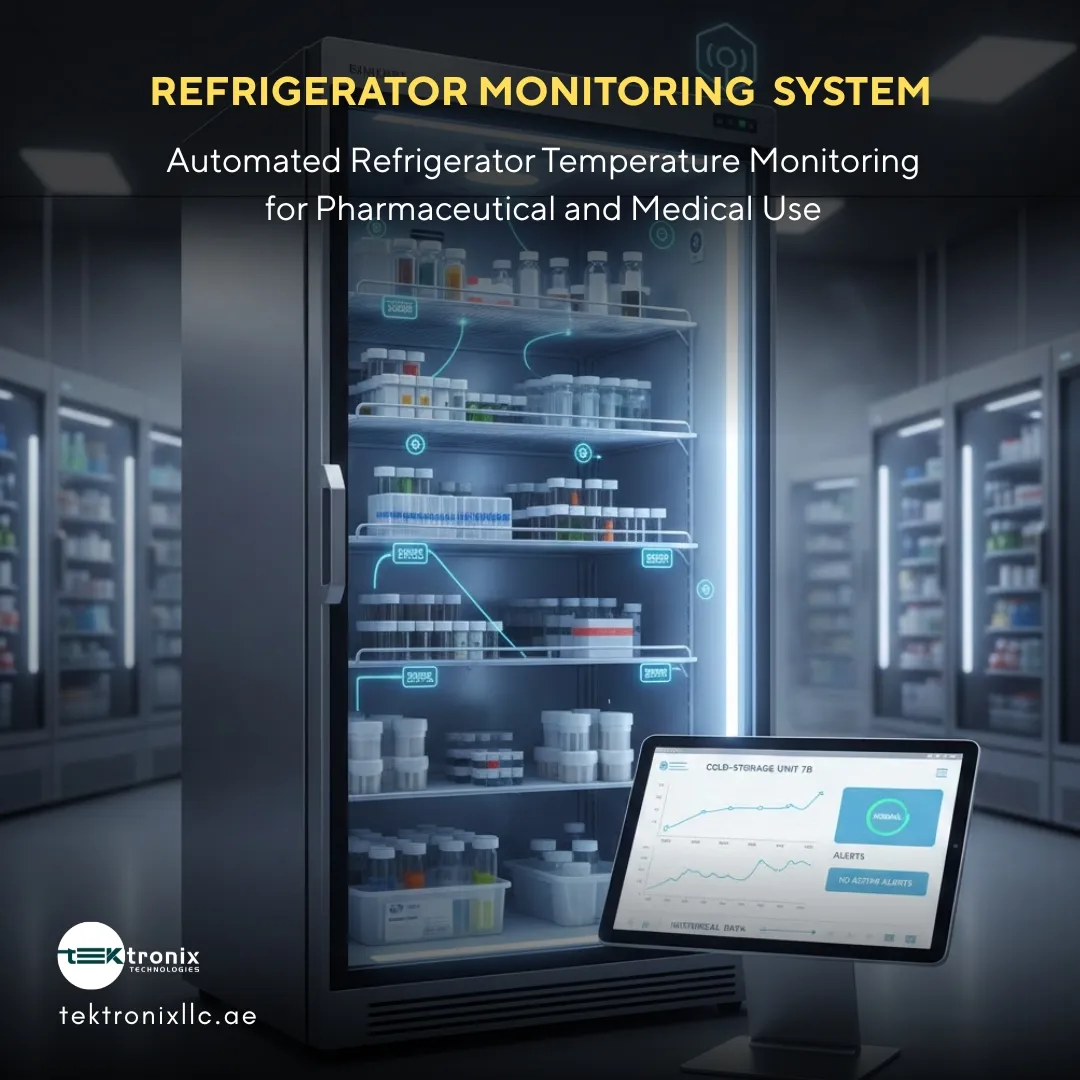
In Oman’s public healthcare system—operated through the Ministry of Health’s extensive network of hospitals, polyclinics, and primary health centres—vaccine cold-chain integrity is a national public health priority. The Expanded Programme on Immunization (EPI) mandates continuous temperature monitoring for all vaccine storage equipment from national cold store to last-mile health centre. Tektronix LLC has delivered monitoring solutions aligned with WHO EVM (Effective Vaccine Management) criteria across healthcare facilities in multiple Omani governorates, providing the Ministry with centralized visibility of cold-chain status across its entire vaccine distribution network.
In the private sector, Oman’s rapidly expanding network of private hospitals, specialty clinics, retail pharmacies, and diagnostic laboratories is driving strong demand for monitoring solutions that meet international accreditation requirements—JCI, CAP, ISO 15189—while integrating with existing hospital information systems and laboratory information management systems (LIMS). The food and beverage sector, including Oman’s growing cold-chain logistics industry serving the country’s food security ambitions under Vision 2040, represents a further significant deployment segment.
Industry Sectors Served Across Oman
- Ministry of Health hospitals, polyclinics, and primary health centres: vaccine and medication cold-chain compliance
- Private hospitals, specialty clinics, and day-surgery centres: pharmacy refrigerator and blood bank monitoring
- Retail pharmacy chains: multi-branch centralized monitoring and regulatory compliance documentation
- Diagnostic and pathology laboratories: reagent, specimen, and biological sample storage monitoring
- Food processing, catering, and hospitality: HACCP-compliant cold-room and display chiller monitoring
- Pharmaceutical importers and distributors: warehouse GDP compliance and in-transit shipment monitoring
- Research institutions and universities: ultra-low temperature freezer and incubator monitoring
Refrigerator Monitoring Muscat: The Capital’s Growing Compliance Imperative
Refrigerator Monitoring Muscat demand is concentrated in the capital’s dense cluster of healthcare, hospitality, food retail, and pharmaceutical infrastructure. Muscat’s major hospital campuses—the Royal Hospital, Khoula Hospital, Muscat Private Hospital, the Aga Khan Hospital, and the growing number of specialist day-care centres in the Madinat Al Irfan and Al Khuwair corridors—each operate dozens of refrigerated units storing products whose value and sensitivity demand continuous automated oversight.
Muscat’s retail pharmacy sector is experiencing particularly rapid growth in monitoring adoption, driven by the Oman Pharmaceutical Society’s tightening good pharmacy practice (GPP) guidelines and the competitive pressure of international pharmacy chains entering the Omani market with pre-established global compliance standards. Multi-branch pharmacy groups in Muscat are deploying centralized monitoring dashboards that give their quality managers a single-screen view of temperature status across all branches simultaneously—replacing the manual logbook regime with automated digital records that are exportable for regulatory submission at a click.
The hospitality sector represents another significant Muscat demand center. Luxury hotels, resort properties along the Muscat coastal strip, and the capital’s expanding fine-dining and catering scene are adopting HACCP-aligned cold-room and refrigerator monitoring to satisfy both Oman’s food safety regulatory requirements and the due-diligence standards of international hotel brand standards auditors.
Refrigerator Monitoring Salalah: Cold-Chain Assurance in Dhofar’s Unique Environment
Refrigerator Monitoring Salalah deployments present a distinct technical and operational profile shaped by Dhofar Governorate’s geographic isolation, its khareef season humidity extremes, and the critical role that Salalah’s Port and Free Zone play in Oman’s cold-chain logistics infrastructure.
Salalah’s distance from the national supply chain—approximately 1,000 kilometres by road from Muscat—means that any significant cold-chain failure at a Salalah healthcare facility or pharmacy cannot be rectified with a rapid capital-city delivery. The consequences of an undetected temperature excursion are therefore disproportionately severe: replacement stock may take 24–48 hours to arrive, during which patients may be denied critical medications. Continuous remote monitoring with instant alerting is not merely a compliance tool in this context—it is a patient safety imperative.
The Salalah Free Zone hosts a growing number of pharmaceutical and food-grade cold storage facilities serving regional re-export markets in East Africa, the Indian Subcontinent, and the wider Indian Ocean trade zone. These facilities operate under GDP and HACCP frameworks that require validated, audit-ready temperature records—a requirement that Tektronix LLC’s monitoring platforms satisfy through automated report generation, electronic signature workflows, and long-term data archiving aligned with GCC regulatory retention requirements.
System Integration and Platform Capabilities
Tektronix LLC’s cold-chain monitoring platform is engineered for seamless integration into the facility’s existing digital infrastructure:
- Hospital Information Systems (HIS) and Laboratory Information Management Systems (LIMS): Automated temperature data feeds for electronic patient record and quality management workflows
- Building Management Systems (BMS): Integration with HVAC and refrigeration plant monitoring for correlated root-cause analysis of temperature excursions
- Enterprise Quality Management Software (eQMS): Direct export of temperature logs, alarm records, and calibration certificates in formats accepted by JCI, ISO, and regulatory submission portals
- ERP and Inventory Management Platforms: Temperature excursion events trigger automatic quarantine flags in inventory systems, preventing dispensing or use of potentially compromised stock
- Maintenance Management Systems (CMMS): Equipment performance analytics feeding predictive maintenance workflows, flagging refrigeration units whose temperature variability patterns suggest compressor wear or refrigerant depletion before outright failure occurs
Why Tektronix LLC Is Oman’s Trusted Cold-Chain Monitoring Authority
Tektronix LLC’s authority in critical facility monitoring is grounded in more than a decade of regional deployment experience, a team of certified instrumentation and IoT engineers, and a commitment to supplying only monitoring hardware that meets internationally recognized metrology and performance standards. Our differentiators include:
- NIST-traceable sensor calibration with documented calibration certificates supplied at installation and on annual recalibration
- Compliance-ready reporting: pre-built report templates aligned with WHO EVM, ASHP, USP <1151>, GDP, HACCP, JCI, and CAP requirements
- Vendor-agnostic platform design: we integrate best-in-class sensor hardware from globally certified manufacturers rather than locking clients into a proprietary ecosystem
- Regional engineering support: Oman-based technical team providing installation, commissioning, validation, and preventive maintenance services with response times suited to healthcare operational requirements
- IQ/OQ/PQ validation documentation: Installation Qualification, Operational Qualification, and Performance Qualification protocols for GxP-regulated environments
- Long-term data archiving: configurable retention periods of 5–10 years to satisfy GCC pharmaceutical and food safety regulatory requirements
Conclusion
In Oman and across the GCC, where extreme ambient temperatures, stringent regulatory frameworks, and the irreplaceable nature of pharmaceutical and biological inventory converge, Refrigerator Monitoring is not optional infrastructure—it is the operational guarantee that what your organization stores remains safe, effective, and compliant at every moment of every day. Whether the solution calls for enterprise-grade Temperature Monitoring Solutions across a hospital network, calibrated Smart Sensors for a retail pharmacy chain, Remote Temperature Monitoring for geographically dispersed facilities, validated Temperature Data Loggers for regulatory compliance, or precision Temperature Alerts that mobilize the right person within minutes of a breach, Tektronix LLC has the engineering expertise, regional track record, and compliance knowledge to deliver.
From the hospital campuses and pharmacy networks of Muscat to the port-side cold-storage facilities of Salalah and every critical facility in between, Tektronix LLC is the partner that Oman’s most compliance-conscious organizations trust to protect their cold chains with intelligence, precision, and absolute reliability.
FAQs
FAQ 1: What types of facilities require Refrigerator Monitoring in Oman?
Refrigerator Monitoring is required across a broad range of facility types in Oman. Healthcare facilities—including Ministry of Health hospitals, private hospitals, specialty clinics, and primary health centres—must monitor vaccine, blood product, and medication storage to comply with Ministry of Health guidelines and international accreditation standards such as JCI and CAP. Retail and hospital pharmacies must document continuous temperature records under Oman Pharmaceutical Society Good Pharmacy Practice (GPP) guidelines. Diagnostic and pathology laboratories must monitor reagent and specimen storage to maintain ISO 15189 accreditation. Food businesses—restaurants, catering companies, hotels, and cold-chain logistics operators—must demonstrate HACCP-compliant temperature control to satisfy the Oman Food Safety Centre’s regulatory requirements. Pharmaceutical importers and GDP-compliant warehouse operators require validated monitoring and audit-ready records for import licence maintenance and customs clearance documentation.
FAQ 2: How do Smart Sensors maintain accuracy in Oman’s extreme ambient temperatures?
Smart Sensors deployed in GCC environments are selected and specified to perform reliably across the full range of ambient temperatures encountered in Oman—from air-conditioned interiors at 18–24°C to unconditioned plant rooms and logistics yards that may reach 55°C or above in summer. Tektronix LLC specifies sensors with operating temperature ranges of −40°C to +85°C or wider, IP67 or IP68 ingress protection ratings for dusty and humid environments, and stainless steel or UV-stabilized polymer probe housings rated for continuous exposure to the Gulf’s climatic extremes. Annual NIST-traceable recalibration is included in Tektronix LLC’s maintenance programmes, verifying that sensor accuracy remains within specification across the full measurement range and issuing updated calibration certificates that serve as regulatory compliance evidence.
FAQ 3: What is the difference between Temperature Data Loggers and a real-time Remote Temperature Monitoring system?
Temperature Data Loggers are self-contained recording devices that capture and store temperature readings in internal memory at configurable intervals. Their primary strength is auditability: they provide a continuous, tamper-evident record of thermal history that can be retrieved and presented to regulators, accreditors, or auditors. However, standalone loggers are passive—they record excursions without alerting anyone. Remote Temperature Monitoring, by contrast, is an active system that transmits readings in real time to a central platform, enabling live visibility of current conditions and immediate Temperature Alerts when thresholds are breached. Best-practice deployments combine both: networked loggers that provide local tamper-evident storage AND real-time wireless transmission, delivering regulatory-grade audit records and operational alerting from a single device.
FAQ 4: How are Temperature Alerts configured to avoid nuisance alarms in busy Omani healthcare facilities?
Temperature Alerts in Tektronix LLC’s monitoring platform are configured with multi-parameter precision to minimize nuisance alarms while ensuring genuine excursions are never missed. Each monitored unit has independently configurable warning and critical thresholds calibrated to its specific product storage requirements. A time-delay filter—typically 5 to 15 minutes, configurable per unit—prevents transient door-open events from triggering alarms while still catching genuine compressor failures that produce sustained temperature rise. Alert routing is configured to notify only the appropriate responsible person for each unit, avoiding alarm fatigue from mass notifications. Acknowledgement workflows require the responsible staff member to confirm receipt and log the corrective action taken, creating a documented response record for each alarm event. Facilities operating shift patterns can configure escalation trees that automatically re-route alerts to the on-duty person when the primary contact is off-shift.
FAQ 5: What compliance documentation does Tektronix LLC provide for Refrigerator Monitoring Salalah and remote Oman deployments?
For Refrigerator Monitoring Salalah and other remote Oman facility deployments, Tektronix LLC provides a comprehensive compliance documentation package at commissioning: Installation Qualification (IQ) report confirming system installation against approved design; Operational Qualification (OQ) report demonstrating that the system performs to specification across its configured operating range; Performance Qualification (PQ) protocol for GxP-regulated environments requiring validated system performance over a defined observation period; NIST-traceable calibration certificates for all deployed sensors; user training records; system operating procedures (SOPs) aligned with the facility’s quality management framework; and a data management plan confirming retention period, backup schedule, and access control configuration. Annual re-qualification and recalibration services are available under Tektronix LLC’s maintenance contracts, ensuring continuous compliance documentation without administrative burden on the facility’s quality team.
Contact Us:
00971 58 8899612


























Sign in to leave a comment.