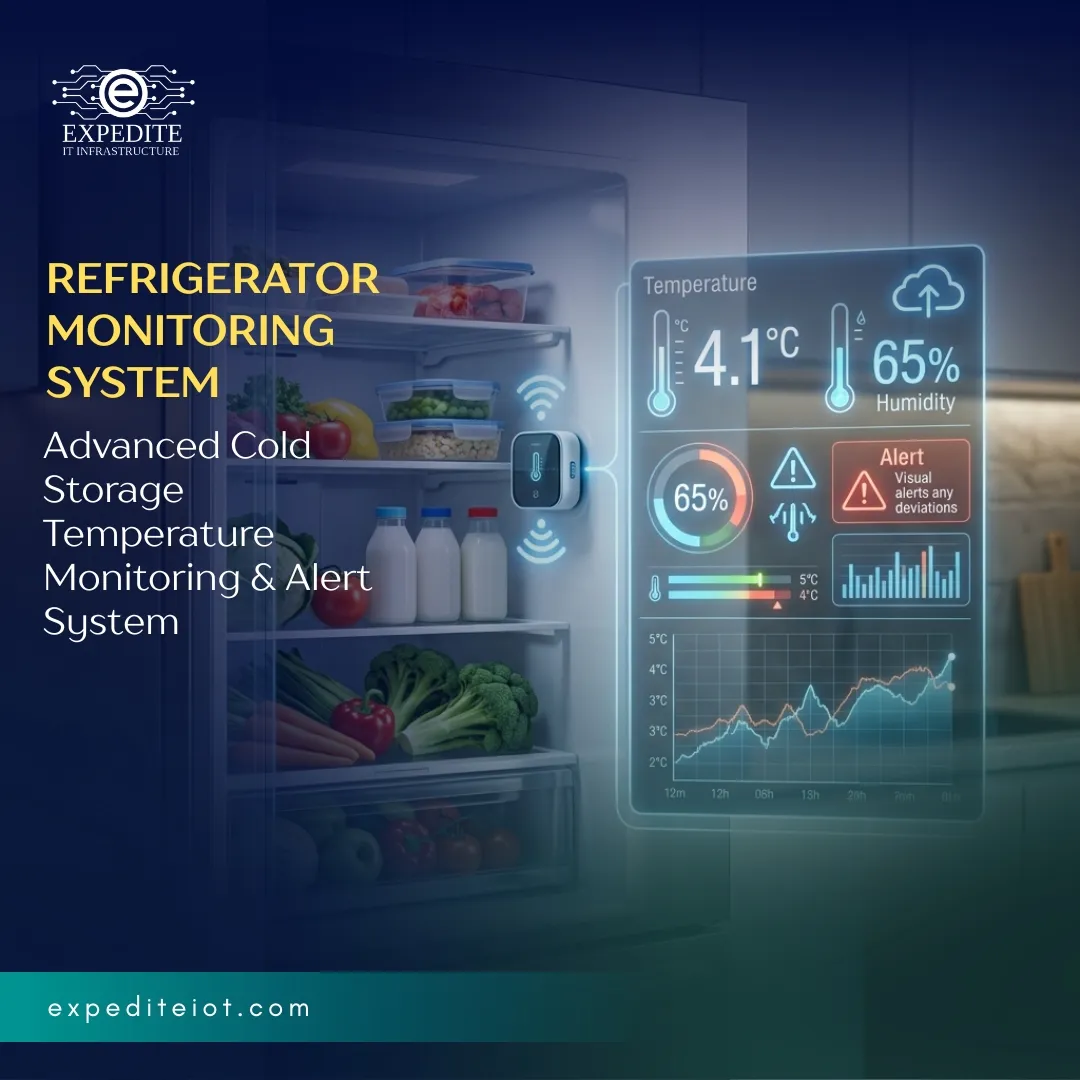

Refrigerator Monitoring is no longer optional for healthcare and life sciences organizations — it is a regulatory mandate, a patient safety obligation, and an operational necessity. Across Qatar's rapidly expanding hospital networks, pharmaceutical manufacturing campuses, and biomedical research institutions, maintaining precise cold-chain integrity is the difference between a viable medication and a discarded batch worth thousands of riyals.
Traditional manual log-sheets and standalone thermometers cannot meet the real-time visibility demands of modern cold-chain governance. The solution — an end-to-end IoT-powered Refrigerator Monitoring system equipped with smart sensors, cloud-connected dashboards, and instant temperature alerts — is transforming how Qatar's most critical facilities protect their valuable inventory and maintain regulatory compliance.
The Cold-Chain Risk Landscape in Qatar's Healthcare Sector
Qatar's healthcare infrastructure has grown dramatically over the past decade, anchored by flagship facilities such as Hamad Medical Corporation, Sidra Medicine, and a proliferating network of specialty clinics and pharmaceutical distribution hubs. Each of these environments stores temperature-sensitive assets — vaccines, insulin formulations, oncology biologics, blood products, diagnostic reagents, and compounded sterile preparations — whose efficacy is entirely dependent on unbroken cold-chain management.
The consequences of a cold-chain failure are severe. According to the World Health Organization, approximately 50% of global vaccines are wasted annually due to temperature excursions. In Qatar's climate, where ambient temperatures routinely exceed 45°C in summer, power fluctuations or equipment malfunctions can push refrigerator temperatures outside the required 2°C–8°C range within minutes — long before a manual check would detect the deviation. A single undetected excursion in a hospital pharmacy can render an entire batch of high-value biologics non-viable, triggering regulatory scrutiny, financial loss, and — most critically — compromised patient care.
What Is an IoT Refrigerator Monitoring System?
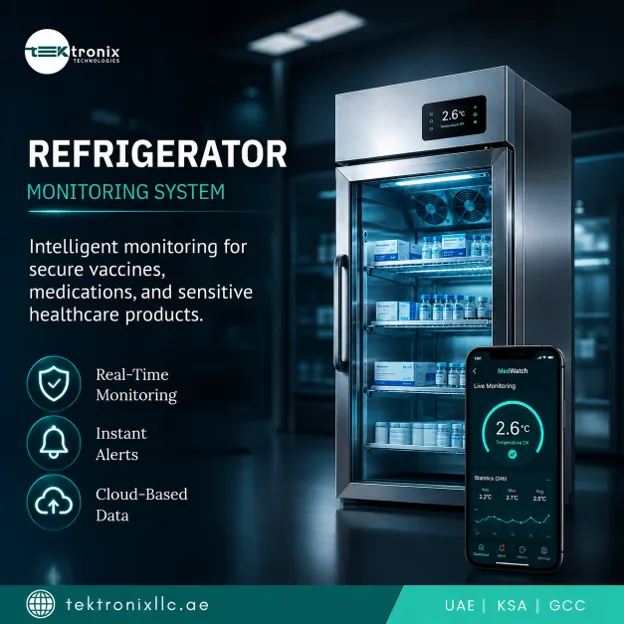
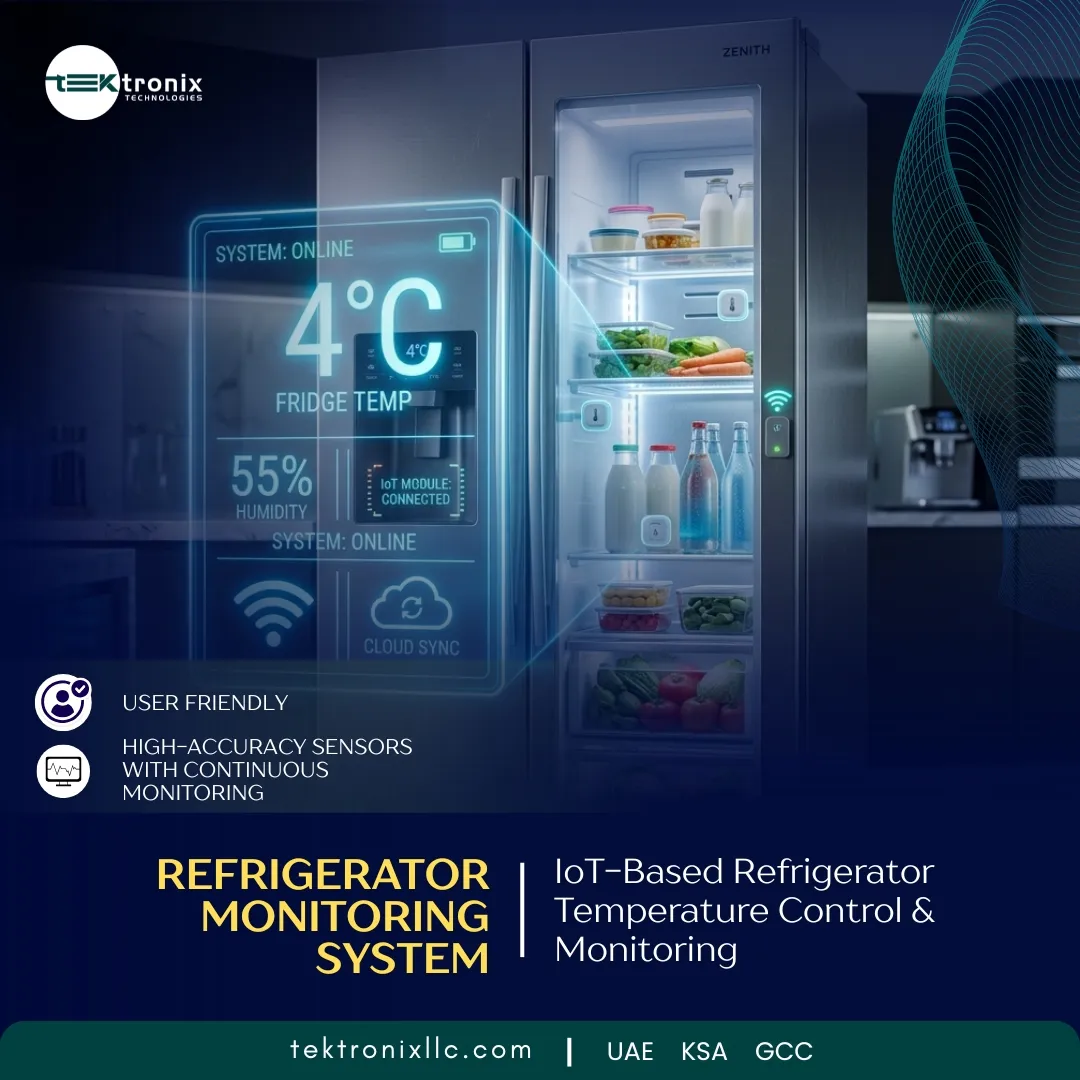
An IoT Refrigerator Monitoring system is a connected network of wireless probes, gateway devices, and cloud-based analytics software that continuously measures, records, and communicates the internal temperature — and optionally humidity — of every cold storage unit in a facility. Unlike standalone thermometers, the IoT architecture delivers:
- Continuous, automated measurement — readings captured at configurable intervals (every 1, 5, or 15 minutes)
- Instant temperature alerts — push notifications, SMS, and email dispatched the moment a threshold is breached
- Tamper-proof digital audit trails — every reading is time-stamped and stored in an immutable cloud log for regulatory inspection
- Remote temperature monitoring — facility managers, quality assurance officers, and pharmacists access live and historical data from any device, anywhere
- Predictive maintenance signals — trend analysis flags aging compressors and door-seal failures before they cause an excursion
The Role of Smart Sensors in Modern Cold-Chain Management
Smart sensors are the nerve endings of an IoT cold-chain platform. Mounted inside refrigerators, freezers, and cryogenic storage units, these miniaturized devices combine a precision thermocouple or NTC thermistor with a microprocessor and a wireless radio — typically Zigbee, LoRaWAN, or Wi-Fi — that transmits readings to a central gateway in real time. Modern smart sensors deployed across Refrigerator Monitoring Doha projects offer:
- Accuracy to ±0.1°C — meeting WHO PQS E006 and USP 1079 standards for pharmaceutical storage
- Battery life of 3–5 years — eliminating the maintenance burden of frequent replacements in large installations
- Dual-sensor redundancy — a backup probe continues logging if the primary fails, ensuring data continuity for audits
- Door-open detection — a separate contact sensor logs every door event, critical for root-cause analysis after an excursion
- IP67 ingress protection — enabling deployment in wet laboratories, blood banks, and walk-in cold rooms where condensation is constant
The sensor data flows to an on-site IoT gateway — or directly to the cloud over cellular LTE in facilities without dedicated Wi-Fi infrastructure — where it is processed, stored, and made accessible through a role-based web and mobile dashboard.
Temperature Data Loggers vs. IoT Sensors: Understanding the Difference
Temperature data loggers are standalone devices that record readings to internal memory for later download — traditionally a USB stick plugged into a computer at the end of a shift or a delivery run. While temperature data loggers remain a valid tool for point-in-time transport validation and regulatory submission packages, they are fundamentally reactive: they tell you what happened, not what is happening right now.
IoT-connected smart sensors bridge this gap by combining the precision of a calibrated data logger with continuous cloud connectivity. For hospital pharmacies and pharmaceutical warehouses in Doha that must comply with Qatar's Ministry of Public Health (MoPH) storage guidelines, ASHRAE 90.1, and international frameworks such as the ICH Q10 Pharmaceutical Quality System and GDP guidelines (EU/WHO), the IoT approach provides the always-on, always-auditable evidence trail that temperature data loggers alone cannot deliver at scale.
Remote Temperature Monitoring: Visibility Across Every Facility
Remote temperature monitoring fundamentally changes the operational model for quality assurance teams. In a traditional setup, a QA officer must physically tour cold-storage areas on a fixed schedule, manually reading and recording thermometer values. In a multi-floor hospital with 50+ refrigeration units — blood bank, pharmacy, pathology, oncology day unit, and research biorepository — this process is both labour-intensive and riddled with blind spots between checks.
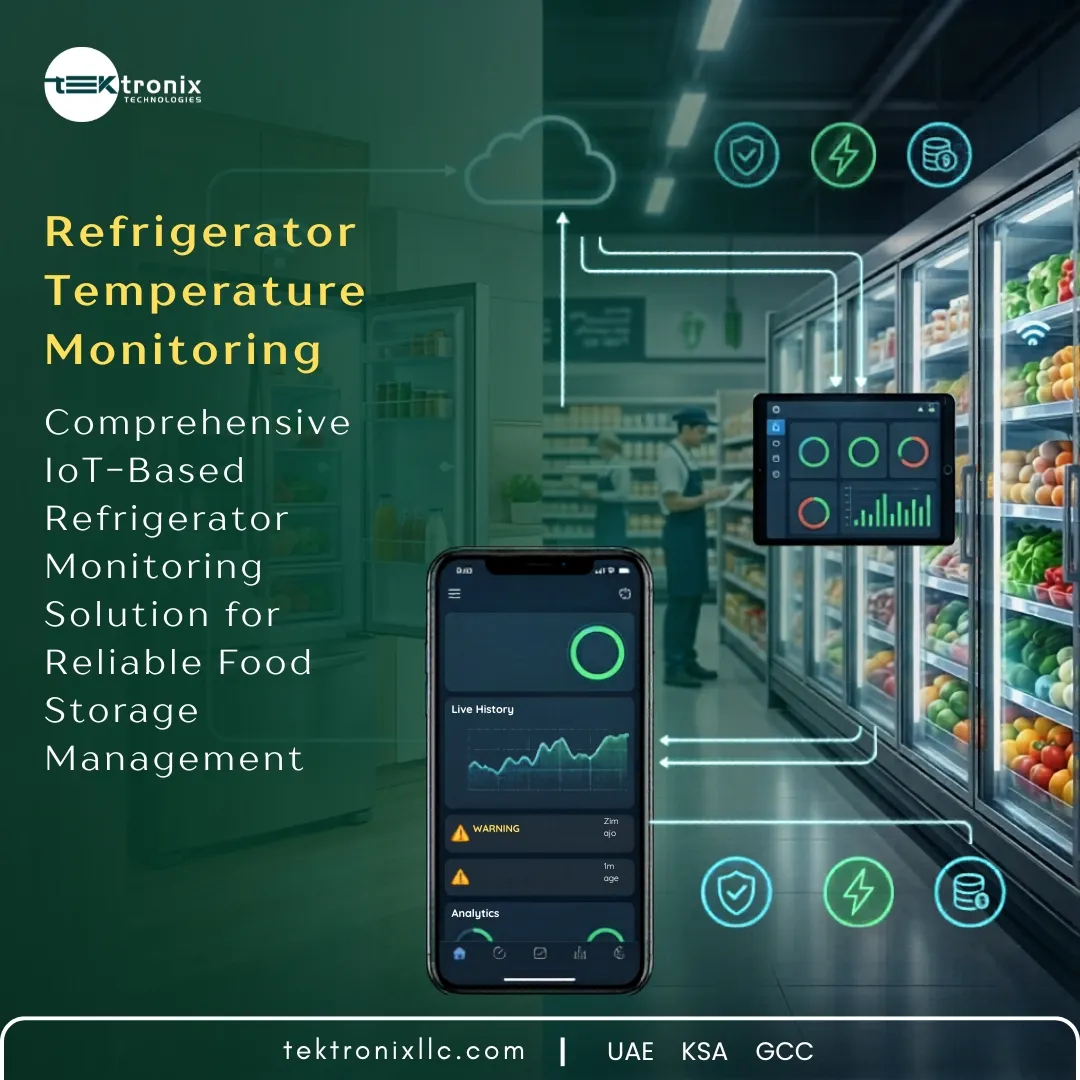
With an IoT remote temperature monitoring platform, a single dashboard — accessible via browser, iOS, or Android — displays every unit's live status, color-coded by compliance zone. Excursions are flagged immediately, escalation chains are automated, and after-hours coverage requires no additional staffing. For Refrigerator Monitoring Qatar deployments spanning multiple sites — such as a hospital group managing facilities in Lusail, West Bay, and Al Wakrah simultaneously — centralized remote temperature monitoring eliminates the need for on-site QA staff at each location during overnight or weekend periods.
Temperature Alerts: From Passive Logging to Active Risk Prevention
The most operationally impactful feature of any IoT monitoring platform is its temperature alerts engine. Modern systems support a tiered escalation architecture:
- Soft alert (advisory) — temperature approaches the threshold limit (e.g., 7.5°C for a 2°C–8°C range); notification sent to primary custodian
- Hard alert (breach) — temperature crosses the defined upper or lower limit; immediate notification to custodian, backup, and duty manager
- Escalation alert — breach unacknowledged for a configurable time window (e.g., 10 minutes); notification escalated to department head or QA director
- Critical infrastructure alert — sustained excursion beyond a defined duration; automatic work-order generation in the CMMS / facilities management system
The temperature alerts are delivered via push notification, SMS, WhatsApp, and email simultaneously, with full acknowledgement tracking — ensuring that no alert is silently ignored. Every alert, response, and corrective action is logged to the audit trail, providing exactly the documentation required by Qatar's MoPH pharmaceutical inspection protocols and international accreditation bodies such as JCI (Joint Commission International) and CAP (College of American Pathologists).
Temperature Monitoring Solutions Tailored for Qatar's Healthcare Environment
Selecting the right temperature monitoring solutions for Qatar requires more than choosing off-the-shelf hardware. The local deployment context demands specific considerations:
Climate Resilience
Sensor gateways and cabling must tolerate Qatar's extreme ambient temperatures and humidity fluctuations between air-conditioned interiors and outdoor loading docks. Industrial-grade IoT hardware rated for operation at 0°C–70°C ambient is the minimum specification for robust temperature monitoring solutions in this environment.
Regulatory Alignment
Qatar's MoPH Storage and Distribution Guidelines for pharmaceutical products mandate continuous temperature recording, documented excursion responses, and annual sensor calibration certificates. The platform and its temperature data loggers must produce export-ready compliance reports in formats acceptable to MoPH, Qatar's National Health Strategy 2024–2030 quality objectives, and international standards such as ISO/IEC 17025 for calibration traceability.
Scalability Across Asset Classes
A single temperature monitoring solutions platform should cover not only pharmaceutical refrigerators and freezers but also ultra-low-temperature (ULT) freezers (−80°C) for COVID-19 mRNA vaccines and cell therapies, blood bank equipment (1°C–6°C), cryogenic nitrogen storage (−196°C), and incubators (35°C–37°C) in microbiology labs — all within the same dashboard interface.
Key Use Cases Across Qatar's Healthcare and Life Sciences Sectors
Hospital Pharmacy Cold Storage
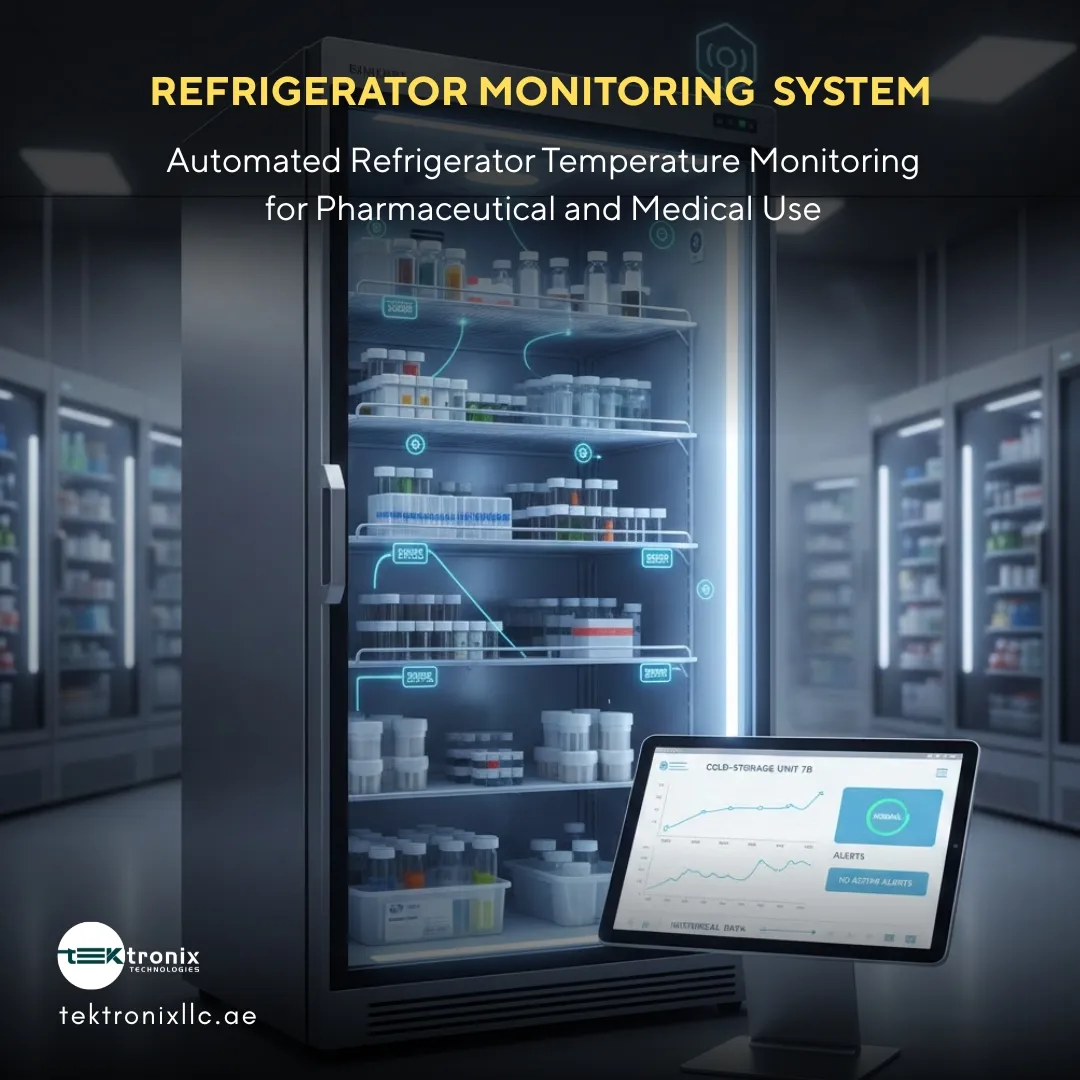
Hospital pharmacies are the highest-density concentration of temperature-sensitive assets in any healthcare facility. An IoT Refrigerator Monitoring system reduces medication waste, provides the audit evidence required for JCI accreditation, and enables 24/7 oversight without additional pharmacy staffing. Temperature alerts are routed directly to the on-call pharmacist during out-of-hours periods.
Blood Banks and Transfusion Services
Blood products have some of the narrowest storage windows in medicine — red blood cells require 1°C–6°C, platelets require 20°C–24°C with agitation, and fresh frozen plasma must be maintained at −18°C or below. Continuous remote temperature monitoring with equipment-specific alert thresholds ensures that Qatar's blood banks meet AABB and CAP accreditation standards while eliminating the manual checking burden on transfusion medicine staff.
Pharmaceutical Warehousing and Distribution
Pharmaceutical distributors operating in Refrigerator Monitoring Doha and across the Gulf use IoT sensor networks to monitor entire warehouse cold zones — walk-in cold rooms, refrigerated loading docks, and in-transit cool boxes — providing an unbroken chain of temperature data loggers evidence from manufacturer receipt to hospital delivery. This cold-chain traceability is a prerequisite for handling high-value specialty biologics and licensed vaccines.
Research Biorepositories and Genomics Labs
Research institutions at Qatar Foundation campuses — including Weill Cornell Medicine-Qatar and Hamad Bin Khalifa University's biomedical programs — operate biobanks containing irreplaceable clinical samples, cell lines, and genetic material. For these environments, smart sensors with sub-minute polling intervals and battery-backed gateway redundancy provide the highest level of asset protection. Even a single ULT freezer failure without an active temperature monitoring solutions platform can result in the permanent loss of years of research samples.
Expedite IoT: Qatar's Trusted Partner for Cold-Chain Monitoring
Expedite IoT is a specialized IoT solutions provider with a proven deployment track record across Qatar, the UAE, Saudi Arabia, and Oman. Our engineering team has designed and commissioned Refrigerator Monitoring Qatar systems for hospital groups, pharmaceutical distribution warehouses, clinical laboratories, and biomedical research institutions — environments where sensor accuracy, uptime, and regulatory compliance are non-negotiable.
We deliver complete end-to-end temperature monitoring solutions including hardware supply, wireless network design, cloud platform configuration, MoPH-compliant reporting templates, sensor calibration certificates, staff training, and ongoing 24/7 SLA support. Our platform integrates with leading Hospital Information Systems (HIS), Laboratory Information Management Systems (LIMS), and Building Management Systems (BMS) — making cold-chain data a first-class signal in your facility's operational intelligence ecosystem.
Across our Qatar and GCC portfolio, we have achieved zero undetected excursions in monitored assets during our engagement period — a direct result of our multi-tier temperature alerts architecture and dedicated customer success management. Speak to our Doha team today to schedule a free site assessment and live platform demonstration.
Why Qatar's Healthcare Facilities Cannot Afford to Wait
Qatar's National Health Strategy 2024–2030 places patient safety, digital health infrastructure, and pharmaceutical governance at the center of its reform agenda. The Qatar National Vision 2030 explicitly targets world-class healthcare delivery as a pillar of economic diversification. Against this backdrop, Refrigerator Monitoring Qatar deployments are accelerating — not as discretionary technology upgrades but as core compliance infrastructure for any facility seeking JCI accreditation, MoPH licensing renewal, or participation in government vaccine programs.
The cost of inaction is quantifiable: a single excursion event in a hospital pharmacy, if undetected, can write off QAR 50,000–QAR 500,000 in medications depending on the product mix. Against this exposure, the total cost of ownership for a fully deployed IoT remote temperature monitoring platform — sensors, gateway, software, and support — typically represents less than 10% of the value of a single avoided batch loss. The return on investment is not measured in years; it is measured in the first prevented incident.
Conclusion
For hospitals, pharmaceutical distributors, blood banks, and research institutions operating in Qatar, an IoT Refrigerator Monitoring system is the single most impactful cold-chain investment available. By deploying calibrated smart sensors, enterprise-grade temperature data loggers, and an intelligent temperature alerts platform, organizations gain the real-time visibility, the regulatory audit trail, and the predictive maintenance intelligence needed to protect patient safety and comply with Qatar's evolving pharmaceutical governance framework.
Whether your priority is JCI accreditation, MoPH compliance, vaccine cold-chain management, or simply the elimination of costly medication losses, Expedite IoT's Refrigerator Monitoring Qatar platform delivers the coverage, accuracy, and support your facility demands. Contact our Refrigerator Monitoring Doha team today to get started.
FAQs
1. What types of refrigeration units can an IoT Refrigerator Monitoring system cover?
A modern IoT Refrigerator Monitoring platform supports the full spectrum of cold-storage assets: pharmaceutical refrigerators (2°C–8°C), medical-grade freezers (−20°C to −30°C), ultra-low-temperature (ULT) freezers (−80°C), blood bank equipment (1°C–6°C for red cells), cryogenic liquid nitrogen storage (−196°C), and controlled room-temperature cabinets (15°C–25°C). All asset types are managed within a single dashboard, with asset-specific alert thresholds configured per unit.
2. How do temperature alerts reach staff outside business hours?
The temperature alerts engine supports multi-channel, time-aware escalation. Outside business hours, alerts are routed to on-call staff via SMS and push notification simultaneously. If the primary contact does not acknowledge within a configurable window (typically 5–10 minutes), the alert automatically escalates to a backup contact, then to a department supervisor. Every alert, acknowledgement, and corrective action is logged with a timestamp for regulatory audit purposes.
3. Are the smart sensors in your system approved for pharmaceutical use?
Yes. The smart sensors used in Expedite IoT's deployments are calibrated to NIST/ISO/IEC 17025 traceable standards and meet WHO PQS E006, USP 1079, and EU GDP requirements for pharmaceutical cold-chain monitoring. Annual recalibration certificates are provided as standard, and sensor calibration history is maintained in the platform's audit log — directly satisfying Qatar MoPH inspection requirements.
4. What is the difference between remote temperature monitoring and traditional data loggers?
Remote temperature monitoring delivers live data to a cloud dashboard with instant temperature alerts, whereas temperature data loggers record data locally and require manual retrieval. For ongoing facility monitoring — where the value is in catching an excursion within minutes, not hours — IoT remote temperature monitoring is the appropriate solution. Traditional temperature data loggers remain useful for single-journey transport validation where cloud connectivity is not available during transit.
5. How quickly can Expedite IoT deploy a Refrigerator Monitoring Qatar system?
For a standard hospital pharmacy or laboratory deployment of up to 30 refrigeration units, Expedite IoT's Refrigerator Monitoring Qatar team can complete site survey, hardware installation, sensor calibration, dashboard configuration, and staff training within 5–7 working days. Larger installations covering multiple floors or multi-site campuses are scoped individually.
Contact Us:
+966 5021 04086

























Sign in to leave a comment.