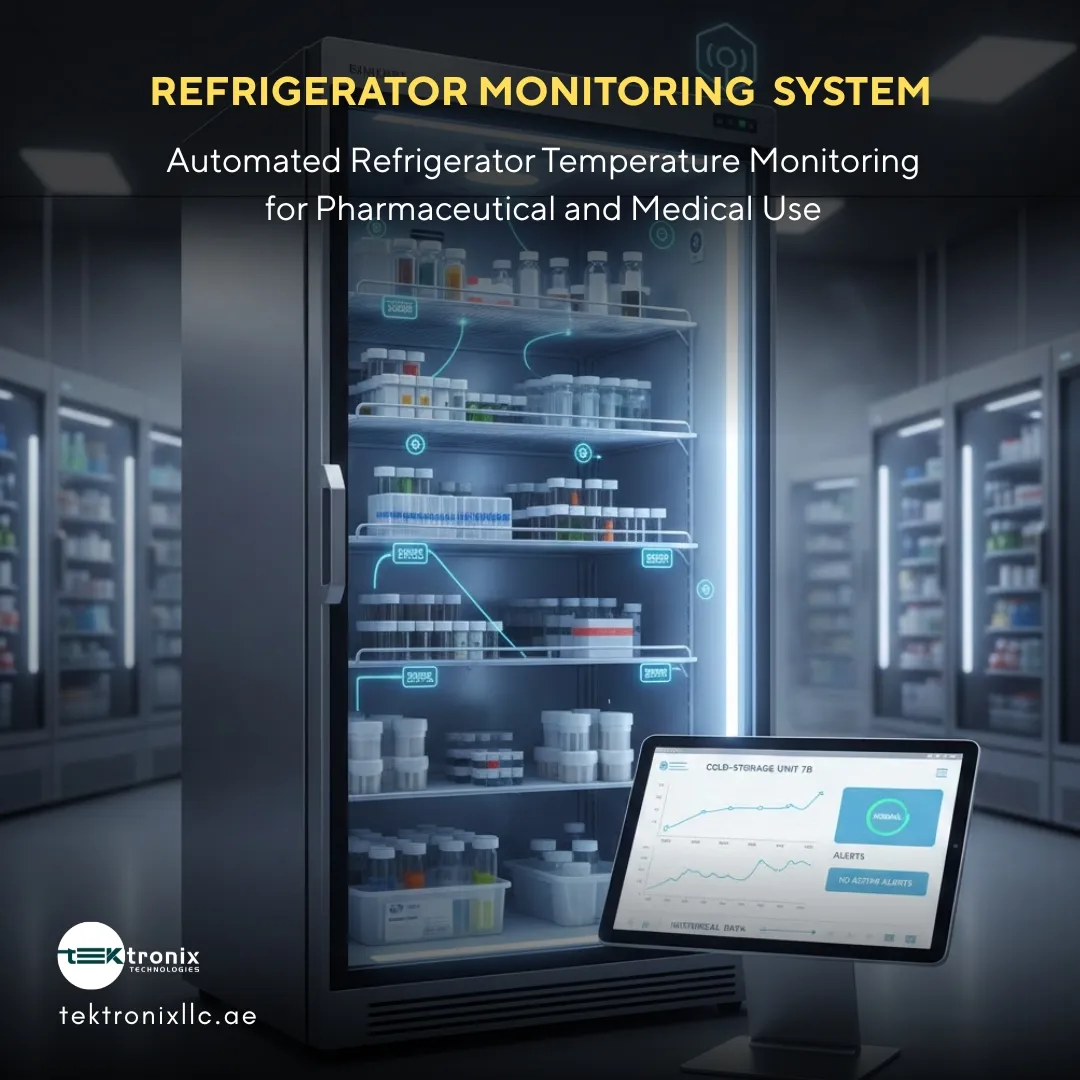

In the UAE's extreme climate — where ambient temperatures routinely exceed 45°C in summer — maintaining the integrity of cold-chain assets is a business-critical, legally mandated, and often life-or-death responsibility. Automated Refrigerator Monitoring has evolved from a nice-to-have operational tool into a regulatory baseline for pharmaceutical distributors, food-service operators, hospital blood banks, laboratory networks, and hospitality chains operating across the emirates. This definitive guide examines why Temperature Monitoring Solutions are indispensable in the UAE context, how the core technologies work, what city-specific compliance pressures businesses face, and how to select the right monitoring platform to safeguard your cold-storage assets, protect your licence to operate, and maintain the trust of every stakeholder in your supply chain.
Why the UAE's Climate and Regulatory Environment Makes Automated Cold-Chain Monitoring Essential
The combination of the UAE's punishing ambient temperatures, year-round high humidity in coastal zones, and some of the Middle East's most rigorous pharmaceutical and food-safety regulatory frameworks creates a uniquely demanding environment for cold-storage operations. A brief power interruption, a door left ajar, or a failing compressor can destroy an entire vaccine consignment or a high-value biologics shipment within minutes — losses that carry not only direct financial costs but also potential criminal liability under UAE Federal Law No. 4 of 1983 (Pharmaceutical and Medicinal Products Law) and MOHAP Good Distribution Practice (GDP) guidelines. Manual temperature checks — the legacy approach of logging readings every four or eight hours on paper — are entirely inadequate in this context: they create data gaps between checks, introduce human error, and provide no real-time visibility when excursions begin. The UAE Health Authority and Dubai Health Authority both mandate continuous, automated temperature logging with audit-ready records for licensed pharmaceutical storage facilities. Only purpose-built Remote Temperature Monitoring platforms can satisfy these requirements while delivering the operational confidence that procurement managers, quality directors, and regulatory auditors expect.
Core Technologies That Power Modern Temperature Monitoring Solutions
Understanding the technology stack behind a robust Refrigerator Monitoring UAE platform is essential for informed procurement decisions. Four foundational technologies work in concert to deliver continuous, reliable cold-chain visibility.
Smart Sensors
Smart Sensors are the nerve endings of any temperature monitoring ecosystem. Unlike legacy bi-metal or glass thermometers, contemporary smart sensors combine calibrated NTC thermistor or platinum RTD (Pt100/Pt1000) probes with onboard microprocessors that perform local data validation, self-diagnostics, and wireless transmission in a single compact unit. Industrial-grade sensors deployed in UAE cold-storage environments carry IP67 or IP68 ingress-protection ratings to withstand condensation and cleaning chemicals, and are designed to operate reliably across a measurement range of −80°C to +60°C — covering everything from ultra-cold vaccine freezers at −70°C to standard ambient monitoring at +25°C. Modern smart sensor nodes communicate over low-power wide-area networks including Wi-Fi 802.11b/g/n, Zigbee, LoRaWAN, and cellular (NB-IoT / LTE-M), enabling reliable signal propagation through the dense concrete and metal construction typical of UAE commercial and industrial buildings. NIST-traceable factory calibration certificates, with recommended annual recalibration intervals, ensure the measurement accuracy required by MOHAP, ESMA, and ISO 17025 audit frameworks.
Temperature Data Loggers
Temperature Data Loggers serve a dual role: as standalone devices for short-term cold-chain shipment validation (particularly for last-mile pharmaceutical distribution across UAE road networks in summer), and as edge-computing nodes within permanent fixed monitoring installations. A logger records measurement at configurable intervals — typically every 5, 10, or 15 minutes — and stores thousands of data points in onboard non-volatile memory, ensuring no readings are lost even during Wi-Fi outages or gateway failures. For UAE regulatory compliance purposes, data loggers are indispensable: DHA and MOHAP auditors specifically require continuous temperature records with no gaps for pharmaceutical cold rooms, and the immutable nature of logger memory provides the tamper-evident audit trail that regulators demand. USB and Bluetooth-enabled loggers allow pharmacists, warehouse managers, and quality officers to instantly extract and export timestamped temperature reports in PDF or CSV format for inclusion in GDP compliance dossiers, customer delivery documentation, or insurance claim substantiation.
Remote Temperature Monitoring Platforms
The defining capability of modern cold-chain management is the ability to know what is happening inside every refrigerator, freezer, and cold room across your entire UAE facility portfolio — from a single dashboard, in real time, from anywhere in the world. Cloud-based Remote Temperature Monitoring platforms achieve this by aggregating sensor data from Wi-Fi or cellular gateways, processing it through rules-based alarm engines, and presenting live readings, trend charts, and compliance reports through a web browser or mobile application. For multi-site operators — a hospital group with facilities in Dubai, Abu Dhabi, and Al Ain, or a pharmaceutical wholesaler with warehouses in JAFZA and Khalifa Industrial Zone — centralised remote monitoring eliminates the operational overhead of dispatching engineers to investigate temperature alarms on-site. Platforms built on open API architectures integrate with existing hospital information systems (HIS), ERP platforms, and building management systems (BMS), enabling seamless data flows without manual re-entry. Role-based access controls ensure that quality managers see full audit trails while store staff see only the assets relevant to their location.
Temperature Alerts and Automated Escalation Logic
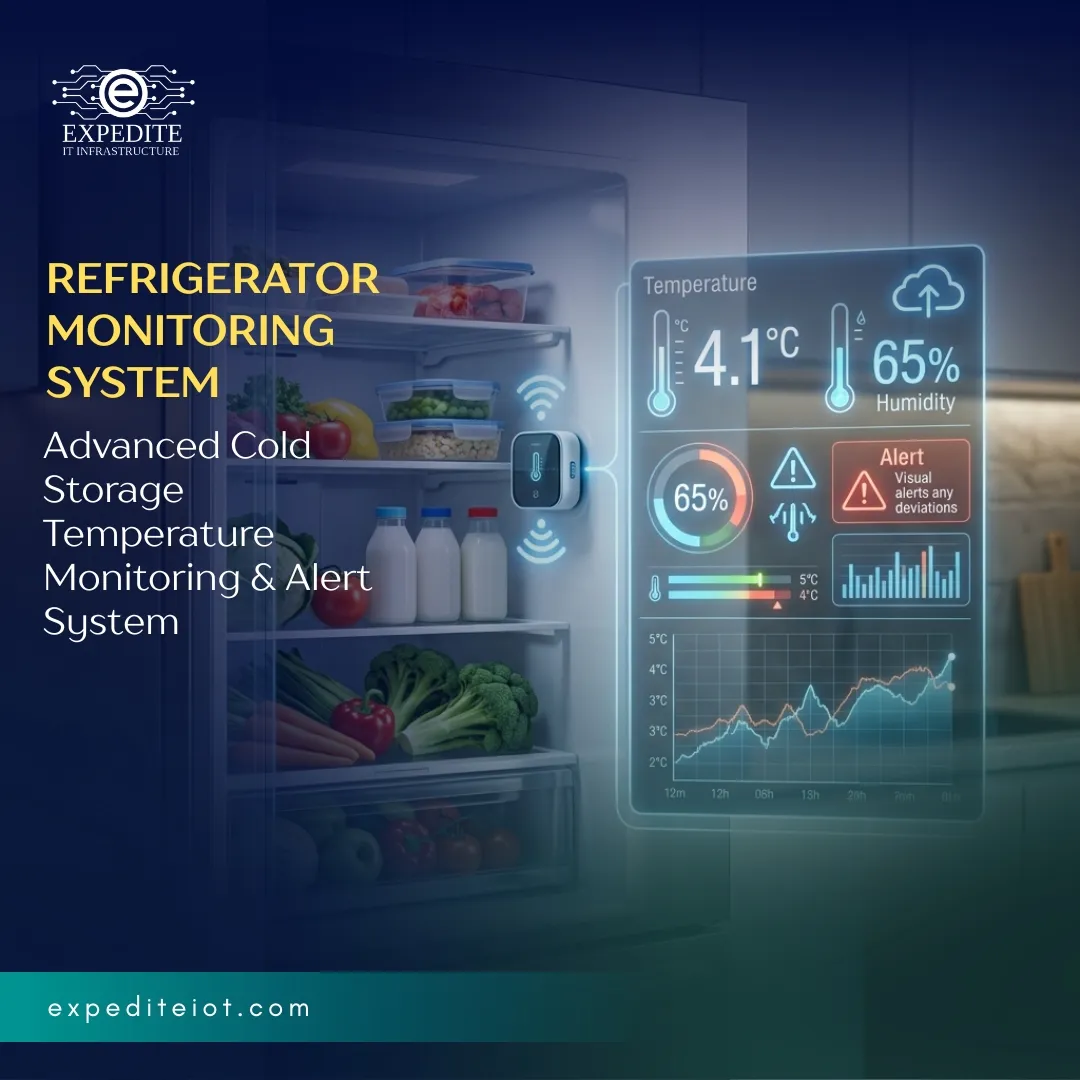
The real-time value of any monitoring system is only realised if the right people receive actionable Temperature Alerts through the right channels at the right time. Modern platforms support multi-channel alert delivery — SMS, email, push notification via mobile app, and automated voice call — with configurable escalation trees that ensure critical excursions are never missed due to a single point of contact being unavailable. Alert logic is typically configured with two threshold tiers: a soft warning alert at, for example, +5°C for a +2°C to +8°C refrigerator (prompting investigation before a full excursion), and a hard alarm at +8°C (triggering immediate corrective action and automatic incident logging). Mean Kinetic Temperature (MKT) calculations — required by WHO and ICH Q1A pharmaceutical stability guidelines — are often performed automatically by the platform, providing quality teams with an immediate assessment of whether a temperature excursion has compromised product stability rather than requiring manual pharmacokinetic calculations. Alarm suppression during planned defrost cycles and door-open events prevents alert fatigue, ensuring that when an alarm fires, operations teams take it seriously.
City-Specific Deployment Insights and Regulatory Contexts
Each of the UAE's major commercial centres presents distinct regulatory requirements, industry concentration patterns, and infrastructure considerations that directly shape how temperature monitoring projects are designed and deployed.
Refrigerator Monitoring Dubai
Dubai is the UAE's largest pharmaceutical distribution hub, processing a substantial share of the region's cold-chain pharmaceutical imports through Dubai International Airport's dedicated pharma cargo terminal and JAFZA's world-class logistics infrastructure. Refrigerator Monitoring Dubai deployments are driven primarily by DHA (Dubai Health Authority) GDP licensing requirements, which mandate continuous temperature logging with alarm systems and annual calibration certificates for all licensed pharmaceutical cold stores. Dubai's booming food and beverage sector — spanning hypermarket chains, hotel F&B operations, dark kitchens, and fine-dining establishments — also faces HACCP compliance requirements under Dubai Municipality's food safety regulations, which require documented cold-chain temperature records as part of the Food Watch traceability framework. The city's smart infrastructure agenda has accelerated adoption of cloud-connected monitoring platforms that integrate with Dubai Now and other smart-city data layers, giving facility operators visibility into cold-chain status alongside energy consumption and building-systems data.
Refrigerator Monitoring Abu Dhabi
Abu Dhabi's healthcare ecosystem — anchored by SEHA (Abu Dhabi Health Services Company), Cleveland Clinic Abu Dhabi, and a rapidly growing network of private hospitals and specialty clinics — represents some of the highest-stakes cold-chain monitoring environments in the region. Refrigerator Monitoring Abu Dhabi projects at SEHA facilities and DOH (Department of Health)-licensed pharmacies are subject to stringent GDP and Good Manufacturing Practice (GMP) validation requirements, including Installation Qualification (IQ), Operational Qualification (OQ), and Performance Qualification (PQ) protocols for all monitoring systems. Blood banks, tissue repositories, and oncology pharmacy units operating ultra-cold freezers at −70°C to −86°C require monitoring platforms with sub-degree accuracy and immediate SMS escalation to on-call pharmacists or biomedical engineers. Abu Dhabi's industrial zones — KIZAD, Mussafah, and ICAD — also generate significant demand for large-scale cold-room monitoring in food processing, chemical storage, and petrochemical laboratory applications, often requiring hazardous-area (ATEX/IECEx-rated) sensor variants.
Refrigerator Monitoring Sharjah
Sharjah's pharmaceutical manufacturing sector — home to several WHO-prequalified generic drug producers in the Sharjah Healthcare City and Industrial Area — makes the emirate a significant centre for GMP-grade cold-chain monitoring. Refrigerator Monitoring Sharjah deployments in manufacturing environments must satisfy both MOHAP inspection requirements and the exporting customers' GDP audit requirements for European, US, and GCC markets. The emirate's university hospital network and the extensive primary healthcare clinic infrastructure managed by the Sharjah Health Authority require continuous monitoring with 24/7 alarm response coverage. Sharjah's large cold-storage and food logistics sector — serving the broader Northern Emirates — also demands scalable monitoring platforms that can cover large multi-zone cold rooms and blast-freezer tunnels, where temperature uniformity mapping (thermal mapping studies per ISPE guidelines) is a prerequisite before a facility can obtain food-safety or pharmaceutical cold-storage licences.
Industry Verticals and Critical Application Environments
Across the UAE, automated cold-chain visibility is mission-critical in five principal industry verticals, each with distinct product sensitivity profiles and compliance frameworks:
- Pharmaceutical and healthcare: Vaccines, biologics, blood products, oncology drugs, and tissue samples require continuous +2°C to +8°C or ultra-cold −20°C to −86°C monitoring with full 21 CFR Part 11-compliant audit trails.
- Food and beverage: Perishable produce, dairy, meat, seafood, and ready-to-eat products require HACCP-compliant cold-chain records from farm gate through last-mile delivery to meet Dubai Municipality and ADAFSA traceability mandates.
- Laboratory and research: Clinical sample repositories, PCR reagent stores, and research biobanks require sub-degree monitoring accuracy and immediate alarm escalation to preserve irreplaceable biological materials.
- Hospitality and retail: Hotel F&B operations, supermarket cold aisles, and convenience store chiller cabinets require monitoring to protect brand reputation, prevent food-safety incidents, and satisfy regulatory inspections.
- Industrial and chemical: Specialty chemical stores, catalyst repositories, and petrochemical laboratories require temperature monitoring to prevent product degradation, maintain safety compliance, and protect multimillion-dollar inventory.
UAE Regulatory Compliance Framework and Assurance
Navigating the UAE's multi-layered cold-chain compliance landscape requires a monitoring partner with documented regulatory expertise — not just hardware supply capability. Key regulatory frameworks governing cold-chain monitoring in the UAE include MOHAP GDP Guidelines (aligned with EU GDP Directive 2013/C 343/01), DHA Cold Chain Management Policy, DOH Abu Dhabi Pharmaceutical Regulations, ESMA (Emirates Authority for Standardisation and Metrology) calibration traceability requirements, and HACCP Codex Alimentarius standards as adopted by Dubai Municipality and ADAFSA. ISO/IEC 17025 accreditation for calibration laboratories ensures that sensor calibration certificates are internationally recognised, a critical requirement when UAE-based distributors export to European or US customers who perform GDP audits. Tektronix LLC brings extensive, verifiable experience in deploying compliant cold-chain monitoring systems across UAE healthcare, pharmaceutical, and food-safety environments — delivering the Experience, Expertise, Authoritativeness, and Trustworthiness (E-E-A-T) credentials that procurement officers, quality directors, and regulatory auditors demand from a technology partner. The company's certified engineers provide IQ/OQ/PQ validation documentation, thermal mapping study support, and 24/7 alarm monitoring coverage, ensuring clients are audit-ready at all times.
Return on Investment: Quantifying the Value of Continuous Monitoring
The financial case for investing in automated cold-chain monitoring is compelling across multiple value dimensions:
- Prevented product loss: A single undetected excursion can destroy a vaccine batch worth AED 50,000–500,000 or an oncology drug consignment worth multiples of that. Automated Temperature Alerts deliver the minutes of lead time needed to transfer products before irreversible damage occurs.
- Regulatory penalty avoidance: DHA and MOHAP inspections that find inadequate temperature records can result in licence suspension, product recall orders, and import bans — costs that dwarf the annual cost of a monitoring subscription.
- Labour efficiency: Replacing manual four-hourly temperature logging rounds with automated Smart Sensors frees pharmacy and warehouse staff for higher-value activities, delivering measurable labour savings within the first month of operation.
- Insurance and liability: Comprehensive automated temperature logs constitute primary evidence in insurance claims for cold-chain losses, and are required by most UAE cold-chain cargo insurers to validate spoilage claims.
- Energy optimisation: Temperature trend data identifies refrigeration units running warmer or cooler than setpoint — early indicators of compressor inefficiency or refrigerant loss — enabling planned maintenance before a costly breakdown occurs.
How to Evaluate and Select the Right Monitoring Partner in the UAE
When assessing vendors for your Temperature Data Loggers and monitoring platform deployment, apply this structured due-diligence framework:
- Verify that sensor calibration certificates are NIST-traceable or UKAS-accredited and include a calibration interval recommendation — typically 12 months for pharmaceutical applications.
- Confirm the platform provides 21 CFR Part 11-compliant electronic records and audit trails if your facility is subject to FDA or EMA inspection in addition to MOHAP requirements.
- Evaluate alarm reliability: does the system support multi-channel escalation (SMS, email, voice call, app push) with configurable acknowledgement workflows and escalation trees?
- Assess data sovereignty and cloud security: where is monitoring data hosted, and does the platform comply with UAE data residency requirements under the Personal Data Protection Law (PDPL)?
- Request documented IQ/OQ/PQ validation support and thermal mapping study capability — prerequisites for any MOHAP, DHA, or DOH-licensed pharmaceutical cold-storage qualification project.
Why Tektronix LLC Is the UAE's Trusted Cold-Chain Monitoring Partner
Tektronix LLC is a specialist provider of industrial IoT and environmental monitoring solutions with a proven track record across UAE pharmaceutical, healthcare, food, and industrial sectors. The company's cold-chain monitoring portfolio delivers the complete technology stack — calibrated Smart Sensors, cloud-connected gateways, enterprise-grade Temperature Data Loggers, and a feature-rich Remote Temperature Monitoring platform with configurable Temperature Alerts — all backed by certified engineers with deep regulatory domain expertise across DHA, DOH, MOHAP, and ESMA compliance frameworks. With active deployments spanning Dubai, Abu Dhabi, and Sharjah, and coverage extending to Saudi Arabia and Qatar, Tektronix delivers turnkey project services including site assessment, sensor placement design, wireless coverage validation, system commissioning, IQ/OQ/PQ documentation, staff training, and 24/7 alarm monitoring support.
Conclusion
In a region where extreme climate conditions, stringent regulatory frameworks, and high-value cold-chain assets converge, automated Refrigerator Monitoring is not a luxury — it is a fundamental operational and compliance imperative. From calibrated Smart Sensors delivering sub-degree accuracy in hospital blood banks to cloud-based platforms providing Temperature Alerts to quality managers across multi-site operations, the right monitoring infrastructure protects products, patients, business licences, and brands simultaneously. Whether your operations are based in Refrigerator Monitoring Dubai, Refrigerator Monitoring Abu Dhabi, or Refrigerator Monitoring Sharjah, partnering with a certified, experienced UAE-based monitoring specialist ensures you are audit-ready, compliant, and fully protected against cold-chain excursions at all times. Contact Tektronix LLC today and take the first step toward complete, continuous cold-chain confidence.
FAQs
1. What is the difference between Smart Sensors and Temperature Data Loggers?
Smart Sensors are permanently installed wireless devices that transmit real-time readings to a centralised cloud platform continuously, enabling live dashboards, instant alarm notifications, and automated compliance reports without any manual intervention. Temperature Data Loggers, by contrast, record and store data locally in onboard memory — making them ideal for in-transit shipment monitoring, validation studies, and environments where permanent wireless connectivity is unavailable. Many modern deployments combine both: fixed smart sensors for 24/7 facility monitoring and portable loggers for last-mile distribution and IQ/OQ/PQ qualification studies.
2. What UAE regulations require automated Refrigerator Monitoring for pharmaceutical facilities?
Licensed pharmaceutical storage facilities in the UAE must comply with MOHAP's Good Distribution Practice guidelines, which mandate continuous automated temperature monitoring with alarm systems, calibrated sensors with NIST-traceable certificates, and tamper-evident digital records for regulatory audit purposes. DHA-licensed facilities in Dubai and DOH-licensed facilities in Abu Dhabi have additional emirate-specific requirements, including documented alarm response procedures and periodic thermal mapping studies. Failure to maintain compliant Refrigerator Monitoring UAE systems can result in licence suspension, stock quarantine orders, and significant financial penalties during regulatory inspections.
3. How do Temperature Alerts work, and what channels are supported?
Temperature Alerts are triggered automatically by the monitoring platform when a sensor reading crosses a pre-configured threshold — for example, above +8°C for a pharmaceutical refrigerator or below −18°C for a blast freezer. Modern platforms deliver alerts through multiple simultaneous channels including SMS, email, in-app push notifications, and automated voice calls, with configurable escalation trees that notify a secondary or tertiary contact if the primary recipient does not acknowledge the alarm within a defined response window. Alert logic also supports MKT (Mean Kinetic Temperature) calculations and suppression during planned defrost cycles, minimising false alarms while ensuring genuine excursions always reach the responsible team instantly.
4. Can Remote Temperature Monitoring integrate with hospital or ERP systems?
Yes. Enterprise-grade Remote Temperature Monitoring platforms are built on open API architectures that support RESTful API, MQTT, and Modbus integration with hospital information systems (HIS), laboratory information management systems (LIMS), ERP platforms such as SAP and Oracle, and building management systems (BMS). This allows temperature excursion events to automatically trigger work orders in maintenance management systems, update inventory quarantine statuses in ERP, or populate GDP compliance dossiers in quality management systems — eliminating manual data transfer and the associated transcription errors that undermine audit integrity.
5. How often should temperature monitoring sensors be calibrated in the UAE?
MOHAP GDP guidelines and most international cold-chain standards (EU GDP, USP Chapter 1079, WHO TRS 961) recommend annual sensor calibration as a minimum interval for pharmaceutical cold-chain applications, with calibration performed by an ISO/IEC 17025-accredited laboratory to maintain NIST or UKAS traceability. In the UAE's harsh climate — where sensors are subject to high thermal cycling, humidity stress, and vibration in busy storage environments — some quality directors prefer a six-month calibration interval to provide an additional margin of assurance. Tektronix LLC provides calibration management services including pre-calibration sensor collection, calibration certificate issuance, post-calibration recommissioning, and automatic calibration-due reminders to ensure Temperature Monitoring Solutions remain compliant throughout their operational lifecycle.
Contact Us:
+971 55 232 2390























Sign in to leave a comment.