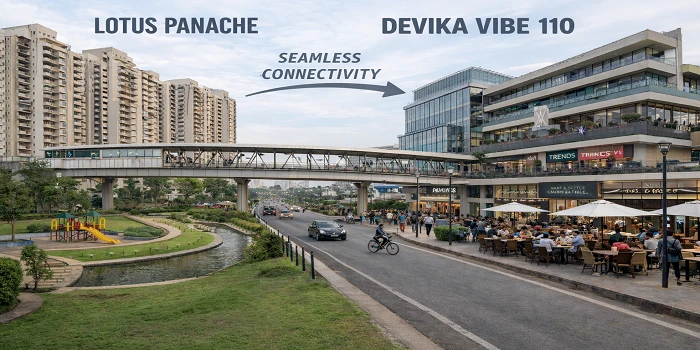

Over the past decade, Noida has transformed from a developing satellite city into a structured urban hub supported by corporate corridors, expressway connectivity, and planned residential sectors. Sector 110 represents one of those micro markets where this transformation is clearly visible. Unlike newly emerging sectors that rely heavily on future projections, Sector 110 already possesses a functioning residential ecosystem supported by established infrastructure. Wide internal roads, access to the Noida Greater Noida Expressway, proximity to educational institutions, healthcare facilities, and office clusters contribute to its everyday livability.
In urban planning, sustainability comes from balance. A sector thrives when residential density, retail convenience, and connectivity develop together. The relationship between Lotus Panache Noida and Devika Vibe 110 reflects this balanced growth model.
Lotus Panache Noida as a Residential Growth Catalyst
Large scale residential developments influence more than just housing supply. They shape consumption patterns, infrastructure demand, and neighborhood identity. Lotus Panache Noida, with its expansive layout and multi tower configuration, has played a major role in establishing Sector 110 as a populated and active zone.
A high occupancy residential project creates predictable economic activity. Daily requirements such as grocery shopping, dining, pharmacy visits, personal care services, tuition centers, and wellness facilities generate recurring spending. This recurring demand differs from speculative footfall because it is routine driven and necessity based.
Additionally, residential communities with organized amenities attract stable families and working professionals, contributing to a reliable spending demographic. This demographic stability becomes essential for nearby commercial developments seeking long term tenant retention and brand sustainability.
Devika Vibe 110: Commercial Planning Rooted in Catchment Analysis
Devika Vibe 110 stands as a structured response to the demand generated by established residential clusters. Rather than positioning retail in isolation, the project aligns itself with a dense local catchment. From a commercial real estate perspective, this reduces dependency on external draw and strengthens repeat visitation patterns.
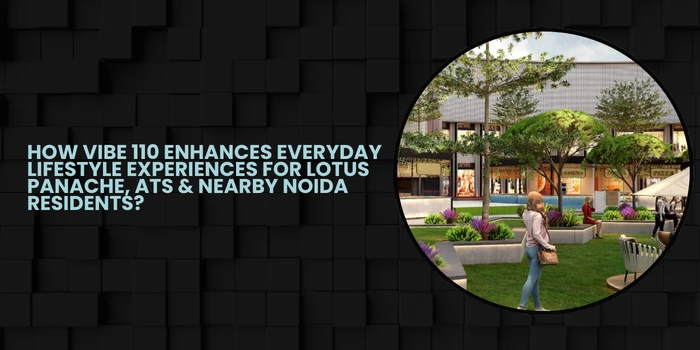
Successful neighborhood retail depends on ease of movement, visibility, and functional design. Developments that provide organized parking, open circulation areas, clear zoning of retail categories, and pedestrian friendly layouts tend to perform better over time. When such planning is combined with immediate residential proximity, the retail ecosystem matures faster.
The advantage here lies in conversion efficiency. A nearby residential base shortens the consumer journey from intent to purchase. Convenience often determines where consumers spend, and accessibility directly influences frequency of visits.
The Financial Logic Behind Residential Retail Synergy
In commercial real estate, rental stability and tenant longevity are closely linked to footfall consistency. Projects surrounded by active residential communities often show stronger absorption because brands prefer locations with predictable daily engagement.
The presence of Lotus Panache 110 supports this predictability. Every residential tower contributes to potential repeat customers. This dynamic reduces the volatility often seen in projects dependent only on weekend or destination traffic.
From an investor’s perspective, commercial spaces supported by a defined catchment carry measurable advantages. Lower vacancy risk, stronger tenant retention, and consistent consumer demand contribute to better long term asset positioning. While no investment is without risk, demand backed micro markets generally provide more stability than speculative zones.
Infrastructure, Connectivity, and Accessibility
Connectivity plays a critical role in determining both residential desirability and commercial performance. Sector 110 benefits from access to major arterial routes linking it to corporate zones, educational institutions, and healthcare centers across Noida and Greater Noida. Ease of commuting ensures that residential occupancy remains strong, which in turn supports retail demand.
Moreover, improved road networks reduce travel friction for visitors from neighboring sectors. This layered accessibility expands the catchment beyond immediate walking distance while still preserving neighborhood convenience.
In urban economics, this dual catchment model, immediate residents plus surrounding sectors, enhances long term viability for retail developments.
Changing Consumer Behavior and the Rise of Walk to Retail Culture
Consumer preferences have evolved significantly. Long mall commutes are increasingly replaced by localized lifestyle hubs that offer curated experiences within short distances. Walk to retail culture reduces travel time, lowers transportation dependency, and enhances community engagement.
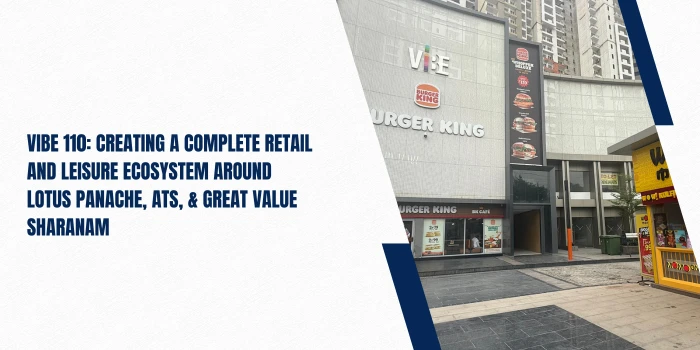
In this context, Devika Vibe 110 functions as an extension of the residential environment created by Lotus Panache Noida. Residents can transition from private living spaces to public social and retail zones without disrupting their daily schedule. This seamless integration elevates lifestyle perception and strengthens locality branding.
Neighborhood commercial hubs often become informal community centers. Over time, they host casual meetings, family outings, fitness sessions, and daily social interactions. This social layering further reinforces footfall consistency.
Urban Sustainability Through Integrated Development
Integrated development models are increasingly viewed as sustainable urban solutions. When residential and commercial infrastructures coexist within manageable distances, traffic pressure reduces and resource utilization becomes more efficient. Time savings, reduced commuting, and organized land use contribute to better quality of life.
Sector 110 demonstrates how integrated planning can create a self sustaining cycle. Residential strength supports commercial growth. Commercial vibrancy enhances residential appeal. Together, they build locality confidence and long term stability.
Long Term Outlook for Sector 110
As Noida continues expanding along the expressway corridor, sectors that already possess mature residential density and structured retail are likely to maintain relevance. Growth does not always mean new construction; it often means strengthening what already functions effectively.
The presence of Lotus Panache Noida as a stable residential landmark and Devika Vibe 110 as an organized commercial hub positions Sector 110 favorably within Noida’s broader development narrative. Their connection reflects alignment rather than coincidence.
Conclusion
The journey from home to hangout in Sector 110 is grounded in practical urban logic. Lotus Panache Noida provides the population density, purchasing capacity, and residential stability necessary for a thriving micro market. Devika Vibe 110 translates that demand into accessible retail and lifestyle infrastructure. This synergy illustrates how thoughtful placement and ecosystem understanding contribute to sustainable urban growth.
Rather than operating independently, residential and commercial spaces in this sector complement each other. The result is a balanced environment where convenience, economic activity, and community engagement coexist. In a rapidly urbanizing region, such integration represents not just development, but informed planning.
Frequently Asked Questions
Why is residential density important for commercial success?
Residential density ensures recurring daily consumption, which provides predictable footfall and reduces dependence on seasonal or destination driven traffic.
How does proximity influence retail performance?
Shorter travel distances increase visit frequency and improve conversion rates, supporting stronger tenant sustainability.
What makes Sector 110 different from emerging sectors?
Sector 110 already has established residential occupancy and supporting infrastructure, which lowers speculative uncertainty.
Is integrated residential and retail planning beneficial long term?
Yes, balanced planning improves convenience, reduces commuting strain, and supports stable economic activity within the locality.
What factors should investors evaluate in such micro markets?
Key considerations include catchment size, occupancy levels, connectivity, tenant mix potential, infrastructure growth, and long term demand stability.






















Sign in to leave a comment.