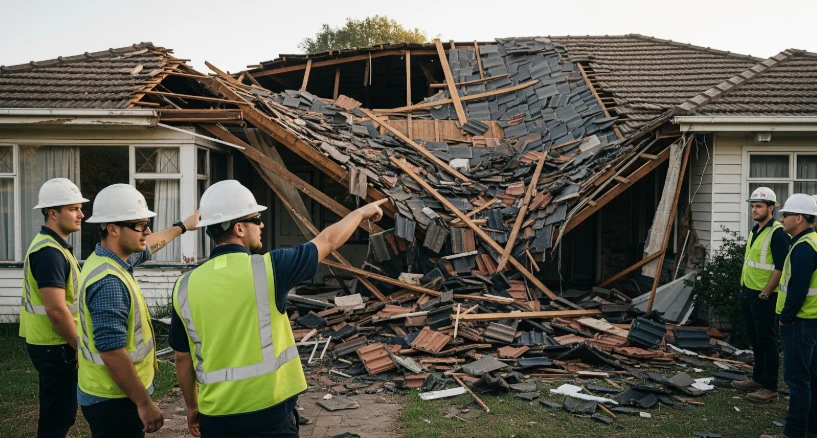

The business of restoration is fundamentally counter-cyclical. When the economy stalls, large-scale commercial and residential projects are often the first items to be shelved. Conversely, a severe weather event creates an instant and non-negotiable surge in demand for repair services.
These emergencies are essential interventions required to stabilize property, mitigate further loss, and make structures habitable or operational again. The immediate, high-pressure requirement creates a marketplace with less price sensitivity and a much higher barrier to entry for generalized construction businesses.
Income From Restoration
The forces generating this need are multifold, ranging from region-wide to localized events, from incidents like burst pipes to small kitchen fires and vehicle impacts. A significant portion of this sustained activity involves water damage mitigation, which is critical immediately following a flood or even a small internal leak.
If not addressed swiftly and thoroughly, water penetration can rapidly lead to mold growth and structural compromise, exponentially increasing the cost and complexity of the eventual repair. The urgency of such situations allows specialized restoration businesses to command premium pricing for rapid deployment and expert intervention. Securing a steady and reliable income from restoration services is a matter of building a reputation for speed, technical precision, and unwavering professionalism in moments of crisis.
A company focused on this specialty must invest heavily in specialized equipment and training that is distinct from traditional building. Thermal imaging cameras, industrial-grade dehumidifiers, air scrubbers, and advanced drying technology are mandatory tools of the trade when you want to grow your restoration company.
Pathway to Predictable Profitability
Restoration work is often characterized by its complexity and the non-standardized nature of the damage encountered. A ground-up build operates from a set of blueprints and defined specifications. Restoration, by contrast, is an exercise in applied problem-solving, requiring a deep understanding of materials science, structural engineering, and historical construction methods, particularly when dealing with older properties.
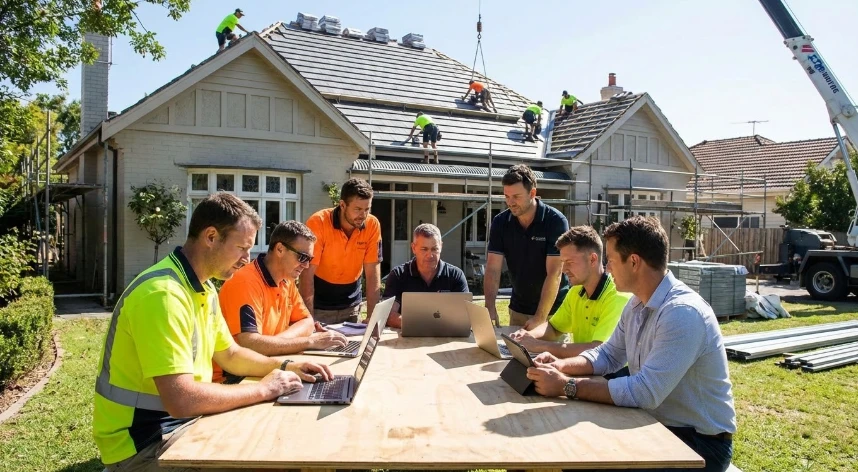
The true genius of the restoration business model lies in turning a chaotic emergency into a systematized and repeatable workflow. Establishing clear, protocol-driven procedures for initial assessment, emergency stabilization, mitigation, and final reconstruction allows companies to scale their operations efficiently.
A storm that affects a thousand properties is not a thousand unique problems but the same core process repeated a thousand times. The standardization allows for effective deployment of crews, optimal utilization of expensive equipment, and accurate, rapid estimation.
The relationships forged during this difficult time build exceptional customer loyalty. Unlike a new construction project, where the contractor is viewed as a service provider fulfilling a dream, the restoration company is often perceived as a lifesaver, rescuing a home or business from potential ruin. The empathy shown during a crisis transcends a simple transactional relationship. This goodwill translates into strong word-of-mouth referrals, a continuous source of new work that costs nothing to acquire. The high velocity of claims, combined with the recurring nature of the risks, ensures a perpetual pipeline of projects, making the business far less reliant on slow, expensive marketing efforts than traditional construction.
The Future of the Built Environment
The focus on repair and reuse embedded within the restoration sector aligns powerfully with modern sensibilities regarding resource conservation. Choosing to restore a structure rather than demolishing it avoids sending immense quantities of material to landfills. It also conserves the considerable embodied energy already expended in the original construction of the building materials. This commitment to sustainability appeals to both environmentally conscious property owners and to governing bodies focused on responsible development.
In addition, restoration often presents an opportunity for not merely returning a property to its pre-loss condition, but improving it. After a fire or flood, materials may be upgraded to be more resilient, insulation may be improved to enhance energy efficiency, or systems may be replaced with modern, more durable alternatives. This concept of restoring better adds long-term value to the property, benefiting the owner and increasing the value proposition of the restoration firm.
The professional who masters this field recognizes that structural integrity is a continuous, rather than a one-time, requirement. This realization drives a deeper appreciation for the materials and techniques that ensure longevity. The sophisticated understanding is absolutely critical for the long-term health of the built environment.
Insurance and Financial Structuring
A deep, working knowledge of property insurance claims is a prerequisite for success and a primary driver of profitability in the restoration sector. Unlike traditional construction, where payment terms are negotiated directly with the property owner or developer, restoration revenues are often dependent on the efficient processing and approval of third-party insurance claims.
Successful restoration businesses employ, or closely partner with, professionals who are experts in industry-standard estimating software. This allows them to communicate damage scope and costs in a language immediately understood and accepted by insurance carriers, minimizing delays and disputes over pricing.
The business that can accurately scope a job and justify the associated costs quickly gets paid faster. This speed of payment is essential for managing cash flow, especially during large-scale disaster events that require significant capital outlay for equipment and payroll. Moreover, cultivating strong, professional relationships with local and regional insurance adjusters often results in being placed on preferred vendor lists. This designation provides a continuous stream of high-value leads directly from the source, reducing marketing costs to near zero and ensuring a reliable flow of projects.
Technological Advancements Driving Efficiency and Growth
The restoration industry’s high-margin potential has been amplified by the adoption of sophisticated technology. The ability to quickly and accurately assess damage, monitor the drying process, and document every step for insurance purposes is now driven by tools that were unavailable to earlier generations of contractors.
E.g., moisture mapping using non-penetrating meters and hygrometers allows technicians to precisely locate hidden water pockets and track their evaporation rates. This is far more efficient than relying on guesswork or testing. The use of drones for inspecting storm damage on roofs and upper structural elements provides a safe, fast, and highly detailed visual record that accelerates the claims process and aids in accurate estimating.
Further out, project management software specifically tailored for restoration integrates documentation, photo logging, invoicing, and communications with insurance adjusters and property owners into a single platform. The digital approach enhances transparency and speed and allows companies to handle a higher volume of emergency calls without a corresponding increase in overhead.
Predictive analytics helps businesses anticipate areas most likely to be hit by a forecasted weather event. This strategic advantage in deployment ensures the firm is the first to arrive, which secures a larger market share during high-demand periods.
Overall, the restoration industry has huge potential to operate profitably. The only prerequisite is to work smarter and rely on proven processes.





























Sign in to leave a comment.