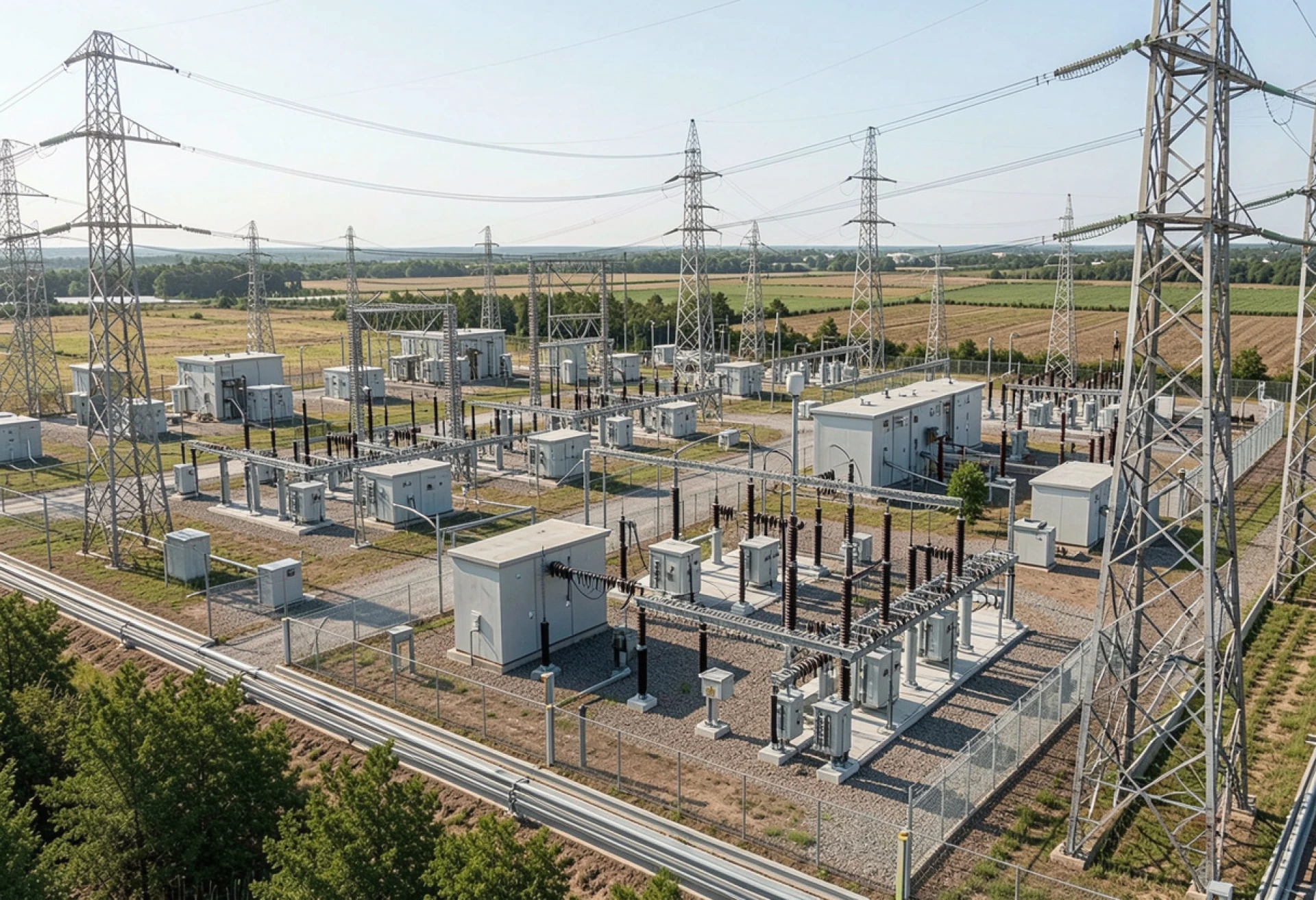
Electric power systems are evolving rapidly as the world moves toward smarter grids, renewable energy integration, and higher energy demand. Modern substations are no longer just facilities that transform voltage levels—they are becoming intelligent hubs that support grid stability, efficiency, and automation. As utilities adopt advanced technologies, the way substations are planned and built is also changing.
Today, electrical substation design is shifting from traditional manual systems to digital, automated, and data-driven infrastructures. These developments are improving reliability, reducing operational costs, and enabling utilities to manage complex energy networks more effectively.
Below are some of the most important trends shaping the future of substation development and automation.
Digital Substations and Smart Grid Integration
One of the biggest transformations in the industry is the shift toward digital substations. Traditional substations rely heavily on copper wiring and analog equipment, while modern systems use digital communication protocols and fiber-optic networks.
Digital substations allow real-time monitoring, faster communication between devices, and more accurate data analysis. By replacing conventional wiring with digital networks, utilities can significantly reduce installation complexity and maintenance requirements.
Smart grid integration is another major factor driving innovation. Modern substations must support two-way energy flow due to the increasing use of renewable sources like solar and wind. Digital technologies make it easier to manage these dynamic energy flows and maintain grid stability.
This transformation is pushing utilities and engineers to rethink their approach to substation engineering design, ensuring that new facilities are scalable, secure, and capable of handling future energy demands.
Automation and Intelligent Protection Systems
Automation is becoming a standard feature in modern substations. Intelligent Electronic Devices (IEDs), advanced protection relays, and automated control systems are replacing many manual processes.
These automated systems can detect faults, isolate affected equipment, and restore service much faster than traditional setups. This significantly improves grid reliability and reduces downtime for consumers.
Advanced protection schemes also help prevent equipment damage and power outages. With real-time data analytics and automated responses, substations can react to network disturbances within milliseconds.
Automation not only improves operational efficiency but also enhances safety for field engineers by minimizing the need for manual intervention.
Compact and Optimized Substation Layouts
Urbanization and land constraints are influencing how substations are designed. In densely populated areas, utilities often have limited space available for new infrastructure.
As a result, engineers are focusing on optimized and compact electrical substation layout strategies. Gas-insulated substations (GIS) and hybrid designs allow equipment to be installed in smaller footprints without sacrificing performance.
Compact layouts also improve efficiency by reducing cable lengths, simplifying maintenance access, and improving overall operational workflow.
These innovations help utilities install substations in urban centers, industrial zones, and renewable energy sites where space is limited.
Cybersecurity and Data Protection
As substations become more connected and digitalized, cybersecurity is becoming a critical priority. Modern substations rely on communication networks, remote monitoring systems, and cloud-based analytics, which increases the risk of cyber threats.
To address these risks, utilities are implementing stronger cybersecurity protocols. These include secure communication standards, network segmentation, encrypted data transmission, and advanced monitoring tools.
Cyber-resilient systems ensure that critical infrastructure remains protected against unauthorized access and cyberattacks. As digital technologies continue to expand, cybersecurity will remain a fundamental aspect of modern substation infrastructure planning.
Integration of Renewable Energy Sources
Renewable energy is transforming the global power landscape. Solar farms, wind turbines, and energy storage systems require substations capable of handling fluctuating generation patterns.
Future substations must support variable power inputs, grid balancing, and distributed energy resources. This requires advanced control systems, flexible switching configurations, and improved grid visibility.
The integration of renewables also encourages modular substation construction, allowing utilities to expand infrastructure as energy demand grows.
By adopting forward-thinking approaches in substation design & engineering, power companies can ensure smooth integration of renewable energy while maintaining grid reliability.
Predictive Maintenance and Data Analytics
Another major trend in modern substations is the use of predictive maintenance. Instead of relying solely on scheduled inspections, utilities are now using sensors and analytics to monitor equipment health in real time.
Smart sensors collect data on temperature, vibration, voltage levels, and equipment performance. This information is analyzed using advanced software to detect early signs of potential failures.
Predictive maintenance helps utilities reduce unexpected outages, extend equipment lifespan, and lower maintenance costs. It also enables engineers to make informed decisions based on real operational data.
As digital technologies continue to evolve, predictive analytics will play a crucial role in improving the efficiency and reliability of power networks.
The Future of Substation Infrastructure
The future of substations is defined by intelligence, flexibility, and sustainability. Automation, digital communication, and advanced analytics are transforming substations from passive infrastructure into active components of smart energy systems.
Utilities and engineering companies that embrace these innovations will be better positioned to meet growing electricity demand, integrate renewable energy, and maintain reliable grid operations.
By adopting modern technologies and forward-thinking strategies, the next generation of substations will deliver higher efficiency, enhanced reliability, and greater resilience for power networks around the world.























Sign in to leave a comment.