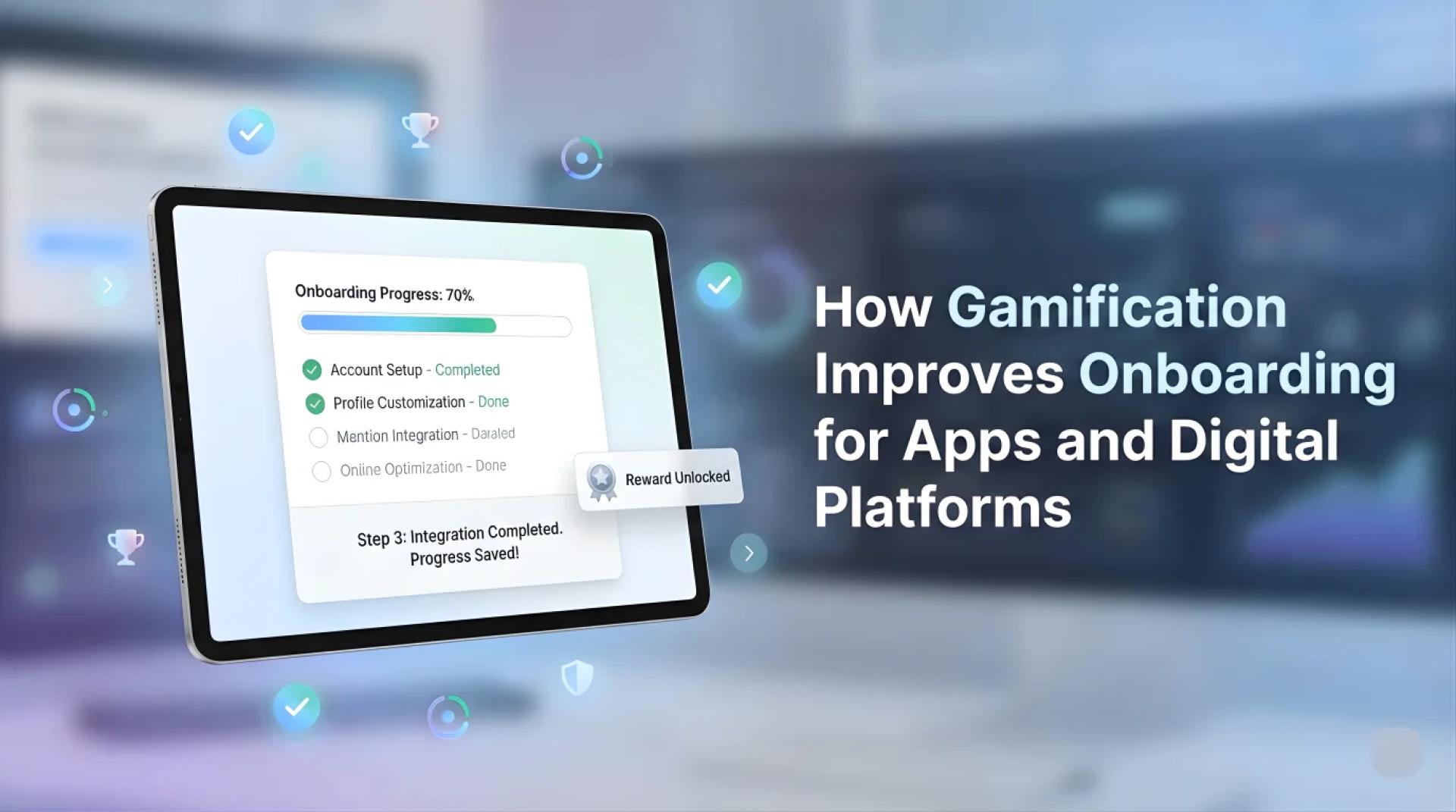
When people install an app or sign up for a digital platform, the first few minutes decide almost everything. Most users are not trying to learn every feature right away, you know. They just want to understand what to do next and why it matters. If that moment feels confusing or heavy, they leave. This is where gamification in app onboarding starts to matter in a real way.
Gamified onboarding uses simple game-style ideas to guide users through early actions. It does not try to entertain for the sake of fun. It helps users move, learn, and succeed step by step. At the end of the day, onboarding gamification supports a better first-time user experience, stronger user engagement, and faster product adoption. This approach now appears across digital platform onboarding in areas like gamification in e-commerce, e-learning, gaming, fintech and more
Why App Onboarding Fails for Most Users
Most onboarding problems are not caused by bad products. They come from poor structure and unclear guidance. Many apps assume users will figure things out on their own, which is rarely true. When early steps feel heavy or unclear, users lose patience a bit and move on.
Too many onboarding steps reduce user engagement
When onboarding includes too many steps at once, users feel overloaded very quickly. Even motivated users can lose focus if they are asked to do too much before seeing any value. This problem shows up often in app onboarding strategy design, where teams try to explain everything upfront. You know how that feels, it just drains energy.
Gamification for user activation helps by breaking tasks into small actions. Each step feels lighter and easier to complete. Instead of thinking about the full setup, users focus on one clear move at a time. This approach supports user engagement and keeps the onboarding flow moving forward without stress.
Key ways long onboarding steps hurt engagement include:
- Users feel mentally tired before reaching any success moment
- Progress feels slow, which reduces motivation early
- Confusing screens increase hesitation and exits
- Too many choices at once delay action
- Users do not feel rewarded for effort
- Drop-off happens before product value appears
Reducing steps alone is helpful, but pairing fewer steps with onboarding gamification makes the process feel guided rather than shortened.
Lack of clear onboarding guidance confuses users
Many apps expect users to explore freely, but new users often want direction. When screens lack guidance, people pause and second-guess their actions. This confusion damages the user onboarding experience, especially during the first session. A bit of uncertainty is normal, but too much causes exits.
Gamification in app onboarding adds guidance through visual cues, progress tracking, and task-based flows. These signals quietly tell users what to do next without heavy instructions. It feels supportive rather than controlling, which helps users stay calm and focused.
Common results of unclear guidance include:
- Users skipping key setup steps
- Features being misunderstood or ignored
- Longer time to first meaningful action
- Increased support requests later
- Lower confidence during first-time use
- Reduced user retention over time
When guidance is clear and light, users move forward with less friction and more trust.
Users fail to see app value during first use
If users do not see value early, they leave, plain and simple. Many onboarding flows focus on explaining features instead of showing benefits. This disconnect makes the app feel abstract and unhelpful at the start, you know.
Gamified onboarding solves this by tying actions to visible outcomes. Small wins show users why each step matters. Whether it is unlocking progress, earning a reward, or completing a task, users quickly connect effort to benefit. This supports product adoption and reduces early churn.
Reasons value is often missed include:
- Benefits explained too late in onboarding
- Features shown without real context
- No feedback after completed actions
- Success moments not highlighted
- Users unsure what problem the app solves
- Onboarding flow feels disconnected
Showing value early builds momentum and prepares users for deeper engagement later.
What Gamification Means in App Onboarding
Gamification is often misunderstood as adding fun elements without purpose. In onboarding, it serves a practical role. It structures actions, reduces friction, and supports learning. When done right, gamification in app onboarding improves clarity without distracting users from their goals.
Using gamification elements in app onboarding flows
Gamification elements like progress bars, task lists, and rewards help users understand where they are and what comes next. These elements support the onboarding flow by turning setup into a guided experience. It feels less like work and more like steady movement, which users appreciate a bit.
This structure supports user activation gamification by encouraging action instead of delay. Each element exists to help users move forward with confidence.
Common gamification elements used in onboarding include:
- Progress tracking to show completion status
- Task-based steps instead of long forms
- Visual indicators for next actions
- Reward systems tied to real actions
- Feedback after each completed step
- Simple milestones that mark success
These elements support digital platform onboarding without adding noise or pressure.
Difference between games and onboarding gamification
Games aim to entertain, while onboarding gamification aims to guide. This difference matters. In onboarding, every element must serve clarity and learning. If rewards distract from goals, they fail their purpose. You know, usefulness always comes first here.
Onboarding gamification focuses on function over play. It uses familiar game mechanics to support understanding, not competition or chance. This distinction helps maintain trust and keeps the experience grounded.
Key differences include:
- Onboarding prioritizes learning over fun
- Rewards support progress, not competition
- Actions map directly to product value
- Feedback reinforces correct behavior
- No randomness that blocks progress
- Success depends on completion, not luck
This approach works well across gamification in fintech, e-learning, e-commerce.
Why gamification fits digital onboarding experiences
Digital onboarding happens without human help. Users rely on the interface to guide them. Gamification fits naturally here because it replaces missing human cues with clear signals. These signals help users feel supported, even when onboarding alone.
Gamified onboarding works well because it aligns with how people learn digitally. Small steps, feedback, and visible progress reduce anxiety and increase confidence. At the end of the day, this leads to stronger user retention.
Reasons gamification fits onboarding include:
- Clear structure without long explanations
- Visual feedback that confirms actions
- Reduced cognitive load for new users
- Encouragement through small successes
- Faster understanding of app purpose
- Better first-time user experience
This makes onboarding gamification a strong foundation for long-term engagement.
How Gamification Guides Users Step by Step
Good onboarding feels like a quiet guide standing next to the user. It does not shout instructions or overwhelm with choices. Gamification in app onboarding works well here because it breaks learning into small, manageable actions. Users move forward without feeling lost, which matters a lot in the first session, you know.
Turning onboarding tasks into simple gamified actions
Large tasks often scare new users. When onboarding asks for too much at once, users pause or skip steps. Gamified onboarding avoids this by splitting tasks into simple actions that feel easy to finish. Each action feels achievable, which keeps energy levels stable.
This approach supports user engagement by lowering effort at every step. Instead of thinking about the whole setup, users focus on one action, complete it, and move on. That rhythm matters more than speed.
Ways gamified actions help onboarding include:
- Tasks feel smaller and less stressful
- Users focus on one clear goal at a time
- Completion brings instant feedback
- Momentum builds naturally with progress
- Users feel capable instead of overwhelmed
- Onboarding flow feels organized
Small actions stacked together create a smooth path toward product adoption.
Guiding new users through app onboarding paths
Many apps fail because users do not know where to go next. Gamification solves this by creating clear onboarding paths. These paths guide users through essential steps without forcing exploration too early. It feels supportive rather than restrictive, which users appreciate.
Guided paths help user activation gamification by showing users how features connect. Each step prepares them for the next one, reducing confusion and hesitation during first use.
Benefits of guided onboarding paths include:
- Clear direction without long instructions
- Reduced decision fatigue for new users
- Faster understanding of core features
- Better user onboarding experience
- Fewer abandoned setup screens
- Stronger early user retention
Guidance builds trust and helps users move forward with confidence.
Reducing onboarding confusion with gamification cues
Confusion often comes from silence. When users act and nothing responds, they second-guess themselves. Gamification cues solve this by responding clearly to user actions. Visual signals, confirmations, and progress updates reassure users that they are on the right path.
These cues support the first-time user experience by reducing uncertainty. Users know what happened and what to do next, which keeps stress low and engagement steady.
Common gamification cues used in onboarding include:
- Visual confirmations after actions
- Progress indicators that update instantly
- Highlighted next steps
- Gentle prompts without pressure
- Clear completion signals
- Simple language feedback
Clear cues turn uncertainty into confidence during onboarding.
Using Progress Bars to Drive Task Completion
Progress bars are one of the most effective onboarding gamification tools. They give users a sense of movement and closure. Seeing progress reduces anxiety and increases motivation, especially during setup-heavy onboarding flows.
Progress bars increase onboarding completion rates
When users see how far they have come, they are more likely to finish. Progress bars show effort already invested, which encourages completion. This works well in digital platform onboarding where users might otherwise drop off midway.
Progress tracking creates a psychological push to finish what was started. It supports how gamification improves onboarding without adding pressure or urgency.
Reasons progress bars boost completion include:
- Users see a clear endpoint
- Effort already spent feels valuable
- Progress feels measurable and real
- Motivation increases as completion nears
- Setup feels shorter than it is
- Users stay focused on finishing
Completion rates improve when users know how close they are to the end.
Visual onboarding progress reduces user drop-off
Drop-off often happens when users feel stuck or unsure. Visual onboarding progress reduces this by showing constant movement. Even small progress updates reassure users that they are advancing.
This supports reduce onboarding drop-off with gamification by replacing doubt with clarity. Users feel guided instead of lost.
Ways visual progress reduces exits include:
- Removes guesswork about remaining steps
- Builds patience during longer setups
- Confirms actions were successful
- Encourages continued interaction
- Reduces frustration from delays
- Supports smoother onboarding flow
Visibility keeps users engaged during the most fragile stage.
Showing completed steps builds user confidence
Confidence grows when users see proof of success. Completed steps marked clearly give users a sense of achievement. This matters during first-time use when confidence is still forming.
Gamified onboarding uses completed step indicators to reinforce learning and reduce hesitation. Users feel capable, which supports long-term product adoption.
Benefits of showing completed steps include:
- Reinforces correct actions
- Builds trust in the interface
- Encourages continued exploration
- Reduces fear of mistakes
- Improves user engagement
- Supports early user retention
Confidence during onboarding leads to stronger relationships with the product.
How Rewards Encourage First-Time Actions
Rewards play a quiet but powerful role during onboarding. They are not about giving away prizes. They exist to confirm progress and reinforce useful behavior. In gamified onboarding, rewards help users feel that their actions matter. That feeling is important early on, you know, when users are still deciding whether the app is worth their time.
Small gamification rewards boost early user activation
Early actions often feel uncertain to new users. They are testing the app and watching how it responds. Small rewards reduce that uncertainty by confirming that users are doing the right thing. This supports gamification for user activation without pushing users too hard.
These rewards do not need to be large. Even simple acknowledgments help users move forward with confidence and curiosity.
Ways small rewards support activation include:
- Immediate confirmation after key actions
- Positive reinforcement for progress
- Reduced fear of making mistakes
- Increased willingness to continue setup
- Stronger emotional connection early
- Higher early user engagement
When rewards are timely and clear, users feel encouraged rather than distracted.
Using points and badges in app onboarding
Points and badges work best when they reflect real progress. In onboarding gamification, they act as markers of learning and completion, not competition. Users see them as proof that they are moving forward.
This approach works across many industries, including gamification in gaming, e-learning, and fintech. The key is keeping them tied to meaningful actions.
Effective uses of points and badges include:
- Rewarding completion of setup steps
- Marking first successful feature use
- Highlighting learning milestones
- Encouraging exploration without pressure
- Supporting progress tracking visually
- Reinforcing correct behavior patterns
When designed well, points and badges support clarity instead of noise.
Linking rewards to real onboarding milestones
Rewards lose value when they feel random. Linking them to real onboarding milestones keeps them meaningful. Each reward signals progress toward full product use, which supports product adoption.
Milestone-based rewards help users understand what matters most. They guide attention toward key actions without long explanations.
Benefits of milestone-linked rewards include:
- Clear connection between action and value
- Better understanding of app priorities
- Reduced wasted effort during onboarding
- Stronger sense of achievement
- Improved onboarding flow clarity
- Higher user retention after setup
Meaningful rewards support learning and confidence during first use.
Gamification Builds Confidence During First Use
Confidence is one of the most important outcomes of good onboarding. When users feel capable, they explore more and rely less on support. Gamification in app onboarding supports confidence by making progress visible and mistakes less scary.
Instant feedback improves first-time user experience
Feedback tells users that the app is listening. When actions trigger instant responses, users feel in control. This is especially important during the first-time user experience, when trust is still forming.
Gamified onboarding uses feedback to confirm actions and guide next steps. This reduces second-guessing and hesitation.
Ways instant feedback helps include:
- Confirms successful actions
- Reduces uncertainty during setup
- Encourages continued interaction
- Builds trust in the system
- Improves user engagement early
- Supports smoother onboarding flow
Feedback creates a conversation between user and product.
Clear success signals build onboarding confidence
Success signals show users that they are progressing correctly. These signals can be visual, textual, or structural. They matter because users often doubt themselves during first use, you know.
Onboarding gamification uses success signals to remove that doubt and replace it with reassurance.
Examples of effective success signals include:
- Checkmarks for completed tasks
- Visual completion states
- Positive confirmation messages
- Progress bar updates
- Clear transitions to next steps
- Reduced need for explanations
Clear success signals help users trust their actions and continue confidently.
Gamification helps users feel in control early
Feeling in control reduces stress and increases willingness to explore. Gamified onboarding gives users a sense of control by showing progress, choices, and outcomes clearly.
This sense of control supports user retention by making users feel capable rather than dependent.
Ways gamification supports control include:
- Transparent onboarding steps
- Predictable progress patterns
- Clear outcomes for actions
- No hidden penalties or surprises
- Freedom to pause and resume
- Supportive guidance without pressure
Control builds comfort, and comfort builds long-term engagement.
Reducing User Drop-Off With Gamified Flows
User drop-off during onboarding usually happens quietly. People do not complain. They just leave. Gamification in app onboarding helps prevent this by keeping users mentally present and emotionally invested. It gives them reasons to continue even when distractions appear, which happens a lot, you know.
Gamified onboarding keeps users active longer
Activity drops when onboarding feels passive. Gamified onboarding keeps users active by requiring small interactions at regular intervals. These actions maintain attention and reduce idle moments where users might close the app.
This approach supports user engagement by turning onboarding into a series of active steps rather than a passive walkthrough.
Ways gamified onboarding keeps users active include:
- Regular prompts that encourage interaction
- Clear tasks instead of long explanations
- Progress tracking that motivates continuation
- Small rewards that reinforce movement
- Feedback loops that respond to actions
- Reduced waiting or idle screens
Active onboarding keeps users mentally involved and moving forward.
Re-engaging users who pause onboarding steps
Pauses are normal. Users get distracted or run out of time. The problem is when paused onboarding feels hard to resume. Gamification solves this by making re-entry clear and inviting instead of confusing.
Gamified onboarding flows show users exactly where they stopped and what remains. This reduces friction when they return, which supports reduce onboarding drop-off with gamification.
Re-engagement benefits include:
- Clear restart points after pauses
- Visible remaining steps
- Reduced need to relearn actions
- Continued progress without penalties
- Encouragement to resume calmly
- Better user onboarding experience
When returning feels easy, users are more likely to finish onboarding.
Building early momentum with gamification systems
Momentum matters early on. Once users complete a few steps, they are more likely to continue. Gamification systems support momentum by stacking small successes together. Each success pushes the next action forward.
This approach helps users build confidence and supports long-term user retention beyond onboarding.
Ways momentum is built include:
- Early wins within first minutes
- Fast feedback after actions
- Visible progress accumulation
- Rewards tied to meaningful steps
- Clear next-action prompts
- Consistent pacing across steps
Momentum turns curiosity into commitment.
Examples of Gamified Onboarding That Work
Seeing gamified onboarding in action helps teams understand what works in practice. These examples focus on structure and behavior, not brands. They show how onboarding gamification supports clarity and engagement across digital platforms.
Checklist-based gamified onboarding for apps
Checklists work because they make progress visible and manageable. In gamified onboarding, checklists guide users through essential setup steps without overwhelming them. Each completed item feels like a small win.
This approach supports progress tracking and helps users stay focused on what matters.
Benefits of checklist-based onboarding include:
- Clear visibility into remaining steps
- Reduced cognitive load
- Easy pause and resume options
- Satisfaction from checking items off
- Better onboarding flow structure
- Stronger product adoption
Checklists turn setup into a guided experience rather than a chore.
Level-based onboarding systems for digital platforms
Level-based onboarding introduces complexity gradually. Users start with basic actions and unlock deeper features as they progress. This works well for digital platform onboarding where learning takes time.
Advantages of level-based onboarding include:
- Gradual feature exposure
- Reduced early confusion
- Clear sense of advancement
- Motivation through visible levels
- Better long-term user engagement
- Stronger user retention
Levels provide structure without pressure or rush.
Reward-driven onboarding feature adoption examples
Reward-driven onboarding focuses attention on key features. Users are encouraged to try important actions first, supported by small rewards or recognition. This helps guide behavior naturally.
This method supports gamification for user activation and ensures users experience real value early.
Benefits of reward-driven onboarding include:
- Faster feature discovery
- Clear connection between action and value
- Reduced hesitation to explore
- Positive reinforcement of correct use
- Improved first-time user experience
- Higher activation rates
Rewards help users understand what matters most.
Gamification Metrics That Measure Onboarding Success
Good onboarding feels smooth, but teams still need proof that it works. Metrics help confirm whether gamified onboarding actually improves behavior. Without clear measurement, it is easy to rely on assumptions. You know, numbers help ground decisions.
Tracking user activation after app signup
User activation shows whether onboarding leads users to meaningful action. It answers a simple question: did users do the thing that shows real intent? Gamification in app onboarding often improves this by guiding users toward one clear goal early.
Activation metrics help teams understand if onboarding flows actually work.
Key activation indicators include:
- Completion of first key action
- Time taken to reach activation
- Percentage of users activating
- Drop-off before activation
- Engagement after activation
- Repeat actions within first session
Higher activation usually signals a healthier onboarding flow.
Measuring onboarding completion and engagement
Completion metrics show how many users finish onboarding steps. Engagement metrics show how users behave while doing so. Together, they provide a clear picture of the user onboarding experience.
Gamified onboarding often improves both by keeping users involved and focused.
Useful completion and engagement metrics include:
- Step-by-step completion rates
- Average time per onboarding step
- Interaction frequency during onboarding
- Skipped or repeated steps
- Drop-off points in onboarding flow
- Progress tracking consistency
Balanced engagement often leads to better product adoption.
Time to first key action in onboarding
Time to first key action measures how quickly users reach value. Shorter times usually mean clearer onboarding. Gamification helps by guiding users directly instead of letting them wander.
This metric matters across digital platform onboarding in areas like gamification in fintech and gamification in e-commerce.
Why this metric matters:
- Faster value reduces early exits
- Users gain confidence sooner
- Learning feels easier and lighter
- Fewer support issues later
- Better first-time user experience
- Stronger user retention
Speed to value often predicts long-term success.
How Captain Up Supports Gamified Onboarding
Building gamified onboarding from scratch can take time. Tools that simplify setup help teams focus on user needs instead of technical effort. Captain Up supports onboarding gamification with flexible systems that fit different platforms and goals.
Adding onboarding gamification using Captain Up
Captain Up helps teams add gamification without heavy development work. This allows faster testing and adjustment. Teams can build onboarding gamification that supports user activation without disrupting existing flows.
This flexibility helps teams stay focused on real user behavior.
Ways Captain Up supports onboarding include:
- Easy setup for reward systems
- Progress tracking integration
- Flexible onboarding flow design
- Support for digital platforms
- Adaptable rules for user actions
- Clear visibility into user behavior
This approach supports gamified onboarding without complexity.
Tracking onboarding progress and user actions
Tracking matters as much as design. Captain Up helps teams track onboarding progress and user actions clearly. This data helps teams see what works and what needs improvement.
Progress tracking supports better decisions and smoother onboarding updates.
Tracking benefits include:
- Visibility into onboarding completion
- Insight into user engagement patterns
- Identification of drop-off points
- Measurement of activation success
- Support for ongoing optimization
- Better understanding of user retention
Clear data helps teams refine onboarding with confidence.
Improving onboarding flows with real user data
Real user data shows how onboarding works in practice. Captain Up helps teams adjust gamification elements based on actual behavior instead of guesses. This leads to better outcomes over time.
Data-driven adjustments help maintain trust and clarity.
Improvements supported by data include:
- Adjusting step order
- Refining reward timing
- Simplifying confusing steps
- Improving progress indicators
- Supporting better onboarding flow
- Increasing long-term engagement
Using real data keeps onboarding grounded and effective
Best Practices for Safe and Ethical Gamification
Gamification works best when users feel respected. Ethical onboarding gamification avoids pressure, tricks, or confusion. Trust matters during first use, and once lost, it is hard to rebuild.
Avoiding manipulative onboarding gamification patterns
Manipulation damages trust. Onboarding gamification should guide, not trap. Users should always feel free to pause, skip, or stop without penalty. You know, respect builds long-term relationships.
Avoiding manipulation helps protect user trust.
Practices to avoid include:
- False urgency or countdowns
- Hidden penalties for stopping
- Forced actions without context
- Misleading reward promises
- Blocking access without reason
- Overloading users with prompts
Clear and honest design supports healthier onboarding.
Designing honest reward systems for users
Rewards should reflect real effort and value. Honest reward systems support learning instead of pressure. Users should understand why they earned something and what it means.
This approach works well across gamification in e-learning and gamification in fintech.
Honest reward design includes:
- Clear reward conditions
- Meaningful milestones
- No fake scarcity
- Rewards tied to learning
- Transparency in progress tracking
- Respect for user choice
Honest rewards build confidence and engagement.
Maintaining trust in gamified onboarding flows
Trust grows when onboarding feels predictable and fair. Gamified onboarding should support clarity, not confusion. Users should always understand what is happening and why.
Trust supports long-term user retention and loyalty.
Ways to maintain trust include:
- Clear communication at every step
- Consistent feedback patterns
- No surprise restrictions
- Respectful pacing
- Simple explanations when needed
- Stable onboarding flow design
Trust turns onboarding into a positive first impression.
Captain Up Build Better Onboarding Experiences
Gamified onboarding works best when it supports real user needs. Captain Up helps teams design onboarding gamification that guides users, builds confidence, and improves user engagement from the first session. With flexible reward systems, progress tracking, and clear insights, Captain Up supports better onboarding across digital platforms. If you want to reduce onboarding drop-off, improve user activation gamification, and create smoother first-time user experiences, Captain Up gives you the tools to do it thoughtfully. Visit Captain Up to see how gamification can support onboarding that feels clear, calm, and effective.


























Sign in to leave a comment.