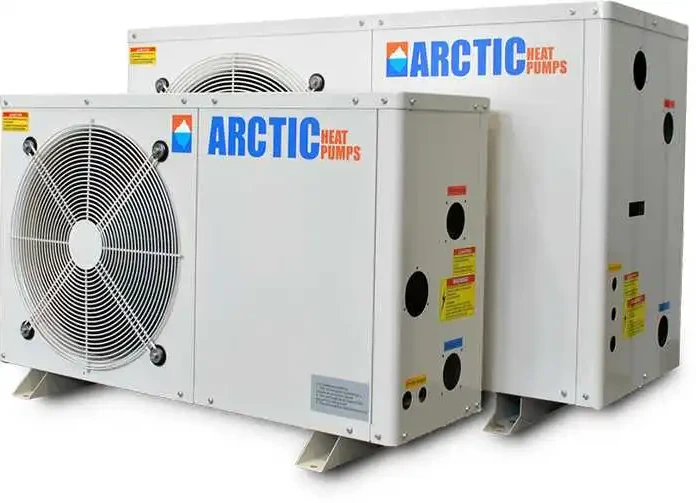

Owning a swimming pool is a luxury, but heating it shouldn't cost a fortune. For decades, homeowners relied on propane or natural gas heaters to keep their water warm. While effective, these traditional methods are notoriously inefficient, often burning a hole in your wallet faster than they heat the water.
As energy costs rise and green technology advances, the industry has shifted toward a smarter solution: the Pool Heat Pump.
If you live in a region with fluctuating temperatures—like the Northeast or Canada—or simply want to extend your swimming season without breaking the bank, understanding how modern inverter technology works is a game-changer.
How Does a Pool Heat Pump Work?
Unlike a gas heater that generates heat by burning fuel, a heat pump for pool applications works by moving heat. It functions like a reverse air conditioner.
Using a fan, the unit pulls in ambient air across an evaporator coil. Even in cold weather, this air contains thermal energy. The refrigerant inside the coil absorbs this heat, compresses it to a high temperature, and transfers it to your pool water via a heat exchanger.
Because it utilizes existing heat from the air rather than creating it from scratch, a high-quality pool heat pump can achieve a Coefficient of Performance (COP) of 6.0 or higher. This means for every $1 of electricity consumed, you get $6 worth of heat. Compare that to a gas heater, which has a COP of less than 1.0.
The Game Changer: DC Inverter Technology
Not all heat pumps are created equal. Older models used "On/Off" compressors—they ran at 100% power until the water was hot, then shut off. This is energy-intensive and noisy.
Modern Arctic Heat Pumps utilize DC Inverter Technology. Think of this like the cruise control in your car.
- Soft Start: The system ramps up slowly, avoiding energy spikes.
- Modulation: Once your pool reaches the desired temperature (e.g., 85°F), the compressor slows down to maintain that heat using a fraction of the power.
This smart modulation allows for whisper-quiet operation and energy savings of up to 80% compared to traditional heaters.
Can You Swim in Winter? (Cold Climate Capability)
A common myth is that heat pumps don't work when it gets cold. While standard units may struggle below 50°F (10°C), specialized Cold Climate Pool Heat Pumps are designed for extreme conditions.
By using advanced refrigerants like R32 (which is also eco-friendly with a lower Global Warming Potential), these units can harvest heat from the air even when outdoor temperatures drop to -4°F (-20°C). This makes them the ideal pool heat pump for homeowners looking to keep a swim spa or hot tub at 104°F year-round, regardless of the snow outside.
Key Features to Look For
Before upgrading your system, ensure your chosen unit includes these essential features:
- Titanium Heat Exchanger: Essential for durability. Titanium is impervious to corrosion from salt water and chlorine, ensuring your investment lasts 15-20 years.
- Dual Function (Heat & Cool): In areas like Texas or Florida, pools can get too hot. A unit with a reversing valve can switch to "Chiller Mode" to cool the water down for a refreshing dip.
- WiFi Control: The ability to monitor and adjust your pool temperature from your smartphone allows you to optimize heating schedules and save money.
Conclusion
Upgrading to a heat pump for pool heating is one of the smartest investments a pool owner can make. The Return on Investment (ROI) is typically realized within 3-4 years through energy savings alone. Whether you want to swim earlier in the spring, keep the pool open late into October, or enjoy a hot tub in the middle of winter, inverter technology offers the perfect balance of comfort and efficiency.


























Sign in to leave a comment.