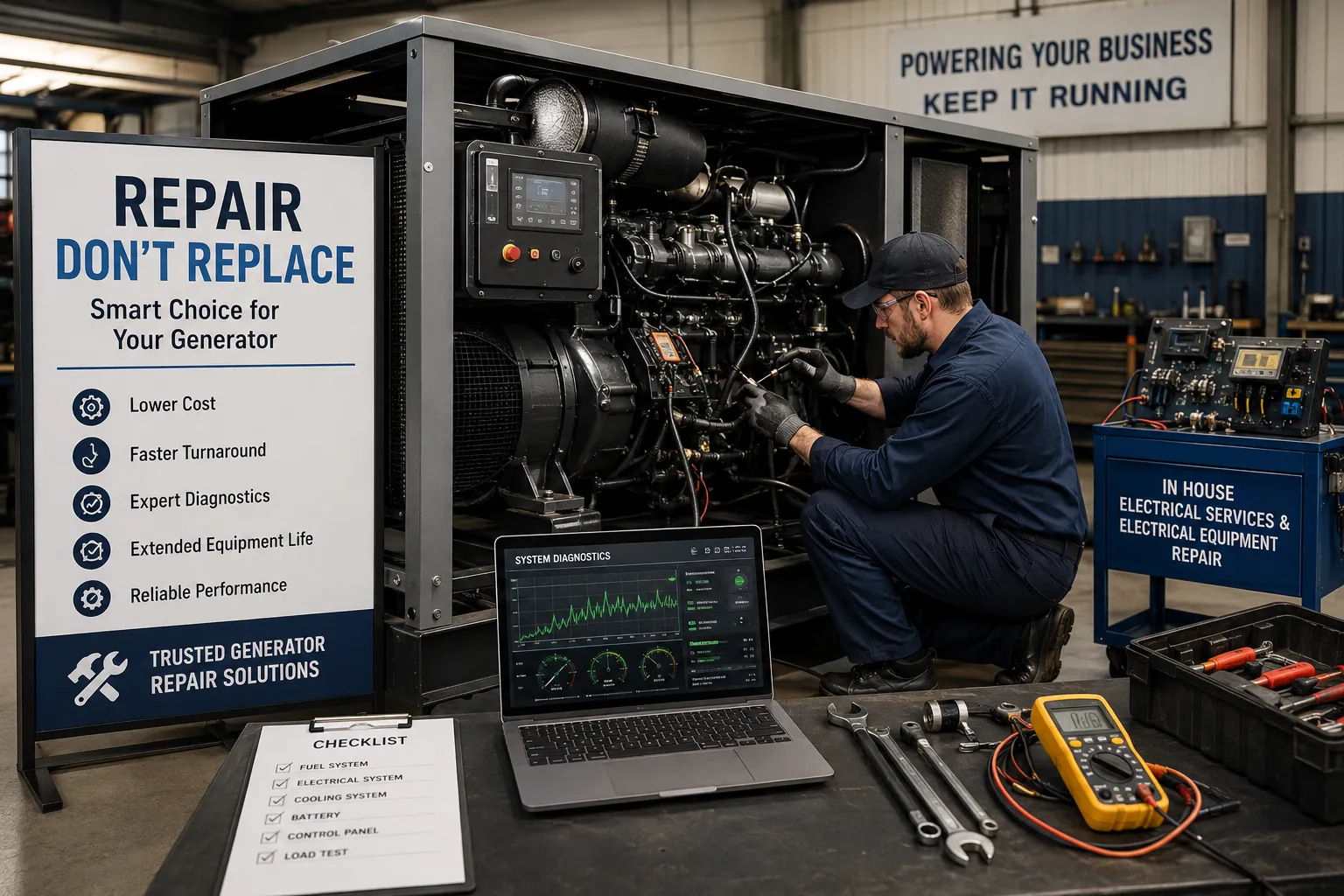

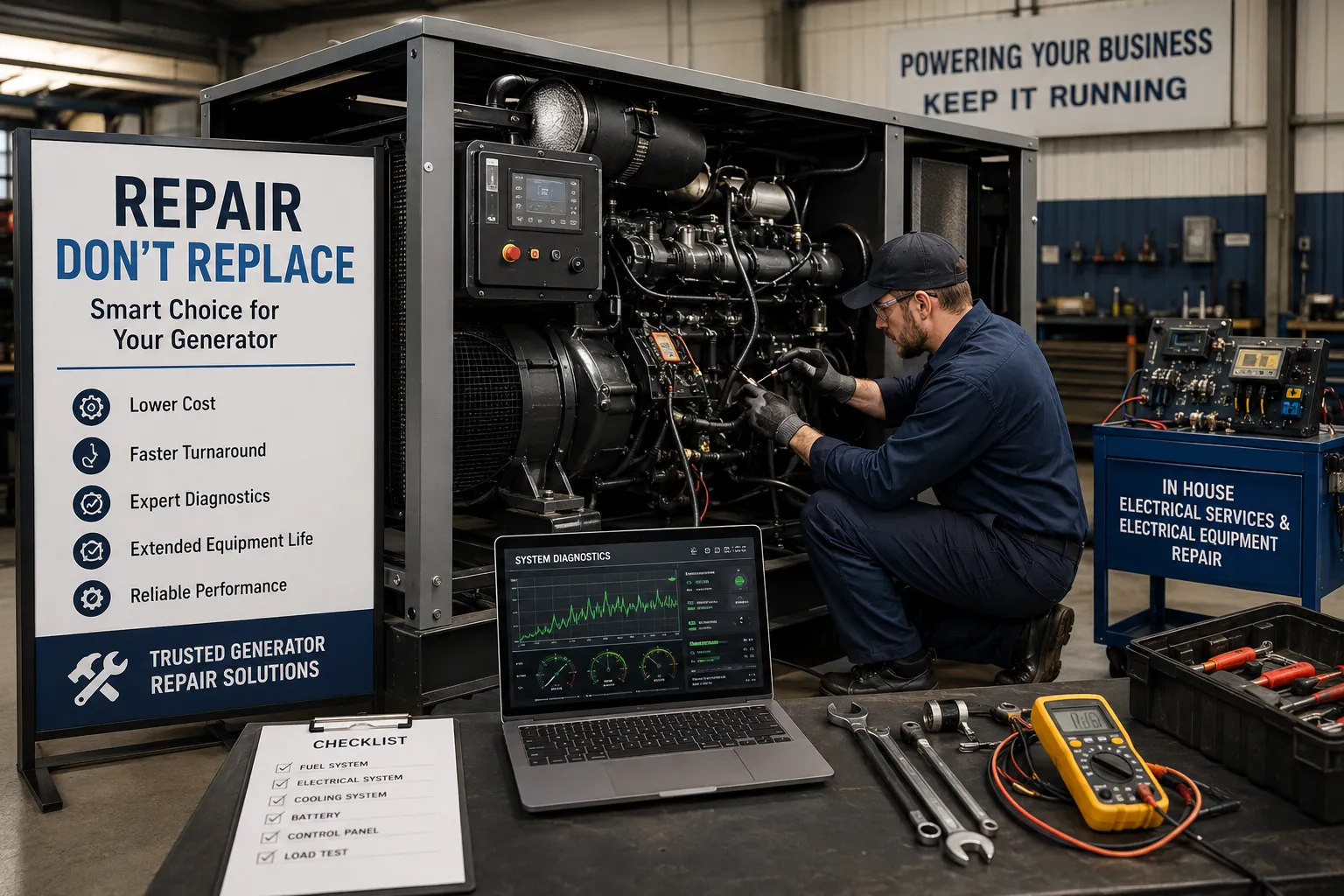
Industrial generators and electrical equipment are major investments for businesses. Whether you operate a construction company, manufacturing facility, healthcare center, or commercial building, reliable backup power keeps operations moving. But when a generator fails, many companies face a difficult question: repair or replace?
Working with a professional generator repair shop can save thousands of dollars and extend the life of your equipment for years. Modern generators are built for durability, and many problems can be repaired quickly by experienced technicians using advanced diagnostic tools and in-house testing.
Understanding when to repair instead of replace can help businesses reduce downtime, avoid unnecessary expenses, and maintain dependable power systems without sacrificing performance.
Why Businesses Replace Equipment Too Quickly
Many equipment owners assume replacement is the only option after a major malfunction. However, generator issues often appear worse than they actually are.
Common reasons businesses rush into replacement include:
- Lack of accurate diagnostics
- Fear of repeated breakdowns
- Pressure from downtime
- Misunderstanding repair costs
- Limited access to specialized repair services
Signs Your Generator Should Be Repaired Instead of Replaced
Before replacing your generator, look for these repairable warning signs that may indicate your equipment still has years of reliable performance left.
The Equipment Still Meets Your Power Requirements
If your generator still provides the correct power output for your operations, repair is usually the smarter option. Many generators are designed to operate for 20,000 to 30,000 hours with proper maintenance.
Minor failures like wiring issues, voltage irregularities, worn bearings, or cooling system problems rarely justify a full replacement.
The Core Components Are Still Strong
A generator can often be repaired if these components remain in good condition:
- Alternator
- Engine block
- Stator and rotor
- Fuel system
- Control panel framework
Replacing smaller damaged parts costs far less than purchasing a new industrial generator.
Repairs Cost Less Than 50% of Replacement
Before investing in a new generator, comparing repair costs against replacement expenses can help businesses make a smarter long-term financial decision.
One common industry rule is this:
| Situation | Recommended Action |
| Repair costs under 50% of replacement | Repair |
| Frequent major failures | Evaluate replacement |
| Obsolete equipment with unavailable parts | Replace |
| Core engine failure with high labor cost | Compare options carefully |
This approach helps businesses make financially responsible decisions.
Benefits of Choosing a Specialized Generator Repair Shop
Working with a dedicated generator repair shop provides advantages that general repair providers may not offer.
Advanced Diagnostic Capabilities
Specialized shops use advanced load testing, thermal imaging, electrical diagnostics, and computerized analysis to pinpoint problems accurately.
This reduces:
- Guesswork
- Repeat repairs
- Downtime
- Hidden electrical risks
Access to In-House Repair Services
Professional facilities offering in-house electrical services can handle complex repairs under one roof.
This includes:
- Generator rewinding
- Electrical motor repairs
- Control panel diagnostics
- Load bank testing
- Component rebuilding
- Emergency troubleshooting
An in-house repair approach speeds up turnaround times significantly.
Quick Fact: According to the U.S. Department of Energy, proper preventive maintenance can reduce equipment breakdowns by up to 70%.
Repair vs Replacement: What Makes More Financial Sense?
Understanding the true cost of repairs versus replacement can help businesses avoid overspending and maximize the lifespan of their power equipment.
Replacement Comes with Hidden Costs
Buying new equipment involves more than the purchase price.
Businesses also face:
- Installation costs
- Delivery delays
- Downtime losses
- Permit requirements
- Electrical upgrades
- Employee retraining
Repairs Offer Faster ROI
Repairing equipment often delivers immediate value:
- Lower upfront cost
- Faster return to service
- Extended equipment lifespan
- Reduced operational disruption
Do You Know?
Some industrial generators manufactured over 20 years ago are still operating today after undergoing scheduled rebuilds and electrical restoration services.
Common Generator Problems That Can Be Repaired
Not every generator issue requires full replacement. Many failures are highly repairable when caught early.
Electrical Failures
These include:
- Voltage fluctuations
- Circuit breaker failures
- Damaged wiring
- Burned contacts
- Faulty sensors
Mechanical Issues
Examples include:
- Cooling system leaks
- Worn bearings
- Fuel injector problems
- Belt damage
- Exhaust issues
Control System Problems
Modern generators rely heavily on digital controls. Software calibration and component replacement can often solve performance issues without replacing the unit.
How Specialized Repair Shops Extend Equipment Life
Specialized repair shops use advanced diagnostics, preventive maintenance, and component rebuilding techniques to help generators operate efficiently for many more years.
Preventive Maintenance Programs
Experienced repair providers create custom maintenance schedules based on:
- Operating hours
- Environmental conditions
- Load demands
- Equipment age
This proactive approach prevents expensive emergency failures.
Component Rebuilding
Many shops rebuild critical parts instead of replacing entire systems.
Examples include:
- Rotor balancing
- Alternator rewinding
- Engine overhauls
- Fuel system cleaning
- Electrical panel restoration
This dramatically increases equipment lifespan.
Note: Ignoring small generator issues often leads to larger electrical failures later. Early diagnostics can prevent catastrophic damage and expensive downtime.
Industries That Benefit Most from Generator Repairs
Several industries rely heavily on equipment uptime and benefit significantly from specialized repair services.
| Industry | Why Repairs Matter |
| Healthcare | Critical backup power |
| Manufacturing | Prevent production delays |
| Construction | Maintain project timelines |
| Data Centers | Protect sensitive systems |
| Hospitality | Avoid guest service interruptions |
| Commercial Buildings | Maintain business continuity |
For these industries, fast repair turnaround is often more valuable than waiting weeks or months for replacement equipment.
Environmental Benefits of Repairing Equipment
Repairing generators also supports sustainability goals.
Benefits include:
- Reduced industrial waste
- Lower manufacturing demand
- Fewer raw materials are used
- Reduced carbon footprint
How to Choose the Right Generator Repair Shop
Not all repair providers offer the same expertise. Look for companies that provide:
- Certified technicians
- Emergency response support
- In-house testing capabilities
- Load bank testing
- Detailed inspection reports
- Experience with industrial equipment
- Fast turnaround times
A reliable repair partner becomes an important long-term operational asset.
Key Takeaways
- Generator replacement is not always necessary after equipment failure.
- Professional repairs can significantly reduce costs and downtime.
- Specialized repair shops provide advanced diagnostics and faster service.
- Preventive maintenance extends the generator's lifespan dramatically.
- In-house electrical repair services improve repair efficiency and quality.
- Repairing equipment also supports sustainability efforts.
Conclusion
Replacing industrial equipment too quickly can lead to unnecessary expenses and operational disruption. In many cases, professional repair services provide a smarter and more cost-effective solution.
A trusted generator repair shop can diagnose complex issues, restore critical components, and help businesses maximize the lifespan of their electrical systems. With access to advanced diagnostics and electrical equipment repair, companies can often avoid costly replacements while maintaining reliable power performance.
Before investing in new equipment, it is worth consulting experienced repair specialists who understand the true condition of your generator system.
FAQs
1. How do I know if my generator should be repaired or replaced?
If repair costs are significantly lower than replacement costs and the generator still meets your power needs, repair is often the better option. A professional inspection can confirm the best choice.
2. How long can industrial generators last with proper maintenance?
Many industrial generators can operate for 20 to 30 years with routine maintenance, scheduled inspections, and timely repairs.
3. What services does a specialized generator repair shop provide?
Most specialized shops offer diagnostics, electrical repairs, load testing, component rebuilding, preventive maintenance, and emergency repair services for commercial and industrial equipment.
Need reliable generator diagnostics or professional repair support? Explore expert in house electrical services and electrical equipment repair solutions to keep your equipment running efficiently, reduce downtime, and extend the life of your power systems.




















Sign in to leave a comment.