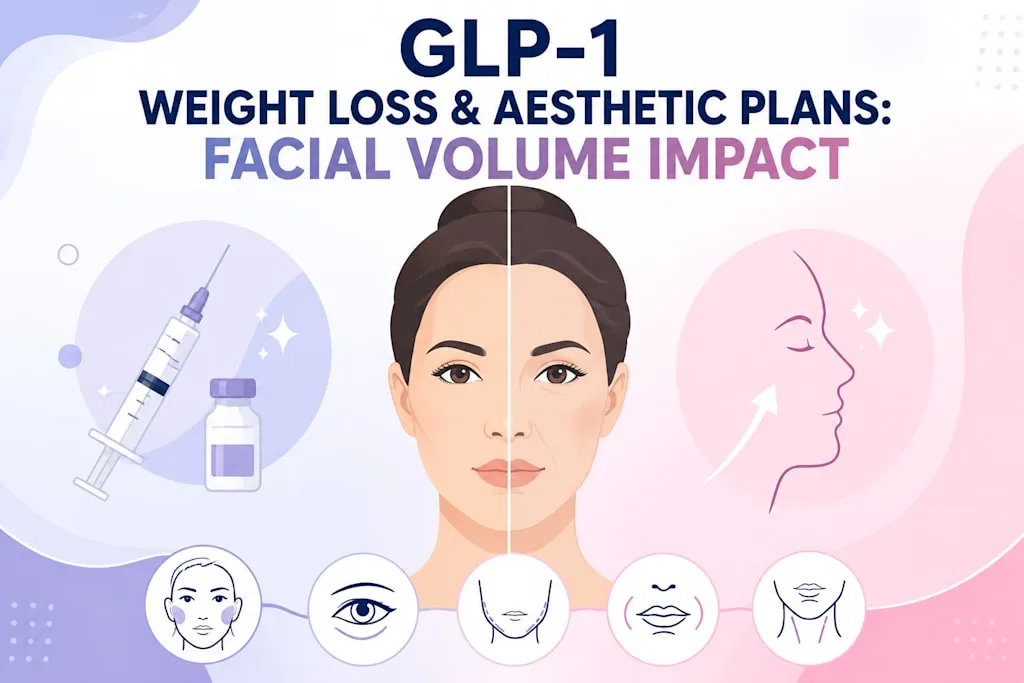
Are you losing weight on Ozempic or Mounjaro but suddenly looking older, more hollow, or more tired in the face?
You are not overreacting. What you are seeing is a well-documented clinical pattern and it is now one of the fastest-growing concerns walking through aesthetic clinic doors across the United States.
GLP-1 medications like semaglutide and tirzepatide have genuinely changed the weight loss conversation. But they have also quietly triggered a parallel conversation in medical aesthetics, one about facial fat, structural volume, and what happens when the body loses weight faster than the face can handle.
Let's dive into what is really happening and what you can do about it.
Why GLP-1 Medications Affect Your Face Differently Than Regular Weight Loss
Most people expect weight loss to make them look younger. GLP-1 patients often experience the opposite, at least facially.
The reason is biology. Your face is not just skin over bone. It is a layered system of fat compartments, collagen scaffolding, and ligaments that work together to create lift, contour, and fullness. These fat pads, in the cheeks, temples, under-eye hollows, and jawline — are not just cosmetic. They are structural.
GLP-1 medications suppress appetite aggressively, leading to caloric deficits that produce rapid, sustained fat loss. The body pulls from all fat stores including facial fat compartments, often faster than the overlying skin can contract. The result is deflation, not rejuvenation.
Quick Fact: A 2023 study published through NIH found that tirzepatide patients lost an average of 20.2% of total body weight over 72 weeks, a rate of loss that directly accelerates facial volume depletion across multiple anatomical zones.
What makes this clinically distinct is the speed and uniformity of the loss. Natural aging causes gradual, compartment-specific volume reduction over decades. GLP-1-related facial changes compress that timeline into months, leaving skin lax, structural support gone, and features that once looked full now looking gaunt.
The Anatomical Reality: What Is Actually Happening Beneath the Skin
Understanding GLP-1 facial changes means understanding facial anatomy, specifically, the deep and superficial fat compartments.
The face has distinct fat layers. The deep medial cheek fat supports mid-face projection. The buccal fat defines cheek contour. The temporal fat pad maintains upper face volume. The sub-orbicularis oculi fat (SOOF) supports the lower eyelid and cheek junction. When GLP-1 medications accelerate systemic fat loss, these compartments deflate in a non-uniform pattern, creating hollows, shadows, and folds that mimic advanced aging.
Clinically, providers are documenting:
- Bitemporal hollowing — sunken temples that age the upper face dramatically
- Malar descent — the cheek fat sliding downward, deepening nasolabial folds
- Tear trough exaggeration — under-eye hollows becoming more pronounced
- Prejowl sulcus formation — loss of jawline definition and early jowling
- Lip deflation — thinning of the vermilion border without any direct lip treatment
Tip: These are not surface-level concerns. They reflect deep structural changes. A provider who only assesses what you can see in a mirror without understanding the fat compartment anatomy underneath, will undertreat or misplace your filler entirely.
Semaglutide Face Before and After: What the Data and Clinics Are Reporting
The term "Ozempic face" was initially dismissed as social media exaggeration. It is not. Aesthetic providers nationwide are now reporting a consistent clinical profile among GLP-1 patients presenting for facial consultations.
A 2022 survey published via the American Society for Dermatologic Surgery noted that volume restoration was among the top five reasons patients sought injectable treatment — with weight-loss-related volume loss now explicitly cited as a primary driver in post-pandemic consultation data.
What providers are seeing is not just volume loss, it is disproportionate volume loss. Patients who lose 40 to 80 pounds over 8 to 12 months often retain body skin laxity alongside facial hollowing, making the face look significantly older than the body feels. The disconnect between how a patient feels physically and how they look facially is a central emotional driver behind why this population is seeking aesthetic treatment in growing numbers.
How to Fix Facial Volume Loss After Semaglutide: The Clinical Framework
Restoring GLP-1-related facial volume is not a simple cosmetic top-up. It requires a structured, anatomy-based approach.
Stage 1 — Stabilize Before You Treat
If you are still actively losing weight, facial filler placement is premature. Volume placed in a changing anatomical environment shifts unpredictably, migrates, or dissolves faster. Most experienced providers recommend waiting until body weight has been stable for a minimum of 3 months before beginning significant filler work.
Stage 2 — Full-Face Structural Assessment
GLP-1 facial changes are rarely isolated to one area. A thorough provider evaluates all facial thirds — upper (temples, brows), mid (cheeks, tear troughs, nasolabial folds), and lower (lips, chin, jawline, prejowl) — before recommending any treatment.
Stage 3 — Deep Before Superficial
Hyaluronic acid fillers placed in deep tissue planes — such as supraperiosteal placement at the cheekbone or deep medial cheek — rebuild the foundational scaffolding that GLP-1 medications depleted. Superficial placement without deep structural support produces a puffy, unnatural result.
Stage 4 — Layer With Biostimulators for Skin Quality
For patients with concurrent skin laxity — which is common after rapid weight loss — collagen-stimulating agents like Sculptra (poly-L-lactic acid) or Radiesse (calcium hydroxylapatite) address not just volume but the quality and thickness of the dermis itself. These work over weeks to months and produce gradual, natural improvement.
Quick Fact: According to ASPS, soft tissue filler procedures grew 4% in 2023, with volume restoration for weight-loss patients emerging as one of the most discussed new clinical indications among board-certified providers.
Do You Need Fillers After GLP-1 Weight Loss? A Clear Decision Guide
| Clinical Presentation | Recommended Approach |
| Mild volume loss, good skin elasticity | Preventive skincare, optional 1–2 syringe filler |
| Moderate mid-face hollowing | Targeted HA filler, cheeks and tear troughs |
| Significant deflation across multiple zones | Multi-area structural filler, possible biostimulator |
| Skin laxity without major volume loss | Biostimulator + skin tightening modalities |
| Still actively losing weight | Wait, assess baseline, plan strategically |
The goal is never to restore how you looked before GLP-1 treatment. The goal is to look proportionate, refreshed, and structurally supported at your new weight which is entirely achievable with the right provider and the right plan.
Tip: Avoid any provider who approaches GLP-1 facial changes with a standard "one syringe" protocol. This patient population requires higher volumes, deeper placement, and a whole-face treatment philosophy, not spot correction.
Key Takeaways
- GLP-1 medications cause rapid, multi-compartment facial fat loss that mimics accelerated aging
- The speed of loss — not just the amount — is what makes GLP-1 facial changes clinically unique
- Deep fat compartments including the temples, SOOF, and deep medial cheek are most affected
- Filler treatment should begin only after weight has stabilized for at least 3 months
- A full-face structural assessment across all three facial thirds is essential before treatment
- Biostimulators like Sculptra complement HA fillers when skin laxity is present alongside volume loss
- Experienced, anatomy-trained injectable providers deliver measurably better outcomes for this population
Conclusion
GLP-1 medications are clinically remarkable but they demand a smarter aesthetic response. If your face looks older, hollower, or more tired since starting semaglutide or tirzepatide, that is not a vanity concern. It is a structural one and it has precise, evidence-informed solutions.
The Spa & Laser Center team understands the clinical complexity behind GLP-1 facial changes. Our experienced dermal fillers providers in Virginia Beach build individualized treatment plans designed around your anatomy, your weight loss journey, and your aesthetic goals, not a one-size-fits-all protocol.
Frequently Asked Questions
1. Can GLP-1 medications cause permanent facial fat loss, or does volume return if I stop the medication?
Facial fat loss from GLP-1 medications is generally permanent unless weight is regained. Even if medication is discontinued, the fat compartments do not automatically refill — particularly in older patients or those with reduced skin elasticity. Filler or biostimulator treatment remains the most reliable path to restoration.
2. Is there a specific type of dermal filler that works best for GLP-1-related facial volume loss?
Thicker, more cohesive hyaluronic acid fillers such as Juvederm Voluma XC or Restylane Lyft are preferred for deep structural areas like cheeks and temples. Lighter fillers are used for more superficial zones. The right product depends entirely on the area, depth of placement, and degree of volume loss which is why an individualized assessment matters.
3. How many treatment sessions are typically needed to fully restore facial volume after significant GLP-1 weight loss?
Most patients with moderate to significant volume loss require 2 to 3 sessions spaced 4 to 8 weeks apart. Full restoration is typically phased rather than achieved in one visit — both for natural-looking results and to allow tissue to respond and settle appropriately between appointments.
4. Does rapid weight loss from GLP-1 medications affect how long fillers last?
Yes, potentially. Patients with elevated metabolic rates — common while actively on GLP-1 medications — may metabolize hyaluronic acid fillers slightly faster than average. Most results last 12 to 18 months, but maintenance appointments may be recommended more frequently during active weight loss phases.
5. Are there any non-injectable treatments that address GLP-1-related facial laxity effectively?
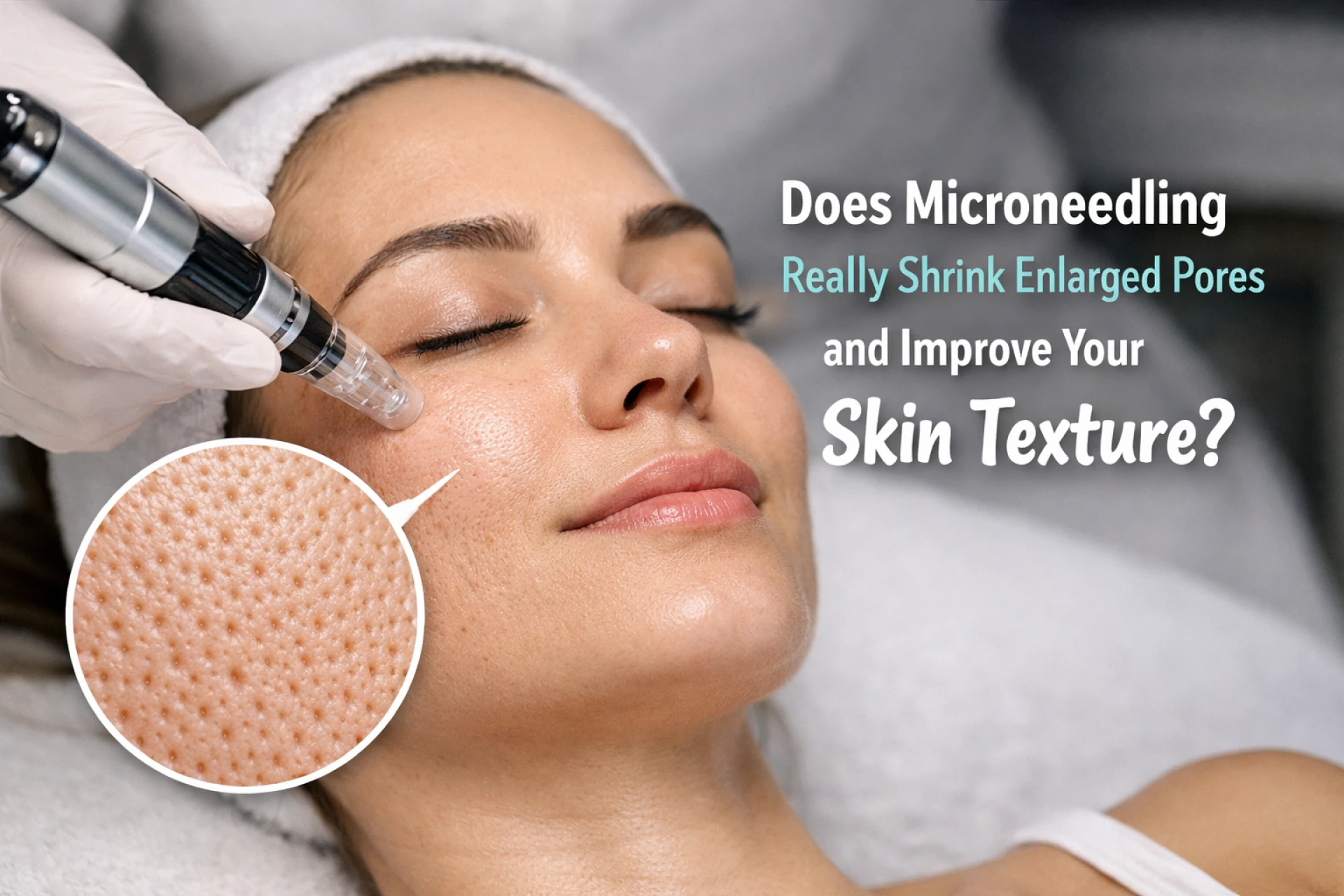
Yes. Radiofrequency microneedling, ultrasound-based skin tightening, and plasma pen treatments can meaningfully improve skin laxity and texture in GLP-1 patients. These are often combined with injectable volume restoration for comprehensive results — particularly in patients who prefer a gradual, less invasive approach as a first step.






















Sign in to leave a comment.