

Government-sponsored education loans are financial support given by the government to help students pay for their education. These loans are meant to make higher education easier to reach, especially for students from low-income families. These loans make it easier for students to get quality education and follow their dreams without too much financial stress.
This article will give you all the information you need about government-sponsored education loans in India.
What Are Government-Sponsored Education Loans?
Government-sponsored education loans are financial help programs started or supported by the government to encourage higher education. These loans have benefits like low-interest rates, subsidies, and easy repayment options, making them a great choice for students from different backgrounds.
Popular Government Education Loan Schemes in India
Here are some well-known government education loan schemes in India that are designed to assist students in their pursuit of higher education:
1. PM Vidyalaxmi Scheme
The Government of India has launched the PM-Vidyalaxmi scheme to help talented students get financial support so that money issues don’t stop them from pursuing good higher education.
This scheme offers a special loan product that allows meritorious students to get education loans without needing collateral or a guarantor if they get admission into the top 860 quality colleges in the country. The application process is simple, transparent, student-friendly, and fully digital.
Additionally, for students whose families earn up to Rs. 8 lakhs a year, the scheme provides a 3% interest subsidy on loans up to Rs. 10 lakhs.
2. Central Sector Interest Subsidy (CSIS) Scheme
The Central Sector Interest Subsidy (CSIS) Scheme was started by the Ministry of Education in 2009. Under this scheme, students get an interest subsidy on their education loans during their course period. This helps reduce the financial burden for those pursuing higher education. To apply, you can approach any major bank when you're applying for an education loan.
3. Fulbright-Nehru Master’s Fellowships
The Fulbright-Nehru Master’s Fellowships are important scholarships for Indian students who want to study for a Master’s degree in the US. These fellowships help promote cultural exchange and academic success between India and the US.
To be eligible, you need to meet certain criteria: your family income should be less than Rs. 6 lakh, you must have at least 55% in your Bachelor’s degree, and you should have three years of work experience.
To apply, create an account with the Institute of International Education and upload the necessary documents.
4. Fulbright-Nehru Doctoral Research Fellowships
The Fulbright-Nehru Doctoral Research Fellowships support Indian scholars who are doing a PhD at an Indian institute and want to complete part of their research in a US institution. This fellowship provides financial help and gives access to top-notch resources for research.
To apply, you must be enrolled in a PhD program at an Indian institute and have submitted your PhD thesis. Applications for the Fulbright-Nehru Doctoral Research Fellowships should be submitted online through the official website.
5. National Overseas Scholarship
The National Overseas Scholarship is for students from minority communities like Scheduled Castes, Denotified Nomadic and Semi-Nomadic Tribes, Landless Agricultural Laborers, and Traditional Artisans. This scholarship provides financial support to help these deserving candidates pursue higher education abroad.
To be eligible, you need to meet certain criteria: you must belong to a minority community, have at least 55% in your last degree exam, not have more than one sibling who has received help under this scheme, and your family income should be less than Rs. 6 lakh.
You can apply online through the official website of the Ministry.
6. Agatha Harrison Memorial Fellowship
The Agatha Harrison Memorial Fellowship, offered by the Ministry of Human Resource Development, provides fully funded fellowships for Indian students who want to do research or academic programs at the University of Oxford.
This fellowship gives scholars a great chance to engage in advanced studies, research and intellectual discourse. To apply, you need to have scored 60% or more in your studies until your PhD, be between 30 to 40 years old, and have at least three years of teaching experience.
7. Dr. Ambedkar Central Sector Scheme of Interest Subsidy on Educational Loan for Overseas Studies for Other Backward Classes & Economically Backward Classes.
The Dr. Ambedkar Central Sector Scheme provides interest subsidies on educational loans for overseas studies to students from Other Backward Classes (OBCs) and Economically Backward Classes (EBCs). This scheme helps deserving candidates from these categories pursue higher education abroad.
To be eligible, students must have secured admission to a higher study program abroad and have a family income not exceeding Rs. 8 lakh for EBCs and Rs. 5 lakh for OBCs.
You can apply for this scheme by submitting an application at any bank branch where you are applying for your education loan.
8. Credit Guarantee Fund Scheme for Educational Loans
The Credit Guarantee Fund Scheme for Educational Loans provides a guarantee for loans up to Rs. 7.5 lakh without needing collateral or security. This scheme helps deserving students access loans without the stress of providing extra security.
To apply, you can go to any bank branch where you want to get your education loan. By using these government loan schemes, students can achieve their dreams of higher education and explore many opportunities. It's important to know the eligibility criteria and application process for each scheme to make the best use of these options.
Key Features of Government-Sponsored Education Loans
Here’s a brief overview of the key features of government-sponsored education loans, which aim to make higher education more accessible for students:
1. Interest Subsidy
Under schemes like the Central Sector Interest Subsidy Scheme (CSIS), the government covers the interest on loans during the moratorium period (course duration plus one year).
2. No Collateral for Smaller Loans
Loans up to ₹7.5 lakhs often do not require collateral under the Credit Guarantee Fund Scheme for Education Loans (CGFSEL).
3. Affordable Interest Rates
Government loans typically have lower interest rates than private loans, making them cost-effective.
4. Flexible Repayment Tenures
Repayment periods can range from 10 to 15 years, reducing the financial pressure on graduates.
5. Comprehensive Coverage
These loans cover tuition fees, living expenses, travel, and other educational costs.
Eligibility Criteria for Government Sponsored Education Loans
Understanding the requirements for a government-sponsored education loan is crucial for approval. Here's what you generally need:
1. Indian Citizenship
You must be an Indian citizen and provide valid proof such as an Aadhaar card or passport.
2. Admission to a Recognized Institution
You should have secured admission to a recognized university or college, whether in India or abroad, through a merit-based or entrance test process.
3. Co-applicant with Stable Income
A co-applicant, usually a parent or guardian, is needed as a guarantor. Their stable income assures the lender of repayment capability.
4. Proof of Financial Need
For specific schemes aimed at economically weaker sections, you need to show documents like income certificates or family income proof to establish financial need.
Benefits of Government-Sponsored Education Loans
Here are the major benefits of Government sponsored education loans:
1. Accessibility
These loans make education accessible to students from economically weaker sections.
2. Affordable Terms
Lower interest rates and subsidies reduce the financial burden.
3. Social Upliftment
They promote equal opportunities by supporting underprivileged students.
4. Support for International Education
Schemes like Padho Pardesh help students pursue higher education abroad.
5. Extended Repayment Periods
Longer tenures give students ample time to repay loans after securing a job.
Challenges and Considerations for Government Sponsored Education Loans
While government-sponsored education loans offer many benefits, several challenges and considerations need to be addressed to ensure their effectiveness:
1. Extensive Documentation
Government loans often require detailed paperwork, which can be time-consuming.
2. Income Restrictions
Many schemes are limited to students from families within specific income brackets.
3. Lack of Awareness
Limited knowledge about these schemes leads many students to opt for costly private loans.
How to Apply for a Government-Sponsored Education Loan?
While the steps may differ across different schemes, here are the most important steps to apply for a government sponsored education loan:
1. Visit the official website of the scheme that you need to explore options and apply.
2. Research suitable schemes based on your eligibility.
3. Gather necessary documents like admission letters, KYC, and income proof.
4. Submit your application online or through the respective bank.
Tips for Managing a Government Education Loan
Here are the most important tips for managing a government education loan:
1. Understand Loan Terms
Familiarize yourself with the loan’s interest rate, repayment period, and any subsidy eligibility.
2. Pay During the Moratorium
If possible, pay interest during the moratorium period to reduce the overall loan burden.
3. Explore Subsidy Benefits
Ensure you utilize interest subsidies if eligible.
4. Stick to a Budget
Plan your expenses wisely to ensure smooth repayment.
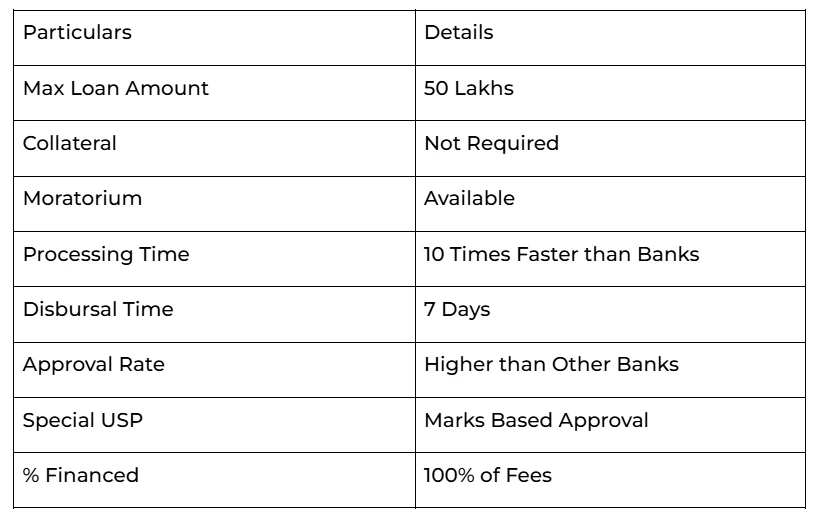
Propelld stands out for its quick and transparent loan processing. They ensure a smooth experience by providing clear information about interest rates, repayment options, and eligibility, making it easier for students to plan their education financing.
Why Propelld?
The following are the primary benefits of Propelld.
FAQs
- What are government-sponsored education loans?
- These are loans provided or supported by the government to help students pay for higher education with benefits like low-interest rates and subsidies.
- What is the Central Sector Interest Subsidy (CSIS) Scheme?
- It offers an interest subsidy on education loans during the moratorium period for eligible students.
- Who can apply for the Fulbright-Nehru Master’s Fellowships?
- Indian students with a family income below ₹6 lakh, 55% in their Bachelor’s degree, and three years of work experience.
- What is the eligibility for the Fulbright-Nehru Doctoral Research Fellowships?
- Applicants must be enrolled in a PhD program in India and have submitted their PhD thesis.
- What is the National Overseas Scholarship?
- A scholarship for minority students to pursue higher education abroad, covering tuition, living expenses, and more.
- What is the Agatha Harrison Memorial Fellowship?
- A fully funded fellowship for research or academic programs at the University of Oxford, available to Indian scholars.
- What is the Dr. Ambedkar Central Sector Scheme?
- It provides interest subsidies for education loans for OBC and EBC students pursuing studies abroad.
- What is the Credit Guarantee Fund Scheme for Educational Loans?
- A scheme that guarantees education loans up to ₹7.5 lakh without requiring collateral or security.
- What are the benefits of government-sponsored education loans?
- Accessibility, lower interest rates, subsidies, extended repayment periods, and support for international education.
- What documents are needed for a government education loan?
- Admission letters, income proof, KYC documents, and financial need proof (if applicable).
- How can I apply for a government-sponsored education loan?
- You can apply through the Vidya Lakshmi Portal or directly at participating banks.
- Do government education loans cover living expenses?
- Yes, they cover tuition fees, living expenses, travel costs, and other educational expenses.
- Can I repay the loan during the moratorium period?
- Yes, paying interest during this period can reduce the overall loan burden.
- What are the challenges of applying for government-sponsored loans?
- Extensive documentation, income restrictions, and lack of awareness are common challenges.
- What is the repayment period for government-sponsored education loans?
- Repayment periods typically range from 10 to 15 years, depending on the loan amount and scheme.



























Sign in to leave a comment.