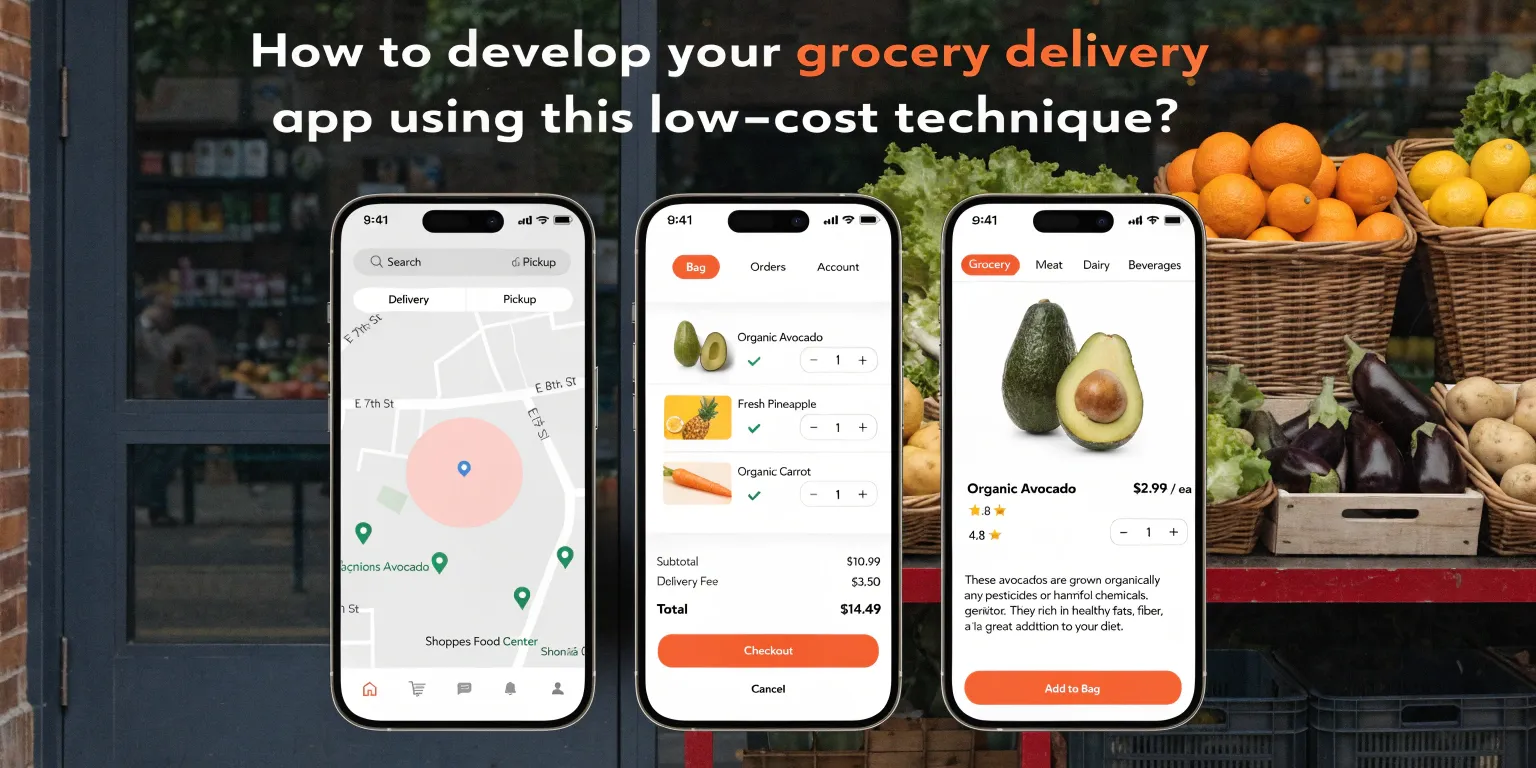

The exponential increase in online purchases has led to a change in how consumers purchase daily needs. The need for grocery delivery applications is now more important than ever before. Moreover, creating an application does not necessarily mean spending vast amounts of money; with proper planning and strategy, one can develop an app economically.
Has your grocery store or supermarket business been impacted by the coronavirus? Do you want your store to rank at the top when customers search for “grocery delivery near me” or “grocery shop near me”? If so, investing in grocery delivery app development is a smart and necessary step.
Technological advancements, combined with global disruptions, have significantly changed consumer behavior. The coronavirus pandemic accelerated this shift, creating a “new normal” where digital solutions dominate everyday activities. Buying and selling
This article will give you detailed information regarding the creation of your application with low expenses.
What is a grocery delivery app?
Grocery delivery apps are online platforms through which users can browse and purchase their groceries and have them provided to their location. Such apps help customers find local markets or supermarkets from which they can make purchases and pay easily and track their delivery status.
A typical on-demand grocery delivery app has features like product search and selection, cart management, real-time tracking, payment integration methods, and customer service support.
Low-Cost Techniques to Develop a Grocery App
Before diving into the development process, it’s important to adopt cost-saving strategies:
- Start with a Minimum Viable Product (MVP) to launch quickly with essential features
- Use ready-made frameworks and APIs instead of building everything from scratch
- Choose cross-platform development to reduce time and cost
- Outsource development to an experienced mobile app development company
- Focus on scalable architecture to avoid future redevelopment expenses
These techniques help businesses minimize initial investment while ensuring a strong foundation for growth.
Select the Model of Your On-Demand Grocery Delivery App
Choosing the right business model is crucial for both functionality and profitability. Here are the three most popular models:
1. Store-Specific Model
This model will make the mobile application focus on one particular grocery store or brand, and people will be able to buy goods offered by that particular store through the app.
This model works perfectly for companies that own physical stores already and wish to go digital. The model demands less sophistication as compared to others, making it an affordable choice for new startups.
2. Aggregator Model
Under this model, different grocery stores will come together under one roof. People will be able to compare prices and find out what's good from various stores.
Customer engagement will be improved, but it will take advanced features like management dashboard and synchronization to work effectively.
3. Marketplace Model
This is the most sophisticated model that enables different vendors to offer their goods and manage them independently.
Though it has a lot of advantages like scalability and better earnings, backend development will demand your attention and partnership with an experienced grocery delivery app development company.
Deciding the Revenue Model
To ensure long-term success, you must define how your app will generate income. Here are the most effective monetization strategies:
1. Delivery Charges
Charging a delivery fee for each order is one of the simplest revenue models. The fee can vary based on distance, order value, or delivery time.
This method ensures consistent income while keeping the pricing structure transparent for users.
2. Revenue Sharing
In this model, the platform earns a commission from partner stores on every successful order. It is widely used in aggregator and marketplace apps.
This approach allows businesses to scale without directly managing inventory, making it highly profitable over time.
3. Advertisement & Promotional Services
You can offer promotional opportunities to vendors, such as featured listings, banner ads, or sponsored products within the app.
This model creates an additional revenue stream while helping vendors increase their visibility and sales.
4. Membership Fee
A subscription-based model allows users to pay a monthly or yearly fee in exchange for benefits like free delivery, exclusive discounts, or faster service.
This strategy helps generate recurring revenue and builds customer loyalty.
Final Thoughts
The development of the grocery delivery application does not necessarily require spending too much money as long as everything is done the smart way. By choosing a proper business model, implementing core features, and choosing efficient development methods, businesses can create a successful solution.
The choice of grocery delivery application development services by experts will allow launching a quality product that is easy to use and is guaranteed to be effective for its users.



























Sign in to leave a comment.