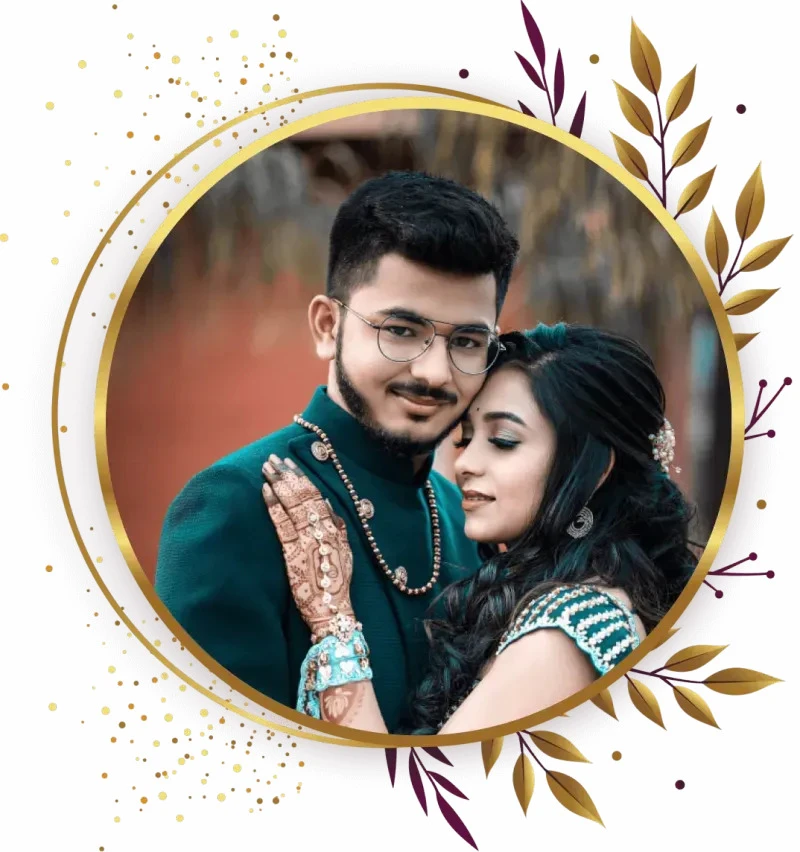

Gujarat is renowned for its wonderful culture and mouthwatering vegetarian cuisine. Gujaratis are kind and hospitable, and their friendliness can be seen at their wedding celebrations as well. The Gujarati matrimony ceremonies are loving, unique, and eccentric. Gujarati matrimony customs have a purpose and a history. Here are some of the customary Gujarati matrimony rituals.
Chandlo Vidhi
Gujarati refers to Chandlo as a red vermillion. Tika and Matli are terms for money. By the Chandlo Matli tradition, the bride's home is visited by the groom and four male family members. The groom is blessed and has the red Chandlo placed on his forehead by the bride's father. The wedding date is also set at this time between the two families.
Gol Dhana
In Hindi, the term "Gol Dhana" signifies jaggery with coriander seeds. Gol Dhana essentially depicts a Sagai ceremony or Engagement at Gujarati matrimony. With treats and presents, the bride and her family visit the bride's family. After exchanging engagement rings, the pair asks for the approval of five married ladies from each family. Both families gather for a cosy feast featuring a variety of traditional Gujarati delicacies. This happens to mark the beginning of the wedding rites.
Lagan Lakhvanu (kankotri)
The first formal wedding invitation, known as a Kankotri, was written during this ritual. After this, they will deliver it to god as a sign that the wedding would benefit from his blessings. The couple will also ask for his blessings and the success of the wedding on the auspicious date. After this, visitors will get the wedding invitation cards. The ceremony used to be held a month before the wedding, but now happens whenever it is most convenient.
Mehndi
The mehndi is a festive gathering of ladies where the bride's hands and feet are decorated with lovely henna designs. It is often held two days before the wedding at the bride's home. The design will also include the groom's initials. The hands of the remaining women are likewise henna-painted.
Sanjhi or Sangeet Sandhya
Sanji is a lively musical performance that Gujarati matrimony guests virtually always anxiously anticipate. Both families come together during the Sangeet ceremony to sing traditional songs and dance fervently. The first time that both families get to know one another through music and dance is at a Sanji.
Mandap Mahurat
In Indian and Hindu tradition, requesting Lord Ganesha's blessings is a significant occasion is customary. The bride and groom each host a prayer service in their houses where they offer prayers to Lord Ganesha. They do this in hopes of receiving his blessings for an unhindered future of prosperity. They ask Mother Earth to bless the location of the mandap.
Pithi
The bride's and the groom's homes each host a separate "pithi" or haldi ceremony. Their loved ones force them to sit on a low stool as they apply a paste. That paste is a mixture of turmeric, sandalwood, rosewater, and other herbs for their hands, feet, and face. The wife of the groom's or bride's paternal uncle makes the paste. After that, they receive a holy water bath.
Varghodo
Similar to the "baraat," the groom rides a brilliantly decorated horse to the bride's house or the wedding location. The bride's mother welcomes the groom and his family with treats and the "Jaan" ritual of doing aarti. The groom then playfully tries to avoid being caught while the bride's mother lightly pinches his nose. This is to remind him to be humble since he is there to ask for her daughter's hand.
Ponknu
An enjoyable ritual in Gujarati matrimony is ponkhnu. In essence, it symbolises welcoming the husband to the mandap for the wedding. Before he enters, the bride's mother performs Aarti, blesses him, and feeds him candy. She then tries to tug the groom's nose in jest to remind him to be modest. This happens because the groom came to ask for their daughter's hand in marriage. In response, the groom tries to elude the nose-pulling. Over time, everyone enjoys a good laugh as this ritual develops into one that is extremely humorous.
Jaimala
The Jaimala procedure will begin once the bride and the husband have both arrived at the wedding mandap. The couple will then exchange the garlands. There are occasionally Jaimala tunes playing in the background, and everyone applauds.
Madhuparka
The bride's mother accompanies the husband to the mandap for the following ceremony, known as Madhuparka. During this, the bride’s mother washes his feet with milk and water. She then presents Panchamrut, a drink made of milk, yoghurt, sugar, ghee, and honey, to the groom. The bride's sisters are planning and carrying out the entire Joota Chhupai rite at this time.
Kanyadaan
The ritual known as "kanyadaan" is a significant event where the father formally offers his daughter to the groom. They request his future son-in-law to assume from them the duty of his daughter's happiness and well-being.
Pheras
In contrast to other Indian traditions, the couple only performs four Pheras around the sacred fire during Gujarati matrimonial. The four Pheras are extremely important to the marriage. Dharma, Artha, Kama, and Moksha are the four goals of human life that each represents.
Vidaai
The bride departs from her family house in an emotional Vidaai ritual after the reception. She hurls rice at the home she is leaving from the back of her head. It serves as a metaphor for her repaying her family's debts. With this ceremony the Gujarati wedding comes to end.
Read Also:- How to Plan a Vishwakarma Matrimony in Budget






















Sign in to leave a comment.