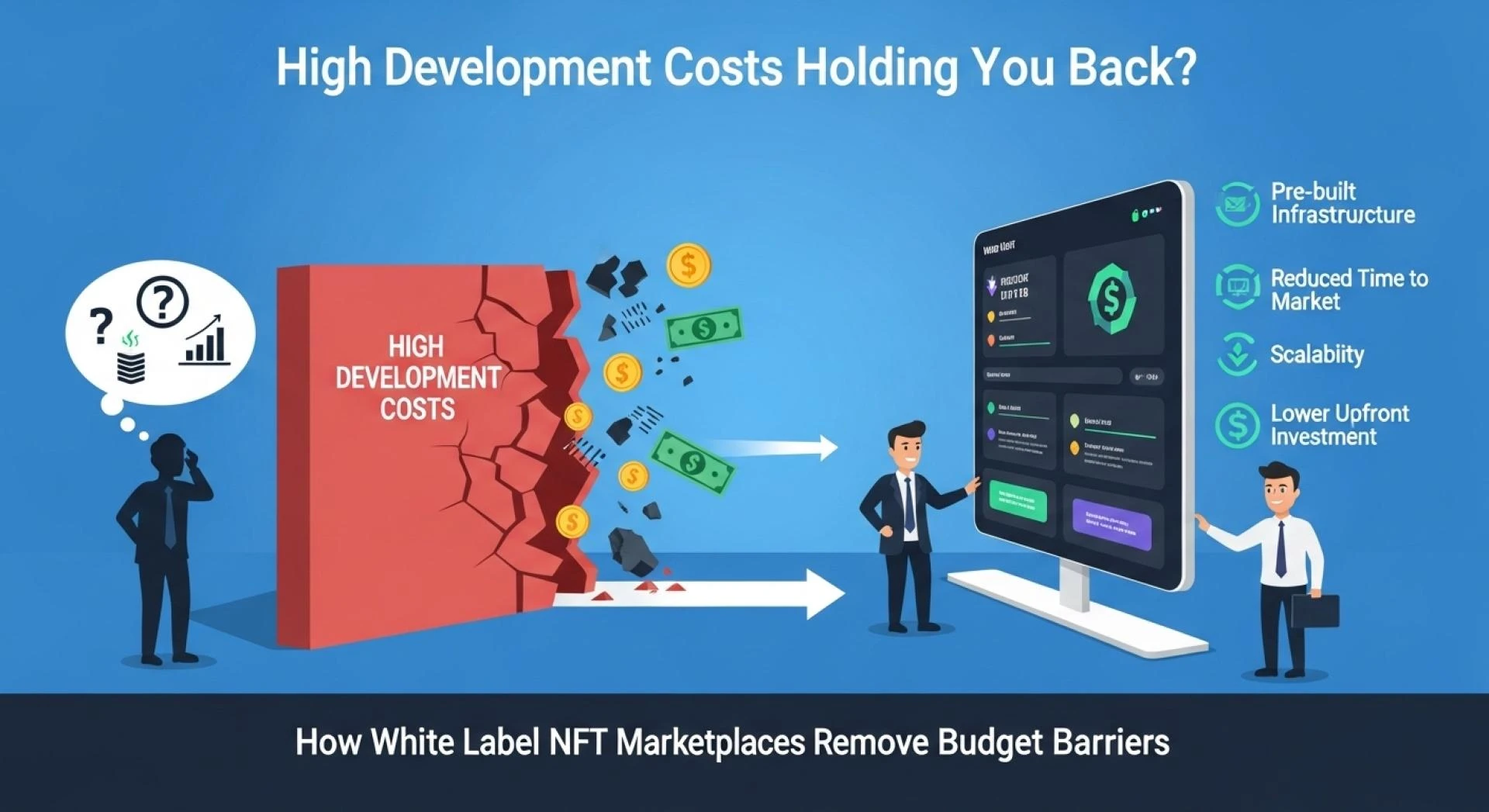

Across the United States and the United Kingdom, NFTs are no longer experimental concepts. Businesses in media, gaming, fashion, sports, real estate, and enterprise software are actively exploring NFT platforms as tools for monetization, digital ownership, and customer engagement. Despite growing interest, many NFT initiatives never move beyond the planning phase due to high development costs and financial uncertainty.
Launching a fully functional NFT marketplace requires deep technical expertise, regulatory awareness, and infrastructure planning. For organizations that must justify ROI, manage investor expectations, or operate under strict budgets as is common in the US and UK these costs can quickly become prohibitive.
White Label NFT Marketplaces have emerged as a strategic alternative. Instead of investing heavily in custom development, businesses can deploy ready-built platforms that significantly reduce upfront and long-term expenses while maintaining scalability and security.
Key challenges faced by NFT-driven businesses include:
- Rising Web3 development costs in the US and UK
- Difficulty hiring and retaining blockchain talent
- Unpredictable infrastructure and audit expenses
- Long development timelines delaying market entry
Understanding how white label NFT marketplaces remove these financial barriers is essential for businesses seeking sustainable growth in the NFT ecosystem.
Why Custom NFT Marketplace Development Is Financially Intensive
Building an NFT marketplace from the ground up is a complex engineering project, not a simple product build. Every functional layer adds cost, time, and risk.
Custom development typically includes:
- Blockchain selection and architecture design
- Smart contract creation and deployment
- Asset minting and ownership logic
- Wallet connectivity and transaction handling
- User dashboards and admin controls
- Security testing and audit cycles
In the United States and United Kingdom, where development costs are among the highest globally, these components quickly inflate budgets. Even minor feature changes can result in additional development sprints and cost overruns.
White Label NFT Marketplaces reduce this burden by offering pre-engineered solutions, allowing businesses to bypass the most expensive development phases entirely.
The Real Cost of Blockchain Talent in the US and UK
One of the largest cost drivers in NFT development is human capital. Skilled blockchain developers, smart contract engineers, and Web3 architects are in limited supply.
Talent cost challenges include:
- High annual salaries for blockchain specialists
- Contract-based pricing for smart contract audits
- Extended hiring timelines delaying projects
- Dependency on niche technical skill sets
In both the US and UK, competition for Web3 talent continues to increase, pushing salaries and consultancy fees higher. Maintaining an in-house team for long-term NFT platform support further escalates operational costs.
White Label NFT Marketplaces eliminate the need for large internal blockchain teams. Businesses rely on an existing technical foundation maintained by specialized providers, allowing smaller teams to manage operations efficiently.
Infrastructure Expenses That Escalate Over Time
NFT platforms require reliable infrastructure to support minting, trading, storage, and analytics. Poor infrastructure planning leads to performance issues, while overbuilding infrastructure increases costs unnecessarily.
Typical infrastructure costs include:
- Blockchain node hosting
- Cloud servers and load balancers
- Decentralized or hybrid storage solutions
- Monitoring and uptime management
- Backup and disaster recovery systems
For businesses operating in high-demand regions like the US and UK, infrastructure must handle peak traffic without degradation. Scaling infrastructure prematurely increases costs, while reactive scaling risks downtime.
White Label NFT Marketplaces use optimized, shared infrastructure models that distribute costs efficiently while maintaining performance and reliability.
Smart Contract Audits: Essential but Budget-Heavy
Security failures in NFT platforms can lead to reputational damage, financial loss, and legal consequences—particularly in regulated markets like the United States and United Kingdom.
Smart contract costs often include:
- Initial contract development
- Multiple independent security audits
- Fixing vulnerabilities and retesting
- Continuous monitoring and updates
Audit expenses alone can represent a significant percentage of total development budgets.
White Label NFT Marketplaces rely on pre-tested and pre-audited smart contract frameworks, dramatically reducing audit frequency and cost while maintaining security standards.
Regulatory and Compliance Costs in the US and UK
While NFT regulations vary, businesses in the US and UK must comply with data protection laws, consumer protection standards, and financial oversight frameworks.
Compliance cost factors include:
- Legal consultations and risk assessments
- Data privacy controls and reporting
- Optional KYC/AML integrations
- Governance and audit logging systems
Managing compliance independently adds financial and operational strain.
White Label NFT Marketplaces often include configurable compliance tools, allowing businesses to adapt to regional requirements without building compliance frameworks from scratch.
How White Label NFT Marketplaces Reduce Upfront Investment
White label solutions remove many of the most expensive stages of NFT development.
Cost-saving benefits include:
- Ready-made marketplace architecture
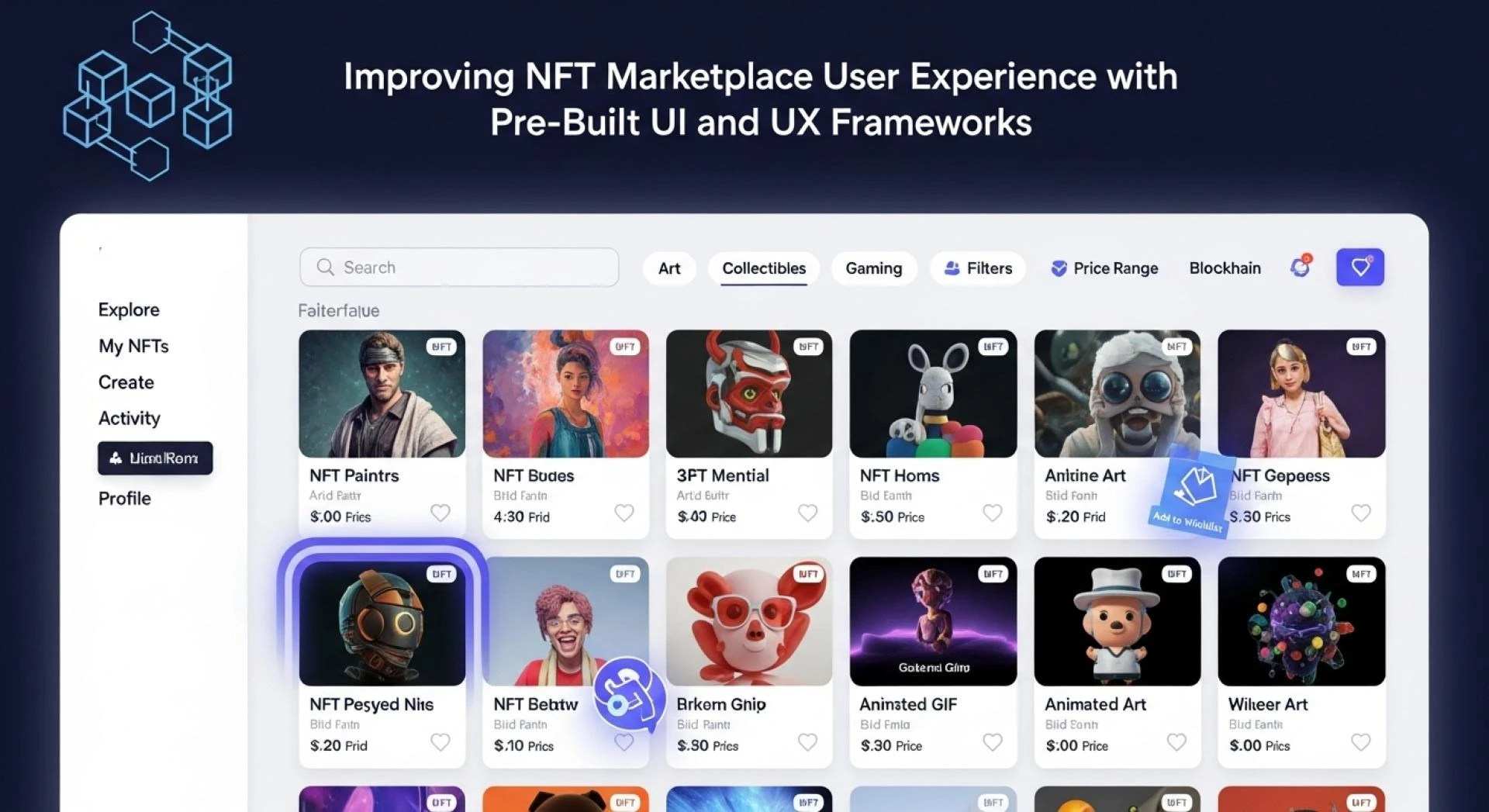
- Built-in minting, listing, and trading flows
- Pre-integrated wallets and payment systems
- Existing analytics and admin dashboards
- Reduced testing and QA cycles
For businesses in the United States and United Kingdom, this means launching NFT platforms with significantly lower capital investment and faster returns.
Predictable Pricing Enables Better Financial Planning
Custom development projects often exceed initial budgets due to scope changes, technical challenges, and delayed timelines.
White Label NFT Marketplaces offer:
- Transparent pricing models
- Clearly defined feature sets
- Lower risk of cost overruns
- Easier budget forecasting
Predictable costs are especially valuable for US and UK companies accountable to investors, boards, and stakeholders.
Reduced Maintenance and Operational Overhead
NFT platforms require continuous support after launch. Maintenance costs can surpass development costs over time if not managed properly.
Ongoing expenses include:
- Security updates
- Infrastructure scaling
- Feature enhancements
- Bug fixes and performance tuning
White Label NFT Marketplaces shift much of this responsibility to solution providers, reducing internal workload and long-term expenses.
Faster Time-to-Market Reduces Opportunity Costs
Delays in launching NFT platforms result in lost revenue, missed partnerships, and reduced competitive advantage.
White label solutions enable:
- Rapid deployment
- Early market entry
- Faster user onboarding
- Quicker feedback and iteration
In fast-moving markets like the US and UK, speed directly impacts financial success.
Scalability Without Rebuilding the Platform
As NFT adoption grows, platforms must scale efficiently.
White Label NFT Marketplaces support:
- Increasing transaction volumes
- Multi-chain compatibility
- Global user expansion
- Feature modularity
This eliminates costly re-architecture efforts common with custom-built platforms.
Customization Without Full Custom Costs
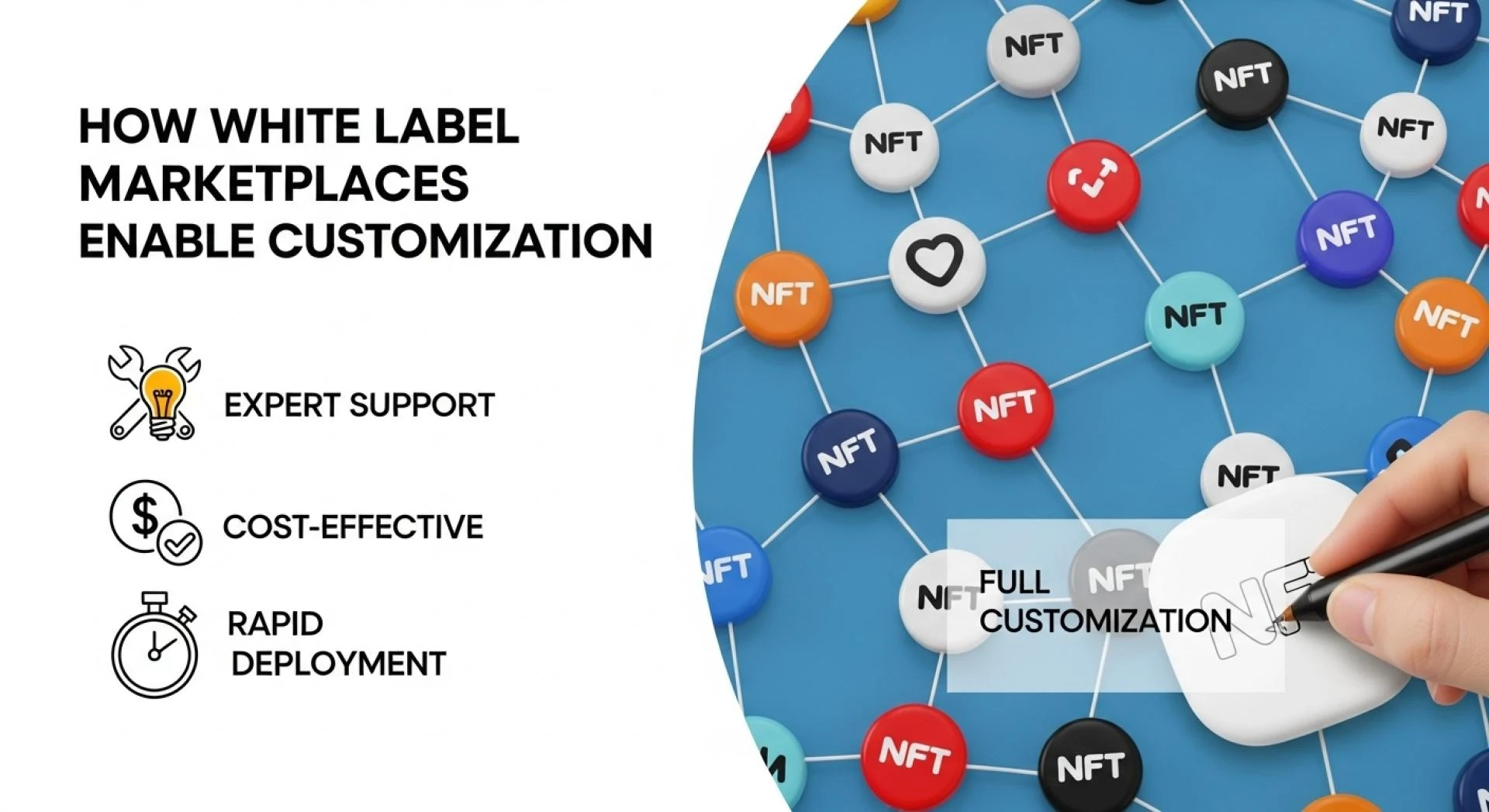
White label does not mean inflexible. Businesses can customize platforms without rebuilding core systems.
Customization options include:
- Branding and UI personalization
- Feature enablement or restriction
- Creator and admin workflows
- Revenue and fee structures
This balance between flexibility and cost efficiency is ideal for US and UK businesses seeking differentiation without excessive spending.
Long-Term Financial Sustainability for NFT Platforms
As the NFT market matures, financial sustainability becomes more important than experimentation.
White Label NFT Marketplaces support:
- Lower operational risk
- Faster ROI realization
- Predictable growth costs
- Easier platform evolution
This makes them suitable for enterprises, startups, and institutions alike.
Why White Label NFT Marketplaces Are a Smart Choice in 2026
By 2026, the NFT landscape favors platforms that are:
- Cost-efficient
- Secure and compliant
- Scalable and adaptable
- Operationally sustainable
White label solutions align perfectly with these requirements, especially in regulated and competitive markets like the United States and United Kingdom.
Conclusion: Lowering Financial Barriers Without Compromising Quality
High development costs should not prevent businesses from entering the NFT ecosystem. While custom-built platforms offer control, they introduce financial risk, delays, and long-term operational burdens particularly for organizations operating in the United States and United Kingdom.
White Label NFT Marketplaces remove these barriers by offering secure, scalable, and cost-efficient solutions that significantly reduce upfront investment and ongoing expenses. They allow businesses to focus on growth, innovation, and market engagement rather than infrastructure and engineering complexity.
For companies seeking a practical and financially responsible path into NFTs, white label NFT marketplaces provide a proven and future-ready solution.










Sign in to leave a comment.