
High Yield Exchange Traded Funds: What You’re Really Getting (and Giving Up)
A client asked me not long ago, “I keep hearing about high yield exchange traded funds… are they actually worth it, or is this just another income trap?”
It’s a fair question. Especially right now, when interest rates, dividends, and income strategies are all over the place.
Here’s the thing most people don’t realize—high yield doesn’t automatically mean better. It just means something different is going on under the hood.
What are high yield exchange traded funds, really?
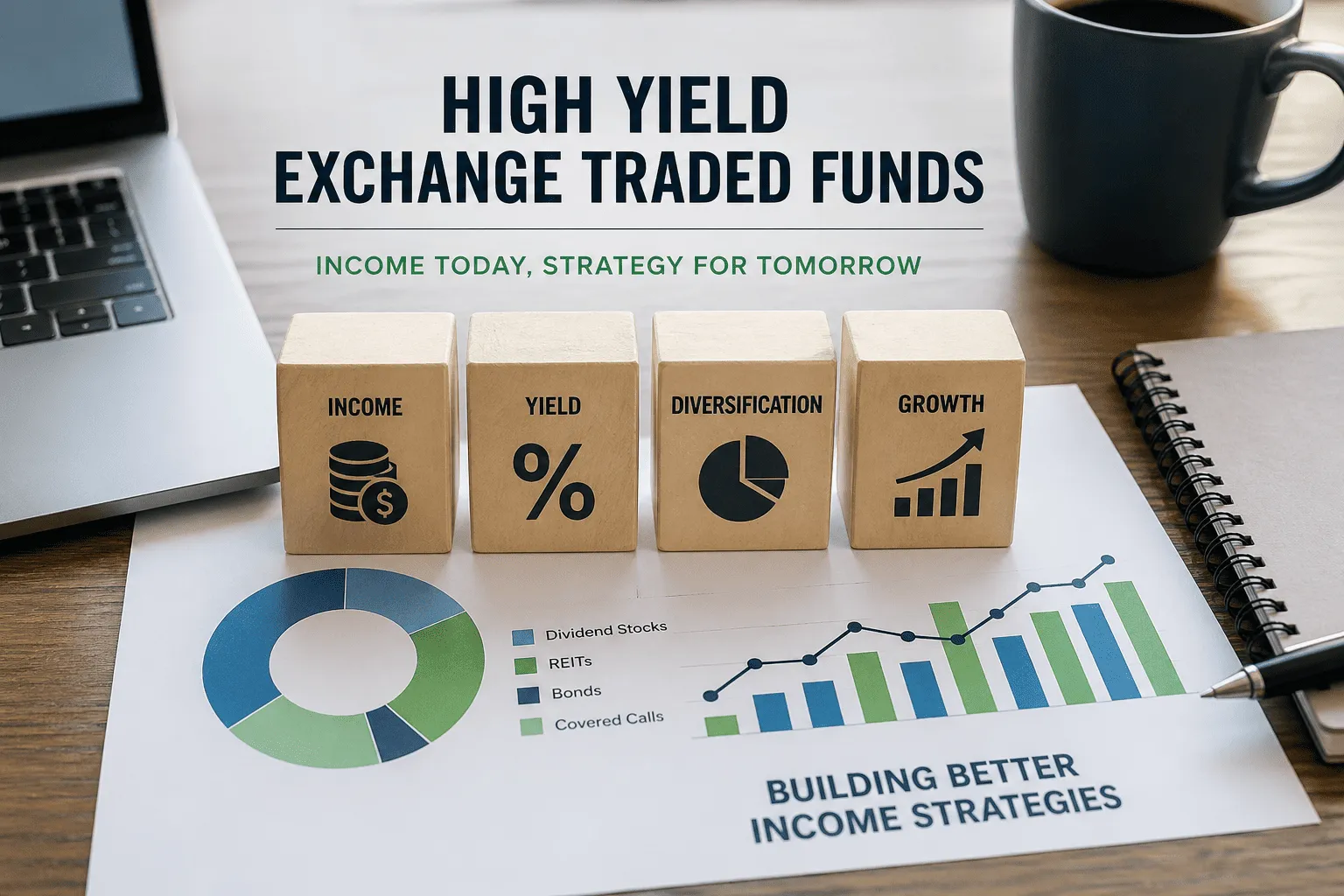
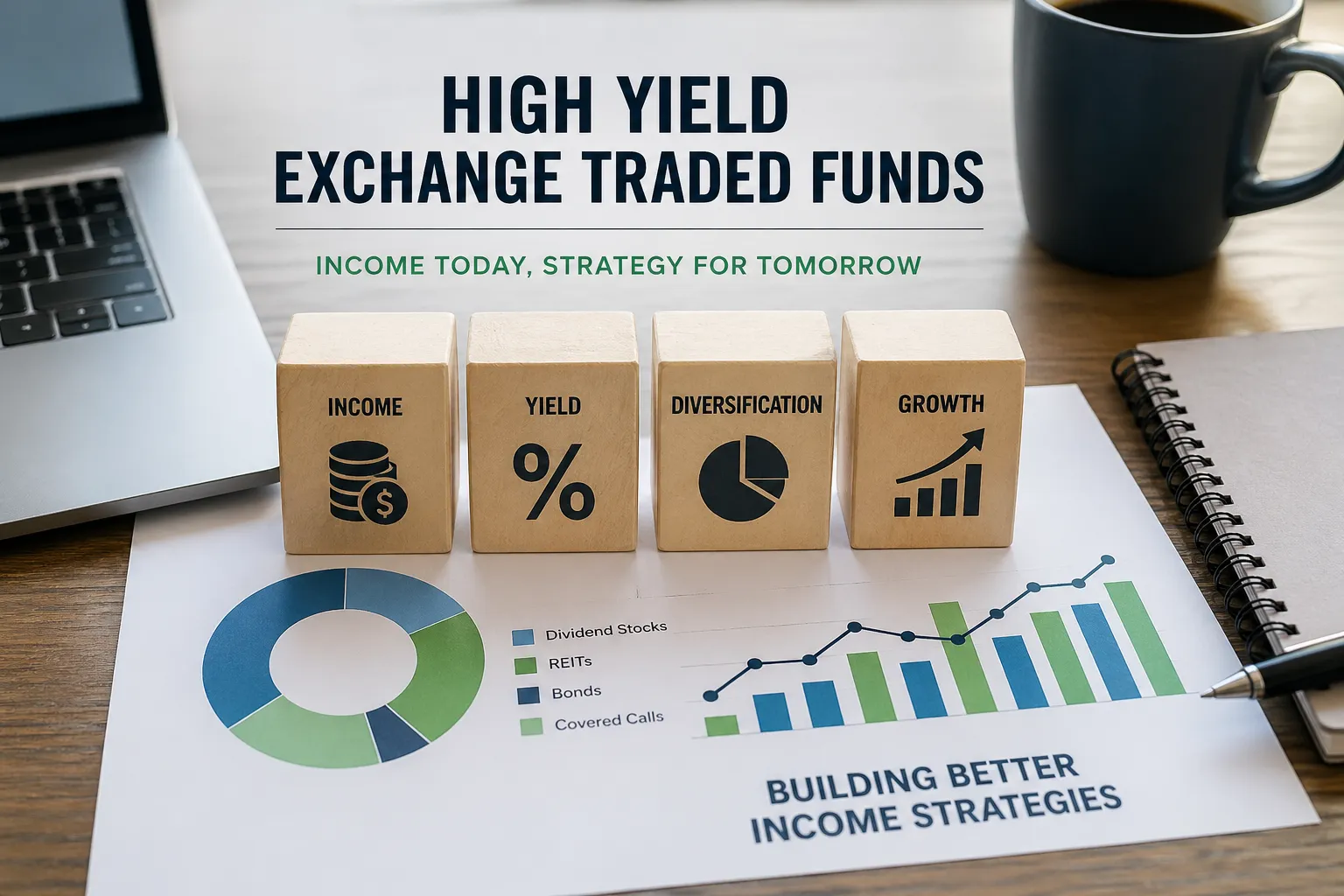
At a basic level, high yield exchange traded funds (ETFs) are investments designed to pay you more income than a typical ETF.
Instead of holding just broad market stocks, these funds often focus on things like:
- Dividend-heavy companies
- Real estate investment trusts (REITs)
- Covered call strategies
- High-yield bonds
So yes, the income can look attractive. Sometimes very attractive.
But—and this is where people get tripped up—that income doesn’t come for free.
Why the yield looks so good (and what it might cost you)
You might be wondering if this applies to you, especially if you’re looking for steady cash flow.
Here’s what I’ve seen happen quite a bit when someone chases yield:
They focus on the income number… and ignore what’s happening to the actual investment value.
Some high yield ETFs generate income by limiting growth. For example, covered call ETFs sell upside potential in exchange for income. That means:
- You may get regular payouts
- But your long-term growth could be capped
Others invest in riskier assets—like lower-quality bonds or volatile sectors—to boost yield.
So the trade-off usually looks like this:
Higher income today vs. lower growth or higher risk tomorrow
That’s not necessarily bad. It just needs to fit your situation.
Where these funds can make sense
I don’t think high yield exchange traded funds are “good” or “bad.” They’re tools.
Used properly, they can be helpful—especially for:
- Retirees who need predictable income
- Investors who want to supplement cash flow without selling assets
- Portfolios that already have strong growth elsewhere
In a place like Canada, where many investors are balancing retirement income and tax efficiency, these funds sometimes come up in conversations around investment planning counsel Canada.
But they shouldn’t be the whole strategy.
A few common mistakes I see
This is where things can quietly go wrong.
- Chasing the highest yield
If one ETF pays 12% and another pays 6%, people often jump to the 12% without asking why. - Ignoring taxes
Some of that income isn’t as tax-friendly as you’d expect. Depending on the structure, it could be interest income, which is taxed higher than dividends in Canada. - Overconcentrating
I’ve seen portfolios where high yield ETFs make up 60–70% of holdings. That’s risky, especially if markets shift. - Expecting stability
High yield doesn’t always mean stable. Prices can still move quite a bit.
How I usually approach it with clients
When we’re doing financial planning and tax services, the conversation isn’t just “how much income can we generate?”
It’s more like:
- Where is your income actually coming from?
- How is it taxed?
- What happens to your capital over time?
- Does this align with your long-term plan?
Sometimes we include a high yield ETF. Sometimes we don’t.
I’ve seen cases where a simpler mix of dividend stocks and balanced funds did a better job—with less stress.
A quick reality check
If something is paying significantly more than the rest of the market, there’s always a reason.
That reason might be:
- Higher risk
- Lower growth potential
- More complex strategies
None of those are dealbreakers—but they shouldn’t be ignored.
Where a firm like Bow Valley Private Wealth Management fits in
Some people prefer working with independent firms like Bow Valley Private Wealth Management because the conversation tends to go deeper than just “what pays the most.”
It becomes about fit.
Does this investment actually support your lifestyle, your timeline, and your comfort with risk?
That’s usually where clarity starts to show up.
At the end of the day, high yield exchange traded funds can play a role—but they’re not a shortcut.
If you’re considering them, the better question isn’t “how much does it pay?”
It’s “what am I giving up in return for that income?”
That one question tends to change how people invest.



















Sign in to leave a comment.