
Interior projects often begin with excitement and end with regret when planning is rushed. A sofa that looked perfect online suddenly overwhelms the room. A wall color that seemed soft and warm under store lighting turns dull at home. A carefully chosen dining table blocks circulation, or new lighting creates shadows in the wrong places. These mistakes are common, and they are expensive to fix once materials are purchased and work has started.
That is where 3D room design makes a real difference. By turning ideas into realistic interior visualization, it helps homeowners, designers, and contractors see problems before they become costly errors. Instead of relying only on imagination, mood boards, or flat sketches, 3D interior design gives a clearer understanding of how a space will look, feel, and function in real life.
What Is 3D Room Design?
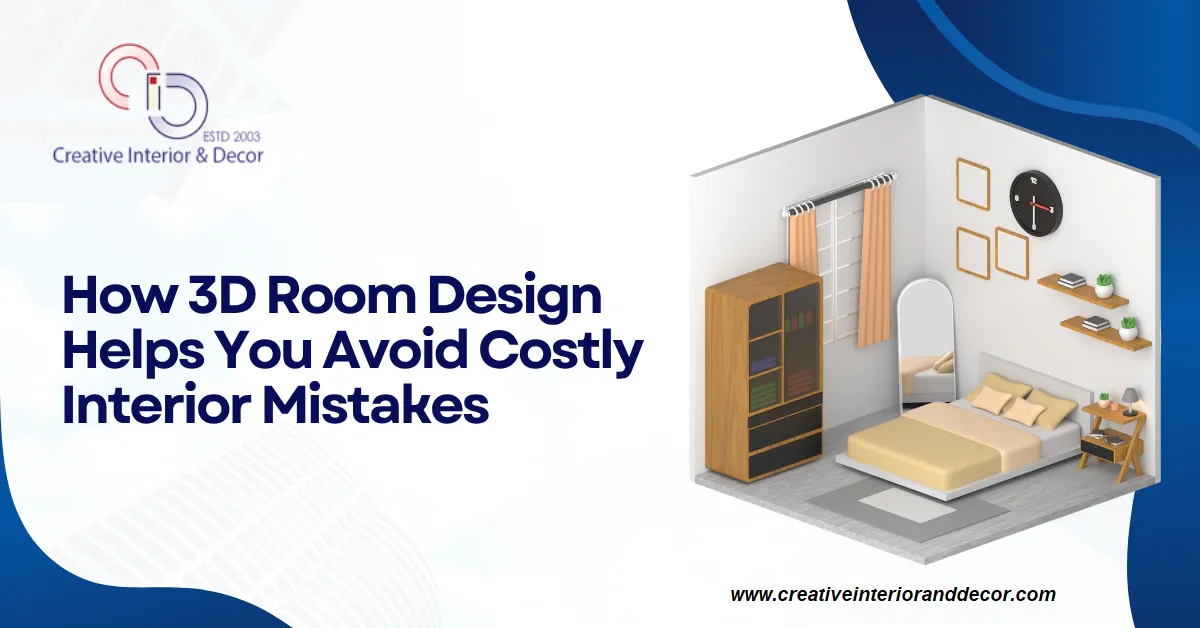
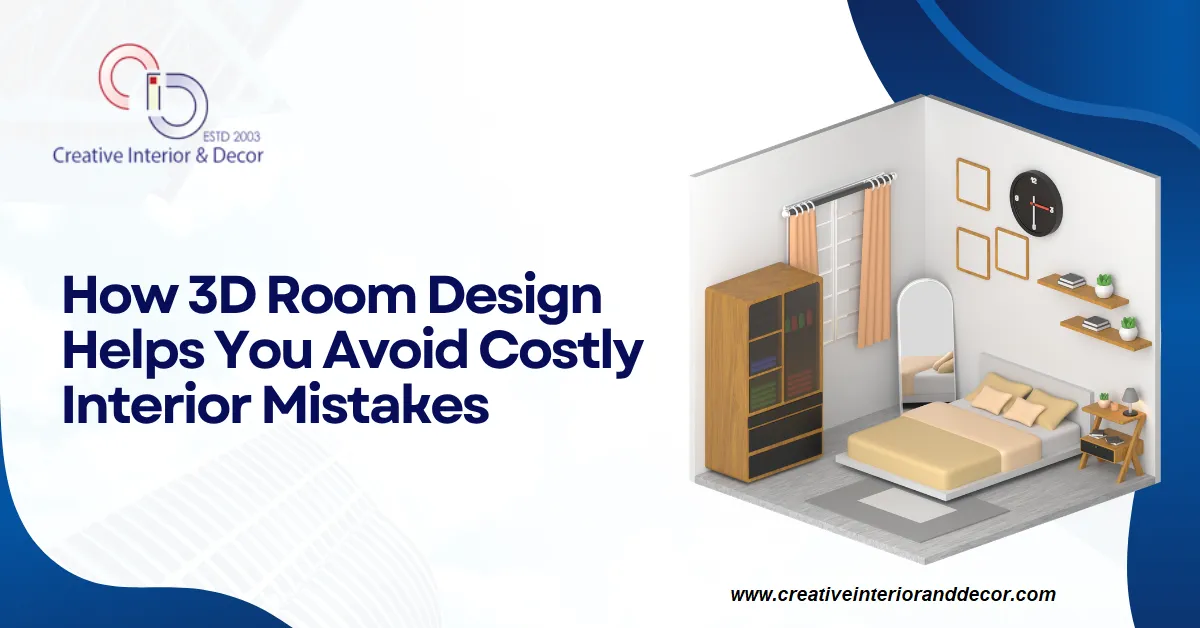
3D room design is a digital way of planning interiors using three-dimensional models of a room, furniture, finishes, lighting, and décor. It creates a visual simulation of the space so you can see proportions, layouts, materials, and color combinations before anything is built or bought.
Unlike traditional 2D floor plans, which mainly show measurements from above, 3D interior design adds depth, height, scale, and realism. A mood board may show a color palette, fabric sample, and reference images, but it cannot show how those choices behave together inside your actual room. A 3D model can.
This distinction matters because many interior design mistakes are not about style alone. They happen because people cannot accurately judge space, proportion, flow, or lighting from flat visuals. 3D room design reduces that uncertainty.
Why Interior Mistakes Become Costly
Small planning errors can have a large financial impact. A wrongly sized cabinet may need to be remade. A painted wall in the wrong shade may require repainting. Flooring choices that do not suit the room’s lighting or usage can lead to replacement. Even furniture placement mistakes can affect movement, usability, and the overall feel of the home.
The biggest cost is usually not just the item itself. It is the labor, time, delays, and rework that come with correcting the mistake. That is why home design planning benefits so much from 3D visualization. It allows decisions to be tested digitally before they become expensive in reality.
Accurate Space Planning and Layout Visualization
One of the most valuable benefits of 3D room design is accurate space planning. In a real home, every inch matters. A room may look spacious on paper but feel cramped once furniture is placed inside. A hallway might seem wide enough until cabinet doors, drawers, or walking paths are considered.
With 3D residental interior design, you can test multiple layout options before choosing one. For example, a living room may need to accommodate a sectional sofa, a coffee table, a TV unit, and a reading chair. A 3D model can show whether the arrangement supports comfortable movement or blocks entry points and natural flow.
This helps avoid mistakes such as:
- choosing furniture that makes the room feel crowded,
- placing major items in a way that interrupts circulation,
- or failing to account for doors, windows, and opening clearances.
A limitation to keep in mind is that the accuracy of the result depends on the accuracy of the measurements entered. If the room dimensions are wrong, the visualization may be misleading. Still, when measurements are correct, 3D room design offers a far clearer planning tool than a sketch or imagination alone.
Better Material and Color Selection
Material and color choices can look very different in a digital store image than they do in an actual room. A soft beige tile may appear too yellow under natural light. A dark wood finish may make a small room feel heavier than expected. A glossy surface may reflect light in a way that feels too strong for everyday use.
3D room design helps solve this by showing materials and colors together in context. Instead of judging a wall paint or countertop sample in isolation, you can see how it works with flooring, cabinetry, upholstery, and lighting. This is one of the most practical 3D interior design benefits because it reduces second-guessing.
For example, a homeowner planning a bedroom may consider a muted green wall with wooden furniture and cream curtains. On a sample card, the palette may seem balanced. In a 3D model, the same combination may reveal that the green becomes too dark in a north-facing room, or that the wood tone clashes with the flooring. That early insight can prevent repainting, reordering, or replacing finishes later.
The main consideration here is that render quality affects perception. A low-quality render may distort texture or color slightly. Even so, it is still far more useful than making final decisions from tiny samples alone.
Realistic Lighting Simulation
Lighting is one of the most underestimated parts of interior planning. A room may look beautiful in daylight but feel flat or harsh at night. Ceiling lights, wall sconces, pendant fixtures, task lighting, and natural daylight all interact differently depending on the room’s size, orientation, and surfaces.
3D room design allows for lighting simulation that shows how brightness, shadow, and reflection affect the interior. This can be especially useful in kitchens, bedrooms, living rooms, and workspaces where both function and atmosphere matter.
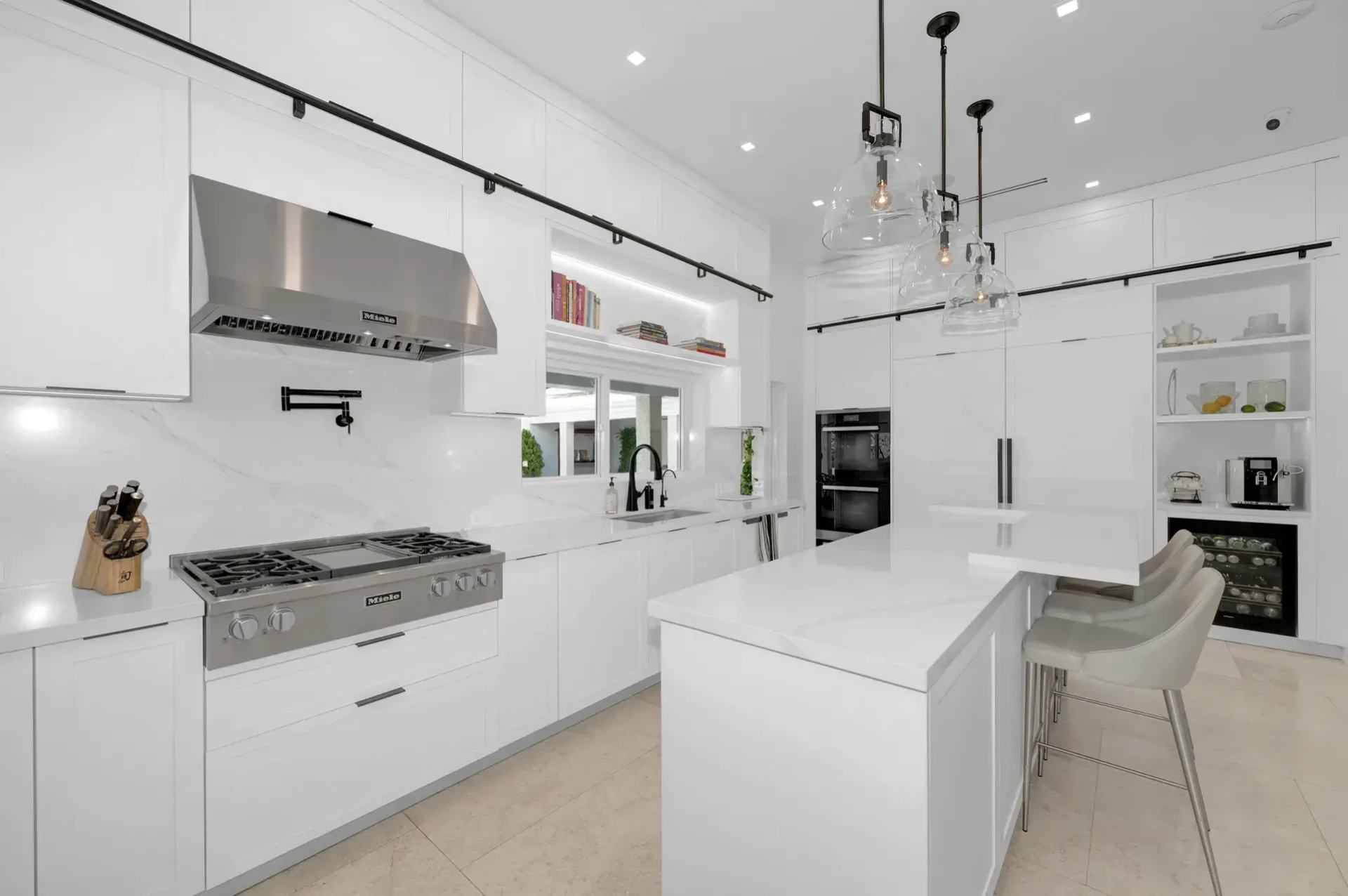
For example, in a kitchen, a single central light may leave shadows over the countertop. In a 3D model, this problem becomes visible before installation. The designer can then add task lighting under cabinets or adjust fixture positions. In a bedroom, too much overhead light may create a harsh mood, while layered lighting can create a softer and more practical environment.
This helps avoid costly mistakes like:
- installing too few lights,
- choosing fixtures that are too large or too small,
- placing lights where they create glare or shadows,
- or discovering too late that the room feels dim.
A limitation is that virtual lighting can simulate appearance well, but it may not perfectly reproduce every real-world condition. Still, it is a powerful planning tool for reducing uncertainty before electrical work begins.
Furniture Sizing and Placement Accuracy
Furniture often looks smaller in a showroom and larger once delivered. That mismatch leads to one of the most common interior design mistakes: buying pieces that do not fit the room properly. A bed that leaves no walking space, a sofa that blocks a window, or a dining table that prevents chairs from being pulled out comfortably can make a room difficult to live in.
3D room design improves furniture sizing and placement accuracy by showing actual scale in relation to the room. You can see whether a king-size bed overwhelms the bedroom, whether a console table fits behind a sofa, or whether a dining set leaves enough clearance around the edges.
This is especially helpful in smaller homes and apartments, where design decisions are tightly connected to functionality. For example, in a compact living room, the difference between a bulky armchair and a slimmer accent chair can completely change how usable the room feels. A 3D layout makes that difference visible early.
The key limitation is that furniture models must match the real product dimensions. If a catalog model is outdated or approximate, the visualization may not be exact. That is why correct specifications matter. Even so, it is still much safer than guessing from photographs alone.
Budget Planning and Cost Estimation Clarity
A well-planned project is usually a more controlled project. One of the underrated benefits of 3D room design is that it supports budget planning by making design choices more concrete. When the room is visualized in detail, it becomes easier to estimate the number of materials, the scale of furniture, the amount of lighting, and the level of finish required.
This clarity helps avoid costs that often come from uncertainty, such as:
- over-ordering materials,
- changing finishes midway through execution,
- paying for rework,
- or upgrading components after realizing the original plan does not work.
For example, a homeowner may initially budget for simple storage and later realize that the room needs custom cabinetry to maintain balance and functionality. Seeing the room in 3D from the beginning helps identify those needs sooner, making the budget more realistic.
A limitation is that 3D design does not replace a detailed quotation from contractors or suppliers. It supports the planning stage, but final costs can still vary based on location, labor, brand choice, and availability. Even so, it improves the quality of early budgeting decisions.
Improved Communication with Designers and Contractors
Many interior mistakes happen not because of bad taste, but because of poor communication. A homeowner may imagine one thing, a designer may interpret it differently, and a contractor may build something else entirely. When people are relying on vague descriptions, confusion is almost guaranteed.
3D room design creates a shared visual reference. Everyone involved can look at the same layout, the same materials, and the same proportions. This reduces misunderstanding and improves coordination between clients, designers, and execution teams.
For example, if a client wants a “minimal” living room, that word may mean different things to different people. In a 3D model, the exact result becomes clearer: the type of sofa, storage style, wall treatment, and lighting arrangement are all visible. That makes feedback more precise and reduces revision cycles.
This does not eliminate the need for discussion, but it makes those discussions more productive. The limitation is that 3D visuals still depend on how well the concept is translated into the model. A good communication process remains important, but the risk of misinterpretation drops significantly.
2D vs 3D Design: Why the Difference Matters
Both 2D and 3D design have value, but they serve different purposes.
A 2D layout is excellent for technical planning. It shows dimensions, walls, openings, and room structure. It is useful for construction accuracy and basic space allocation. However, it does not fully communicate how a room will feel.
A 3D design adds realism. It shows volume, scale, visual balance, material combinations, and lighting effects. It helps people understand not just where things go, but how the room will actually look and function.
In practical terms, 2D tells you the room’s measurements. 3D helps you evaluate whether those measurements support a comfortable and attractive design. For home design planning, both are useful together, but 3D often prevents the kinds of mistakes that are hardest to detect in a flat drawing.
How Technology Is Changing Interior Planning
Modern interior visualization is evolving quickly. Rendering tools now produce highly realistic images that help clients understand finishes and design direction with greater confidence. Virtual walkthroughs make it possible to move through a future room before construction is finished. AR and VR tools take this even further by overlaying design elements into real spaces or creating immersive room previews.
These technologies are changing the way interior decisions are made. Instead of approving a plan based on imagination alone, clients can review a more complete visual experience. That makes it easier to test alternatives, refine details, and catch design issues earlier.
For example, a virtual walkthrough can reveal whether a hallway feels too narrow, whether a feature wall dominates the room too strongly, or whether the placement of furniture disrupts the natural path through the space. In this way, technology strengthens both creativity and practicality.
The main consideration is that these tools are most effective when used with thoughtful measurement, realistic expectations, and accurate material input. Technology improves decision-making, but it still works best when guided by sound design judgment.
Conclusion
3D room design is more than a visual luxury. It is a practical planning tool that helps people avoid costly interior mistakes before they happen. By improving space planning, material selection, lighting decisions, furniture placement, budgeting, and communication, 3D interior design supports smarter home design planning from the start.
The real value of 3D visualization is not only that it looks impressive. It is that it reveals problems early, when they are still easy to change. That leads to fewer surprises, fewer revisions, and more confident design decisions. In modern interior planning, thoughtful use of 3D tools, an approach reflected in the work of Creative Interior & Decor, can save both money and frustration while creating spaces that work better in everyday life.




















Sign in to leave a comment.