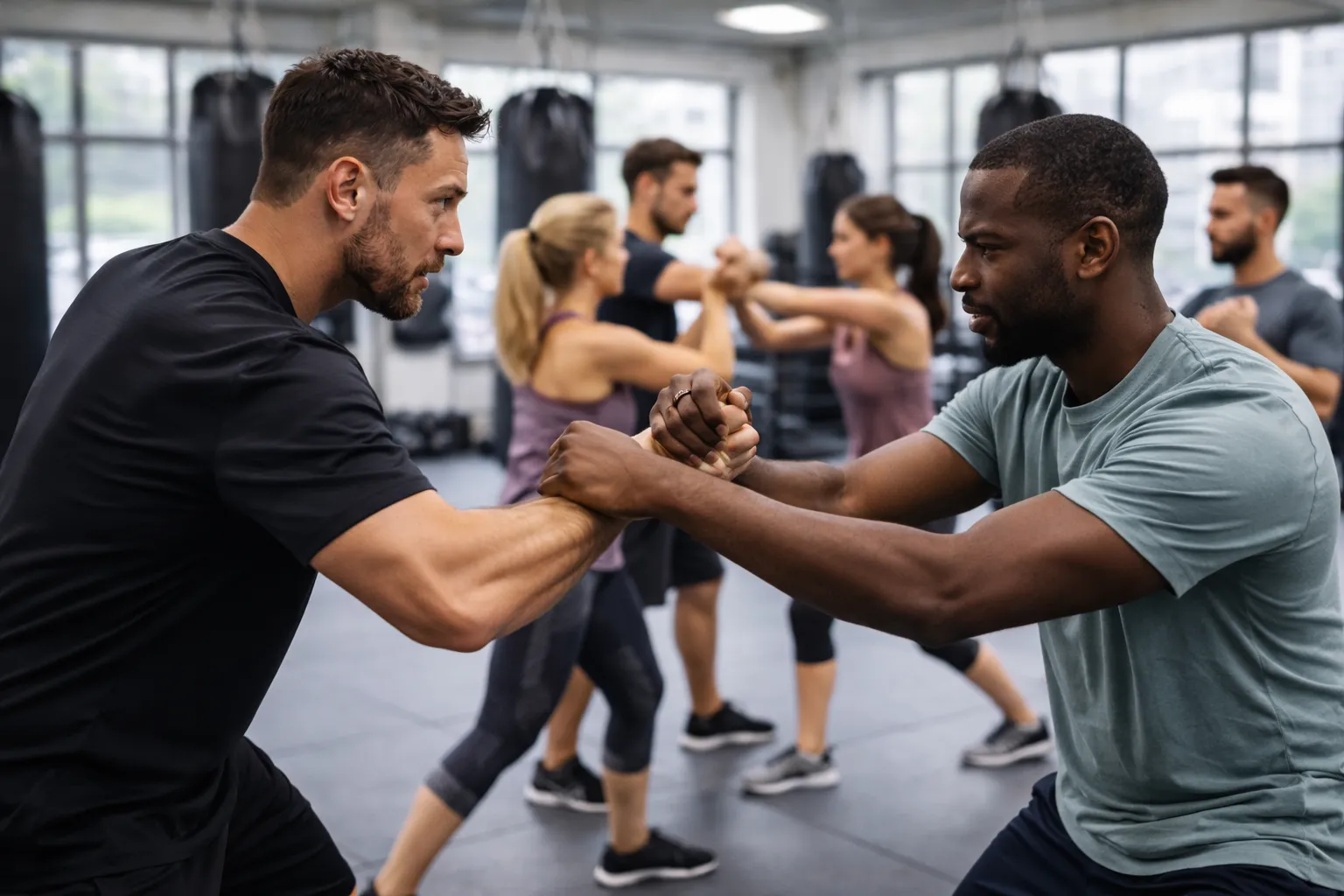

Stress changes how people think. Reactions become narrower, movement becomes less controlled, and decision making slows down or becomes impulsive. In self defense situations, that shift matters because hesitation and confusion reduce available options very quickly.
Adult self defense training improves decision making under stress by teaching people how to recognize pressure early and continue functioning while situations are still changing.
How stress affects perception during real situations
Stress affects awareness before it affects movement.
Attention narrows toward a single detail while the surrounding environment becomes harder to process clearly. People often focus too heavily on one person, one movement, or one emotion while missing changes happening around them.
This creates delayed decisions. Someone may recognize discomfort but still struggle to decide whether action is necessary.
Adult self defense training addresses this directly by placing students inside controlled pressure where awareness must remain connected to the full environment.
Why hesitation increases under pressure
Hesitation usually comes from uncertainty.
Many situations develop gradually rather than becoming immediately obvious. A conversation changes direction. Distance closes repeatedly. Someone ignores social cues or continues an interaction longer than expected.
Under stress, people often wait for certainty before responding. That delay allows the situation to continue building momentum.
Training improves decision making by teaching adults to recognize patterns and direction earlier instead of waiting for complete confirmation.
How repetition changes reaction speed
Decision making improves through repeated exposure.
When students experience pressure consistently during training, situations stop feeling completely unfamiliar. The brain begins recognizing patterns faster, which reduces panic and improves timing.
A student who initially freezes during fast-moving drills gradually learns to continue observing, moving, and responding without shutting down mentally.
This is one reason structured adult self-defense training focuses heavily on repetition under changing conditions rather than static practice alone.
Why movement helps reduce stress responses
Movement affects thinking.
When people stop moving under pressure, stress increases quickly. Physically freezing often creates mental freezing as well. Position becomes fixed, awareness narrows further, and decisions become delayed.
Training develops the habit of adjusting movement early. Creating space, changing angle, or repositioning toward open areas immediately improves awareness and emotional control.
Movement keeps decision making active instead of reactive.
How emotional control changes outcomes
Stress often creates emotional reactions before logical decisions.
Frustration, fear, embarrassment, or anger can take over attention during uncomfortable situations. Once emotion dominates perception, decision quality drops.
Adult self defense training repeatedly exposes students to manageable pressure so emotional reactions become easier to control. Instead of reacting emotionally to uncertainty, students learn to stay connected to what the environment is actually showing them.
This creates calmer responses during situations that would previously create confusion or panic.
A crowded environment where decisions happen quickly
A crowded sidewalk during evening rush hour creates constant movement. People pass closely, conversations overlap, and attention shifts rapidly between different directions.
One person changes pace repeatedly to remain aligned with someone walking ahead despite open space around them. The behavior continues for several blocks.
Without training, uncertainty may delay response while the situation is internally debated.
A trained response begins earlier. Position shifts toward populated areas. Awareness broadens. Distance increases before the interaction fully develops.
The difference appears in timing, not strength.
Why decision making matters outside physical conflict
Good decisions often prevent situations from becoming physical at all.
Adults who train consistently usually become better at recognizing behavioral patterns, establishing boundaries earlier, and disengaging from interactions before pressure escalates further.
This affects workplaces, public transportation, social environments, parking lots, elevators, and everyday situations where discomfort develops gradually rather than dramatically.
Training improves practical judgment under pressure, not just physical response.
Where stress becomes manageable
Stress cannot be removed from real situations, but responses to stress can improve significantly through training.
Adult self defense training improves decision making under stress because it teaches people how to continue observing, moving, and responding while pressure is still developing. Awareness becomes clearer, hesitation decreases, and decisions happen earlier.
That shift changes how people function not only during emergencies, but during everyday situations where timing and clarity matter.
FAQs
How does stress affect decision making in self defense?
Stress narrows attention, slows recognition, and often increases hesitation or impulsive reactions.
Can self defense training improve reactions under pressure?
Yes. Repeated exposure to controlled pressure improves awareness, timing, and decision consistency.
Why does movement matter during stressful situations?
Movement improves positioning, awareness, and emotional control while reducing physical and mental freezing.
Does adult self defense training focus only on physical techniques?
No. Effective training also develops awareness, positioning, emotional control, and decision making under pressure.
Can these skills help outside dangerous situations?
Yes. The same skills apply to workplaces, crowded environments, uncomfortable social interactions, and everyday stress situations.

















Sign in to leave a comment.