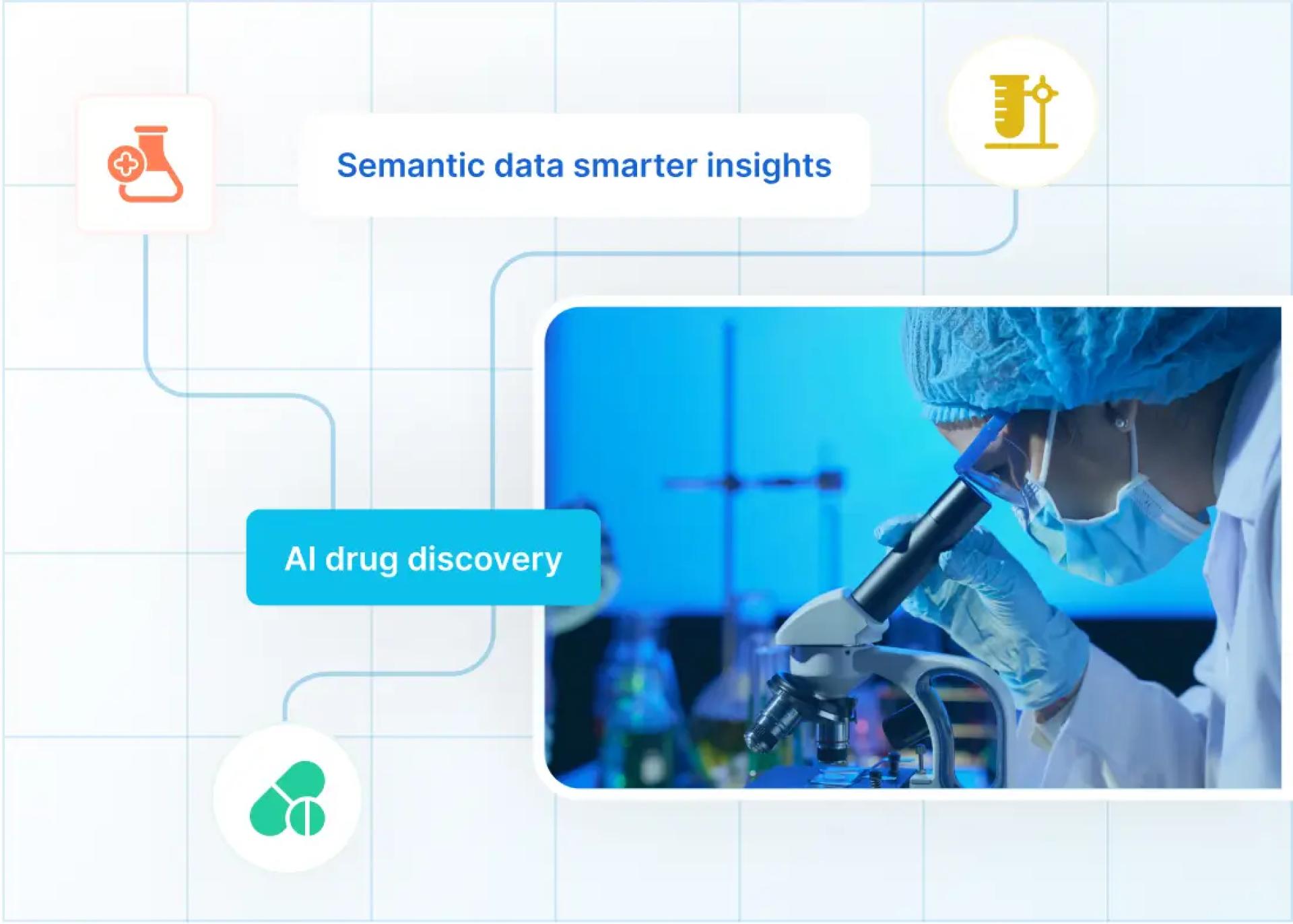

1. Definition of AI-Driven Drug Repurposing
AI-driven drug repurposing refers to the use of computational models and data-driven techniques to identify potential new therapeutic applications for existing compounds.
In pharmaceutical research, these tools analyze large volumes of biological, clinical, and chemical data to surface hypotheses about possible drug–disease relationships. They do not establish clinical efficacy or safety and are not substitutes for experimental or clinical validation.
2. Why Drug Repurposing Is Relevant in Pharma Research
Traditional drug discovery can involve long development timelines and high levels of uncertainty. Repurposing focuses on compounds with existing data, which may reduce early-stage research uncertainty.
AI-driven approaches support this process by:
- Analyzing complex relationships across datasets
- Identifying non-obvious associations
- Supporting exploratory hypothesis generation
- Enabling large-scale pattern recognition
Within broader AI-driven drug repurposing tools discussions, the emphasis is on analytical exploration, not clinical recommendation.
3. Data Sources Used in AI-Driven Repurposing
AI-driven drug repurposing tools typically work with diverse data sources, including:
- Clinical trial and observational study data
- Genomic and proteomic datasets
- Molecular structure and compound libraries
- Biomedical literature and annotations
- Real-world clinical data
The value of these tools depends on data integration, quality, and contextual alignment, rather than on any single dataset.
4. How AI Models Support Repurposing Analysis
AI models used in repurposing research may apply techniques such as:
- Pattern recognition across molecular and clinical data
- Network analysis linking drugs, targets, and diseases
- Similarity analysis across compounds and indications
- Predictive modeling for potential biological interactions
These models assist researchers by prioritizing hypotheses for further scientific investigation.
5. AI-Driven Repurposing vs. Traditional Repurposing
AI-driven approaches differ from traditional repurposing methods in several ways:
- Traditional approaches rely heavily on manual literature review and expert intuition
- AI-driven approaches scale analysis across large and complex datasets
However, both approaches ultimately require experimental validation and clinical evaluation before conclusions can be drawn.
6. Analytical Characteristics of Repurposing Tools
Effective AI-driven drug repurposing tools emphasize:
- Transparency – clarity on how insights are generated
- Traceability – ability to link outputs back to data sources
- Reproducibility – consistent results under defined conditions
- Context awareness – alignment with biological and clinical understanding
These characteristics support responsible research use without implying causality or therapeutic outcomes.
7. Limitations and Challenges
AI-driven drug repurposing tools have important limitations.
Common challenges include:
- Dependence on data quality and completeness
- Risk of bias in training datasets
- Difficulty interpreting complex model outputs
- Potential over-interpretation of exploratory results
For these reasons, repurposing insights are typically treated as starting points for further investigation, not as definitive findings.
8. Regulatory and Compliance Context
In regulated pharmaceutical environments, AI-driven repurposing research may be subject to expectations related to:
- Documentation of analytical methods
- Traceability of data and model outputs
- Transparency in hypothesis generation
- Appropriate separation between analysis and decision-making
These considerations help maintain scientific integrity and regulatory confidence.
9. Common Misinterpretations
Several misconceptions can arise regarding AI-driven drug repurposing:
- Assuming AI predictions indicate clinical effectiveness
- Treating repurposing outputs as treatment recommendations
- Overlooking the need for experimental validation
- Confusing correlation with causation
Understanding these boundaries helps ensure responsible interpretation of repurposing insights.
10. Summary
AI-driven drug repurposing tools support pharmaceutical research by enabling large-scale, data-driven exploration of potential new uses for existing compounds. By surfacing hypotheses for further study, these tools complement traditional research methods while preserving scientific rigor and compliance boundaries.
Author Context
Written by a contributor focused on pharmaceutical analytics, computational drug discovery, and data-driven research methodologies.
Disclaimer
This content is provided for informational purposes only and does not constitute medical, legal, regulatory, or analytical advice.



























Sign in to leave a comment.