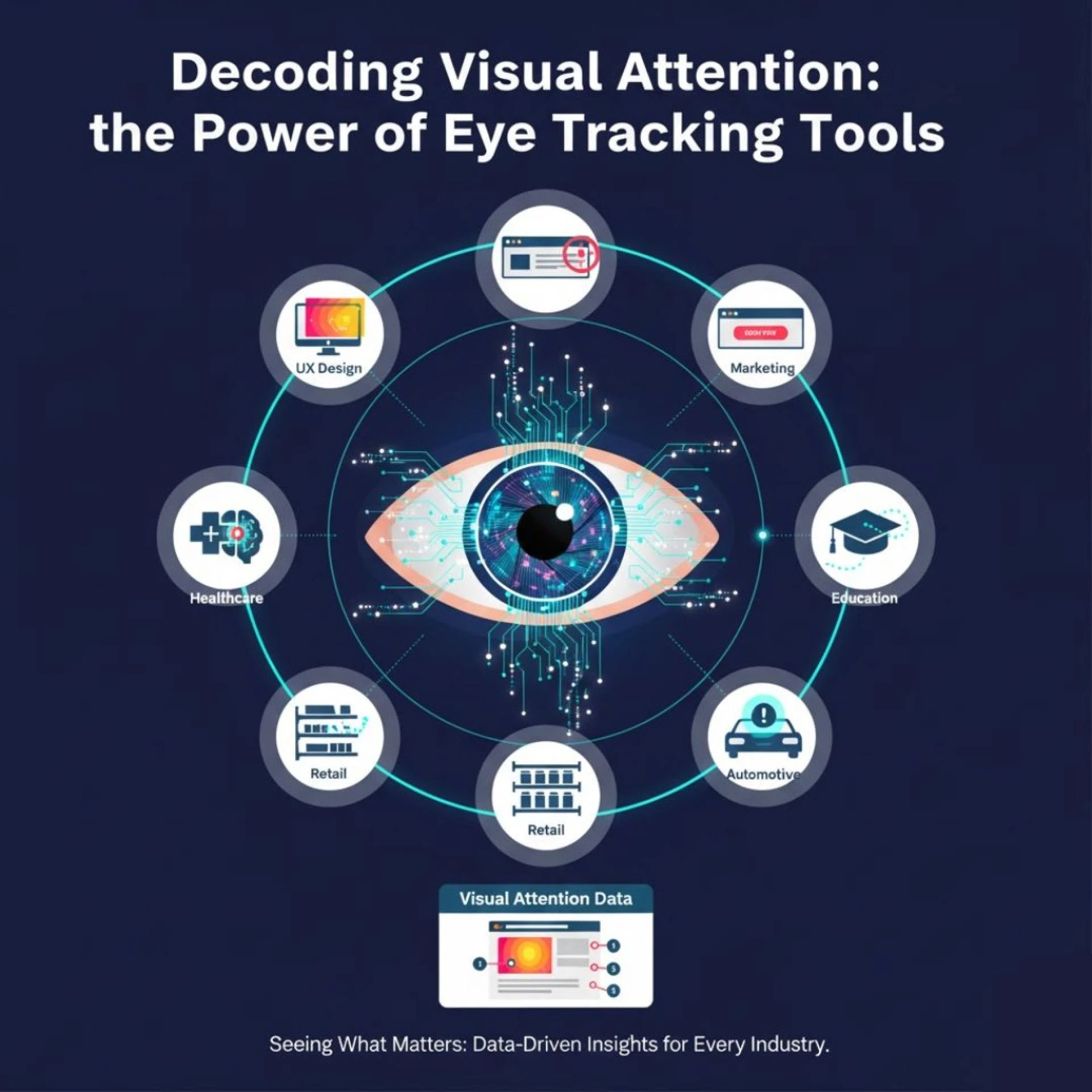

In the modern landscape of data-driven decision-making, understanding human visual behavior has become crucial. Companies, researchers, and designers are increasingly seeking ways to comprehend how individuals interact with visual content. An eye tracking tool has emerged as a powerful solution, offering insights that go far beyond traditional methods of observation and surveys. By capturing precise data on where people look, for how long, and in what sequence, organizations can make informed decisions across multiple sectors.
Enhancing User Experience in Digital Design
In the realm of digital interfaces, knowing how users engage with websites, applications, and software is invaluable. With an eye tracking tool, designers can identify which elements capture attention, which areas are ignored, and how visual hierarchy influences navigation. These insights allow teams to optimize layouts, prioritize content, and reduce friction in user interactions. Beyond aesthetics, this data-driven approach ensures functionality aligns with natural viewing patterns, resulting in smoother, more intuitive experiences for end-users.
Revolutionizing Marketing and Advertising
Marketers constantly aim to create visuals that resonate with audiences. Eye movement analysis offers an empirical basis for understanding attention and retention. For example, advertisements can be evaluated for clarity, prominence of calls-to-action, and visual appeal before launching campaigns. By observing gaze patterns, companies can refine messaging to highlight critical elements that drive engagement and conversions. This approach reduces guesswork and increases the effectiveness of marketing strategies.
Advancing Research in Healthcare
In healthcare, eye tracking is opening new avenues for understanding cognitive and neurological conditions. Researchers use this technology to study attention, perception, and visual processing in patients with disorders such as autism, ADHD, or age-related cognitive decline. Tracking eye movements allows medical professionals to identify atypical patterns and evaluate interventions more accurately. Additionally, it supports usability studies for medical devices, ensuring that user interfaces in clinical settings are safe and efficient.
Improving Education and Training
Educational institutions and training programs are exploring eye tracking to enhance learning outcomes. By analyzing where students focus during lessons, instructors can adapt teaching methods, identify areas of confusion, and create materials that better capture attention. Similarly, in professional training, this data helps refine simulations and e-learning modules, making skill acquisition more effective and targeted.
Optimizing Retail and Consumer Insights
Retailers and product designers leverage eye tracking to understand shopper behavior. Physical and online stores benefit from knowing how consumers view shelves, displays, or product images. Insights into visual attention guide store layouts, packaging designs, and promotional strategies. This evidence-based approach improves customer engagement, enhances product visibility, and ultimately influences purchasing decisions.
Supporting Automotive and Safety Research
In automotive and transportation industries, understanding driver attention is critical for safety. Eye tracking tools provide real-time data on gaze patterns, distraction levels, and reaction times. This information informs the design of dashboards, warning systems, and autonomous vehicle interfaces, contributing to safer driving experiences. Beyond vehicles, similar methods are applied in aviation and industrial settings to enhance operational safety and efficiency.
Future Potential Across Industries
The applications of eye tracking technology continue to expand. From virtual reality environments to entertainment media, understanding where attention naturally falls can shape content, interface, and product strategies. As computational capabilities improve and hardware becomes more accessible, industries can integrate visual attention analysis into routine workflows, driving innovation and informed decision-making.
Conclusion
An eye tracking tool has moved beyond niche research applications to become a transformative instrument across multiple fields. By providing concrete insights into human visual behavior, it allows designers, marketers, educators, healthcare professionals, and safety engineers to make evidence-based decisions. As industries increasingly embrace data-driven strategies, leveraging this technology ensures that visual communication is both effective and engaging. The ability to see what people truly notice, understand, and respond to is no longer a theoretical concept it is a practical advantage that shapes the future of user-centered design and research.




























Sign in to leave a comment.