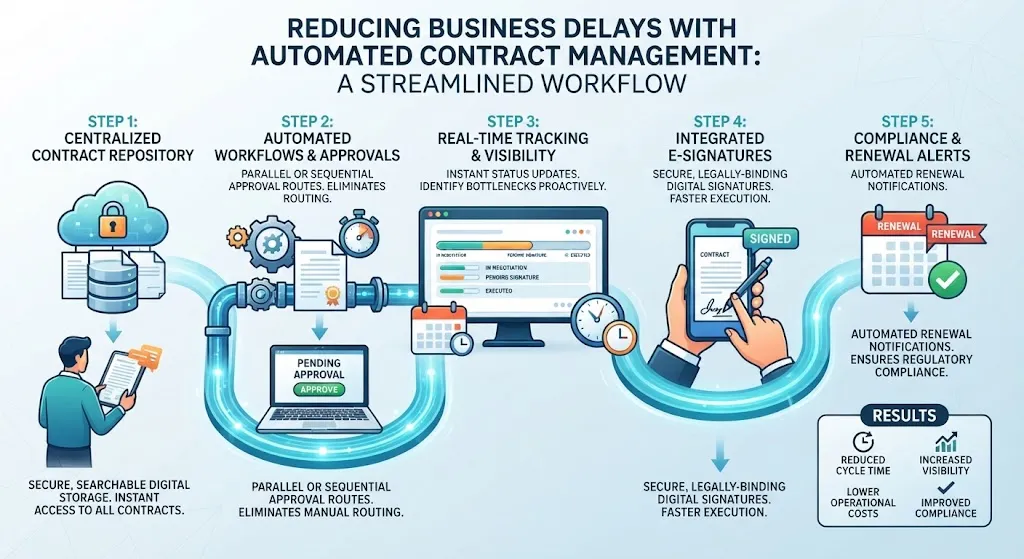

Contracts are essential to almost every organization.
They define agreements with customers, suppliers, employees, partners, and other stakeholders.
But managing contracts manually can create delays. Documents need to be reviewed, approved, signed, stored, and monitored for important dates.
Automation can make this process more organized.
Where Contract Management Becomes Difficult
A contract may pass through several departments before it is finalized.
Legal teams review terms. Finance checks commercial details. Management approves the agreement. The final document is signed and stored.
Later, someone may need to remember when the contract expires or when a renewal decision is required.
Without a structured process, important dates can easily be missed.
An automated contract management process can coordinate these activities.
Creating Consistent Review Workflows
Not every contract needs the same approval path.
A low-value supplier agreement may require a simple review, while a major commercial agreement may need legal and executive approval.
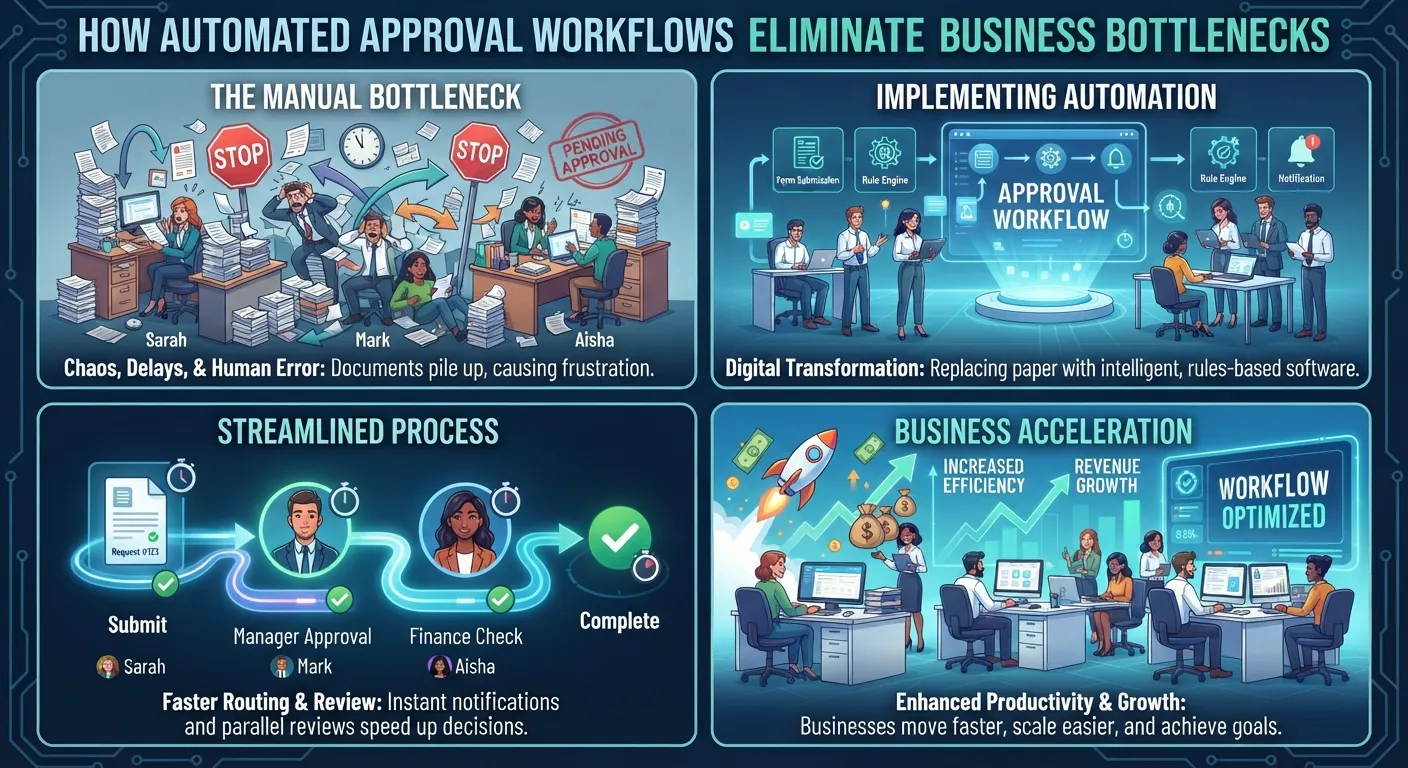
Automation can route documents according to defined rules.
This ensures the right people receive the right contracts without requiring employees to manually coordinate every stage.
Connecting Contracts With Enterprise Systems
Contract information often relates to customer, supplier, finance, and procurement systems.
For example, an approved supplier contract may need to update procurement records.
Through enterprise software integration, relevant information can move between systems without repeated manual entry.
This helps maintain consistency across the organization.
Tracking Important Dates and Obligations
Signing the contract is not the end of the process.
Businesses may need to monitor renewal dates, payment milestones, service obligations, or other commitments.
Automated reminders can notify the responsible team before an important deadline.
Organizations can also use contract data analytics to examine contract volumes, renewal patterns, supplier performance, and other useful information.
Building a More Controlled Contract Process
Contract automation does not remove the need for legal or management judgment.
Instead, it creates a more organized environment around those decisions.
Documents can move through defined stages, approvals can be recorded, and deadlines can be tracked automatically.
This can reduce delays while giving teams better visibility into agreements across the business.
For organizations managing hundreds or thousands of contracts, even small improvements can have a meaningful impact.
A structured contract workflow allows employees to spend less time searching for documents and chasing approvals and more time focusing on the commercial and legal decisions that actually matter.























Sign in to leave a comment.