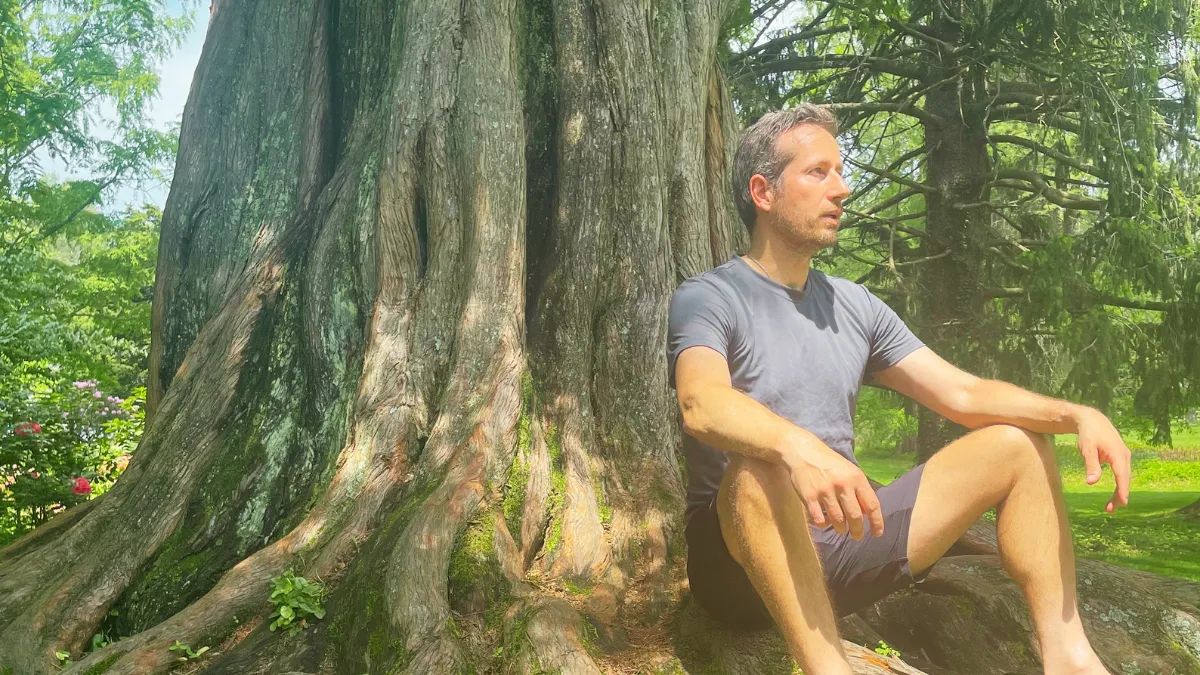

There is a moment just before dawn when the world feels suspended between darkness and light.
Nothing dramatic has happened yet. The sun has not risen. The landscape has not changed. And yet, something deep within nature is already moving toward a new beginning.
I often think personal transformation follows the same pattern.
Most people imagine change arrives with certainty and confidence. They believe there will be a clear moment when they suddenly feel ready, capable, and free from self-doubt.
But after years of working with athletes, executives, entrepreneurs, and people searching for a deeper sense of purpose, I've noticed something different.
Real transformation often begins with a quiet question:
"What if the story I've been telling myself isn't true?"
That question is where metamorphosis begins.
And more often than not, it is the first crack in the wall of limiting beliefs.
Through my work and experiences, including the lessons that shaped my own life, I've come to believe that the purpose of metamorphosis isn't simply to change who we are. It's to help us remember who we were before fear convinced us otherwise.
For many people exploring personal growth through various metamorphosis Coaching Programs, this realization becomes the starting point of lasting change.
What Are Limiting Beliefs, Really?
When people hear the phrase "limiting beliefs," they often think of obvious negative thoughts.
"I'm not good enough."
"I'm too old."
"I'm not talented."
"I'll never succeed."
But limiting beliefs are often much more subtle than that.
Sometimes they disguise themselves as logic.
Sometimes they sound responsible.
Sometimes they even sound protective.
I once worked with an individual who constantly postponed pursuing a meaningful career change. Whenever opportunities appeared, he would explain why the timing wasn't right.
Eventually, we discovered that underneath all the practical explanations was a simple fear:
"If I try and fail, what will that say about me?"
The limitation wasn't external.
It was internal.
And that's true for many of us.
The stories we carry often shape our lives far more than our circumstances.
The Invisible Cage We Build Around Ourselves
One thing I've learned as a Metamorphosis coach is that people rarely realize how much of their behavior is driven by old beliefs.
We inherit them from childhood.
We absorb them from culture.
We develop them through disappointment, failure, criticism, and painful experiences.
Then, over time, we mistake them for truth.
The belief becomes the lens through which we see everything.
If you believe you're not worthy, you'll notice every rejection.
If you believe success is reserved for others, you'll overlook your own opportunities.
If you believe change is impossible, you'll stop looking for evidence that growth is available.
This is why metamorphosis matters.
Because before we can change our lives, we often need to change the lens through which we see them.
What Shenzhen Taught Me About Belief and Reality
Several years ago, after an intense week of training in Hong Kong, I traveled to Shenzhen, China.
Like many visitors, I found myself wandering through its famous markets filled with electronics, designer products, and endless bargaining opportunities.
At first, I became fascinated by how difficult it was to distinguish authentic products from counterfeit ones.
Some of the imitations looked nearly perfect.
Yet upon closer inspection, subtle flaws appeared.
A detail was off.
The material felt different.
Something simply didn't ring true.
Then an unexpected insight emerged.
I realized many of the authentic products weren't perfect either.
Some carried scratches.
Some had imperfections.
And yet they remained genuine.
That experience stayed with me because it mirrored something I often see in coaching.
Many people believe they need to become perfect before they can feel confident, worthy, or successful.
But perfection is a counterfeit ideal.
Authenticity is what creates real growth.
When we stop chasing perfection, we begin dismantling one of the most damaging limiting beliefs of all.
The belief that we must be flawless before we deserve happiness, love, success, or fulfillment.
Why Metamorphosis Challenges Old Stories
A caterpillar doesn't become a butterfly by improving its crawling.
It undergoes a complete transformation.
That's why I often use the word metamorphosis.
Because meaningful change isn't about adding another achievement to your resume.
It's about becoming someone capable of seeing yourself differently.
Limiting beliefs survive because they remain unquestioned.
Metamorphosis interrupts that process.
It encourages us to pause and ask:
Where did this belief come from?
Is it actually true?
Who would I become if I stopped believing it?
These questions can feel uncomfortable.
But discomfort is often where freedom begins.
As I often tell clients:
"The beliefs that keep you small rarely arrive as enemies. They usually arrive disguised as familiar friends."
Practical Ways to Break Free From Limiting Beliefs
Awareness is important, but awareness alone isn't enough.
If you want to create lasting change, you need practical action.
Here are a few approaches I regularly recommend.
1. Challenge Your Evidence
When a limiting belief appears, ask yourself:
What evidence supports this belief?
What evidence contradicts it?
Most people discover they've been collecting proof for one side of the argument while ignoring everything else.
2. Separate Facts From Interpretations
A failed project is a fact.
Believing you're a failure is an interpretation.
Learning this distinction can change your entire perspective.
3. Practice Small Acts of Courage
Confidence doesn't arrive first.
Action comes first.
Every time you do something despite fear, you weaken the grip of the belief that says you can't.
4. Focus on Progress, Not Perfection
Perfection creates paralysis.
Progress creates momentum.
Choose movement over flawless execution.
5. Surround Yourself With Growth-Oriented People
The people around us influence what we believe is possible.
Seek conversations that challenge your assumptions and expand your thinking.
The Connection Between Mindset and Metamorphosis
As Vasilis Mazarakis, I've spent years studying performance psychology while also experiencing the realities of high-level athletics and personal growth.
What I've consistently observed is that mindset isn't about positive thinking.
It's about accurate thinking.
It's about seeing possibilities where fear only sees obstacles.
It's about recognizing that your current beliefs are not permanent identities.
A limiting belief is not who you are.
It's simply a story you've repeated long enough to believe.
And stories can be rewritten.
A Different Way to View Your Future
One lesson from Shenzhen continues to guide me today.
The first price offered by a vendor was rarely the final price.
Everything was negotiable.
Life often works the same way.
The future is not fixed.
Your potential is not predetermined.
Your current limitations are not permanent.
The beliefs you've carried for years are not life sentences.
They are invitations to examine, challenge, and ultimately outgrow them.
As The Metamorphosis coach, I've witnessed extraordinary transformations happen not because people became someone new, but because they finally stopped believing the stories that kept them trapped.
"Freedom begins the moment you become curious enough to question the beliefs you've always accepted as truth."
Final Reflection
If you're feeling stuck, discouraged, or uncertain about what's possible for your future, I want to leave you with a simple thought.
The fact that you're questioning your limitations may already be a sign that transformation is underway.
Metamorphosis rarely begins with certainty.
It begins with awareness.
With curiosity.
With the willingness to consider that perhaps you are more capable than you've been led to believe.
Your beliefs helped shape the person you've been.
But they do not have to define the person you're becoming.
Sometimes the most powerful transformation isn't changing your circumstances.
It's changing the story you tell yourself about what's possible.
And if you're seeking deeper guidance on that journey, working with a skilled personal development coach can help you uncover the beliefs that no longer serve you and replace them with perspectives that support genuine growth.
The journey begins with one question:
What might become possible if you stopped believing the beliefs that are holding you back?
Frequently Asked Questions
What are limiting beliefs?
Limiting beliefs are thoughts, assumptions, or convictions that restrict what you believe is possible for yourself. They often develop through past experiences, upbringing, or fear.
How does metamorphosis help personal growth?
Metamorphosis encourages deep internal transformation. It helps individuals identify limiting beliefs, develop greater self-awareness, and create lasting mindset shifts that support personal growth.
Can limiting beliefs really be changed?
Yes. Limiting beliefs are learned patterns of thinking, not permanent truths. With awareness, reflection, and consistent action, they can be challenged and replaced.
Why do people hold onto limiting beliefs?
Many limiting beliefs provide a sense of familiarity or protection from risk and disappointment. Even when they hold us back, they can feel safer than uncertainty.
What is the first step in overcoming limiting beliefs?
The first step is recognizing them. Once you become aware of a belief that may be limiting your potential, you can begin questioning whether it is actually true.
How long does personal transformation take?
Personal transformation is different for everyone. Some mindset shifts happen quickly, while deeper changes often develop gradually through consistent reflection, learning, and action.



























Sign in to leave a comment.