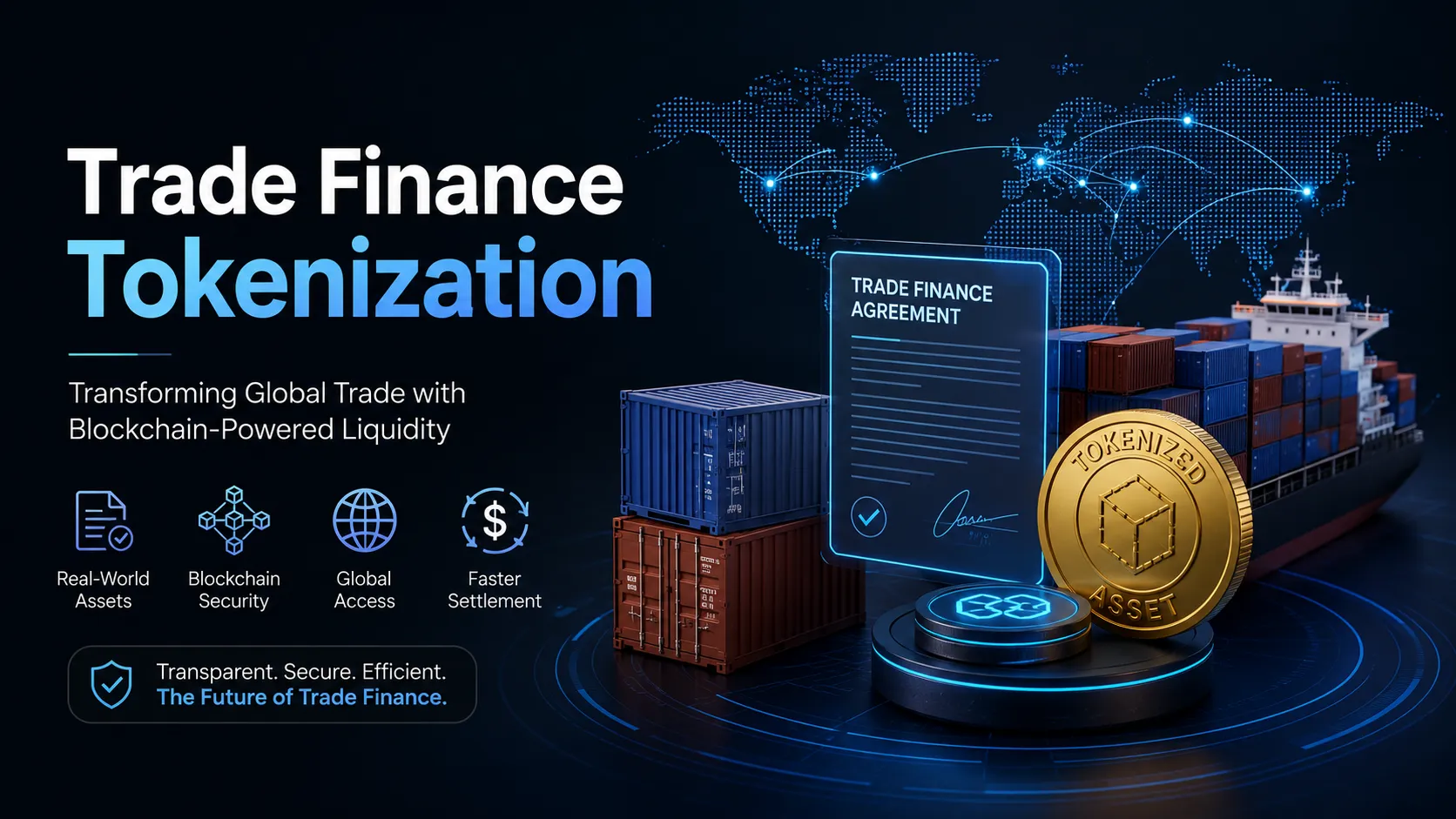

Efficient trade capital management is essential for enterprises engaged in domestic and international commerce. Every stage of the trade lifecycle from procurement and production to shipping and payment settlement requires sufficient working capital to keep operations running smoothly. However, traditional trade finance systems often involve lengthy approval processes, multiple intermediaries, manual documentation, and delayed settlements, tying up valuable capital.
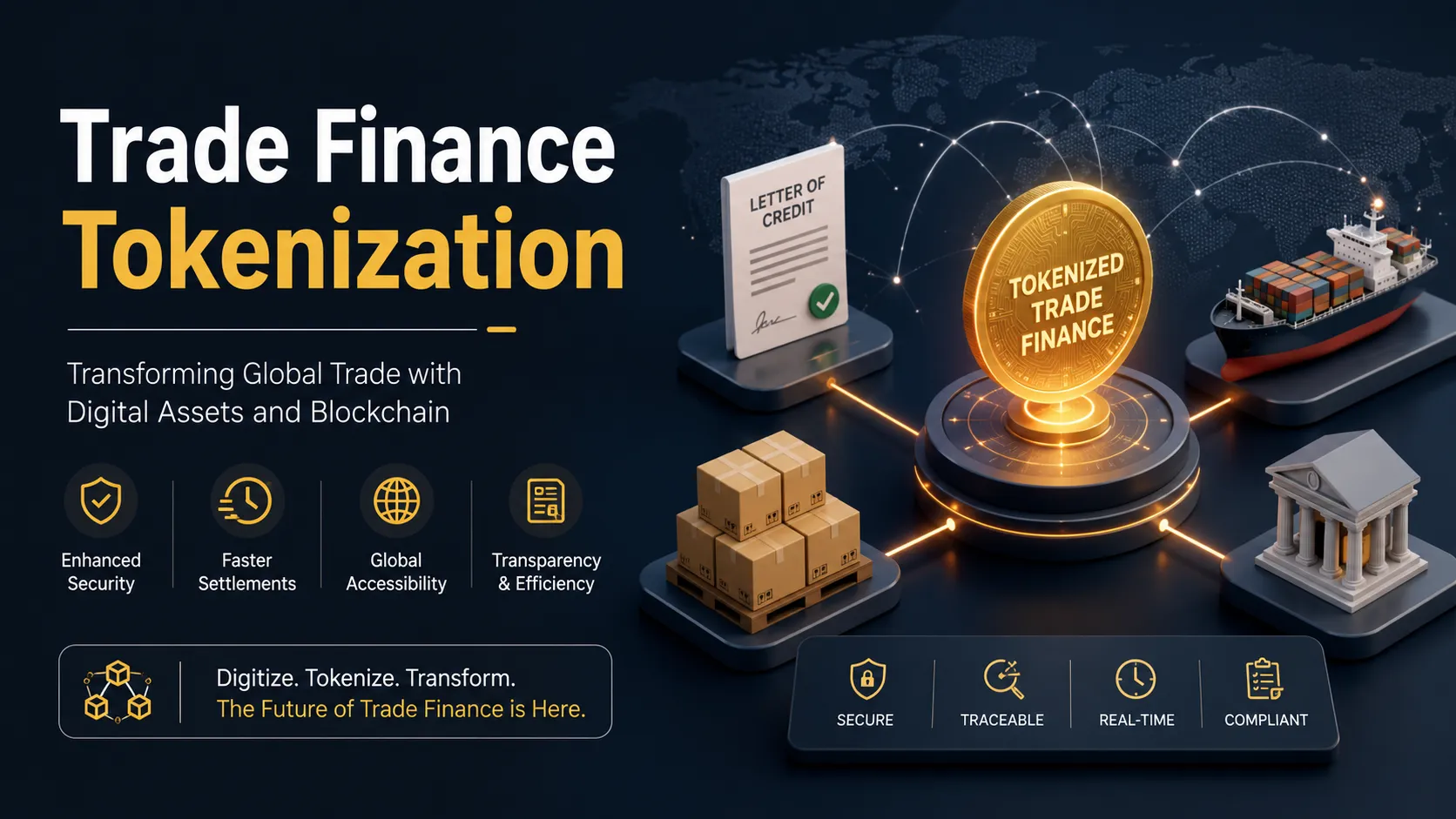
Trade finance tokenization is transforming this landscape by converting trade-related financial assets such as invoices, letters of credit, purchase orders, and receivables into blockchain-based digital tokens. These tokenized assets can be financed, transferred, and managed more efficiently, enabling enterprises to unlock liquidity, accelerate cash flow, and optimize capital utilization. As blockchain adoption continues to grow, trade finance tokenization is becoming a strategic tool for improving financial agility and supporting global business expansion.
What Is Trade Finance Tokenization?
Trade finance tokenization is the process of converting trade-related financial instruments into digital tokens recorded on a blockchain.
Common tokenized trade assets include:
- Trade invoices
- Accounts receivable
- Purchase orders
- Bills of lading
- Letters of credit
- Supply chain payment obligations
- Commodity-backed trade assets
These digital tokens represent verified financial claims and are governed by smart contracts that automate ownership, compliance, financing, and settlement.
Rather than relying on paper-based workflows, enterprises can use blockchain infrastructure to manage trade assets more efficiently throughout the transaction lifecycle.
How Trade Finance Tokenization Works
The process begins when a trade transaction is initiated between buyers and suppliers.
Once the transaction is verified, supporting documents such as invoices or purchase orders are digitized and tokenized on a blockchain platform.
Smart contracts define important business rules, including:
- Payment schedules
- Financing conditions
- Ownership transfers
- Delivery verification
- Settlement instructions
These tokenized assets can then be financed through banks, institutional investors, or digital asset marketplaces.
Once payment obligations are fulfilled, the smart contract automatically settles the transaction and updates ownership records.
How Trade Finance Tokenization Helps Enterprises Optimize Trade Capital
1. Unlocking Working Capital Faster
One of the biggest challenges enterprises face is waiting 30, 60, or even 90 days for invoice payments. Trade finance tokenization allows businesses to tokenize receivables and access financing immediately instead of waiting for customer payments. This improves liquidity and ensures that working capital remains available for ongoing operations, procurement, and expansion.
2. Accelerating Cash Flow Across the Supply Chain
Delayed settlements can disrupt production schedules and supplier relationships.
Blockchain-based settlement mechanisms significantly reduce payment delays by automating verification and execution through smart contracts. Faster settlements improve cash flow predictability and reduce the amount of capital locked in outstanding transactions.
3. Improving Access to Alternative Financing
Traditional trade finance depends heavily on bank lending, which often requires extensive documentation and credit assessments.
Tokenized trade assets can attract funding from:
- Institutional investors
- Private lenders
- Digital asset marketplaces
- Trade finance platforms
- Blockchain-based financing ecosystems
This diversification reduces dependence on traditional banking channels and increases financing flexibility.
4. Reducing Idle Capital Through Faster Asset Monetization
Invoices, purchase orders, and receivables are valuable assets that often remain unused until payment maturity. Tokenization converts these assets into tradable digital instruments that can be financed or transferred before settlement. This enables enterprises to monetize trade assets earlier and deploy capital more productively.
5. Lowering Trade Finance Costs
Traditional trade finance involves numerous intermediaries, including banks, insurers, clearing institutions, and document verification agencies. Tokenization automates many of these processes through blockchain and smart contracts, reducing administrative expenses, documentation costs, and processing fees. Lower transaction costs improve overall capital efficiency.
6. Enhancing Supply Chain Financing
Suppliers frequently experience liquidity shortages due to extended payment terms imposed by large buyers. Trade finance tokenization enables suppliers to tokenize approved invoices and receive financing almost immediately. This strengthens supplier cash flow while ensuring uninterrupted production and delivery.
7. Increasing Transparency for Better Capital Decisions
Blockchain provides a single, immutable source of truth for trade transactions.
Enterprises gain real-time visibility into:
- Outstanding receivables
- Payment status
- Financing arrangements
- Settlement progress
- Ownership history
This transparency supports more informed treasury and working capital management decisions.
8. Reducing Counterparty and Fraud Risks
Trade finance fraud remains a major concern due to duplicate financing, forged invoices, and document manipulation. Tokenization reduces these risks by creating tamper-resistant digital records. Every financial instrument has a unique blockchain identity, making verification easier and significantly reducing fraud exposure.
9. Supporting Cross-Border Trade More Efficiently
International trade often involves multiple currencies, regulatory requirements, and settlement systems. Tokenized trade assets streamline cross-border financing by creating standardized digital representations of trade documents. Smart contracts automate compliance and settlement, reducing delays associated with international banking networks.
10. Improving Treasury and Liquidity Management
Enterprise treasury teams constantly balance incoming receivables with outgoing payment obligations. Trade finance tokenization provides greater flexibility by allowing receivables to be financed dynamically rather than remaining tied to fixed payment schedules. This enables treasury departments to optimize liquidity and reduce reliance on short-term borrowing.
11. Expanding Financing Opportunities for SMEs
Small and medium-sized enterprises often struggle to obtain affordable trade finance due to limited credit histories or collateral. Tokenized trade assets provide lenders with transparent, verifiable financial data, making risk assessment more accurate. This improves financing accessibility and allows SMEs to participate more competitively in international trade.
12. Enabling Programmable Trade Finance
Smart contracts introduce programmable automation into trade finance.
They can automatically execute:
- Payment releases after delivery confirmation
- Interest calculations
- Early payment discounts
- Revenue sharing
- Compliance verification
- Settlement workflows
This reduces manual intervention and improves operational efficiency.
Benefits of Trade Finance Tokenization for Enterprises
Enterprises adopting trade finance tokenization can achieve multiple operational and financial benefits, including:
- Faster access to working capital
- Improved liquidity management
- Reduced financing costs
- Greater transparency across trade operations
- Enhanced fraud prevention
- Faster cross-border settlements
- Broader access to global investors and lenders
- Increased supply chain resilience
- Automated compliance and payment processing
- Better treasury and cash flow optimization
Together, these advantages enable businesses to deploy capital more effectively while supporting sustainable growth.
Challenges to Enterprise Adoption
Although trade finance tokenization offers significant benefits, several challenges remain.
Regulatory frameworks differ across jurisdictions, requiring enterprises to comply with varying financial and digital asset regulations. Integration with existing ERP systems, accounting software, and banking infrastructure can also require substantial investment.
Secondary markets for tokenized trade assets are still evolving, which may limit liquidity in certain sectors. Additionally, enterprises must address cybersecurity, smart contract auditing, and governance requirements before large-scale implementation.
As standards mature, these challenges are expected to become more manageable.
Future Outlook: Smarter Trade Capital Management
The future of trade finance is expected to combine blockchain, artificial intelligence, IoT, and digital identity technologies into an integrated financial ecosystem.
Tokenized trade assets will increasingly support:
- Real-time trade financing
- AI-powered credit assessment
- Automated compliance monitoring
- Cross-border digital settlements
- Integrated supply chain financing
- Tokenized trade asset marketplaces
As adoption grows, enterprises will gain access to faster, more transparent, and more efficient capital management solutions that support global expansion.
Conclusion
Trade finance tokenization is redefining how enterprises manage trade capital by transforming invoices, receivables, purchase orders, and other trade assets into programmable digital financial instruments. It helps businesses unlock liquidity faster, reduce financing costs, automate settlement processes, and improve working capital efficiency.
While regulatory, technical, and market challenges remain, the long-term outlook is highly promising. As blockchain infrastructure and digital financial ecosystems continue to mature, trade finance tokenization is positioned to become a cornerstone of modern enterprise treasury and global trade finance strategies.





























Sign in to leave a comment.