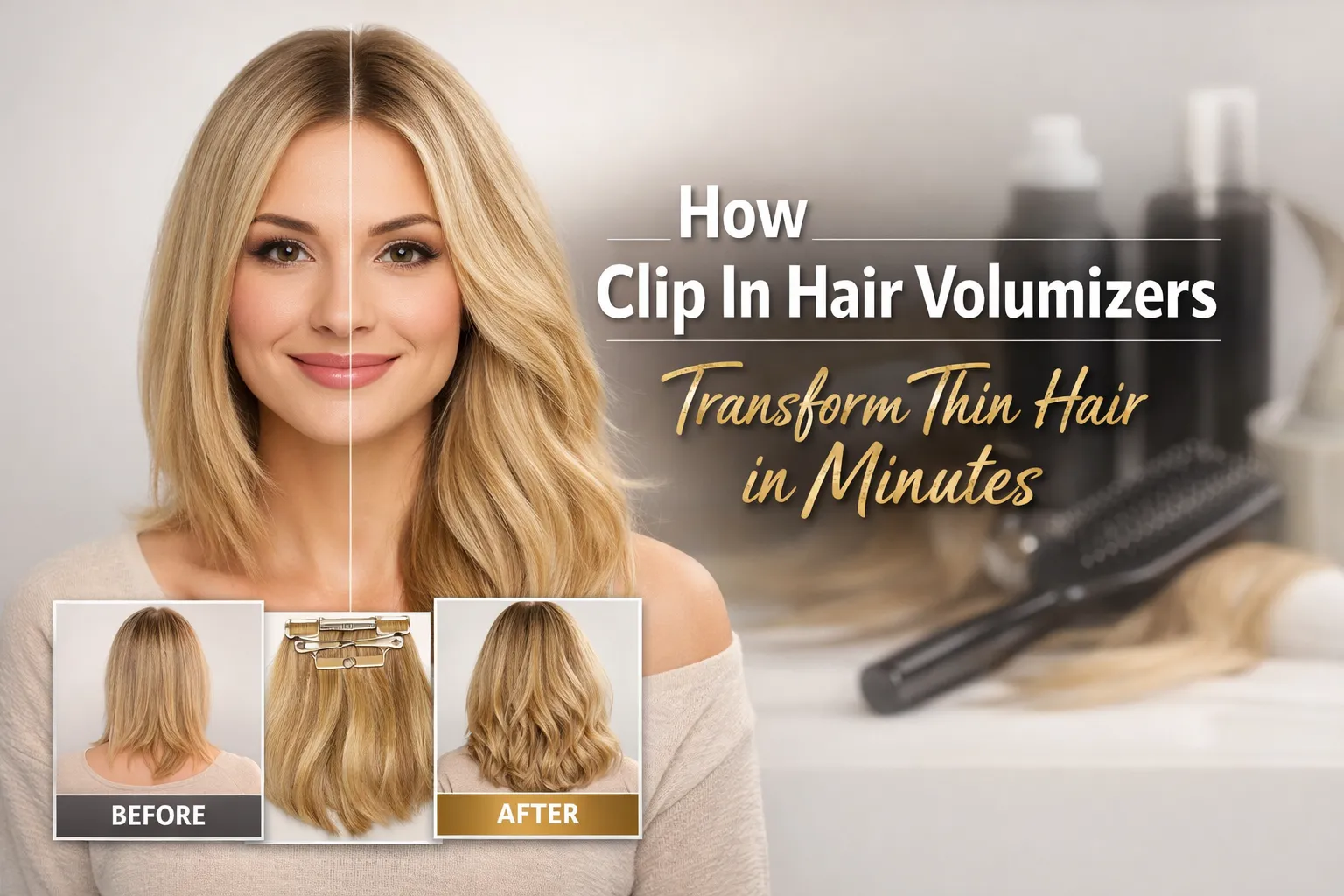

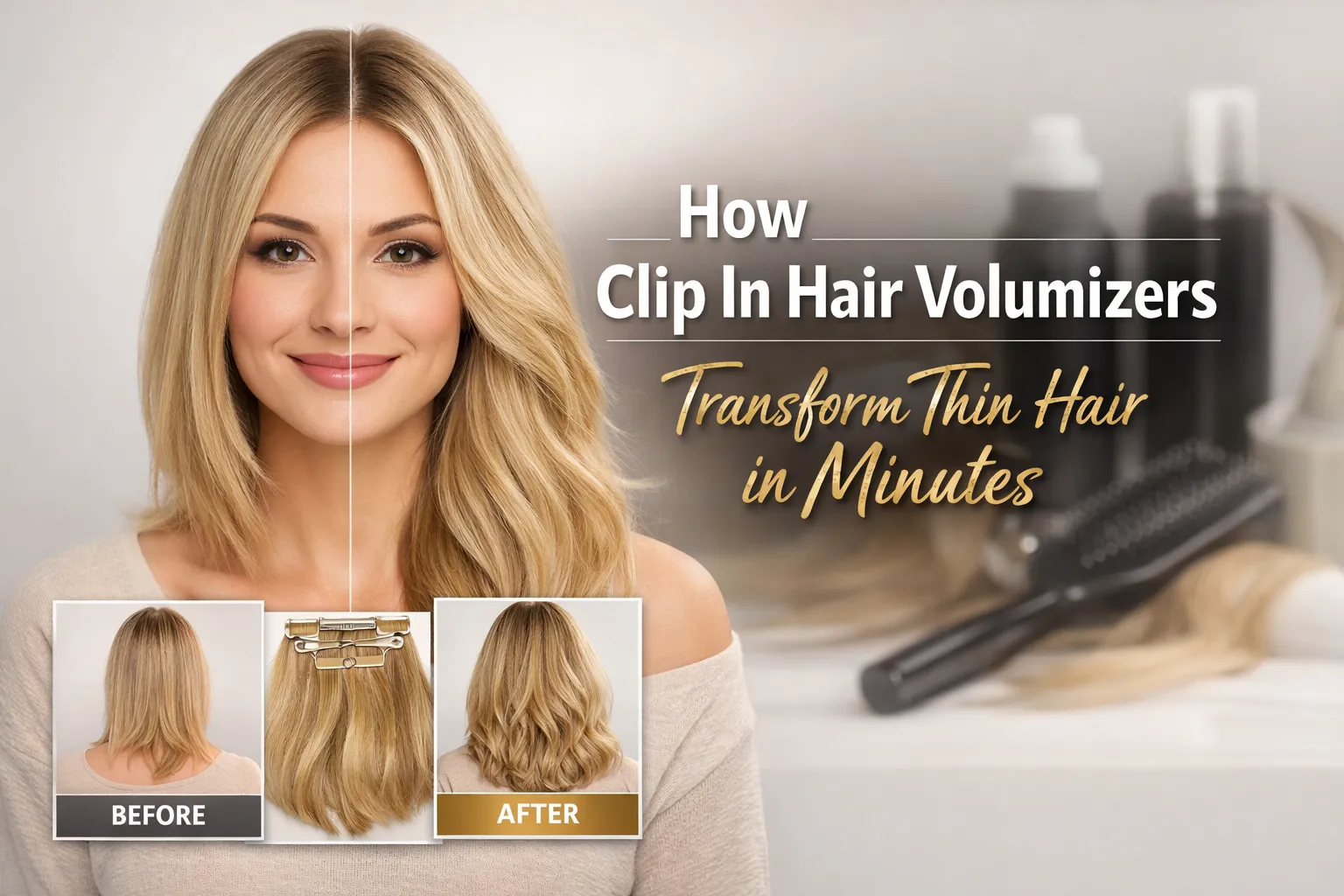
I used to spend 30 minutes every morning trying to make my hair look like something. Dry shampoo at the roots, blow drying upside down, teasing, spraying — the whole routine. And by 11am it was flat again. Just sitting there in my head doing nothing.
If you have fine hair, you know exactly what I'm talking about. It's not about bad hair days. It's every day.
I stumbled onto clip in hair volumizers kind of by accident. A friend mentioned them, I ignored it for six months, then finally tried a set out of desperation before a wedding. That was pretty much it for me. I haven't gone back to fighting my flat hair the old way since.
Why Fine Hair Is a Different Kind of Problem
Here's what nobody really explains — fine hair and thin hair aren't exactly the same thing, though they often go together.
Fine hair means each strand is narrow in diameter. Thin hair means you don't have many strands. A lot of people have both, which is why their hair not only lies flat but also shows scalp at the crown or parting.
Products don't fix this. A volumizing mousse coats the hair shaft and gives it a little grip, but it doesn't add mass. There's still not enough hair. So styles collapse, updos look sparse, and photos are the enemy — especially in bright light where every thin patch shows.
The only real fix is adding more hair. Which sounds obvious when you say it out loud.
So What Are Clip In Hair Volumizers
They're small strips of hair — called wefts — that have little pressure clips attached. You slide them into your own hair underneath the top layer, clip them in, and let your natural hair fall over them. Nobody sees the clips. Your hair just looks fuller.
They're different from a full extension set. Extensions are mostly about length. Volumizers are specifically about thickness — they're shorter, wider, and designed to sit flat against the head without creating bulk you can feel.
Putting them in once you know what you're doing takes about eight minutes. Ten if you're being careful with the colour placement.
- You section off the top layer and clip it up
- Backcomb the roots underneath just slightly so the clips grip
- Snap the wefts in from the nape of the neck upward
- Let your top hair down over everything
Done. People who've known you for years won't be able to tell. They'll just think your hair looks good today.
Clip In Volumizers vs Permanent Hair Extensions — Honest Comparison
People ask about this a lot so let me just say it plainly.
Permanent hair extensions stay in for weeks. Tape-ins, bonds, sew-ins — they're attached to your natural hair and you live with them until your next salon appointment. For people with thick healthy hair who want a long-term look, that's fine. For people with fine or fragile hair, it's riskier than most salons will admit upfront.
The weight of permanent extensions pulls on thin strands constantly. Over months, that tension causes breakage around the attachment points. Some people lose more hair from the extensions than they would have lost naturally. It's not rare — it's actually pretty common with fine hair that wasn't assessed properly before the extensions went in.
Clip in volumizers come out every night. Your scalp breathes. Your hair isn't under pressure overnight or in the shower or while you sleep. For anyone whose hair is already fragile — whether from postpartum shedding, stress, thyroid changes, or just genetics — that daily break matters more than people realise.
This isn't to say permanent extensions are always wrong for fine hair. Lighter tape-ins done by someone who genuinely understands fine hair can work well. The difference is in how carefully the stylist assesses your hair first and how conservative they are with weight and placement.
Extensions Company is one place that actually takes that assessment step seriously — they look at your specific hair density before suggesting anything. That sounds like basic practice but honestly a lot of places skip it, which is how people end up with damage they didn't expect.
The Stuff You Need to Know Before Buying
Buying the wrong set is the most common mistake. Here's what genuinely matters:
Human hair is worth it. Synthetic blends look fine at first but they tangle differently than your natural hair, can't be heat styled to match your texture, and often look obviously fake within a few weeks. Real human hair moves the same way yours does.
Clip quality is underrated. Cheap clips snag. They pull when you remove them. After a few weeks they start to damage the hair they're attached to. Silicone-lined clips hold securely without gripping too hard — that's what you want.
Match the ends not the roots. Most people colour-match to their root colour and then wonder why the extensions look off. Hair gets lighter toward the ends. Match the mid-shaft to end colour, not the scalp.
Don't go too heavy if your hair is very fine. A heavier weft gives more volume but on very fine hair it slips throughout the day. Lightweight wefts stay put better because there's less downward pull.
Weft width matters for placement. Narrow wefts are better for the crown where you need targeted thickness. Wider wefts work better for the sides and back where you're covering more ground.
Who Is Actually Using These
It's not just people who've always had fine hair. A big chunk of people who come to clip in volumizers are dealing with a change — hair that used to be thicker and isn't anymore.
Postpartum hair loss is a massive one. Hair sheds heavily in the months after having a baby and it takes time to come back. Volumizers let women look and feel normal during that waiting period without committing to anything permanent on already-stressed hair.
Stress-related shedding is another. It's more common than people admit and it often shows up months after the stressful period, which makes it feel random and frightening. Again — clip-ins let you manage the appearance while your body sorts itself out.
Then there are people recovering from colour or heat damage, people whose hair has thinned gradually with age, and people who tried permanent hair extensions and found the upkeep too demanding or noticed it was affecting their natural hair.
Be Realistic About What They Do
Clip in volumizers make your hair look thicker. They do that job genuinely well. But they're not treating anything. If your hair is actively thinning and getting worse, that's a conversation for a dermatologist or trichologist — not something extensions of any kind will fix.
Think of them the way you'd think of good glasses. They correct the problem you see in the mirror. They don't fix your eyesight. For most people, that's exactly what they need — a practical solution that works today while they figure out the bigger picture.
Try Clip In Before Going Permanent
If you've been thinking about permanent hair extensions but aren't sure, starting with clip in volumizers is genuinely smart. You'll learn where on your head you actually need volume, what colour blend works with your hair, whether you like the weight and feel of added hair, and how much thickness you actually want.
A lot of people who eventually get permanent extensions started with clip-ins. And plenty of people try clip-ins and realise they don't need anything more — the clip-ins handle everything they were hoping extensions would do, without the cost or the commitment.
You find that out for a fraction of the price before booking a four-hour salon appointment.
Fine hair doesn't have to mean flat hair. Sometimes the most straightforward answer — physically adding more hair where you need it — is the one that actually works. Clip in volumizers aren't magic, but for thin hair they're about as close as it gets.


























Sign in to leave a comment.