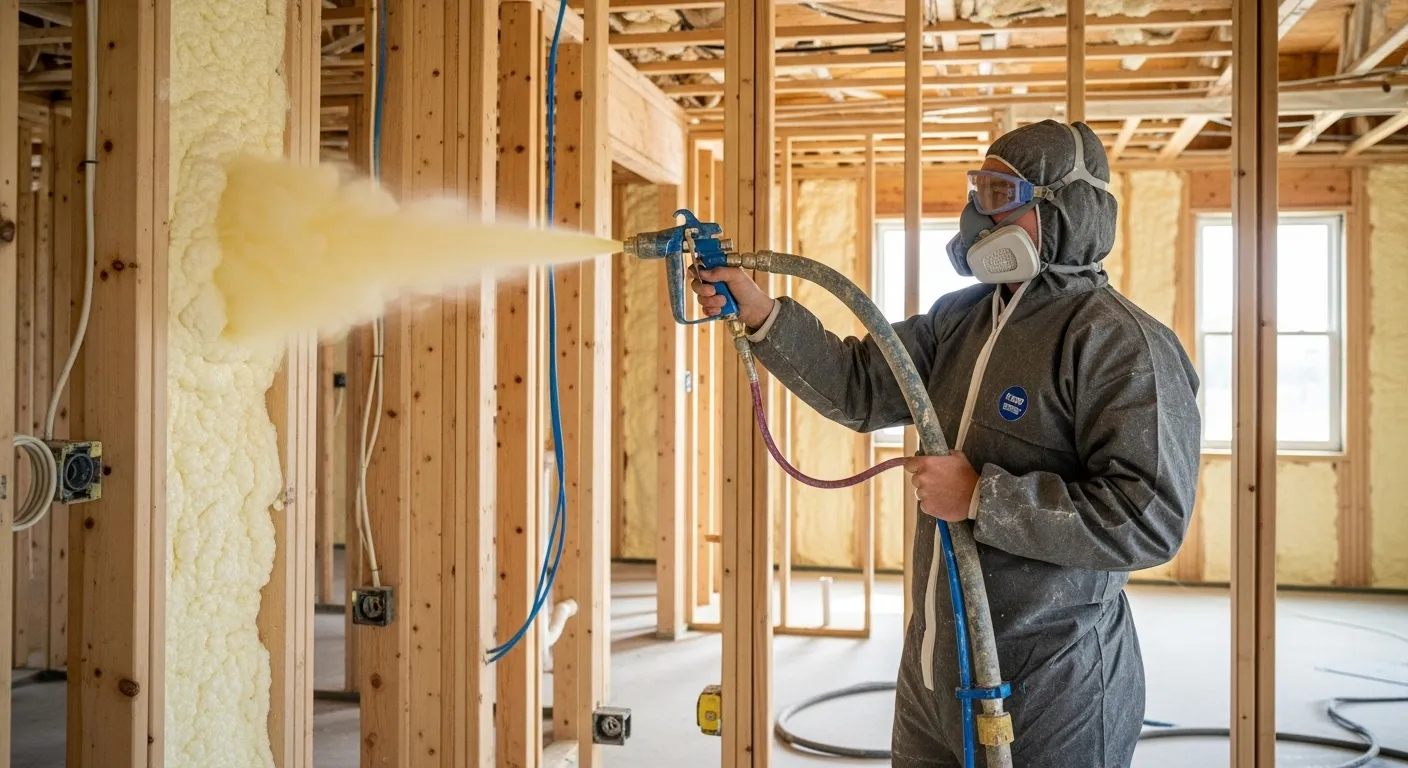

Closed-cell spray foam acts as a powerful moisture barrier because of its dense, airtight cell structure. When applied to surfaces, the foam expands and hardens into a solid mass that prevents water vapor from moving through walls, roofs, or foundations. This material stops liquid water and air infiltration in one application.
Homeowners and builders often choose this material to protect property integrity. Experts recognize that moisture control is the primary way to stop mold growth and structural decay. By sealing off tiny gaps where humid air usually enters, the foam keeps interiors dry and stable.
The Science Behind The Moisture Seal
The efficiency of this material comes from its chemistry. During the application process, two liquid components combine to create an exothermic reaction. This reaction causes the foam to expand rapidly before curing into a rigid, non-porous plastic.
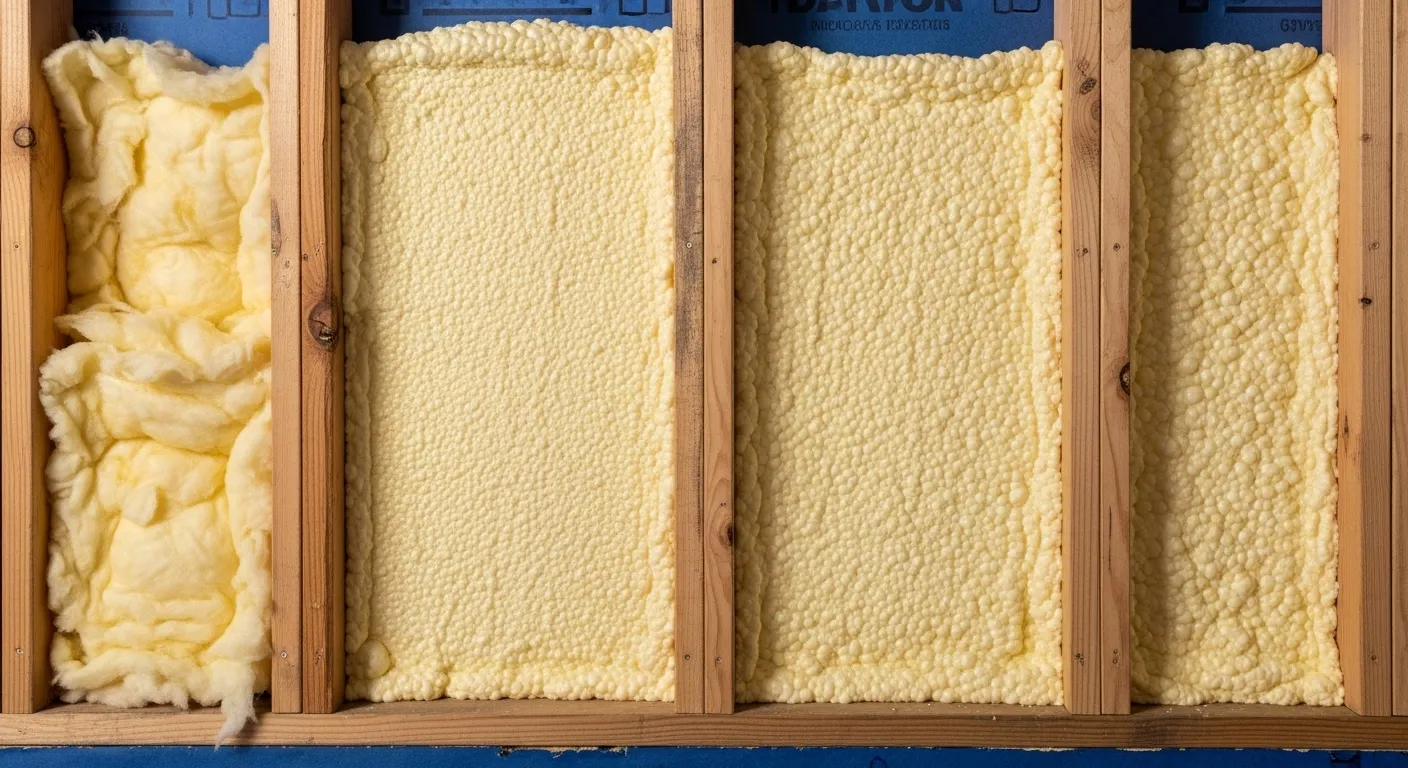
Because the cells are completely closed, they do not absorb water. Even if the material gets wet, the moisture stays on the surface rather than soaking into the interior. This physical property makes it superior to traditional fibrous insulation, which often acts like a sponge when exposed to damp conditions.
Why Airtight Seals Stop Water Damage
Water often enters a building through air leaks. When warm, humid air finds a path into a cold wall cavity, it hits a dew point and turns into liquid water. This condensation is a major cause of wood rot and interior paint damage.
Closed-cell foam eliminates these paths. It seals every crack, corner, and penetration point around pipes or wires. When air cannot move through the wall, it cannot carry moisture into the structure. This dual function of insulation and air sealing keeps the dew point outside of the wall assembly.
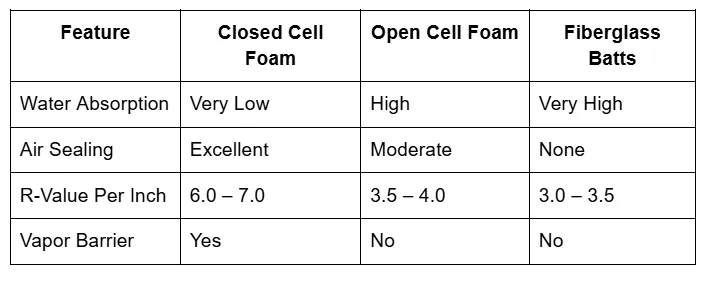
Technical Comparisons Of Insulation Materials
Different types of insulation provide different levels of protection against water. Closed-cell foam stands out because of its high R-value per inch and its status as a Class II vapor retarder.
Bonus Tips For Better Moisture Management
Check existing ventilation: Even with a good moisture barrier, you must ensure your mechanical ventilation systems are working to remove internal humidity generated by bathing or cooking.
Target the rim joist: Apply the foam at the intersection of your floor and foundation wall. This area is a notorious entry point for dampness and insects.
Verify surface conditions: Ensure the surface is dry and clean before the foam application begins so the material bonds correctly to the substrate.
Things To Consider Before You Start Your Project
You should evaluate the source of your moisture problems before paying for insulation. If you have a leaky roof or broken plumbing, the foam will not fix the underlying issue. It only stops the movement of water vapor through the building envelope.
Consider your regional climate. In humid, hot areas, you need a material that stops outdoor humidity from pushing inward. In cold climates, the focus shifts to preventing interior moisture from leaking outward into the wall cavity. Closed-cell foam works well in both situations because it is versatile and durable.
Professional installers need to check the temperature of the substrate. If the surface is too cold or damp during application, the foam might not stick properly. Always ask for a professional assessment to ensure the structure is ready for the treatment.
Regional Climate And Application Tactics
In regions with high annual rainfall, builders favor closed-cell foam for foundation walls. Since concrete is porous, it allows groundwater to seep through. Applying a thick layer of foam to the interior of a foundation wall blocks that seepage effectively.
In coastal areas, this material also provides structural reinforcement. The rigid nature of the cured foam adds strength to wall assemblies, which helps buildings stand up to high winds during storms. This extra rigidity comes from the density of the product once it sets.
Common Misconceptions About Moisture Barriers
Many people think that all spray foam is waterproof. This is incorrect. Only closed-cell foam has the density to serve as a genuine vapor barrier. Open-cell foam, while great for sound control, allows water vapor to pass through freely.
Another common myth is that foam will cause a house to rot if there is existing moisture. If you apply the foam over wet wood, you trap that moisture inside. You must ensure the structure is dry before applying any insulating material to prevent long-term damage.
How To Maintain Your Moisture Barrier
Once the foam is installed, it requires almost no maintenance. It does not sag or settle over time like loose-fill insulation. It stays in place for the life of the building.
If you ever need to perform plumbing or electrical repairs inside the wall, the foam is easy to cut or carve away. Once you finish the repairs, you can fill the gap with a simple foam kit. This keeps your moisture barrier continuous and effective year after year.
Should You Invest In Professional Installation
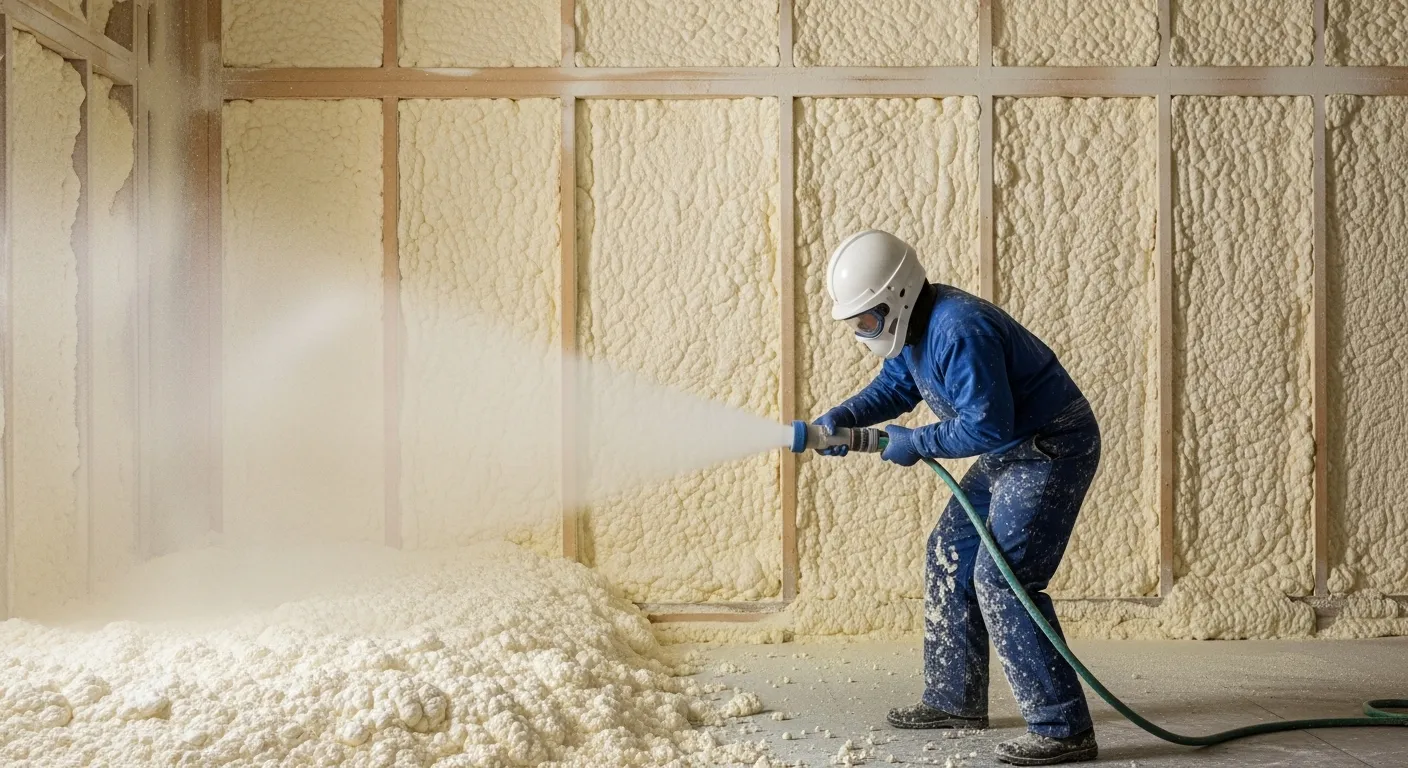
You should consider hiring experts for this process. The equipment requires precise pressure and temperature settings. If the chemical mix is off by even a small percentage, the foam will not cure correctly.
Stellrr Insulation & Spray Foam provides expert consultation to help you understand if this solution matches your needs. Their team ensures the application process follows safety protocols, protecting your family from fumes during the cure time. You can reach them to discuss your property requirements.
How Can You Contact A Professional To Discuss Your Project And Get A Free Quote
If you want to ensure your home or commercial building remains protected from moisture, you should connect with experienced local service providers. Stellrr Insulation & Spray Foam helps property owners evaluate their building envelopes to determine the best approach for moisture control. By reaching out to them at (512) 710-2839 or sending an email to [email protected], you can learn more about how to protect your investment. Their professionals provide guidance to help you make informed decisions and offer free quotes to get you started on your next project.
Frequently Asked Questions About Moisture Barriers
Does closed-cell foam prevent mold?
It prevents mold by keeping building materials dry. Mold needs moisture to grow, so by sealing off water sources and condensation points, you remove the conditions mold requires to survive.
Can I install this foam in my basement?
Yes, it is often recommended for basements. It acts as an excellent barrier against concrete moisture and helps keep basement living spaces dry and comfortable throughout the year.
How long does the moisture protection last?
The barrier is permanent. Because the foam is a stable plastic material, it does not lose its ability to block water or air over time as long as the material remains undamaged.
Is this foam a flood-proof solution?
No. It can withstand high humidity and incidental contact with water, but it is not intended to be a waterproof seal against rising flood waters or standing water for long periods.
Does the foam react with my existing building materials?
It is chemically inert once cured. It bonds well with wood, concrete, and metal without causing corrosion or deterioration to these standard building substrates.



























Sign in to leave a comment.